
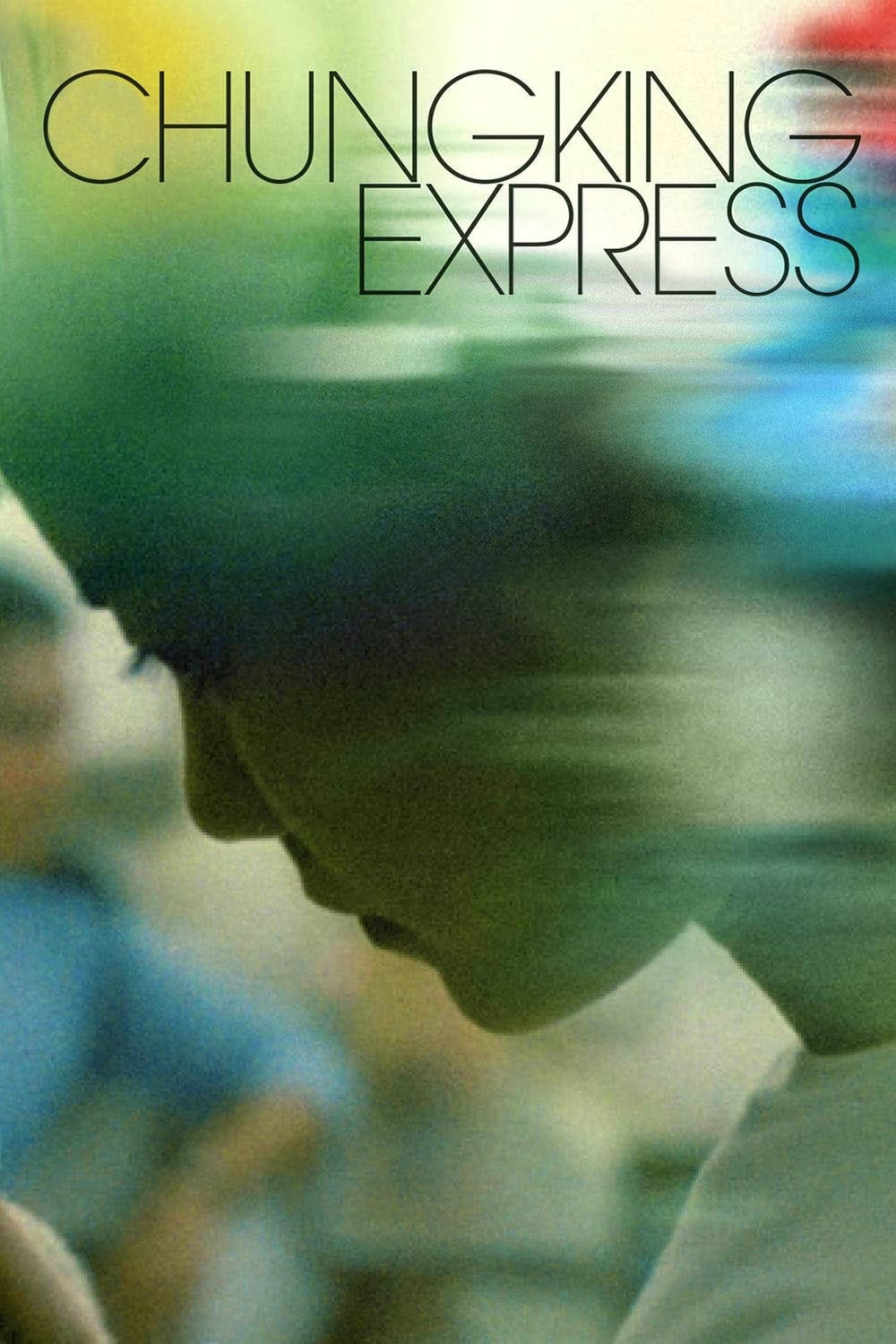
The Historical Era of the Film
Whenever I revisit Chungking Express (1994), I can’t separate my experience of the film from the historical moment that enveloped Hong Kong in the early 1990s. My perspective isn’t merely colored by the film’s lush visuals, but by the rapid, almost hectic transformation that defined the city just before the handover to China. The political atmosphere at that moment was full of anxiety and anticipation. In the years leading up to 1997, when Hong Kong’s sovereignty would transfer from Britain to the People’s Republic of China, uncertainty hovered over every aspect of life. I recall how headlines and conversations alike revolved around the Basic Law, citizenship rights, and emigration waves. Many feared not just a loss of autonomy, but a fundamental shift in personal freedoms and cultural identity.
On the economic front, Hong Kong was suddenly among the world’s most dynamic financial centers—its stock market bustling, property prices sky-high, and luxury goods visible on every corner. Still, I’ve always been aware that beneath this prosperity simmered class divisions and an undercurrent of worry over who would ultimately benefit from the boom. Young professionals, street vendors, and recent immigrants all jockeyed for status and survival in an urban landscape that seemed to reinvent itself every morning. Socially, I felt a tangible sense of rootlessness: so many people came and went, and the city’s neighborhoods were in a constant state of reinvention.
For me, the cultural conversation was also dominated by conversations about Westernization, cosmopolitanism, and the tension between preserving local traditions and adapting to global change. People were not just consumers of international fashion or cinema, but active participants in shaping what Hong Kong would become. The atmosphere was rich with both possibility and apprehension; this duality saturates every frame of the film for me, and makes the viewing experience inseparable from its production era.
Social and Cultural Climate
When I think about the social climate that gave rise to Chungking Express, the image that immediately comes to mind is one of flux—a city and its people in a perpetual state of motion, grappling with the meaning of home and identity. The era’s dominant cultural trend, as I experienced it, was the proliferation of popular culture mixing Western and Eastern influences: American pop music, Japanese consumer goods, and Hong Kong’s vibrant Cinema of the 1980s and 1990s. There was a marked shift toward global interconnectedness: local youth imitated the style of international stars, while filmmakers like Wong Kar-wai borrowed freely from French New Wave and American noir.
Yet, for all its cosmopolitanism, Hong Kong’s society was riddled with unease about the future. I remember how many friends and colleagues described feeling “in between”—not fully Chinese, not traditionally British, but always a distinct mixture. There were fears about cultural erasure after the handover, which ran parallel to pride in the city’s ingenuity and resilience. Attitudes toward authority were complicated. Economic success was lauded, yet many distrusted official narratives about the post-1997 future.
If I had to pinpoint the social attitudes that most permeated the era, I’d list alienation, longing, and the search for individual connection amidst crowds. The city’s night markets, neon lights, and labyrinthine apartment blocks were settings where personal stories unfolded in fleeting encounters. Social mobility was both a promise and a pressure. I saw a society thrilling in its possibilities, yet quietly uneasy, facing profound questions about belonging and permanence.
- The uncertainty of Hong Kong’s political status after 1997
- Heightened Western and Japanese cultural influence
- Economic prosperity paired with deep-rooted anxiety
- A city marked by transience and migration
How the Era Influenced the Film
For me, every stylistic flourish and narrative fragment in Chungking Express is inextricable from these historical circumstances. The characters—wandering police officers, lonely fast food clerks, ambiguous criminals—are all, in my mind, reflections of a society negotiating the boundaries of its own existence. I see the motif of transience everywhere: transient relationships, shifting urban spaces, and the ever-present fear of loss. Wong Kar-wai’s decision to set much of the action in the crowded, multicultural Chungking Mansions strikes me as an explicit nod to Hong Kong’s role as a crossroads for migrants, traders, and dreamers.
The fragmented, impressionistic storytelling seems entirely the product of an era when personal and collective identities were similarly fragmented. I think about how the handheld cinematography, saturated colors, and jump cuts all evoke a sense of impermanence and emotional volatility. These choices weren’t just aesthetic quirks; they mirrored the volatility of the time, and the rootlessness that I often felt walking through the city’s crowded streets. For me, the film’s focus on missed connections and ephemeral attachments also channels a sense of social alienation—people surrounded by millions, yet emotionally alone.
I find it important to note that the year the film entered production, 1993, coincided with a surge of local and diasporic artists trying to capture the texture of Hong Kong before the handover. This context didn’t merely shape the film’s subject matter, but also its approach to storytelling. The quick production schedule and improvisational script feel, to me, like a kind of artistic urgency—an attempt to fix something fleeting on celluloid before it disappears. Just as the characters grasp for meaning in a city that always seems just out of focus, so did the filmmakers grasp for an authentic portrait of Hong Kong’s psyche as the clock ticked down to 1997.
Audience and Critical Response at the Time
When I first encountered the reception to Chungking Express, I was struck by how sharply opinions divided along generational and geographic lines. For many local audiences, the film felt like an almost uncomfortably accurate expression of collective anxieties; I remember hearing from friends who saw themselves reflected in the film’s restless characters and surreal urban atmosphere. The younger generation, in particular, responded to the film’s sense of dislocation—whether from romantic heartbreak, cultural hybridity, or political precarity. It offered a refuge and a mirror, making visible feelings many people didn’t yet have the vocabulary to articulate.
Critical response at the time, especially in Hong Kong and later abroad, was complex and far from monolithic. Some local critics praised Wong Kar-wai’s daring disregard for conventional narrative, seeing his work as the epitome of New Wave Hong Kong cinema. Others, especially older or more traditionally minded viewers, critiqued the film for its apparent aimlessness and unconventional structure, feeling these choices echoed the uncertainties of the era a little too closely for comfort.
International audiences, notably after the film was released outside Asia, were enthralled by its stylistic bravado and dreamlike pacing. I remember reading early Western reception that fixated on Wong’s cinematic influences and his distinct visual style—many likened his work to European arthouse directors. This mixture of awe, confusion, and fascination struck me as eerily similar to how Hong Kongers navigated their emotional terrain at the time. The film developed a devoted following that saw its innovations as representative of the city’s unique historical juncture.
Why Historical Context Matters Today
My understanding of Chungking Express is infinitely deepened by recognizing the historical pressures that shaped its creation. When I introduce the film to new viewers, I always stress that its emotional palette and fractured structure aren’t merely stylistic indulgences—they’re encoded responses to Hong Kong’s existential uncertainties in the decade before the handover. Without an appreciation for this context, I think much of the film’s poignancy risks being reduced to mere nostalgia or aesthetic experimentation.
As Hong Kong’s future continues to challenge and surprise us, I see Chungking Express as a living document—a sensory time capsule capturing a city at its most vulnerable and vibrant. Its characters’ longing for connection, their wary optimism, and their sense of being in-between worlds echo not just the anxieties of the 1990s, but also the dilemmas faced by new generations. For me, understanding the social and political climate that spawned this film isn’t simply academic: it directly connects us to the fears, hopes, and creative energies that still reverberate through Hong Kong’s streets.
Each time I return to the film, memories resurface of how much was at stake for its makers and its first audiences. When lost in its world of fluorescent diners and fleeting love affairs, I’m prompted to reflect on what is gained and lost in times of transition. The historical context makes every gesture and every choice more poignant, and helps me see not just a snapshot of the past, but a lens onto our present and possible futures.
After understanding the factual background, you may want to see how this story was received as a film.
🎬 Check out today's best-selling movies on Amazon!
View Deals on Amazon