
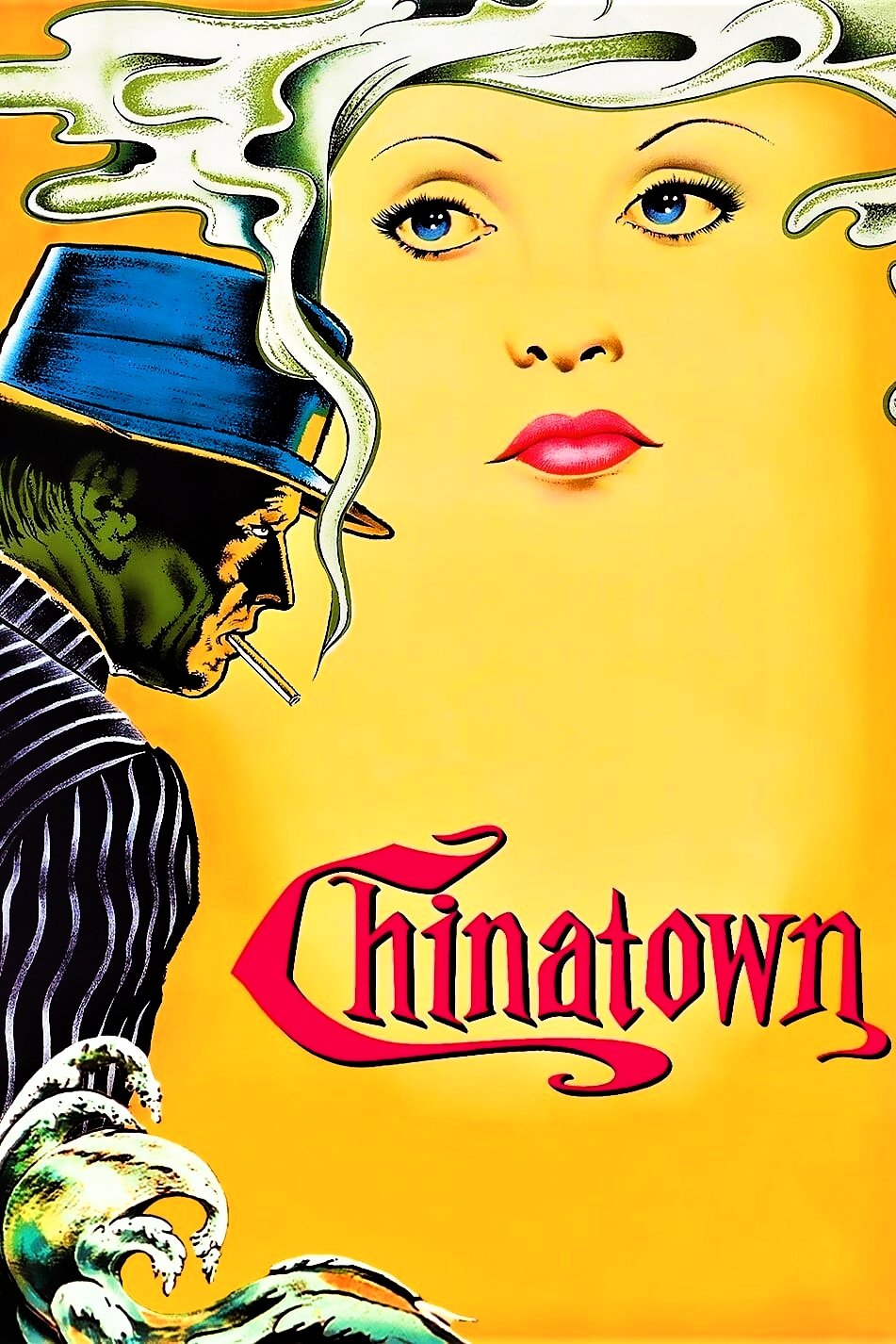
The Historical Landscape
If I close my eyes and transport myself to 1974, when Chinatown first flickered across cinema screens, I’m always struck by the dissonant symphony that defined that moment in American history. The early seventies felt riddled with malaise—a hangover from the optimism and assassinations of the 1960s, and a feeling that nothing, not even sunny Los Angeles, could remain unsullied by corruption and decay. I remember how the headlines screamed of Watergate’s slow, corrosive unraveling and how, beneath it all, was a nation scrutinizing itself, wondering if the rot went even deeper than politicians and policies.
When I think back to the artistic environment that birthed Chinatown, I recall a world in which New Hollywood directors seized creative reins, eager to dismantle the tattered social contract reflected in classical noir and postwar movies. Cinema itself seemed to darken—echoing the streets where protests and disillusionment replaced hope. I see it as a heady crossroads: the hopes of the counterculture had soured into a suspicion of all institutions. Even the American Dream, once blatantly optimistic in grand Technicolor musicals and screwball comedies, now appeared suspect—withered under the California sun. Crime dramas and conspiracy thrillers dominated marquees, almost as if filmmakers collectively set out to shatter comforting illusions.
When I immerse myself in that fragile era, I don’t just see national uncertainty; I feel it mainlining through so much art. There seemed to be a cultural appetite for probing the shadows, to pull back the curtain and confront not just villainous individuals, but entire systems that sanctioned wrongdoing. Chinatown stands, for me, like a signpost in this bleak terrain—its story of lies, betrayal, and urban development touching a public nerve left raw by real abuses of power. The historic backdrop was not merely context for the film’s release; it was fuel, igniting its emotional and ethical intensity. I can’t experience the film without also feeling that tension—between an older Hollywood idealism and this newly unvarnished skepticism about American identity.
Cultural and Political Undercurrents
I’m fascinated when I reflect on how meticulously Chinatown embodies the anxieties and disillusionments simmering beneath American life in the seventies. For me, the film does far more than use the trappings of classic noir as pastiche; it seems to graft modern wounds onto an old form, using the language of mystery to interrogate much deeper, collective scars. I don’t just see Jake Gittes investigating a crime—I see the entire culture questioning what’s actually real, and whom to trust.
The Watergate scandal, which was still gripping the nation in 1974, never feels far from my mind as I watch the shattered mirrors and half-lit rooms of Chinatown. All those headlines about government secrecy and abuse of power echo in the film’s landscape of hidden deals and institutional complicity. I’m always struck by how the ruthlessness exhibited by Noah Cross, the film’s villain, doesn’t just reflect personal evil, but a pervasive rot at the roots of society, the sort of rot people felt as they watched officials at the highest level exposed on the nightly news. In my view, the film suggests that evil in America is never simply individual—it’s systemic, built into the very foundation of cities, policies, and families.
The film’s preoccupation with water, land ownership, and the manufacturing of scarcity, for me, aligns almost eerily with the environmental concerns and urban anxieties of its era. These were the years after Rachel Carson’s Silent Spring had shaken environmental complacency. Every drop of water in Chinatown feels freighted with real-world significance, as droughts, resource exploitation, and questions about who profits from the land played out both in California and national politics. I often wonder whether the anxieties simmering in the film’s script didn’t simply mirror those headlines but helped shape how audiences processed them. When the façade of order can so easily be disrupted, I feel the film posing urgent questions about who truly controls a city’s destiny—and what price is paid for that control.
Beyond politics, I’m also compelled by the film’s gender politics. The character of Evelyn Mulwray, for all the trappings of a femme fatale, is painted with a kind of tragic depth emblematic of the growing consciousness around women’s autonomy and victimization. The seventies were years of cresting feminist activism; I read Evelyn’s haunted vulnerability and impotence against the backdrop of a society still negotiating the place of women’s trauma, voice, and power. In her, I see not just a noir archetype, but a real indictment of patriarchal structures that do violence with impunity. Her struggle isn’t only personal; it seems, to me, to resonate with the moment when wounds long suppressed rose to the surface of the national conversation.
The Film as a Reflection of Its Time
Every time I revisit Chinatown, it feels less like a period piece and more like an open wound—one that throbs with all the contradictions and disappointments of the seventies. What stands out so clearly to me is how the film dares to pull no punches: the world it reveals is bleak, ambiguous, and ultimately, unforgiving. That darkness, I feel, is not accidental or simply aesthetic. It precisely reflects how Americans were confronting their history and their present in those years—I see it as a brave admission that not every mystery can be solved, and not every evil can be undone.
The film’s acid resolution—its infamous insistence that the worst evil goes unpunished—strikes me as a philosophical rebuke to the notion of tidy endings or redemptive justice. When Jake Gittes, world-weary and powerless, is told simply, “Forget it, Jake. It’s Chinatown,” I hear the exhausted resignation that seemed to poison political discourse and private optimism alike in the aftermath of Watergate, the Vietnam War, and the fraying of public trust. The Americans of 1974, as I imagine them watching this film for the first time, were being reminded of the limits of individual action, the failure of heroics, and the triumph—however hidden or denied—of entrenched power. It’s a lesson written between every line of the script, and I think the film’s refusal to let Gittes save the proverbial day is a commentary on how many felt about their inability to change the course of history.
I’m struck, as well, by how the film dissects the American mythology of progress, especially when seen through the lens of Los Angeles. The city, often envisioned as the endpoint of manifest destiny and sun-soaked prosperity, is revealed as something violently manufactured, its very landscape complicit in deception. I find myself comparing this take on LA to the public’s growing awareness that the postwar boom—much celebrated in previous decades—was underwritten by exclusion, exploitation, and corruption. The process of “building the American West” takes on a sinister tone; for me, the beautiful façade is always undercut by dark deals and broken lives. In that way, I read the film as both a confession and a warning: the American Dream, when purchased with invisible suffering, yields nothing but haunted streets.
There’s also a palpable anxiety about history itself, the fear that past crimes can never truly remain buried. Through the film’s ever-present sense of mystery, I interpret a wider concern that the tragedies and betrayals of previous generations continue to shape the present. In 1974, as civil rights reckonings forced a long view of generational injustice, that fear felt powerfully relevant—and still does. The power dynamics in the film, especially those surrounding land and legacy, seem to me to echo anxieties about inherited guilt and unresolved injustice. Chinatown bears witness, as I see it, to the uneasy truth that history is not just memory, but an active, often oppressive, participant in contemporary life.
Every visual cue—the hazy, sepia-tinged cinematography, the oppressive heat, the endless negotiations in smoky rooms—reminds me of the desperate desire to uncover something true beneath layers of obfuscation and self-interest. It’s as if the entire film is an extended metaphor for the time: a scavenger hunt for lost innocence, doomed by the very forces that set the terms of the game. What I find remarkable is how, even with its period setting, Chinatown never lets me forget that the real story is about the making of the present—about how every choice, compromise, and cover-up leaves an indelible scar on the landscape of American life.
Changing Perceptions Over Time
When I reflect on the shifting fortunes of Chinatown, I’m always struck by how its meanings have expanded and contracted according to the needs and anxieties of those watching. At its release, older viewers—brought up on the certainty and resolution of golden-era crime pictures—seemed to recoil from the film’s nihilism, its refusal to provide the reassurance of justice. My own reaction, coming to the film decades later, was markedly different. I read Chinatown not as a subversion of noir, but as a definitive chronicle of a period that no longer believed in rescue, only in the inevitability of defeat at the hands of power.
Over time, I’ve watched the film’s reception oscillate: at moments, it’s lauded as the crowning achievement of seventies cinema, at others, it becomes almost too dark for comfort—or too real. The more I’ve lived through cycles of public betrayal and disappointment, the more prescient its cold message feels. For instance, in the post-2008 era, when economic collapse and unchecked financial manipulation reignited questions about who really steers the fate of cities and citizens, I began to hear younger filmgoers and critics rediscover how the film’s story about water and land theft mirrored ongoing debates about privatization, gentrification, and civic betrayal.
Even the way I view characters has shifted. Jake Gittes, once a clever stand-in for the gumshoes of the 1940s, seems today less like an ironic homage and more like an everyman—outmatched, well-intentioned, and ultimately left impotent by a world that refuses easy answers. Evelyn Mulwray, whom I first saw through the conventions of noir, I now view as a harrowing study in victimhood and secrecy in a patriarchal order whose violence persists long after the curtain falls. The film’s gender and power dynamics feel, to me, even more urgent when compared with the current cultural reckoning around long-concealed abuses of power in Hollywood and beyond.
I also sense a growing appreciation for the film’s emotional resonance: what once felt like stylish cynicism now seems, with the benefit of hindsight, more like a necessary exposure of societal malaise. For newer audiences, I notice that the film stands as both a relic of its time and a perpetual warning—a cautionary tale where being disillusioned is not a flaw, but a survival mechanism. In a world still grappling with institutional cover-ups, the film doesn’t just age; it thickens, acquiring more layers as history marches forward.
My own interpretation continues to evolve, too. Where I once admired the film for its craft and boldness, I now see it as a kind of cultural confession, a rare moment when a movie not only reflected its own era’s pain but had the honesty to suggest those pains were built-in—that leaving things unrepaired may be the truest, bleakest lesson to be drawn.
Historical Takeaway
If I extract a lesson from Chinatown—if such hard-won wisdom can be reduced to a single insight—it’s that the era of its making left filmmakers with no more patience for comfortable myths. For me, the film confesses what so many suspected and feared: that behind America’s sunniest façades and most noble ambitions lurked shadows that could not be banished with heroism or hope alone. Watching the film, I’m reminded that the seventies forced a reckoning—a confrontation with the idea that systems, not just individuals, corrupt; that histories, not just single acts, haunt; and that sometimes, forgetting is all we are permitted when all avenues for justice have been barricaded.
The film’s bleakness is not just a stylistic flourish. At heart, I see it as a mirror for the audience of 1974, a sobering antidote to the era’s newly exposed cynicism. Its refusal to reward virtue or punish villainy isn’t hopelessness for its own sake. Rather, I experience it as a challenge to see the world as it actually is and to grieve for what it might have been—had power served the many rather than the few. In dialogue with its age, Chinatown emerges, to my eyes, as both a product and a prophecy: trying to hold accountable the ghosts of bad history and warning that, without open eyes, those ghosts only tighten their grip.
When I think about how Chinatown teaches us about 1974, I see more than a snapshot of one troubled year. I see an ethos of doubt, a skepticism that reached beyond politics into the ways Americans understood themselves, their cities, and their futures. The film dares us not only to acknowledge darkness, but to stand in it—even when, as the ending insists, there is no light waiting on the other side.
To see how these real-world elements shaped the film’s impact, you may also explore its reception and legacy.
🎬 Check out today's best-selling movies on Amazon!
View Deals on Amazon