
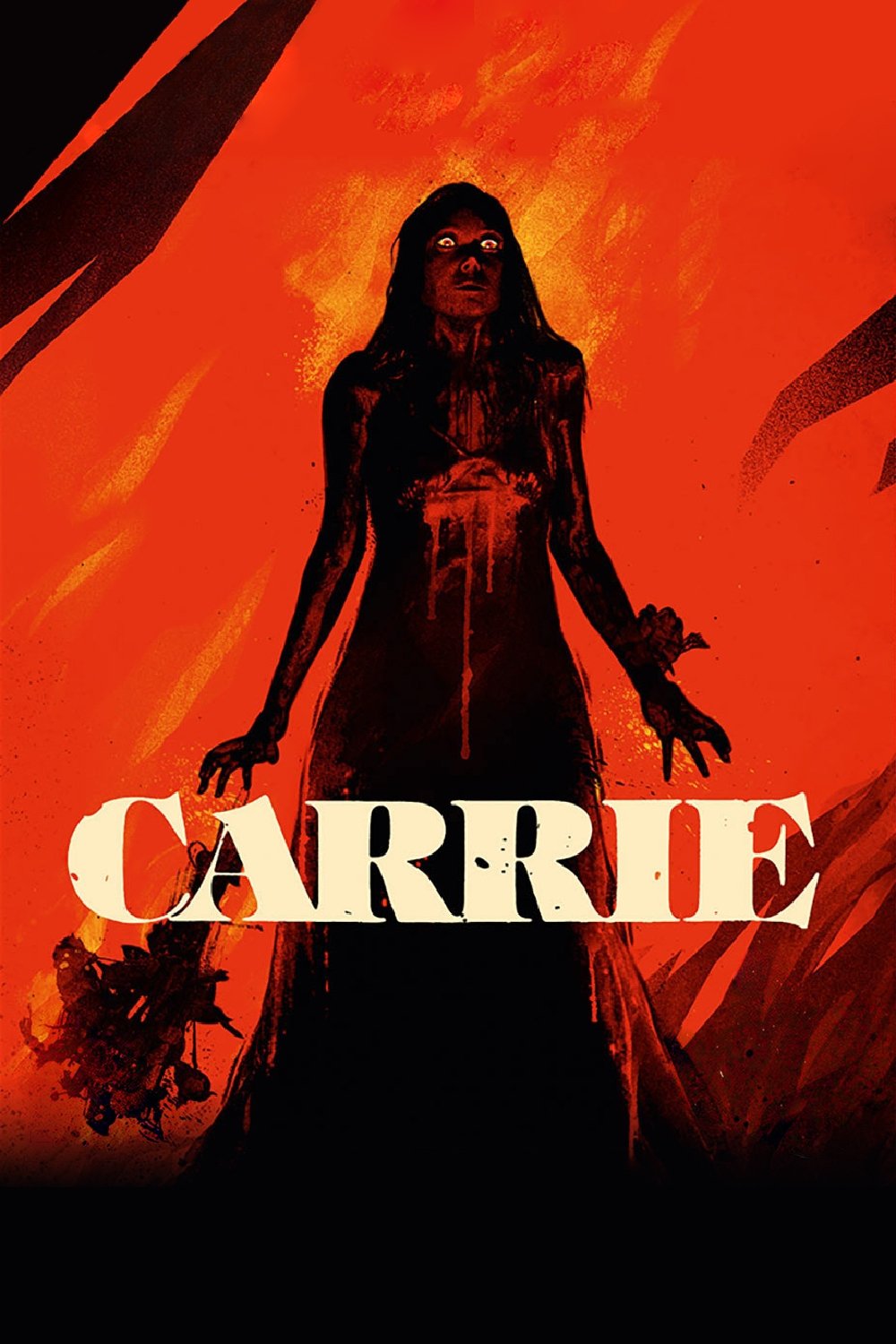
The Historical Landscape
When I first sat down to rewatch Brian De Palma’s Carrie, my memory was steeped not just in the film’s iconic blood-soaked finale but in the aura of the mid-1970s—an era I’ve always considered a complicated intersection of social revolution and collective anxiety. For me, 1976 feels less like a distant past and more like a living crossroads: America’s Bicentennial, disco in its infancy, television as king, and the shadow of Vietnam still fresh on the national psyche. There was a palpable sense, reading newspapers or hearing stories from that period, that institutions were straining under the weight of their own contradictions—family, school, the church, even the government. All around, there was the residue of disappointed idealism from the previous decade’s countercultural energy receding into skepticism and a hunger for personal, sometimes selfish, fulfillment. Cinema, always a thirsty mirror for reality, fed on this churn: horror, exploitation, and genre films became increasingly audacious, breaking taboos with a zeal that felt almost therapeutic to a wounded audience.
When I think of Carrie as a product of this time, I see how it emerges from a society dealing with new freedoms and old fears. There was economic instability—oil crises, rising inflation. Feminism had made household words of “women’s liberation,” but the reality was messier, with backlash and confusion erupting from every corner. The American Dream itself seemed both tarnished and under threat. So when a film like Carrie bursts onto the scene, it doesn’t just tell a story of adolescent angst—it inhabits a country breathlessly negotiating between progress and paranoia, individual awakening and institutional repression. Every frame seems haunted by unresolved cultural tremors, making it deeply symptomatic of its era rather than just a reflection of private terrors.
Cultural and Political Undercurrents
I’ve always believed that horror films are barometers of the collective unconscious, and nowhere is this truer than in Carrie. The mid-1970s were years in which American culture seemed obsessed with the idea of the outsider—that stranger in our midst who threatens “normalcy.” For me, Carrie exists at the intersection of multiple undercurrents: the aftershock of the Women’s Movement, anxieties over adolescence, religious fundamentalism clashing with growing secularism, and a rising skepticism toward authority.
Watching Carrie now, I’m struck by how the film seems to channel the nervous energy surrounding young women’s bodies and sexual autonomy. The shocking opening sequence—a menstrual awakening, met with mockery—felt transgressive for mainstream cinema. I can only imagine how it must have unsettled 1976 audiences; it still does today. This moment, with its merciless bullying and raw exposure, feels emblematic of a culture unsure of how to handle the biological and psychological realities of womanhood. It’s as if the entire population was grappling with what it meant for women to claim space, power, and agency.
Religious zealotry, so viscerally embodied by Piper Laurie’s Margaret White, also reverberates with the decade’s cultural dilemmas. The 1970s saw a bitter tug-of-war between conservative and progressive values, most notably around issues like abortion, sexuality, and education. Margaret’s fanaticism—her obsession with sin and purity, and her determination to control her daughter’s body—feels like a cinematic echo of this wider tension. I sense in her a distorted but very real fear among many Americans that old certainties were dissolving, leaving behind both moral panic and the impulse to reassert patriarchal norms.
Beyond gender, there’s an unyielding theme of bullying and scapegoating—a reflection, to my mind, of how collective insecurity often finds its outlet in ostracizing the weak or different. Whether in schools, workplaces, or on ideological battlegrounds, the 1970s were rife with a new focus on “the problem child,” juvenile delinquency, and the pitfalls of conformity. The gymnasium and prom scenes, with their swirling cruelty, seem to embody the decade’s questions about whether social progress is even possible when institutions permit, or even foster, such violence. It’s no accident, I think, that at a time when trust in authority had been battered by Watergate and Vietnam, Carrie dramatizes the failure of adults to protect or understand youth, exposing the lie of benign paternalism.
Beneath its lurid surface, then, I view Carrie as a statement about the fragility of normal life when cultural fault lines are at their widest—and about the often brutal price paid by those who stand at the center of those cracks.
The Film as a Reflection of Its Time
When I interrogate what Carrie reveals about 1976, I keep returning to how the film channels the chaos and contradictions of its era into psychic heat. I’m particularly moved by the film’s treatment of adolescence—not just as a time of personal crisis, but as a microcosm for national uncertainty. Carrie White is both victim and catalyst, and her story reads like an allegory for the American experience of the 1970s: tentative, yearning for acceptance, but ultimately breaking open old wounds instead.
One of the central conversations of the decade was about female empowerment. But rather than a simplistic tale of triumph, Carrie offers a darker, more ambivalent vision. I find myself struck by how the film sets up the hope of liberation—Carrie’s tentative foray into social spaces, her modest joy in her prom dress—only to twist that hope with betrayal and vengeance. This feels true to the ambivalence of the times: for every step forward, there seemed to be an eruption of backlash, violence, or loss. Watching Carrie’s telekinetic rage explode, I see echoes not just of personal trauma, but of the broader rage bubbling under the polite surface of American life. The fear of female power, newly visible and barely controlled, crackles through every frame.
The film also resonates with the decade’s pervasive sense of surveillance and mistrust. Before the digital panopticon of later years, the 1970s had its own flavor of paranoia: Watergate loomed large, but so did horror stories about cults, serial killers, and the occult. Carrie taps into this anxious mood by blurring the lines between the personal and the supernatural, asking me to consider whether monstrosity is inherent or created by social cruelty. The story’s core—a shy, fragile girl turned monstrous by communal abuse—parallels a nation asking what happens when social contracts are broken and the vulnerable strike back.
I can’t help but think, too, about the role of mothers in the popular imagination of this era. Margaret White is both terrifying and pitiable, capturing a moment when older forms of authority—especially religious and familial—were being challenged again. Watching her interact with Carrie, I’m reminded of generational tensions and the difficulty of communication across moral divides. There’s a kind of mournfulness underlying their relationship, as if the old world is falling apart but nobody has figured out how to build the new one.
In all of these ways, Carrie is more than a straightforward horror story. I see it as a portrait of a society reluctant to confront its own monstrous undercurrents, terrified and fascinated by change, unable to decide whether to embrace transformation or recoil in fear.
Changing Perceptions Over Time
With every decade that passes, I notice how Carrie accrues new meanings. After all these years, the ways I interpret the film are colored by shifts in both culture and cinema. Initially, it seemed to many like a pure, even shocking, exercise in horror and exploitation—a deliberately grotesque fantasy about female puberty gone wild. But as conversations around bullying, gender roles, and trauma have become central to our discourse, I see contemporary audiences returning to Carrie with fresh eyes.
In the 1980s and 1990s, repeated viewings often highlighted Carrie as a cult object and a visual reference for teenage alienation. Friends of mine growing up cited its prom sequence not just as a scare, but as the ultimate anti-High School Musical—an alternative vision of the American teenager as isolated, besieged, and potentially dangerous. The film’s stark presentation of bullying, once seen as overblown or cartoonish, now reads to me (and to many others) as deeply prescient about the lasting scars such abuse can inflict.
After the school shootings and rising violence of the late 1990s and early 2000s, I observed a dramatic shift: Suddenly, Carrie White herself seemed less like a movie monster and more like a symbol of the consequences of systemic neglect. Anxieties about adolescence, estrangement, and power acquired new political valence. Recent conversations about consent, body shaming, and intersectional feminism further complicate the film’s reception, especially the opening sequence and the complicated depiction of mother-daughter relations.
What astonishes me is how the film’s supernatural elements—once interpreted as the stuff of allegorical fantasy—have become powerful metaphors for psychological repression, trauma, and even identity formation. In my recent viewings, I find myself fixating less on the spectacle of telekinesis and more on the horror of miscommunication, loneliness, and the lethal repercussions of unchecked cruelty. The idea of “monstrosity” in Carrie has shifted from the mystical to the metaphorical: Are monsters born, or made by society? Watching audiences grapple with this question over time, I see how Carrie has moved from being a pure horror film to standing as a psychological and cultural case study.
The legacy of Carrie is not static: Each era, and each viewer, finds something different in its bloody catharsis and painful tenderness, reframing its narrative in the light of new traumas and new hopes. For me, this evolution is its own testament to the film’s strange, enduring power.
Historical Takeaway
For all its supernatural terrors, what stands out most to me about Carrie is how it distills the raw, unresolved energy of 1976. In its hybrid of vulnerability and violence, repression and release, I see a portrait of an America teetering on the hinge of transformation—afraid of the future, but unable to retreat to the safety of the past. The film teaches me that historical moments are rarely neat: They seethe with contradiction, fear, and longing. At its most unsettling, Carrie asks what happens when progress comes at the cost of the individual’s safety and sanity; when liberation triggers a backlash as cruel as the structures it seeks to dismantle.
By turning the suffering of an outcast girl into mythic spectacle, the film simultaneously indicts and laments a culture that so often fails to nurture its own. Watching Carrie today, I can’t help but feel that its anxieties remain familiar, even as the specifics have changed. The terrors of bullying, the complexity of female power, the challenges of structural change—these are not relics of a lost decade, but questions we still face.
As a historical artifact, Carrie reminds me that the past’s nightmares often return with new faces. The unresolved tensions of 1976—gender, authority, adolescence, violence—echo in the present, both in our films and in our lives. To me, Carrie is less an answer than a cry; less a story of victory or defeat than a portrait of a society wrestling, in real time, with the limits of its own imagination and compassion.
To see how these real-world elements shaped the film’s impact, you may also explore its reception and legacy.
🎬 Check out today's best-selling movies on Amazon!
View Deals on Amazon