
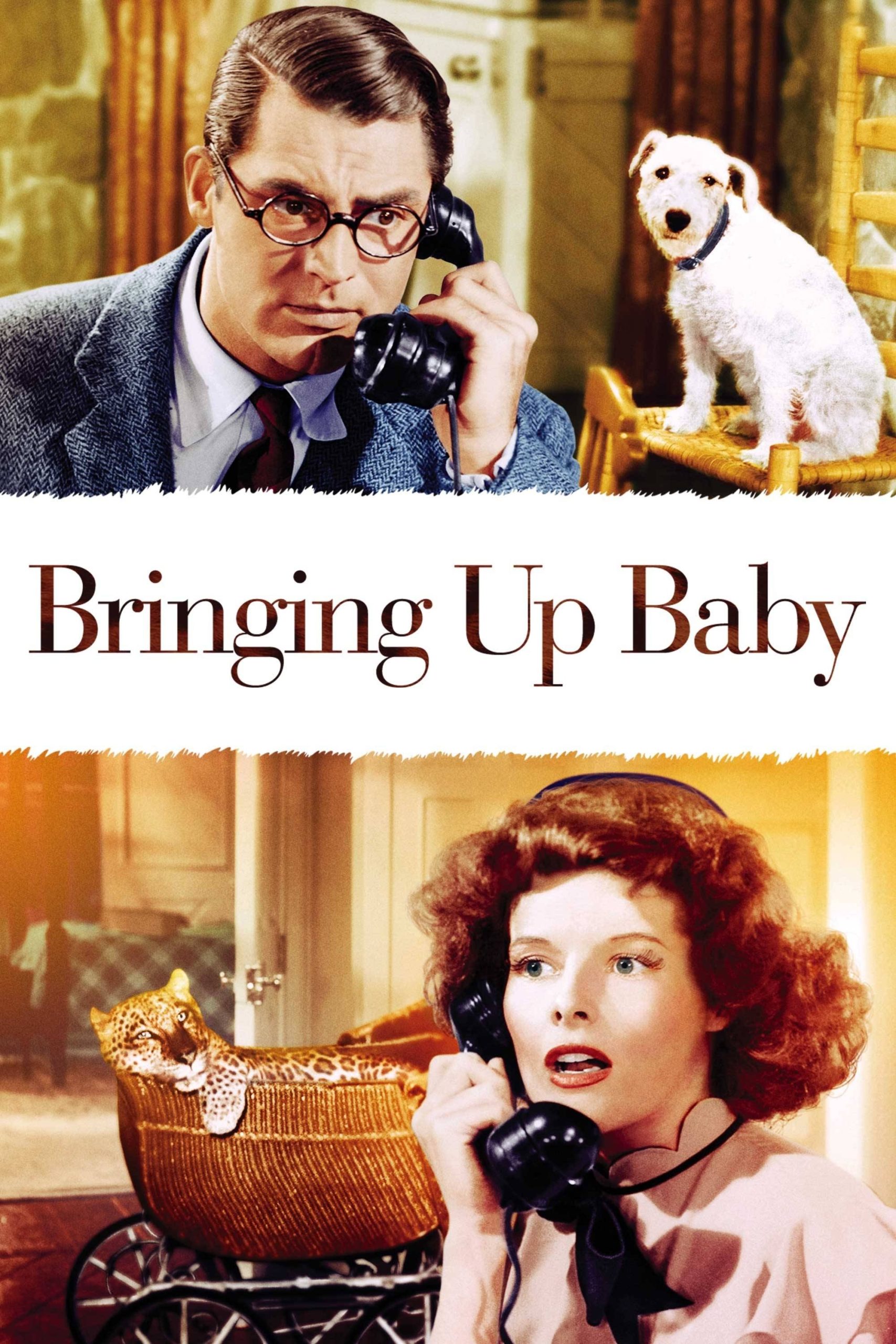
The Historical Era of the Film
Whenever I revisit Bringing Up Baby (1938), I’m struck by how much it feels both of its time and strangely unmoored from it. The political, economic, and social fabric of the United States in the late 1930s was woven with contradictions—a ferment of anxiety and hope. Living in a world trembling between the tail end of the Great Depression and the approach of global war, I often imagine how the film’s comic energy must have felt like a remedy or an escape for its original audience. The New Deal had eased some economic pain but hadn’t banished it, and the specter of unemployment still haunted many Americans’ lives; this economic unease created an atmosphere of both resilience and restlessness that I think pulses beneath even the broadest comedy of the era.
What fascinates me about the political climate is how much was really in flux. It’s impossible for me to ignore that, just off-screen, fascism was tightening its grip abroad, and Americans were debating not just recovery from domestic disaster but also how much to engage with the world’s looming conflicts. Franklin D. Roosevelt’s administration dominated the headlines, implementing programs meant to stabilize the nation, support workers, and encourage a sense of togetherness. I see Bringing Up Baby as a product of that environment—a distraction, perhaps, but also a subtle statement about individuality and wildness within a society seeking order.
Socially, I feel the 1930s were marked by heightened awareness of class divisions as well as shifting ideas about gender and propriety. Hollywood’s Golden Age flourished amidst all this, and its escapist fare was not emergent from a vacuum but shaped by American uncertainties and hopes. I’m always mindful of how the film’s historical context bled into its production: censorship under the Hays Code reined in what could be shown on screen, guiding filmmakers toward clever indirection and rapid, witty dialogue instead of open expression. The law of the land, in so many ways—political, economic, social—set boundaries that films like Bringing Up Baby delighted in pushing, if only within the system’s expectations.
Social and Cultural Climate
Diving into the social and cultural climate that greeted Bringing Up Baby’s production, I notice a tension I always find compelling between the on-screen zaniness and the off-screen pressures Americans faced. The 1930s saw profound shifts in social attitudes. While conservative values around marriage, gender roles, and class structure persisted, there was also a subtle, growing undercurrent of rebellion, especially noticeable in Hollywood’s screwball comedies. These films, as I see it, mirrored and sometimes challenged the era’s dominant beliefs.
This was a time when the public looked to movies for relief from stress and uncertainty. I find it telling that the screwball comedy—absurd, rapid-paced, often featuring strong, unconventional women—emerged as a cultural force at just this moment. Hollywood was using wit and slapstick to poke gentle fun at authority, social status, and even the restrictive norms of romance and gender. Within this milieu, actresses like Katharine Hepburn became icons, embodying a brand of modern femininity that pushed at the boundaries of tradition without explicitly toppling them.
It strikes me how Bringing Up Baby fits into a moment when the concept of the “New Woman” was both inspiring and alarming to American society. I’ve often reflected on how audiences might have viewed Hepburn’s character in contrast to the more demure women of prior film eras; she’s scatterbrained but fiercely independent, and the film itself uses her as a vehicle for gentle social provocation. Not only were gender roles in flux, but so too were expectations about class behavior: in many screwball comedies—including this one—the upper class is presented not as dignified or detached, but as ridiculous and fallible. This inversion of social order, to my mind, echoed the blurring of class boundaries prompted by economic changes and by the shared experiences of the Depression years.
The Hays Code loomed large over all of this, steering filmmakers toward wit and implication over explicitness. I think the code’s restrictions paradoxically sparked some of the era’s most innovative storytelling, encouraging creators to find new ways to communicate sexuality, desire, and subversion. It was through rapid-fire dialogue, subtext, and farcical situations—all on display in Bringing Up Baby—that these filmmakers negotiated their era’s social boundaries.
- Persistent effects of the Great Depression on daily life
- Shifting gender dynamics fueled by the rise of the “New Woman”
- Increasingly visible class fluidity and critique
- The constraints—and artistic opportunities—of the Hays Code
How the Era Influenced the Film
I often marvel at how the particulars of the 1930s are embedded in every frame of Bringing Up Baby, shaping not just its production but the very rhythms of its comedy and its characters’ behaviors. In my view, the screwball formula thrived precisely because it could safely undermine social norms in a way the censors would allow. The backdrop of economic hardship and uncertainty made films that depicted frivolity and chaos oddly reassuring—here was a universe where disruption was funny, mistakes were harmless, and the social order up for grabs, if only for a while.
The Hays Code looms especially large in my mind when I analyze the film’s dialogue and visual gags. Due to the restrictions placed on language, dress, and depiction of romance or sexuality, the filmmakers leaned on fast-paced repartee and deliberately absurd scenarios—enabling them to get away with things only hinted at or alluded to. There was no direct sexuality, but innuendo and physical comedy created a sense of suggestiveness. It’s a creative workaround that I really admire, reflecting both the talent of scriptwriters like Dudley Nichols and the broader resourcefulness born of necessity in the era’s film industry.
The casting of Katharine Hepburn and Cary Grant, to me, feels emblematic of a Hollywood in transition. Hepburn’s brash, unpredictable Susan could only have emerged at a time when audiences were—perhaps subconsciously—prepared to accept women with more agency. Cary Grant’s performance is equally shaped by shifting male archetypes: his David Huxley is awkward, cerebral, somehow both emasculated and endearing. This was a clear departure from the stoic leading men of prior decades, and it speaks volumes about changing expectations of masculinity amid the social reordering prompted by Depression-era shifts.
I sometimes think about how even the setting—a world of museums, country estates, and mistaken leopards—reflects a kind of wish fulfillment. As economic hardship lingered, audiences could escape into a fantasy of upper-class chaos, where the woes of daily living seemed distant. At the same time, the film’s mockery of wealth and class structure resonates with the populist undercurrents of the late 1930s; nothing is secure, not even one’s grip on a dinosaur bone or a pet leopard. For me, all these elements reveal how the filmmakers turned their chaotic era into a highly controlled, anarchic comedy that balanced the rules with rebellion.
Audience and Critical Response at the Time
I always find it fascinating to trace how Bringing Up Baby’s initial reception was colored by the era’s tastes, values, and expectations. Contemporary audiences and critics were, I think, largely unprepared for the film’s frenetic energy and fast-paced humor. To watch accounts from the period is to glimpse a public that often found the film bewildering, even disorienting, compared to the more subdued or direct narratives they were used to. Some reviews—reading them always gives me pause—described the film as chaotic or even exhausting, a testament to how unconventional its structure felt for 1938.
It’s clear to me that the very features which would later become hallmarks of brilliance—Hepburn’s comic timing, Grant’s befuddled elegance, the sheer speed of the situational comedy—were not, at the time, universally understood or appreciated. Critics often commented (sometimes admiringly, sometimes critically) on the film’s disregard for traditional storytelling and decorum. This uneven reception reflected broader cultural anxieties: a society that valued control and clarity was confronted by a film that reveled in confusion.
Yet I sense that, for many ordinary viewers grappling with the stresses of recovery and uncertainty, there was an appeal in being swept away into a world where nothing really mattered except the next gag. For every critic bewildered by the film’s excesses, I imagine there were audience members who found its lawlessness refreshing. Over time, the initial mixed reviews gave way to classic status, but in its own moment, Bringing Up Baby’s reception tells me as much about its era’s cautious tastes as its bold artistry.
Why Historical Context Matters Today
Whenever I discuss Bringing Up Baby with students or fellow historians, I always return to the sense that historical context isn’t just background—it’s the lens through which the film comes alive. Understanding the era in which it was created, I find, transforms each viewing into a richer, more layered experience. It allows me to appreciate what the filmmakers were up against: the economic turbulence, the censors’ ever-watchful eyes, the public’s hunger for escape yet resistance to change.
For me, historical context explains why the film’s chaos and irreverence were both necessary and daring; in a world that prized order but was buckling under disorder, comedic anarchy had subversive power. Seeing Katharine Hepburn operate within the constraints of the Hays Code highlights the ingenuity required to communicate desire, independence, and absurdity without ever spelling them out. Context also deepens my appreciation of the shifting gender dynamics, class tensions, and the innovative spirit so characteristic of Hollywood’s Golden Age.
In the end, I believe that decoding the historical forces shaping Bringing Up Baby makes its humor sharper, its significance clearer, and its legacy more resonant. It reminds me that every joke, every chase, every outlandish misadventure is rooted in, and reaction to, an anxious, transitional society. To watch the film with historical awareness is, for me, not just to laugh more wholeheartedly but to marvel at the resilience and inventiveness of a generation living precariously between crisis and hope.
After understanding the factual background, you may want to see how this story was received as a film.
🎬 Check out today's best-selling movies on Amazon!
View Deals on Amazon