
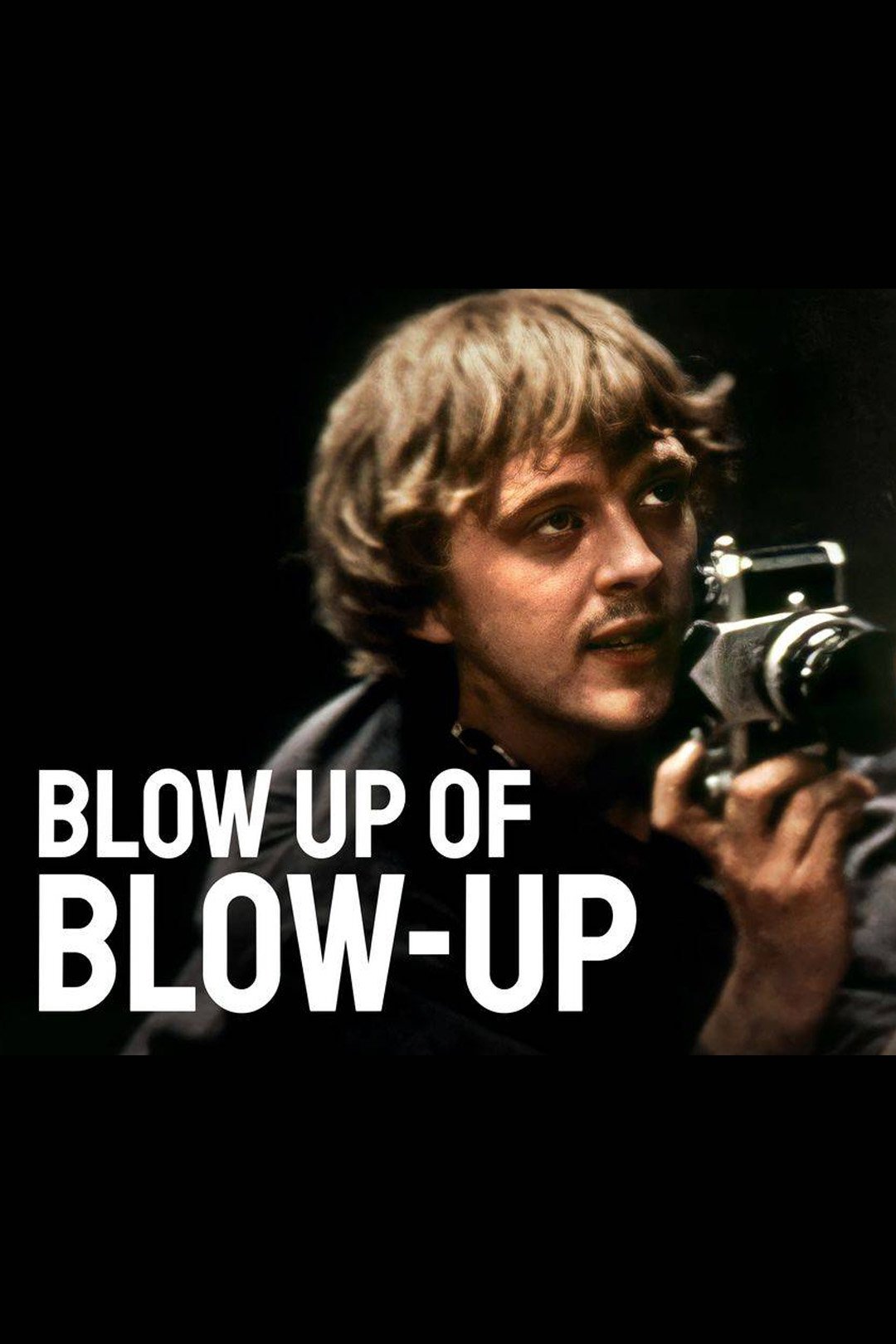
The Historical Era of the Film
There’s always something paradoxical for me about watching “Blow-Up (1966),” because it so expertly captures the flavor of its own production era in ways that, decades later, seem almost uncanny. When I immerse myself in its world, I’m reminded that its creation fell right in the midst of a rapidly shifting decade—one that was as unpredictable as it was transformative. The 1960s in Britain were marked by profound changes: the aftermath of postwar austerity, the waning influence of the British Empire, and the emergence of a bold new youth culture. What particularly strikes me is how these years saw the intersection of political unrest and cultural emancipation. The economic recovery following the Suez Crisis had transformed London into a teeming center of creativity and excitement. Yet, beneath the surface prosperity, social hierarchies and traditional values were being quietly but inexorably challenged.
Politically, I feel the film is shadowed by larger shifts occurring both within the United Kingdom and abroad. The specter of the Cold War loomed over European consciousness, influencing much of the art and literature of the period. British society in 1966 was still contending with its place in a world that was quickly moving beyond colonial power structures—the regular news cycle was filled with independence movements across Africa and Asia, while the Vietnam War dominated headlines and public debate. Against this backdrop, London became a focal point for new voices, radical ideas, and, as “Blow-Up” so intimately depicted, a unique kind of urban alienation.
If I reflect on the economic context, it’s clear to me that consumerism and affluence were reshaping British life. The development of a mass market for fashion, music, and photography gave rise to what I often see described as the “Swinging Sixties.” Fashion designers and rock bands were not just entertainers—they were symbols of seismic change. And the city itself, with its boutiques, clubs, and energetic youth, seemed to pulse with possibility. Yet, the sense of upheaval and uncertainty was never far away. Old class distinctions remained even as new forms of status and celebrity began to take shape.
Socially, these were years of both liberation and contradiction. Discussions of sexuality, race, and gender were entering the public sphere with a new boldness, but not always with widespread acceptance. For me, the selective openness of the era—the sense that some barriers were falling while others endured—colors every frame of “Blow-Up.” Antonio’s lens captures both the excitement and ennui that marked London in these critical years.
Social and Cultural Climate
The social climate of mid-1960s London, as I see it, was marked by its own peculiar cocktail of freedom and anxiety. Walking through “Blow-Up,” I’m consistently struck by the vivid documentation of a society that’s both thrillingly permissive and subtly adrift. This was a city and a culture intoxicated by newfound liberties: the rise of youth-driven style, sexual exploration, and prolific artistic experimentation. It was an age when what counted as avant-garde was also often what was found in the streets, in fashion shoots, and in pop music.
What makes this period especially fascinating to me is how quickly the boundaries of taste, class, and even morality were shifting. Long-standing conventions governing personal behavior were fracturing, and debates about drugs, sex, and art were migrating from the margins to the mainstream. The sexual revolution felt urgent and real, yet it often carried with it a lingering sense of ambivalence or anxiety, especially for those whose lives didn’t fit the new narratives being created by the media. London’s “mod” culture, along with the embrace of modernism in art and architecture, represented both a break from the past and a sometimes uneasy negotiation with tradition.
Culturally, I see this as a moment when photography, music, and visual art started to merge in remarkable ways. One reason “Blow-Up” still resonates for me is its precise depiction of the fashion photographer’s world—one that existed at the crossroads of celebrity, commerce, and art. There was fascination with surfaces, with the act of looking, and with the increasing permeability between high and low culture. The Beatles, The Rolling Stones, and figures like David Bailey were not just pop phenomena—they were cultural touchstones that defined the city’s international image.
With lingering tensions over race, class, and the Vietnam War, the cultural climate was anything but settled. In this roiling environment, I see the seeds of both liberation and discontent: the hunger for authenticity, the questioning of authority, and the sense that the collapse of one order had yet to produce a wholly convincing replacement.
How the Era Influenced the Film
When I watch “Blow-Up,” I’m most fascinated by how deeply it’s suffused with the sensibilities—and even the contradictions—of its moment. The story couldn’t exist apart from the historical context of 1966, with its heady mix of creative openness and existential doubt. For me, the film’s central character, a fashion photographer careening between alienation and intense engagement, embodies the restless curiosity that was so palpable in the arts during this period.
I’m always aware of how Italian director Michelangelo Antonioni, working in London, tapped directly into the zeitgeist of British society in transition. The sense of spontaneity and improvisation, the obsession with images and surfaces, the ambiguous morality—all feel like direct products of an environment where traditional certainties were collapsing. Antonioni’s interest in ambiguity, which some critics called existential, feels like a direct response to the cultural climate of fractured certainty and shifting identity. The way the camera lingers on urban landscapes, stylish apartments, and fashionable parties is, in my view, as much a document of London’s cultural renaissance as it is a narrative device.
The film’s use of music also reflects the era’s embrace of pop experimentation and generational change. Herbie Hancock’s jazz-influenced score and the appearance of bands like The Yardbirds make the film not just about the 1960s, but practically a part of them—alive, improvisational, and occasionally anarchic. Watching these moments, I’m reminded that the boundaries between cinema, photography, and pop culture had never seemed so porous or so inviting.
- Explosion of youth culture in London
- Emergence of modern art and photography
- Increasing questioning of authority
- Global anxieties: Cold War and Vietnam
To me, “Blow-Up” is an example of how the production era can shape a film down to its smallest details. The depiction of parties, casual drug use, and sexual freedom is both a snapshot and a critique of the moment. The uncertainty and detachment that infuse the film, reflected in both pacing and character, speak to a broader societal uncertainty—this was not just background, but the very air the characters breathed. When I think of the flimsy boundaries between reality and illusion in the narrative, I see the unease of a decade that didn’t fully trust the surfaces it was so busily inventing.
Audience and Critical Response at the Time
Whenever I examine the film’s contemporary reception, I’m struck by the jolt it gave to both audiences and critics in 1966. For viewers, “Blow-Up” arrived like a blast of cool, subversive air. The British public—accustomed, perhaps, to more restrained or moralistic films—found Antonioni’s depiction of swinging London both intoxicating and destabilizing. I’ve always been intrigued by reports of how mainstream audiences responded with a mix of fascination and discomfort to the film’s frank portrayal of sexuality, its ambiguity, and its refusal to offer neat resolutions.
On the critical side, I notice a similar fascination mixed with unease. Major critics praised the film’s artful direction and visual innovation, and many hailed it as a defining statement about the era’s sense of alienation and spectacle. The film’s obscurity and indeterminacy were frequently lauded as virtues—markers of a serious, modernist work—though, inevitably, some viewers found the lack of resolution infuriating. The depiction of the mod subculture, fashion photography, and sexual liberation was both praised for its realism and criticized for what some saw as emptiness or amorality.
It’s important for me to underline that “Blow-Up” was also a cause célèbre for its explicit content. The film played a crucial role in the gradual relaxation (and, at times, open confrontation) of the censorship regimes governing both British and American cinema. The controversy surrounding its nudity and sexual themes added to its allure and helped it become both an international success and a lightning rod for debates around morality and film art. The shockwaves it sent through established norms were felt not just among cinephiles, but in the wider press and political sphere as well.
What really stands out for me is how, from its debut, the film’s place at the intersection of art and contemporary life made it an almost instant subject of cultural debate. It wasn’t just seen as a movie, but as a semi-official report on what was happening in the world’s creative capital at that moment—a capsule of a specific moment that invited instant comparison, imitation, and argument.
Why Historical Context Matters Today
Whenever I return to “Blow-Up,” I realize anew just how much understanding its historical context deepens my appreciation of its innovations and uncertainties. The film is so much a child of its era that its mood, narrative style, and even its visual language seem to speak directly to the upheavals of 1960s London. If I try to watch it without the knowledge of what was happening politically or socially at the time, I miss the full measure of its daring and its commentary. Every character’s alienation, every frame suffused with ambiguity, feels sharper when I recall the cultural forces that shaped the film’s creation.
For me, recognizing the way the film mirrors the skepticism toward established authority, the fluidity of identity, and the fascination with image over substance gives it a richness that would otherwise be flattened by time. The 1960s were a laboratory for modernity—a moment when the old world was dissolving and the future remained profoundly uncertain. “Blow-Up” isn’t merely set in this moment; it embodies it, and to overlook this is to miss so much of what makes the viewing experience distinctive.
It’s also clear to me that many of the film’s concerns—about surveillance, reality, and the tenuous line between authenticity and performance—are only more acute today. The historical context isn’t simply an academic backdrop; it supplies the lens through which “Blow-Up” continues to challenge audiences. The energy, confusion, and contradictions of its era still echo in our own, making its historical framework both profoundly relevant and intellectually rewarding. I find the interplay between history and art here not only instructive but enduringly vital.
After understanding the factual background, you may want to see how this story was received as a film.
🎬 Check out today's best-selling movies on Amazon!
View Deals on Amazon