
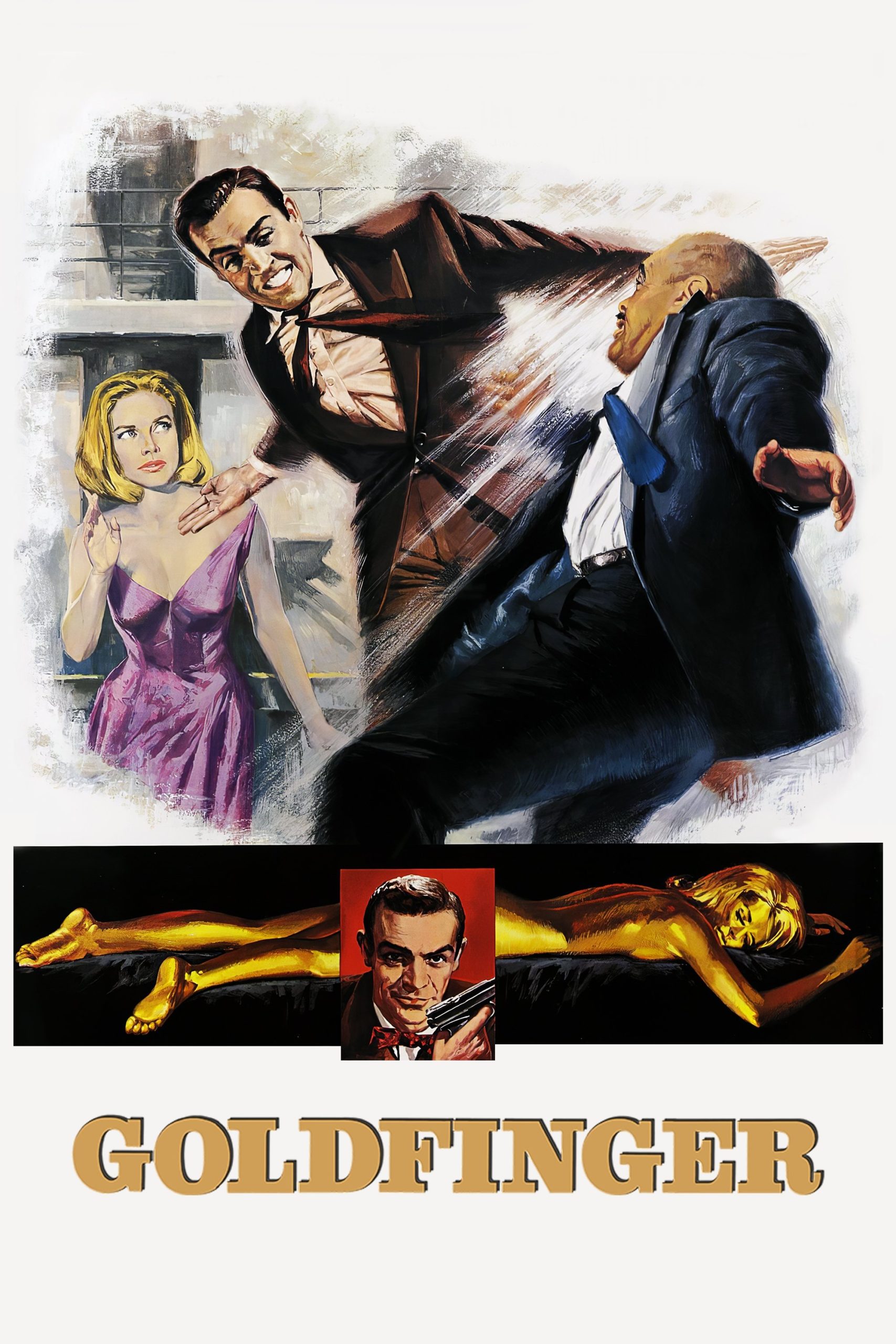
The Historical Era of the Film
Whenever I think back to the moment when Goldfinger (1964) first appeared in cinemas, I find it hard not to be fascinated by the specific texture of the era that birthed it. The early 1960s were full of contradiction, turbulence, and optimism—a Cold War world that seemed perched between looming disaster and boundless possibility. At the heart of the production era was the chilling tension between the world’s two superpowers, the United States and the Soviet Union. I always feel that any analysis of Goldfinger must acknowledge the shadow cast by the Cuban Missile Crisis of 1962, which had only just abated. Nuclear brinkmanship and espionage dominated headlines, and the arms race underscored daily life for millions.
From an economic perspective, the Western world—especially Britain and the United States—was experiencing an afterglow of post-war prosperity. Whenever I revisit photographs and newsreels from 1964, I’m struck by the ubiquity of consumer goods: flashy cars, new gadgets, household appliances. A new kind of affluence was reshaping daily existence, and the middle class was not only aspiring but acquiring, with all the excitement and anxiety that entailed. London, where much of the film was produced and set, reveled in a reputation as the world’s trendsetting capital, yet the British Empire continued its quiet retreat from colonial power. I sense a kind of double vision: confidence and decline, all tangled together.
Social conditions of the time were also laced with unpredictability. The so-called “Swinging Sixties” had begun to bloom, and many societies—Britain included—faced generational clashes over race, gender, and sexuality. Yet in 1964, the full force of these movements had not yet hit. Many old attitudes clung stubbornly to the present. I see Goldfinger, therefore, as a product of transitional energies: conservative in its morality, dazzling in its embrace of consumer modernity, shadowed by the anxieties of a perilous epoch.
Social and Cultural Climate
When I engage with Goldfinger as a cultural historian, I always notice how deeply the film reflects the dominant social climate and cultural energies of its time. Bond’s world is both a wish-fulfillment fantasy and a mirror of contemporary norms, especially as Western societies renegotiated what it meant to be modern. The early 1960s carried an aura of technological optimism. The “space race” captured imaginations, and so did burgeoning innovations in manufacturing, design, and mass media. I find Goldfinger brimming with this enthusiasm—the gadgets, the jets, the laser beams—each one a testament to society’s faith in technology as a force for security and spectacle.
I can’t help but observe also the tensions that persisted beneath the surface. Gender roles remained tightly circumscribed, even as the first tremors of second-wave feminism began to stir. The Bond persona itself—glamorous, assertive, commandingly masculine—speaks to a dominant ideal that would soon be challenged. Audiences at the time celebrated Bond’s urbanity but also absorbed, unconsciously or not, the gender and class hierarchies the character reinforced. When I see the way Goldfinger’s female characters are portrayed, I sense the age’s conflicting attitudes: a craving for both novelty and reassurance, for order and for excitement.
Cultural trends like the rise of youth culture—with its music, its fashions, its irreverence—were also in full swing by 1964. The Beatles were busy transforming not just sound but also sensibility, and a sense of playful risk was in the air. Still, the era’s tensions around race and colonialism surface gently within the film’s boundaries. Bond operates with an air of British confidence in global spaces, yet I always notice how the film never quite acknowledges the changing geopolitical realities beneath that bravado. The world was growing smaller but also more complicated, and Goldfinger’s global escapism feels both authentic and fragile in that context.
- Ongoing Cold War tensions shaped public paranoia.
- Technological advancements inspired both awe and anxiety.
- Shifting gender roles began challenging traditional norms.
- Consumer culture elevated material aspirations and identity.
For me, the social and cultural climate that Goldfinger inhabits is not simply background; it’s the very engine of the film’s energy, attitude, and its ambivalent brand of charm.
How the Era Influenced the Film
Whenever I revisit Goldfinger, I’m perpetually struck by the ways its story, characters, and even its production choices are inflected by the era’s urgent preoccupations. The entire Bond formula is, in itself, a reflection of Cold War anxieties—danger, espionage, supervillains with global ambitions—all deeply familiar to those living in a world of clandestine operations and political uncertainty. For me, Goldfinger channels the intense desire of the time for individual heroes capable of outsmarting faceless threats. The notion of a singular British agent triumphing in the shadowy recesses of international politics reveals the faith and fragility of a world divided by ideological extremes.
The era’s consumer boom is baked into Goldfinger’s DNA. I always marvel at how the film showcases the very latest in luxury: from Aston Martins with ejector seats to the decadent interiors of Fort Knox. These aren’t just embellishments for style’s sake; they stand as emblems of modern prosperity and ingenuity. When I analyze Goldfinger, I see how technological progress is given a glamorous, almost utopian veneer—the idea that gadgetry and wealth might protect us from chaos. Even Goldfinger himself, with his obsession over gold and wealth, reflects a contemporary anxiety about economic security and the shifting rules of global capital. The film’s plot—centered on a grand, imaginative scheme to destabilize the world’s gold reserves—speaks directly to global financial uncertainties of the early 1960s.
I’ve also noted how the depiction of women and minorities is shaped by the inherited values of the period. The “Bond girl” archetype, so glossy and yet so circumscribed, embodies the complex intersection of liberation and objectification that typified the decade’s gender discourse. Pussy Galore, one of the era’s more infamous character names, encapsulates both a certain progressive daring and a fundamental conservatism about women’s roles—I find this tension endlessly revealing. Meanwhile, Goldfinger reveals little real engagement with the rapidly changing global order, rendering its international cast of characters through a lens of British wit and Western confidence that feels, with hindsight, both knowing and naïve.
Even in terms of production, I always notice the bold color palette—thanks to the relatively recent advent of color film—as well as the ambitious set designs and special effects that spoke to a new willingness to dazzle. In my view, this energy was the direct result of a historical moment when the spectacle was inseparable from success. The filmmakers recognized the era’s appetite for the unusual and indulged it, giving Goldfinger a pulse that still crackles today.
Audience and Critical Response at the Time
Reflecting on how audiences and critics responded to Goldfinger during its initial release always gives me insight into the cultural psyche of the mid-1960s. When I look at original reviews and box office figures, I see that Goldfinger wasn’t just a hit; it was a phenomenon. Audiences seemed hungry for escapism, and the film delivered it in spades. I’ve read firsthand accounts of moviegoers stunned by the sleekness of the production, the sly humor, and the relentless pace. It felt, by all accounts, like something new—less an old-fashioned thriller and more a glamorous event, brimming with possibilities for what cinema could achieve.
The response from critics was largely enthusiastic, although tempered by some skepticism. Many lauded the film’s technical sophistication—a rare accomplishment in the British film industry at the time. I notice they were especially appreciative of the confident direction, the clever dialogue, and the inventive special effects, all of which seemed to announce that British cinema was ready to play on a global stage. Some critics, however, did express reservations about the film’s depiction of women or the “cartoonish” spectacle of Bond’s heroics. Yet for most, these criticisms were beside the point. The sheer excitement and style won the day.
I often think about how the real breakthrough was Goldfinger’s appeal to a broad international audience. The film’s blend of British sophistication and Hollywood energy resonated across boundaries. People crowded theaters not just in Britain or North America, but all over the world, making James Bond a synonym for modern adventure and cosmopolitan cool. There was, from what I can gather, a tangible sense of the world shrinking—of audiences sharing a collective experience shaped by spectacle and aspiration.
Even at the level of marketing and merchandising, Goldfinger triggered a frenzy that would become standard for later blockbusters. From toy Aston Martins to soundtrack records, a whole ecosystem of products spun off from the film—evidence, to me, of how deftly the movie captured the moment’s appetite for novelty, glamour, and connectivity.
Why Historical Context Matters Today
I always find that understanding the historical context of Goldfinger enriches my appreciation in ways that go well beyond cinematic technique. For me, the film is not just an adventure—the very shape of its story reveals something crucial about the anxieties, hopes, and contradictions of its time. When I see Bond grappling with existential threats in a world of abundance and fragility, I recognize the deep imprint of the Cold War on cultural imagination. This knowledge helps me see why the film emphasizes spectacle, security, and individual heroism over collective action.
My awareness of the era’s social dynamics—its gender politics, its class structure, its hopes for technology—lets me engage with Goldfinger as a living document, not just a stylish entertainment. I can trace how the film’s success was bound up with the world’s longing for order amid chaos, with a desire to believe in the power of wit and gadgetry to fend off disaster. The lavishness, the bravado, and the cheek of Goldfinger all become more meaningful when I remember the insecurities shadowing the 1960s: nuclear holocaust, shifting economies, fading empires.
Today, when I observe the ongoing influence of the James Bond franchise—not merely as a pop-cultural juggernaut but also as a symbol of Western modernity—I’m reminded that its appeal is inseparable from the historical conditions that forged it. Modern viewers, if they want to truly savor what Goldfinger offers, benefit from knowing not just what happens in the film, but why it mattered in that precise moment. The gestures, the jokes, and the anxieties threaded throughout the film all gain new resonance with a deeper understanding of their birth in a world balancing on the knife-edge of change.
By paying close attention to Goldfinger’s historical context, I can navigate its surface pleasures and its deeper ironies. I see not only what the film meant to its first audiences, but how it continues to echo—challenged and celebrated—in today’s popular imagination. Recognizing the context makes Goldfinger not just a landmark film, but a continuous conversation between past and present, anxiety and aspiration, fantasy and the world as it really was.
After understanding the factual background, you may want to see how this story was received as a film.
🎬 Check out today's best-selling movies on Amazon!
View Deals on Amazon