
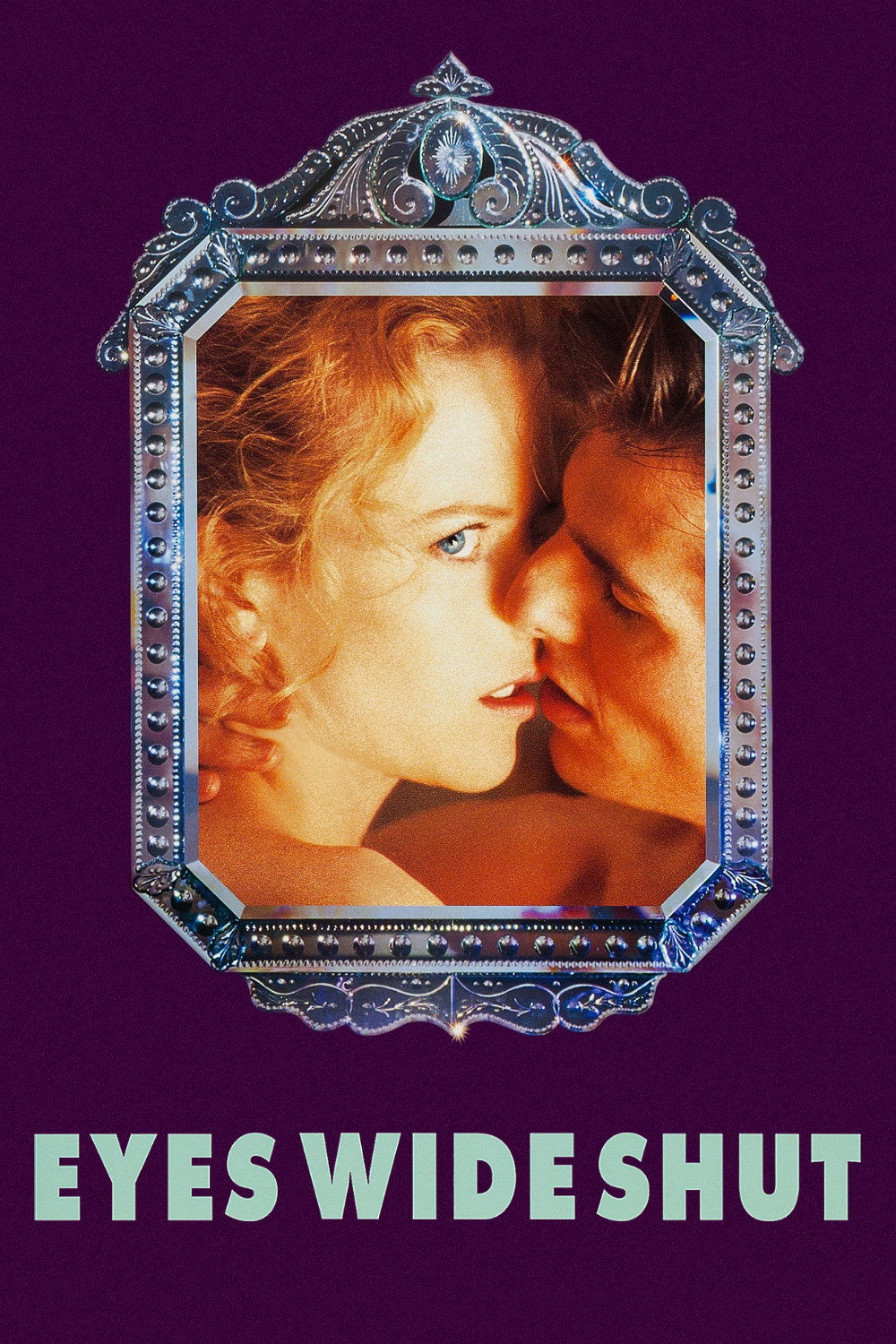
The Historical Era of the Film
Seeing Eyes Wide Shut (1999) for the first time, I was struck not only by the unsettling beauty of its imagery, but by the ways it felt so tangled in its own moment—the very end of the twentieth century, just as the world marched toward the new millennium. In this film, I sensed a unique reflection of the waning years of the 1990s, a time marked by surface prosperity in the United States and Western Europe, coupled with a kind of restless underside that I find crucial to any understanding of its historical context. The political climate during the production era was shaped by the presidency of Bill Clinton, whose tenure blended the optimism of economic growth with mounting scandals and social anxieties. The era was economically flush; stock markets soared, unemployment was low, and the rapidly expanding tech sector was fueling widespread speculation. Yet, beneath that apparent stability, there was an unmistakable sense of uncertainty about what the future would hold, particularly as the year 2000 approached, with its attendant Y2K fears and debates about the digital revolution.
Socially, I saw a world becoming more cosmopolitan and interconnected, yet also more fractured in certain ways. The rise of the internet was just beginning to reshape how people related to each other and to the wider world, introducing new forms of alienation even as it promised greater connectivity. At the same time, the lingering consequences of the Cold War still colored the geopolitical context. Americans had recently experienced the supposed “end of history,” but I always felt the atmosphere of subtle disquiet, as though the absence of grand ideological struggles left a void filled by personal anxieties and the pressures of capitalism, consumption, and image. This was the era in which Stanley Kubrick completed his career—a point that, in my mind, highlights how Eyes Wide Shut operates as a product of, and a commentary on, its precise historical moment. The end of the 1990s offered a paradox: a superficially buoyant society haunted by deep undercurrents of disillusionment and existential doubt. That paradox forms the background against which I always situate the film.
Social and Cultural Climate
When I think about the social and cultural climate that gave rise to Eyes Wide Shut, I can’t help but dwell on the shifting currents of gender relations, sexuality, and the changing landscape of marriage and intimacy during the late 1990s. The decade was awash with conversations about personal fulfillment, therapy culture, and the search for authentic identity amid mounting pressures to perform happiness and success. This was a time when so-called sexual liberation brushed up against the prudery of moral panics; the Clinton-Lewinsky scandal, which gripped the United States in the late 1990s, exemplified an era obsessed with both voyeurism and public shaming. For me, this was a society forever negotiating between permissiveness and surveillance—where private desires increasingly became fodder for public titillation or outrage.
Another aspect I can’t ignore is the growing influence of globalization and the impact of media saturation. Cable television, tabloid journalism, and the early internet started to blur boundaries between public and private selves, encouraging a culture of constant self-display but also secret escapism. I also witnessed a mainstreaming of psychological discourse—self-help books, therapy talk, and the language of inner journeys became tools for self-exploration and anxiety management. In that ferment, the institution of marriage underwent a subtle reappraisal. Divorce rates had peaked earlier in the decade, and couples struggled with competing ideals of tradition versus the promise of open, emotionally honest partnership. I view the film as emerging from these fraught dialogues—between old inhibitions and evolving desires, fear of intimacy and longing for connection.
- The rise of therapy culture and self-exploration
- The clash between sexual liberation and public morality
- Media sensationalism and changing privacy norms
Finally, I must reflect on the broader cinematic and cultural trends that loomed in the background. The 1990s witnessed both a booming independent film movement and a resurgence of big-budget studio productions, fueling restless experimentation alongside renewed conservatism in the film industry’s gatekeepers. Directors and audiences alike were exploring boundaries—formally, thematically, and morally—but always against the reality of an entertainment business nervous about alienating mainstream viewers. I feel these contradictions echo throughout Eyes Wide Shut’s carefully orchestrated ambiguity and provocation.
How the Era Influenced the Film
As I analyze the film’s relationship to its own time, I can’t separate Eyes Wide Shut from late-1990s anxieties around identity and intimacy. The historical circumstances led to a narrative infused with uncertainty, both for its characters and its audience. The fact that Stanley Kubrick chose to adapt Arthur Schnitzler’s Dream Story, a novella from early twentieth-century Vienna, but updated it for fin-de-siècle New York, speaks volumes to me about his resolve to connect old world discontents to modern malaise. The film’s protagonists—portrayed by Tom Cruise and Nicole Kidman—navigate a landscape of apparent affluence and sexual opportunity, yet are beset by doubts and insecurities that mirror the era’s own uncertainties about selfhood, fulfillment, and fidelity.
The film’s famously protracted production, spanning from 1996 to 1998, mirrored the obsessive attention to detail associated with Kubrick, but for me, it also symbolized the broader cultural sense of stasis mixed with anticipation. These were years when the rhythms of daily life were being transformed by technology, but the true implications had yet to become clear. The tension between the seductive surfaces and the lurking unease that colors the film’s visual style seems to channel, almost uncannily, the anxieties I remember from that moment in history—the sense that what appeared stable and pleasurable was often a fragile construction subject to collapse.
Legal and social taboos around sexuality, secrecy, and surveillance clearly informed the film’s motifs and atmosphere. The very notion of elite, secret societies and ritualized behaviors echoed contemporaneous public debates about conspiracy, exclusivity, and hidden power structures. For me, the specter of surveillance that runs through the film reflects the dawning realization that privacy and anonymity were slipping away in the digital age—a reality that seemed both liberating and deeply threatening at the time. I view the film’s obsession with masks and masquerades as a direct outgrowth of a culture preoccupied with image management and the negotiation of multiple, often conflicting, identities. The late-1990s preference for irony, skepticism, and ambiguity provided a fitting foundation for Kubrick’s last, and in many ways most enigmatic, film.
Audience and Critical Response at the Time
Recalling the premiere and initial reception of Eyes Wide Shut remains vivid in my mind. Audiences, primed by the star power of Tom Cruise and Nicole Kidman and the legendary mystique surrounding Kubrick, brought their own late-1990s expectations for what the film would deliver. Many I spoke with, or whose reactions I read about, seemed both confounded and fascinated by the film’s refusal to offer easy answers or graphic titillation, despite the pre-release buzz about its sexual content. Mainstream viewers often found the pacing and tone oddly dreamlike or chilly, out of step with popular thrillers or romances of the time. Nevertheless, I sensed a core of excitement—a hunger for a film that dared to be adult, ambiguous, and psychologically dense as the century ended.
Critics, too, appeared divided, a response for which I have great sympathy. Some lauded the film as a masterpiece of uncertainty and a fitting capstone to Kubrick’s career, responding to its visual style and subversive energy. Others derided it for what they saw as emotional sterility or self-indulgence. I read countless reviews that seemed haunted by the question of what Kubrick really “meant,” or whether he had somehow lost touch with the changing tastes and tempos of popular cinema. Audience reception, measured in ticket sales and word of mouth, reflected this ambivalence: Eyes Wide Shut was a commercial success, but not the blockbuster some had anticipated. I believe the film’s stark departures from genre conventions and its enigmatic use of sexuality challenged many viewers’ expectations, yet also established its reputation for complexity and depth.
In private conversations with peers at the time, I found a recurrent theme—a lingering sense that the film was “about” something crucial, even if that something was hard to put into words. The movie quickly became a touchstone for debates about the direction of contemporary cinema, the limits of mainstream storytelling, and the future of adult subject matter in a rapidly shifting media landscape. Its legacy, for me, is inseparable from that original reaction: a mix of confusion, intrigue, admiration, and impatience, all intensified by the knowledge that this was Kubrick’s swan song, released just after his death and forever colored by that loss.
Why Historical Context Matters Today
Whenever I revisit Eyes Wide Shut years later, I find that understanding its historical context only deepens my appreciation for what Kubrick achieved. The film feels like a time capsule from the final gasp of the twentieth century—its obsession with secrecy, desire, and facades a record of more than just private longing, but of a society on the brink of massive transformation. To me, grasping the social and political forces of the late 1990s, be it the explosion of the internet, the last flush of economic optimism, or the growing sense of psychological and social “performance,” allows the film’s ambiguity to coalesce into something more meaningful and immediate.
I often remind students and colleagues that without this context, the film’s emotional temperature and narrative hesitations might seem gratuitous or outdated. But in its careful recreation of a world in flux—poised uneasily between the analog and digital, the traditional and the transgressive—Eyes Wide Shut reveals the rootlessness and ambivalence that defined an era perched on the edge of the millennium. That, in my opinion, turns the film into a vital document of pre-millennial culture, valuable not only as an artifact of Kubrick’s genius but as a prism through which to understand the period’s anxieties and aspirations.
I also find it crucial to recognize the film’s unique intersection of historical currents: the last great release of a legendary director, the star-culture of 1990s Hollywood, and a culture teetering between hope and fear as it confronted new technologies and shifting morals. Each time I reflect on its intricate surfaces and disturbing undertones, I see more clearly how its historical context shaped not just its style, but its very soul—a testament, for me, to the power of film to encode the spirit of its own time, even as that time slips ever further into the past.
After understanding the factual background, you may want to see how this story was received as a film.
🎬 Check out today's best-selling movies on Amazon!
View Deals on Amazon