
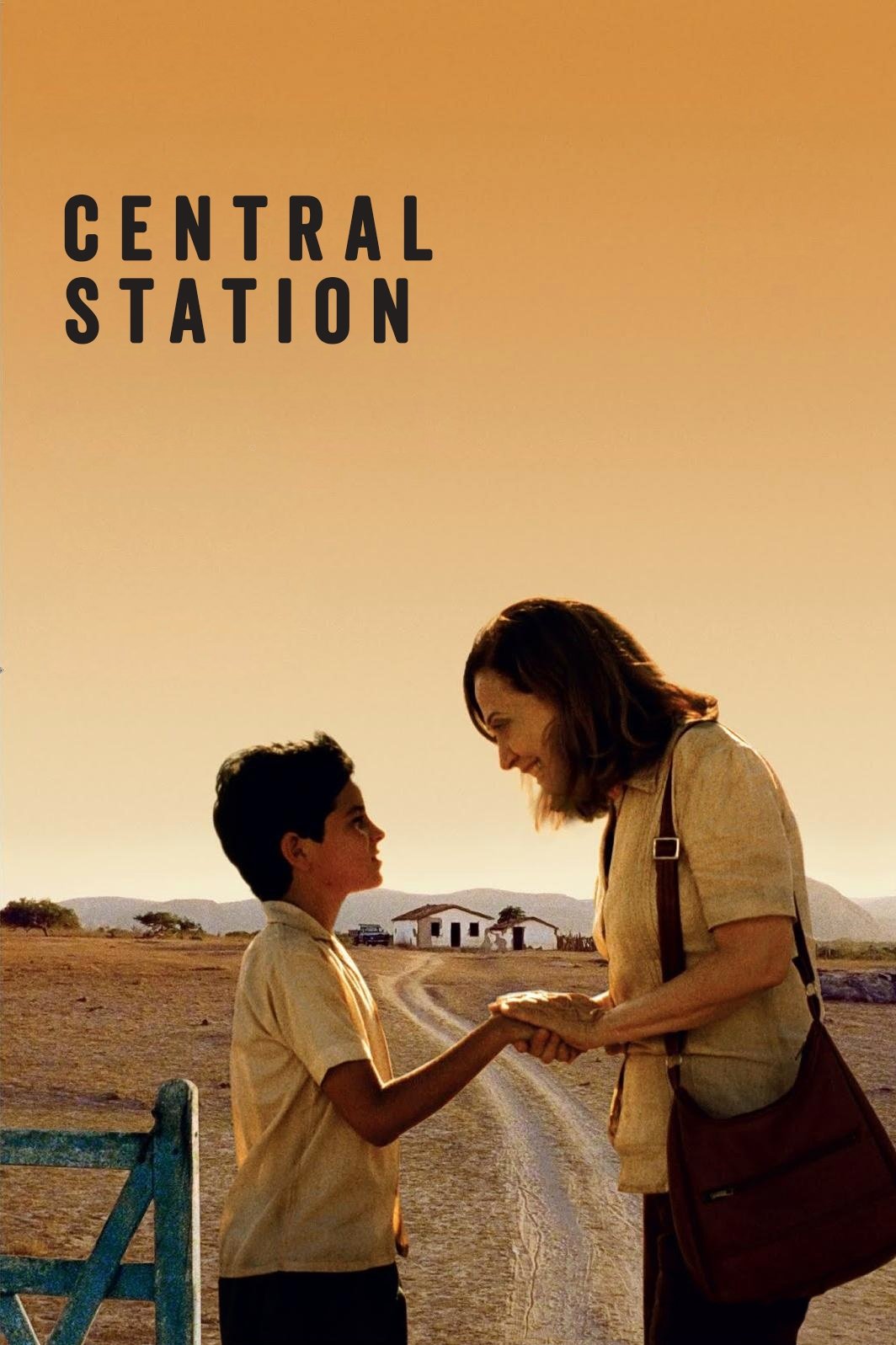
The Historical Era of the Film
Every time I revisit Central Station (1998), I’m instantly reminded of Brazil’s late twentieth-century crossroads—a period that left deep imprints not just on society, but on every frame of the film. For me, the experience of watching it transcends the story; it’s an immersion into the country’s reality at the tail end of the 1990s. That era was anything but stable for Brazil. A nation marked by contrasts—vast poverty amid emerging prosperity and modern ambitions—was grappling with the aftermath of years under military dictatorship. The late 1980s had only just returned democracy to the country, and the 1990s were brimming with both promise and discord. As I see it, this was a time when political reforms and economic turbulence walked hand-in-hand.
From my perspective, the economic climate was particularly volatile. I remember reading about how successive governments attempted to curb hyperinflation—a crisis so severe that it defined the country’s daily life. Even with President Fernando Henrique Cardoso’s Real Plan stabilizing the currency in 1994, the shadow of hardship lingered. Unemployment, glaring inequality, and the struggle to modernize left millions feeling left behind. The political realm, too, was in a state of flux, moving towards openness yet hindered by corruption and lack of infrastructure for the poor. It’s no surprise, then, that these effects seeped into culture, shaping the aspirations and anxieties of an entire generation—one that the film captures so poignantly.
What stands out for me is the resilience of the Brazilian people during this time, manifesting socially in debates over national identity and the place of the dispossessed within a changing landscape. Urban migration, the stark division between city centers and the neglected interior, and the uptick in street children served as somber backdrops to public life. These weren’t just headlines; they were the lived reality for many families. As I see it, the intersections of these political, economic, and social forces set the stage for stories that feel urgent, honest, and deeply connected to real events—qualities I find reflected throughout Central Station.
- Transition from military rule to democracy
- Rampant economic instability and hyperinflation
- Persistent poverty and social inequality
- National debates over identity and modernization
Social and Cultural Climate
The social climate of late-90s Brazil has always fascinated me, particularly in relation to how films like Central Station articulate it. The cultural undercurrents of that era were influenced by the glaring gap between wealth and poverty, the ubiquity of violence in certain urban centers, and the changing understanding of what it meant to be Brazilian. I sensed that the country was in a state of negotiation—trying to shed its old skin but not quite able to escape the weight of the past. It was a time when urbanization redefined the landscape, and with it, huge swathes of the population became almost invisible as society prioritized cosmopolitan progress over rural concerns.
If I were to pinpoint a dominant social attitude, it was this uneasy coexistence of hope and cynicism. I often saw—and still see—families torn between loyalty to their roots and a desire for opportunity, resulting in massive internal migration. The explosion of favelas and the omnipresence of homeless children in city squares deeply moved artists, writers, and filmmakers of the era. This was the Brazil captured nightly in the news headlines: children hustling for survival on busy train platforms, ordinary people seeking dignity within imperfect systems. Central Station, in my view, doesn’t just reflect these realities; it aches with them.
Culturally, the late 90s marked a renaissance in Brazilian cinema, sometimes referred to as the Retomada. After a decade-long hiatus due to funding collapses in the 80s, filmmakers began reclaiming their narratives with renewed vigor. I believe this climate of creative resurgence fueled not just technical boldness, but an authenticity that resonates even today. There was an increased appetite among audiences for films exploring real social issues—perhaps a reaction to decades of censorship and artistic repression.
All around me, the celebration of regional diversity became more pronounced. Music, art, and literature started reflecting the voices of the marginalized in more visible ways. Yet, the ever-present question of who gets to be represented—and whose stories matter—lingered. These tensions shaped the way communities saw themselves, and I’m convinced it changed the stories they chose to tell, on and off screen.
How the Era Influenced the Film
I see the fingerprints of this era all over the DNA of Central Station. From my vantage point as someone who studies both cinema and history, it’s impossible to ignore how the 1990s social and political atmosphere gave shape to the film’s structure, setting, and even casting. For starters, the film’s decision to turn a weathered train station in Rio de Janeiro into its emotional and narrative core makes absolute sense against the backdrop of urban disarray and migration of the period. The crowded platforms and throngs of anonymous faces evoke for me a mixture of anxiety and possibility—hallmarks of Brazil’s national mood at the time.
The characters themselves seem molded by the socioeconomic constraints of the late twentieth century. Dora, the film’s weathered protagonist, feels like an embodiment of a generation caught between memory and pragmatism; I interpret her as channeling the uncertainties of post-dictatorship Brazil. Josué, the orphaned boy, carries with him the specter of the meninos de rua—the street children who became symbolic of national crisis and resilience during this period. The film’s road journey from Rio to the arid Northeast mirrors the real-life migrations of countless families searching for ties and identity amid rapid modernization. When I follow these characters, I feel as though I’m tracing a path through the anxieties and hopes of the era itself.
In production terms, the Brazilian film industry’s reawakening was critical. After the drastic decline in funding and infrastructure during the 1980s, the mid- to late-90s saw a shift: new support mechanisms, co-productions, and international interest allowed stories that had been silenced to reemerge. I’m aware that Central Station’s international funding and collaboration with global distributors were products of this period of opportunity, allowing the film a polish and reach that earlier Brazilian works often lacked. This era’s emphasis on realism—a desire to show the country’s ‘true’ faces rather than romanticized images—comes through in its naturalistic cinematography and use of non-professional actors in supporting roles.
For me, the film’s narrative choices—its lingering scenes, use of silence, and honest portrayal of rural and urban poverty—are creative decisions rooted in historical necessity. They’re not just aesthetic flourishes but responses to a national urge to confront the past, grapple with inequality, and search for connection amid the noise of transformation. The realism, the social casting, and the movement between city and country all point to a film deeply shaped by the Brazil of its time.
Audience and Critical Response at the Time
When I reflect on the reception Central Station received upon its release, I’m struck by how sharply it resonated with both national and international audiences. Within Brazil, I noticed a sense of pride—finally, a homegrown film was telling stories about real Brazilians, with all their struggles and contradictions, rather than pandering to sanitized or stereotypical images. Among those I spoke with in the industry, there was a widespread acknowledgement that the film had managed to achieve a delicate balance between emotional resonance and social critique, something many earlier works had tried but often failed to accomplish. The performances, especially Fernanda Montenegro’s, were hailed as iconic, and it felt like the whole country was rallying behind a rare cinematic export that garnered attention on the world stage.
Globally, critics and festival audiences reacted with fascination and empathy. At the Berlin International Film Festival, I remember the excitement when Central Station took home the Golden Bear—a clear sign that its themes of loss, connection, and the search for belonging spoke far beyond Brazil’s borders. The international press picked up on the authenticity. Reviewers frequently praised the film’s rejection of melodrama, its portrayal of neglected corners of Brazil, and the dignity it afforded to even its most marginalized characters. I sense that, on some level, viewers saw in the film a universal longing for meaning and attachment, albeit told through the highly specific lens of late-90s Brazil.
What I find especially telling is that the film sparked important conversations. Many Brazilian viewers saw their daily lives—so often invisible in mass media—reflected honestly for perhaps the first time. Meanwhile, international critics were moved by a story that refused to exoticize Brazil, choosing instead to confront the contradictions and hardships directly. The critical consensus, as I recall, was overwhelmingly positive: Central Station was seen as a milestone, not only in Brazilian cinema but in world cinema. The accolades, including an Academy Award nomination for Best Foreign Language Film, confirmed the arrival of Amazonian realism and social commentary on the global stage.
After understanding the factual background, you may want to see how this story was received as a film.
Why Historical Context Matters Today
Whenever I discuss Central Station with new generations of viewers, I always highlight the importance of understanding its historical context. For me, knowing the circumstances that shaped the Brazil of the late 20th century fundamentally deepens my appreciation for what the film accomplishes. The realities of economic crises, social disruptions, and the delicate process of reimagining national identity are not just a historical backdrop; they are interwoven with every element of this film. When I approach the story with this awareness, the motivations and vulnerabilities of the characters become more vivid, and the film’s emotional resonance hits even harder.
Grasping the historical context also prevents me from misreading the film’s intentions. Without an understanding of the lasting shadow cast by dictatorship, the climate of poverty, and the hunger for connection in a fractured society, I might be tempted to interpret Central Station as merely a sentimental road movie. But with context, I see a nuanced argument about the ties that hold people together in times of change, and about the costs of neglect—both personal and collective—that haunt a society struggling for progress. The portrayal of marginalized voices and neglected regions holds a mirror up to Brazil’s persistent inequalities, making it clear that these issues, while rooted in the past, continue to echo into present-day debates.
I find that the film’s power endures precisely because it refuses to turn away from the hardships or flatten its subjects into clichés. The historical context helps me recognize the courage behind such honest storytelling and the unique position that Brazilian filmmakers held in recasting the nation’s narrative during the 1990s. By engaging with the world as it was, rather than as audiences wished it to be, Central Station models a kind of cinematic honesty that I wish more films would pursue.
As a film historian, I’ve come to believe that understanding the world that birthed a film like Central Station is vital—not just for academic interpretation, but for a deeper, more empathetic engagement with its characters and ideas. The social, political, and cultural pressures of its era don’t just shape background details; they animate every choice, every emotional beat. In watching with this perspective, I find myself moved not only by the artistry of the film, but by the resilience of the people and the era it brings to life.
🎬 Check out today's best-selling movies on Amazon!
View Deals on Amazon