
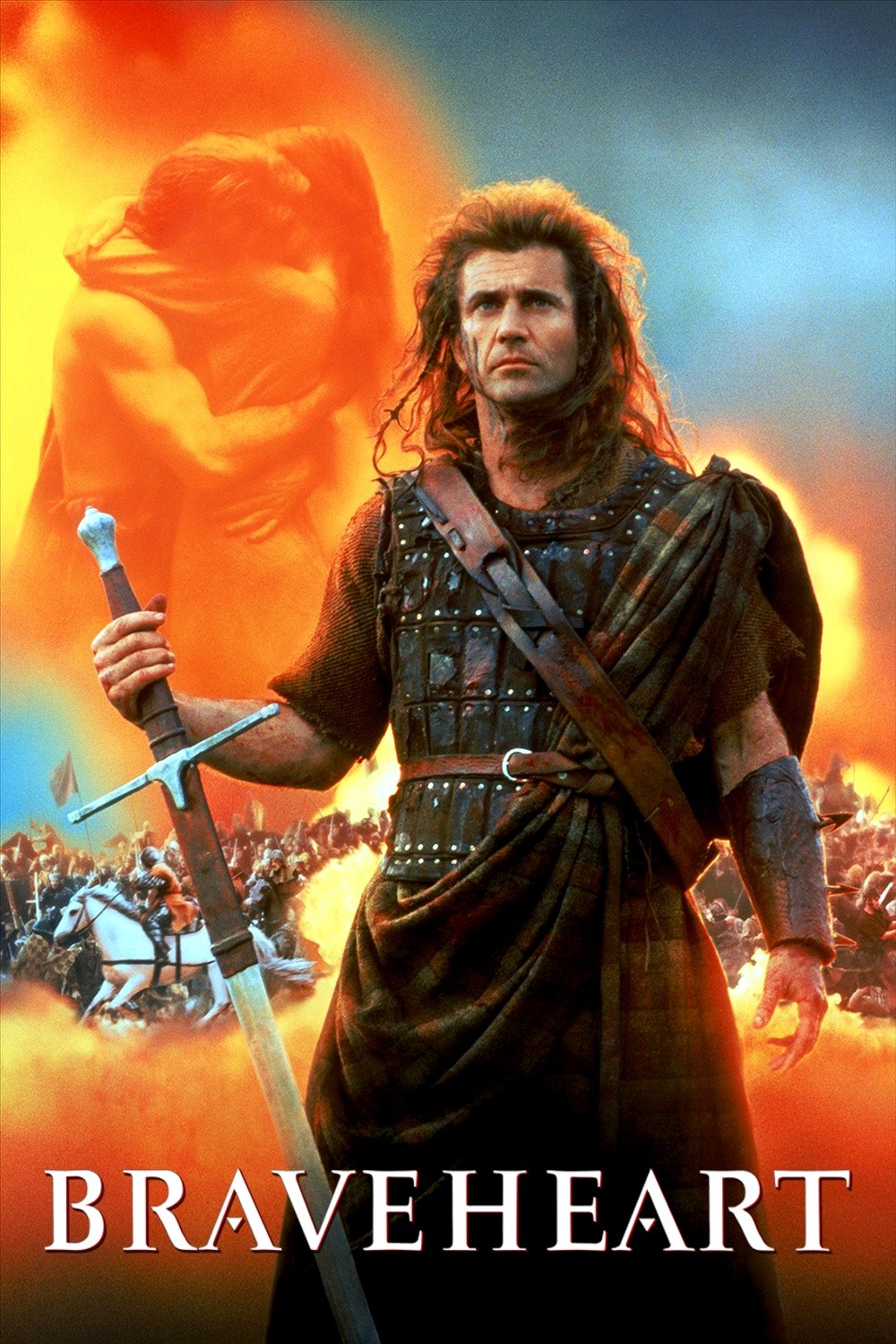
The Historical Landscape
The first time I watched “Braveheart” in the late 1990s, I remember being swept up not just by its sweeping battlefields and extravagant romance, but by an undercurrent of yearning that felt entirely of its moment. By then, the world I inhabited was shifting rapidly: the Cold War had ended, ideological strongholds had crumbled, and both disillusionment and hope seemed to clash daily on television screens. It was an age perched between euphoria and anxiety. Watching Mel Gibson’s take on the Scottish Wars of Independence, I could sense how filmmakers—and by extension, the audiences they courted—were desperate to revisit stories of rebellion, identity, and personal sacrifice.
In this historical context, 1995 feels like a crossroads. The collapse of the Soviet Union was still fresh in collective memory, leaving a world simultaneously elated at the death of old dictatorships and unnerved by loose ends. The rise of global capitalism, turbocharged by the rapid spread of the internet, swept away boundaries. Yet, there was a growing sense that this newfound connectivity came at a cost: eroded traditions, localized identities, and the quieting of dissent in favor of global consensus.
It was also, as I remember personally, a period of intense nostalgia for old certainties. Popular culture cared less about cool detachment and more about grand emotion and lived intensity. In cinema, the early ’90s had cycled through self-aware indie films and sleek blockbusters; but as the century wound down, historical epics staged a startling return. I felt a longing in the air for myth-making and heroes, not the ambiguous antiheroes who’d dominated previous decades. “Braveheart” entered this climate like a war cry, promising both escape and catharsis—a safe place to explore turmoil and resistance, at a moment when the world itself seemed to be renegotiating what freedom meant.
When I revisit the mid-1990s, I am drawn to the atmosphere of political skepticism that had settled on the West. Faith in institutions was waning, the media had discovered a taste for both scandal and cynicism, and young people, of which I was one, cycled through identities as fast as the latest fashion. “Braveheart” was more than a film; it was part of a larger cultural project—a moment when audiences wanted their stories to reflect timeless values in uncertain times, and filmmakers obliged by resurrecting monarchs and rebels, kings and commoners, on epic screens. To me, the film’s release and success cannot be separated from this crossroads in public consciousness.
Cultural and Political Undercurrents
As I dig deeper into why “Braveheart” resonated so strongly, it’s hard to ignore the era’s fascination with individual defiance against systemic power. I’d grown up in a decade obsessed with the outsider—whether in cinema, literature, or even politics—and by 1995, the notion of the lone hero standing against oppression had drifted from fantasy toward wish-fulfillment. “Braveheart” bared its politics openly, presenting William Wallace not simply as a man, but as a symbol. I recognized in this story the anxieties of a generation worried about the flattening forces of globalization and the frequent betrayal of personal hopes by faceless authority.
I’m struck by how the ’90s revitalized interest in the idea of national identity. Discussions about devolution in the UK, referendums in Quebec, and the splintering of federal Yugoslavia all pressed questions about what it meant to belong to a place, a people, or even a cause. Pop culture reflected this roiling undercurrent. “Braveheart” was produced by Hollywood but shot in the Scottish Highlands, bathing itself in the authenticity of landscape and the vividness of local color. Yet, I see in its American-born director and star a distinctly US-inflected valence of freedom—a mythos grafted from Mel Gibson’s own Australian-American background onto Wallace’s medieval Scottish tale. In the film’s swelling speeches and blue-painted faces, I sense as much the spirit of the American Revolution, or even the contemporary underdog, as I do anything inherently Scottish.
On a more intimate level, the 1990s were years of wounds just beginning to be voiced in the public square. Conversations about trauma—both personal and national—were entering mainstream discourse for the first time. Against this background, “Braveheart” foregrounded loss, grief, revenge, and the shaping of collective memory through violence and martyrdom. When I watched those brutal battle scenes, I felt the collision not just of steel, but of ideals: old codes of honor tested by new realities, private love upended by public rage. The film seemed deliberately to conflate personal motives with political ones, as if to say that the fate of a nation rested, ultimately, on private suffering transformed into public action.
Reflecting on the media landscape, I also perceive the film’s lush, sometimes melodramatic style as an assertion against the colder, postmodern aesthetics dominating much of early ’90s art. Where earlier films dissected genre and form, “Braveheart” exuded sincerity—sometimes naively so. It risked grandiosity and emotional directness without irony. I see this as an answer to the feeling, then widespread, that complexity and detachment had reached their limits. The pendulum, it seemed, had swung back toward big emotions and sweeping stories.
The Film as a Reflection of Its Time
I have come to view “Braveheart” not merely as a costume drama, but as an index of its cultural mood. To me, the film’s most striking feature isn’t its claim to historical accuracy—indeed, I often chuckle at its liberties—but its persistent belief in the potency of story. In an age itching for redemption arcs and clear moral divisions, Gibson’s film sidestepped the gray ambiguities popular elsewhere in favor of a crystal-clear dichotomy: tyranny versus freedom, betrayal versus fidelity, suffering versus transcendence. While the world outside was contending with nuance and compromise, on screen, I found a longing for the possibility that one person’s will could shape a nation’s fate.
The narrative’s fixation on martyrdom seemed to echo the idealism and disappointment coursing through my generation. Wallace’s refusal to bend, even as the walls closed in around him, was deeply intoxicating; the film sold the fantasy that heroism persisted not only in battle but in the refusal to conform. This appealed directly to the self-perception of the 1990s Western world: privileged compared to much of history, yet caught in perpetual skepticism that anything could truly matter. Through Wallace’s sacrifice, the film offered the hope of meaning through struggle.
I was also caught by the way the film exploits spectacle to reawaken a fascination with grand narrative history. I remember seeing the battle sequences on the big screen, watching as hundreds of extras clashed and collapsed in mud and blood. The visceral physicality was a rebuke to what many critics considered the sanitized realities of post-Gulf War reporting. With its practical effects and pounding score, the film gave me permission to feel history, not just observe it. There’s an almost cathartic violence in “Braveheart”—a rage against powerlessness that speaks to the decade’s undercurrent of unease.
Yet, the film’s intentional blending of fact and fable also betrays another hallmark of the 1990s: a growing suspicion that official histories, and by extension official narratives of any sort, were incomplete at best and outright false at worst. The rise of conspiracy theories, alternate histories, and revisionist scholarship bubbled under the decade’s news cycle. For me, “Braveheart’s” willingness to shape (or contort) historical details into a passionate argument for liberty reflected both a nostalgia for myth and a resistance to authority—whether political, historical, or cinematic. The film wasn’t concerned with accuracy so much as with inspiration, and I see that as a distinctly post-Cold War sentiment.
Underneath the pageantry, another contemporary anxiety finds expression: the crisis of masculinity. The 1990s culture I remember had few prescriptions for manhood beyond irony or regression. In “Braveheart,” I see an earnest return to the archetype of the self-sacrificing leader—a model as much invented as inherited, but one that resonated with a generation growing weary of male antiheroes crippled by self-doubt. There’s almost a desperation in the film’s embrace of brotherhood, violence, and grief—a bid to reassert traditional roles at a time when traditional roles were themselves under scrutiny. I don’t think it’s a coincidence that the film was released just as debates about gender, equality, and political correctness were beginning to reshape society.
Changing Perceptions Over Time
Watching “Braveheart” now feels revelatory, and sometimes uncomfortable, when I contrast my initial emotional reaction with subsequent critical reevaluations. A film that once seemed the epitome of righteous storytelling is viewed differently through the lens of the 21st century. Today, I notice how frequently conversations about the film pivot from its emotional power to its dubious relationship with history. What was once celebrated for its bold storytelling is now equally critiqued for its distortions and simplifications.
Attitudes about nationalism have also shifted. As a viewer in the 1990s, I saw Wallace’s struggle as exhilarating and universal; now, with more nuanced conversations about the dangers of unchecked patriotism, the film’s iconography—the kilts, banners, painted faces—can seem uncomfortably close to exclusionary myth-making. I have spoken with younger viewers who find its vision naïve, or even dangerous, in an age when populist movements evoke echoes of the same rhetoric. What felt like motivational sloganeering—“They may take our lives, but they’ll never take our freedom!”—can now read as a rallying cry with risky implications.
I confess, too, that the film’s gender politics and narrative focus feel markedly dated by present standards. At the time, I regarded Murron’s revenge arc as powerful; now, I see how her suffering primarily exists to animate Wallace’s. Many critics and fans today are sensitive to such uses of female pain as narrative fuel—what’s often called “fridging.” The assumptions behind the film’s depiction of masculinity and heroism have aged poorly for some audiences, myself included.
Yet, nostalgia exerts its pull. The simple, emotion-first storytelling of “Braveheart” has become, paradoxically, a kind of time capsule. I find myself aware of how my response to the film is tangled up with the context of my own youth, and with a sense of cultural yearning that is harder to access now. Reflection makes me both more critical of its choices and more appreciative of its impact. Like all historical documents, the film accumulates layers, rewriting itself according to the anxieties and aspirations of each new viewer.
There’s also the matter of global context. Where once “Braveheart” played into rising Scottish pride—a fact even the Scottish devolution movement cited—I now observe that such identification is fraught. There are voices calling out how historical inaccuracy can warp collective memory, or how the film’s supposed populism was at odds with its slick, Hollywood production. I can’t help but reflect on the irony that a story about the people was delivered by the machinery of an industry known for spectacle over authenticity. As moviegoers have grown savvier, the appetite for “truthiness” has diminished, replaced by a hunger for rigorous engagement with the past.
Historical Takeaway
Every time I return to “Braveheart,” I’m reminded that films are as much about the world that makes them as the world they portray. The movie was born from a moment of yearning—a desire for certainty, heroism, and clarity at a time when the social fabric seemed both strained and full of possibility. In its deliberate anachronisms, broad emotions, and defiant optimism, the film reveals a ’90s wrestling with legacy, identity, and the shape of the coming millennium. It taught me that myth can be both a form of resistance and a retreat from complexity.
What remains clearest, at least to me, is the longing for values perceived to be in danger: courage, fidelity, sacrifice on behalf of the powerless. The film’s impact, both positive and problematic, tells me a great deal about the era’s anxieties and ambitions. Watching it now, I feel the contradictions—between nostalgia and revisionism, myth and history, emotion and irony—pulling at the film’s seams. That tension is not a flaw, but a feature: a window into the hopes and confusions that animated the late 20th century.
In the end, I believe “Braveheart” is best understood as a mirror reflecting the uncertainties and dreams of its time. Through it, I’ve learned to ask harder questions about the stories we tell and why we find them necessary at particular moments. That, I think, is its enduring lesson: cinema is not a monument to the past, but a living conversation with the present.
To see how these real-world elements shaped the film’s impact, you may also explore its reception and legacy.
🎬 Check out today's best-selling movies on Amazon!
View Deals on Amazon