
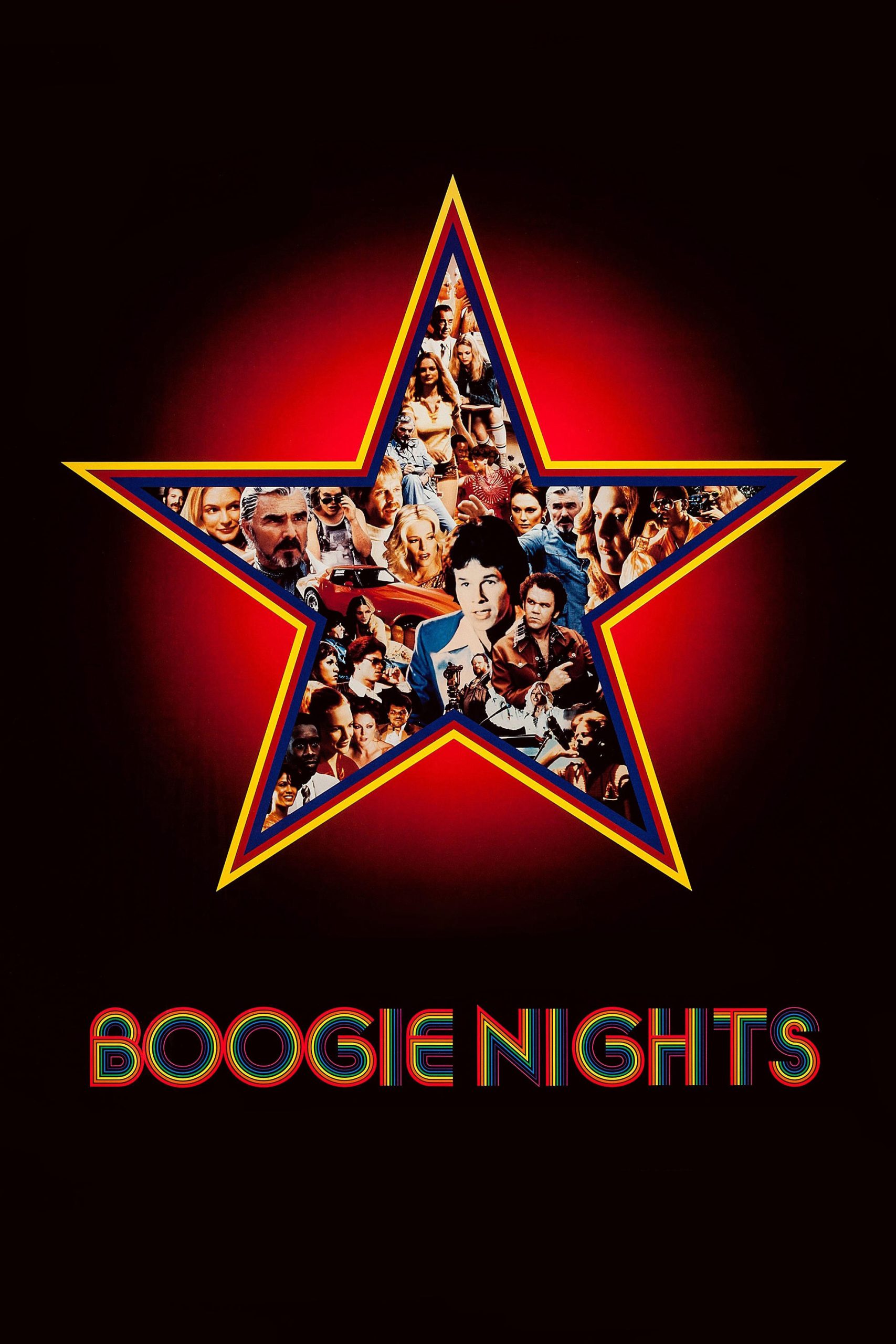
The Historical Landscape
Every time I return to “Boogie Nights,” I am immediately struck by how deeply it channels the late 1990s—the time of its release—almost as much as the era it depicts onscreen. I remember sitting in the darkened theater and feeling an uncanny double vision: on one level, I was watching a highly stylized vision of late-1970s and early-1980s Los Angeles, but on another, I could sense the fingerprints of the 1990s all over it—the anxieties, the ambitions, and the paradoxical naivete of a society entering a new millennium. The film seemed both nostalgic and wary, offering a sideways glance at “the sexual revolution” through the prism of a decade just beginning to question the consequences of unchecked freedom and excess.
Looking back now, the America of the late 1990s was a peculiar place. There was a heady mix of economic optimism, symbolized by the dot-com boom, and a creeping sense of cultural re-evaluation. Digital technology was accelerating fast—cell phones in every pocket, the internet finding its way into the fabric of daily life. Yet, in many communities, there was also a certain moral conservatism shuffling back into the mainstream, a sotto voce protest against the permissiveness and experimentation that had defined earlier decades. I remember debates about censorship, about the meaning of “family values,” as well as a curiosity about what it meant to embrace the taboo or the profane, just as long as it was at a safe, ironic distance—a defining quality of much late-1990s media. “Boogie Nights” landed right at this intersection.
It’s impossible for me to ignore how the film’s timing, arriving in 1997, coincided with the crest of independent cinema’s new golden wave. There was a fresh appetite everywhere for edgier stories told by ambitious auteurs. Tarantino and Soderbergh were household names; Miramax logos flashed at the start of films that courted controversy as a matter of course. Audiences—and, crucially, critics—had developed a taste for movies that walked the line between provocation and nostalgia, that could pay homage to bygone eras while also dissecting their underlying contradictions. Watching “Boogie Nights,” I felt swept up by this atmosphere. It was as if director Paul Thomas Anderson had distilled the energies and uncertainties of the moment into a sprawling, kaleidoscopic tale about an industry and a society searching for direction.
Cultural and Political Undercurrents
For me, what’s most striking about “Boogie Nights” is how it grapples with cultural tensions simmering beneath the surface of late-nineties America. I saw in its narrative a meditation on the nature of aspiration—what it means to be discovered, transformed, and ultimately discarded—in a society obsessed with spectacle. And though the story centers on adult film actors, I found its reach extended far beyond the boundaries of that world. It used the margins to talk about the mainstream.
I often think about why Anderson chose to focus his lens on the porn industry, and I can’t help but see a kind of subversive dialogue with the era of its release. By 1997, pornography had undergone a series of radical transformations, from grainy, underground reels to glossy, widely distributed VHS tapes, and then to the nascent adult entertainment lurking in the pixels of the internet. The film mirrors this arc—from the hazy, communal innocence of the late ‘70s to the cold, mechanical isolation of the video age. Watching it, I felt the undercurrent of anxiety about commodification—not just of sex, but of people, dreams, and even forms of rebellion.
Politically, I felt the film’s arrival echoed the tensions in American public life. Think of the aftermath of the Clinton-Lewinsky scandal, where boundaries between private vice and public virtue blurred more than ever. There was obsession with celebrity, scandal, and the intersection of morality and commerce. The juxtaposition of American idealism and cynicism ran through both civil discourse and pop culture. “Boogie Nights,” I felt, made these contradictions tangible. Its lush opening tracking shot introduced a Los Angeles of energy and potential but soon shadowed it with the realities of addiction, loneliness, and lost innocence. In that sense, the film seemed, to me, to simultaneously ride and question the decade’s wave of “anything goes”—while implicitly asking, “At what cost?”
In my view, the 1990s’ engagement with nostalgia was different than previous eras. There was a fixation on mythmaking, on retro fashions and musical revivals, but also a certain guardedness—a desire to look back with irony and skepticism. Anderson’s film, to my mind, uses this dual gaze: honoring the freedom and spirit of the late 70s, yet never allowing its characters’ optimism to go unchallenged or their excesses to pass unscathed. The result is a work that acknowledges the seductive power of the past, even as it tears the wrapping paper away from its darkest truths.
The Film as a Reflection of Its Time
When I watch “Boogie Nights,” I’m always conscious of how it is speaking not just about a bygone pornographic golden age, but also about the anxieties and longings of 1997 America. What stands out most is the film’s preoccupation with reinvention—the American dream reimagined for an era wary of its own illusions. Dirk Diggler’s journey, for me, reads as a parable for the kind of self-invention that seemed to saturate the late nineties, where the culture oscillated between self-exposure and self-protection, between notoriety and authenticity.
Much of the film’s visual language—the swirling camera work, the moody neon palettes, the bravado of ensemble scenes—seemed, to my eyes, to crib from both the kitsch of the period it depicted and the restless inventiveness of Anderson’s contemporaries. It’s as if the movie is layered, self-aware, and intentionally slippery, embodying both the headlong rush of the 1970s adult film industry and the self-questioning style of the nineties indie boom. Even now, I recall the sense of adrenaline in the movie’s first half—the feeling of being swept into something fresh, daring, and full of potential. But this optimism is always cut, deftly, by shadows: the descent into addiction, menacing eruptions of violence, and the splintering of a surrogate family built on shared delusions.
To me, “Boogie Nights” felt oddly meta for its time. It dramatizes the emergence of video technology with a sense of both promise and dread, mirroring the broader shift I saw, in the 1990s, to digital media and a culture increasingly obsessed with rapid consumption. Characters who initially appear larger than life are revealed to be fragile, uncertain, often bewildered by the pace of change. Their confusion struck a chord with the late-nineties audience—drawn to spectacle, wary of exploitation, and sensing that deep within the machinery of entertainment lies a gnawing emptiness. In this way, the film became more than a portrait of an industry; it became a mirror held up to a society wrestling with authenticity, performance, and alienation at the very moment it was plunging into the digital unknown.
I found myself regarding the film’s organizing sense of community—the surrogate family formed by Jack Horner and his troupe—as both an homage to the found families so central to marginalized subcultures and as a warning about the transience of such bonds in a world driven by profit and novelty. That tension, between belonging and disposability, struck me as distinctly resonant with what I observed in late-1990s America, where loyalty and legacy were increasingly replaced by the shifting sands of brand and image. The film’s later sequence at the drug dealer’s house, with its sense of desperation and collapse, reads, in retrospect, as an allegory for the era’s underlying dread: a fear that everything could unravel spectacularly, even at the height of apparent prosperity.
Changing Perceptions Over Time
Revisiting “Boogie Nights” after all these years, I’m fascinated by how much the film’s reputation and interpretation have evolved. I recall the first wave of reviews—many celebrated its audacity and technical bravura, while others seemed almost scandalized by its explicit subject matter. It was heralded as a bold, brash statement from a young director but also a reminder that “serious film” could grapple with “taboo” culture and still reach mainstream audiences. At that moment, I felt the film’s shock value was part of its currency, a way to cut through the polite oversaturation of both studio fare and formulaic indie drama.
As time passed and the cultural conversation around pornography, celebrity, and self-reinvention shifted, I’ve watched “Boogie Nights” move from edgy upstart to canonized classic. I sometimes smile at how, in the early 2000s, the film seemed less about provocation and more about pathos—the pain and yearning beneath the gloss. Viewers, myself included, grew more attuned to the vulnerabilities of its characters, especially as society started to talk more earnestly about addiction, trauma, and the blurred lines of exploitation within entertainment industries, both mainstream and fringe.
The rise of the internet, the proliferation of reality television, and the collapse of clear boundaries between “public” and “private” personas have, in my opinion, retroactively deepened the film’s thematic resonance. Where once Dirk Diggler’s hunger for fame read mostly as delusion or ambition, today it feels—at least to me—like a prophecy. The normalization of self-broadcasting, the commodification of intimacy via social media, and the spectacle of personal branding all seem present in embryonic form in “Boogie Nights.” I’ve heard younger viewers marvel at the innocence of the film’s world—imagining a time when notoriety could be contained, consequences delayed. In an era where digital fame is just a viral clip away, I find the film’s undertow of regret and longing has only become more poignant.
Even the film’s depiction of sexuality, once boundary-pushing, now appears layered and ambivalent. I notice how conversations today around consent, agency, and exploitation color modern interpretations of the movie’s central relationships. What once played as liberating or transgressive is now often seen as fraught, ambiguous, heartbreaking. My own reading of the film has shifted with the times. I see less of the thrill, more of the ache; less of the glory, more of the cost. “Boogie Nights” seems to have aged into a kind of tragic wisdom, its glamour now laced with the melancholy of lost innocence and the hurt that comes with hard-won clarity.
Historical Takeaway
Reflecting on “Boogie Nights” now, I’m left with the sense that it is as much a document of its own late-1990s context as it is a tribute to the bygone porn industry it so lovingly recreates. What it most pointedly reveals to me is the restless questioning that marked that era: the way Americans, perched on the threshold of a digital and globalized age, looked back on their countercultural heritage with a mixture of awe, regret, and skepticism. The film’s lush surfaces are seductive, but every party hides an undertow, every reinvention comes with a price. I am struck by how closely its characters’ odysseys map onto the decade’s own psychic terrain, where euphoria mingled with insecurity, and dreams of freedom often collided with the harsh realities of commodified desire and transient fame.
The film’s enduring power, for me, comes from its refusal to offer easy answers. It embraces the contradictions of its era—celebrating the urge to transcend limits while also mourning what is lost in that headlong rush. In sketching the rise and collapse of a surrogate family, Anderson doesn’t just chronicle a subculture; he asks what it means to belong, to create, to be seen—and what gets sacrificed along the way. “Boogie Nights” throws those questions wide open, confronting me with the reality that every era’s progress is shadowed by its discontents.
Its impact lingers for those, like me, who lived through the late 1990s and remember the intoxicating mix of optimism and fear that coursed beneath the surface of every cultural conversation. Watching it again, I am reminded not just of what America dreamed of becoming, but of the persistent fragility behind even our boldest fantasies.
To see how these real-world elements shaped the film’s impact, you may also explore its reception and legacy.
🎬 Check out today's best-selling movies on Amazon!
View Deals on Amazon