
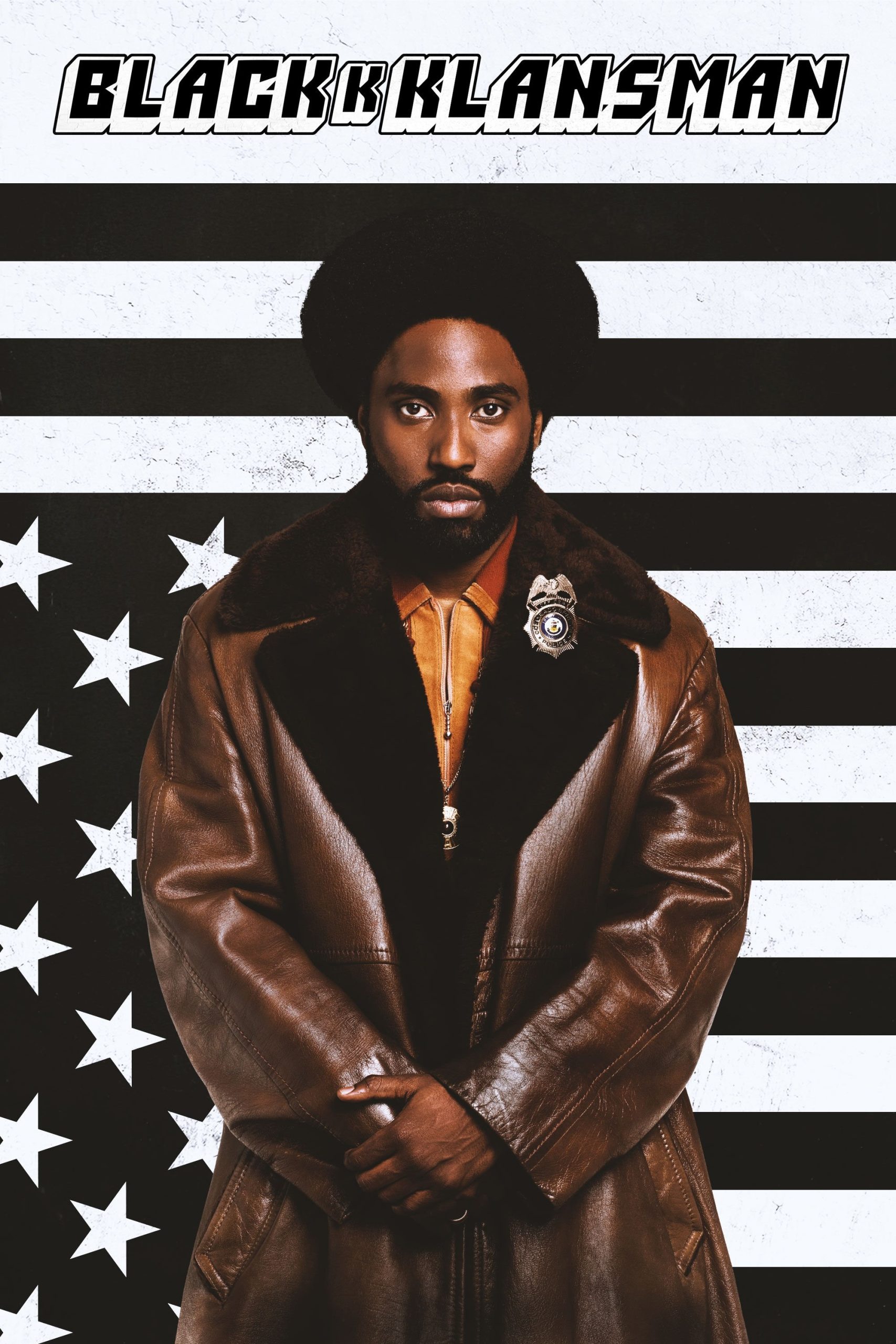
The Historical Landscape
I remember exactly where I was the first time I saw “BlacKkKlansman”—not just geographically, but emotionally, too. The atmosphere outside the theater seemed weighted with tension, so different from the casual excitement that often accompanied summer releases. It was late August 2018, and everywhere I looked, the world’s conversations were shaped not by optimism, but by the stark reemergence and reexamination of hate, division, and the wounds of unfinished American reckonings. I wasn’t surprised, just confirmed in what I already suspected: Spike Lee had chosen his moment with precision, landing this film into a world desperate for confrontation with itself.
To me, the late 2010s were an era of both heightened self-awareness and agitated unrest in the United States. I felt it in social media feeds erupting with daily outrage, in the daily bombardment of think pieces dissecting every nuance of American identity, and in dinner-table conversations that barely skirted the deep discomfort beneath the surface. Polarization—the word was everywhere, and it didn’t even begin to capture the visceral unease in the air. This was the era when the memory of Barack Obama’s presidency stood shoulder-to-shoulder with the reality of Donald Trump’s ascent, and the pendulum swung, sometimes violently, between hope and despair.
In my view, 2018 was a vantage point after the eruption of #BlackLivesMatter—a movement less like a spark and more like an electrical current illuminating long-shrouded truths. I don’t think it’s accidental that Lee’s film arrived right in the aftermath of the white supremacist rally in Charlottesville, Virginia—a wound the nation had only just begun to process. I saw “BlacKkKlansman” as part of a wave, riding alongside the Me Too movement’s exposure of sexual abuse in powerful circles, and after a presidential election that reawakened debates that many had prematurely declared finished. The air was thick with retrograde policies, racial anxiety, and the return of openly expressed bigotry. The era’s contradictions, I felt, could be measured by the simultaneous rise of voices demanding justice and those clinging desperately to imagined pasts—each group certain that history was on their side.
Elsewhere, I recall the way films, television, and even advertisements were suddenly wrestling with the politics of voice, representation, and the authenticity of stories. There was almost a hunger for content that acknowledged deep divides—a need not merely for escapism, but for testimony. Audiences were no longer just consuming culture; they were circumspect, suspicious, and quick to draw lines between genuine political commitment and hollow virtue signaling. It was a demanding era for artists, and an exhausting one for audiences. Into this charged climate, “BlacKkKlansman” entered with its own kind of bravado, seemingly unafraid to stir the embers and ask: Are we really so different from our past?
Cultural and Political Undercurrents
As I sat watching the film unfold, I kept thinking about how far-reaching the cultural and political currents of 2018 ran, and how they burrowed into every corner of American life. For me, the deep societal forces influencing “BlacKkKlansman” were not just a matter of political turnover or policy debates; they were the result of generational trauma jostling uncomfortably against generations yearning for change. In the years leading up to the film’s release, the U.S. had seen not only an uptick in openly racist rhetoric but also a swell in awareness and critique of that very rhetoric. I often felt the country was split-screening its own narrative: one half replaying a sepia-toned nostalgia, the other aggressively color-correcting old footage to better see the cracks and stains beneath.
To my mind, the legacy of the Obama years hovered like a ghost in American consciousness—an era hailed as post-racial, unmasked by the backlash that followed. “BlacKkKlansman,” I think, leaned into this reality more than any film I’d seen from the period. It dared to expose how the “post-racial” myth dissolved not in grand gestures, but in the quiet persistence of microaggressions, the resurrection of emboldened hate groups, and the sly dog-whistles from political leaders. The election of Donald Trump was not, to me, a rupture, but a revelation—an unveiling of what was already there, only more loudly proclaimed.
I can’t ignore the significance of social media in shaping the film’s moment, either. In 2018, I watched as platforms like Twitter and Facebook transformed into battlegrounds for identity, history, and public memory. Viral clips of racism—police shootings, torch-lit protests—became grim daily features, raw and often unmediated. The urgency to process and react, almost in real time, quickened the pace of national conversations. In some ways, I came to see “BlacKkKlansman” as sharing this impulse: a film that arrived not to comfort, but to provoke and demand witnessing. Art, for me, was no longer a slow-burn; it was immediate, reactive, and political.
What also struck me was the way a new generation began interrogating the past, prying up floorboards that previous generations had nailed shut. Historians emerged in viral threads; activists appropriated hashtags that became calls for remembrance and change. Against this backdrop, issues of white supremacy and institutional racism, far from being resolved, were suddenly discussed in boardrooms, classrooms, and places that had long feigned neutrality. I saw “BlacKkKlansman” as very much a child of its time, birthed by the raw fear that perhaps the country was not progressing, but repeating itself—only with more cameras watching.
The Film as a Reflection of Its Time
What I found most haunting about my experience with “BlacKkKlansman” was its unflinching refusal to segregate past and present. Spike Lee, always a filmmaker with his finger pressed to the nation’s pulse, didn’t just tell a story set in the 1970s—he crafted a hall of mirrors in which history ricocheted into the contemporary moment. For me, the film’s audacious approach to narrative structure, shifting tone, and pointed juxtapositions felt less like cinematic cleverness and more like a demand: I had to see, to draw my own uncomfortable parallels.
I could not miss the way Lee wove together jarring images of the Ku Klux Klan in the ‘70s with modern footage—most agonizingly, the real-life events of Charlottesville. That final montage struck me like a challenge, asking if I truly believed racism was a bygone relic. In this way, the film mirrored the anxieties of its era, the inescapable sense that history was not a static background but an active, possibly haunting, present tense. I felt that Lee was transforming every news headline I’d absorbed over the previous years into a demand for both acknowledgment and action.
The humor and satire, too, revealed the era’s contradictions. In the film, I saw absurdity and menace riding in tandem, a parallel to the way I felt online discourse frequently lurched from memes to tragedy within the span of a single tweet. Lee’s deft use of laughter—sharp, subversive, never safe—embedded the sense that in 2018, resistance and ridicule were closely tied. In my view, the film captured the intelligence and cynicism of a generation forced to cope with horrors through gallows humor, a kind of armor against despair.
Beyond the story’s specifics, I noticed how the film interrogated law enforcement’s legacy. As I watched, I considered the heated public debates I’d witnessed about police brutality, trust, and betrayal within Black communities. The protagonist’s infiltration into the KKK—his dual role as both officer and outsider—mirrored the dual consciousness many feel existing within systems built on exclusion. I was forced to ask myself whether the film believed in reconciliation or simply further vigilance. The answer, as I took it, was nuanced: progress was possible, but only if illusions fell away.
What resonated most deeply with me was this: “BlacKkKlansman” did not offer the comfort of distance. Instead, it set its time machine’s dials to swing between past and present, insisting the audience spot their own reflection in every frame. I took away a sense of urgency—the kind that demands people engage not as tourists in history, but as participants. It was a clarion call, echoing the volatile, searching spirit of its release year.
Changing Perceptions Over Time
Reflecting now on how “BlacKkKlansman” has weathered the years since its release, I am struck by how the context in which we view it keeps shifting. The fresh outrage and heartbreak that greeted it in 2018 have, for many viewers including myself, deepened into something more bittersweet—less surprise, more resignation that the cycles of hate and resistance are longer and more resilient than anyone had hoped. I remember initial reactions that praised the film’s sharp critique and timeliness, but over time, the conversations have grown more layered, more introspective, sometimes more weary.
I’ve observed that in the immediate aftermath of its debut, some hailed the film as a cinematic warning flare—a piece uniquely equipped to jolt audiences from complacency. Lee’s prescient vision, to me, seemed almost too on-the-nose for comfort when actual news footage echoed the plot’s extremities. Over the years, as racial tensions remained unresolved and new instances of violence and hate crimes surfaced, some critics and fellow viewers started to reevaluate the film’s approach; was its satirical edge sharp enough, or did the persistent reality defy even satire’s reach?
What’s particularly poignant for me now is how the film’s use of real-life footage has aged. When I first saw it, those closing images felt raw and immediate, almost too soon. Today, they feel like harbingers—images we now see repeated with distressing regularity. The film’s urgent tone appears less exceptional and more standard-issue, a reflection that what was once considered shocking or bracing commentary is now grimly familiar. I often wonder if future audiences will see the film as me and my contemporaries do—as a symptom and diagnosis of an era pivoting on the edge, or as another entry in an ongoing, unresolved conversation.
I’ve also noticed how discourse around representation in Hollywood has evolved. When “BlacKkKlansman” premiered, its success was widely seen as a victory for Black filmmakers and stories focused unapologetically on Black perspective. In the years since, the conversation has expanded to ask tougher questions about who controls narratives and who is allowed complexity in mainstream cinema. Watching the film again in the light of subsequent releases, I now see more clearly how unique and fraught its balancing act truly was. It’s not just history that changes; it’s also our ability to tolerate uncomfortable truths.
Watching new generations of viewers encounter the film, I see the lens moving—from shock at Lee’s boldness to impatience with what now appears slow or insufficiently radical. The film, for some, has already become a cultural artifact—not always a rallying cry, but a time capsule for a moment when mainstream American cinema was forced to look squarely at its own contradictions. My experience with “BlacKkKlansman” has grown more reflective, even melancholic, as I realize that its power lies not in easy answers, but in its restless, unfinished questions.
Historical Takeaway
After all this reflection, what I take away from “BlacKkKlansman” is less a set of solutions and more a lens: a way of seeing the late 2010s as an era when America’s self-scrutiny turned fierce, often painful, and relentless. To me, the film is inextricable from its time, as embedded in the turmoil and hope of 2018 as any news headline or viral video. It captures a country afraid that old demons were no longer sleeping, but wide awake and emboldened. What I remember most is how the film dared me—and by extension, its audience—not to avert our gaze, not to domesticate history, but to recognize it as an ongoing struggle.
The film’s willingness to repurpose the past for present critique is what I find most historically significant. When I look back on this work years from now, I suspect I’ll see it as a cinematic record: not only of a narrative, but of an era that demanded reckoning, even at the expense of comfort or decorum. “BlacKkKlansman” stands, for me, as testimony to the resurgence of public history—the kind that punctures amnesia and insists on inconvenient truths. It inspired debates, discomfort, and, at times, genuine grief, yet I believe that was precisely its merit.
My sense is that future historians and cinephiles will use this film as a touchstone, not simply to chart how art reflected its context, but to understand how a society in crisis makes sense of itself. I am left thinking that 2018 was less a discrete interval and more a crossroads, and “BlacKkKlansman” was the signpost warning of roads both chosen and abandoned. Ultimately, its legacy is tangled with the era’s ache: the uneasy, restless insistence that to heal, one must first see. For me, that is both the burden and the gift the film delivers about its extraordinary, troubled time.
To see how these real-world elements shaped the film’s impact, you may also explore its reception and legacy.
🎬 Check out today's best-selling movies on Amazon!
View Deals on Amazon