
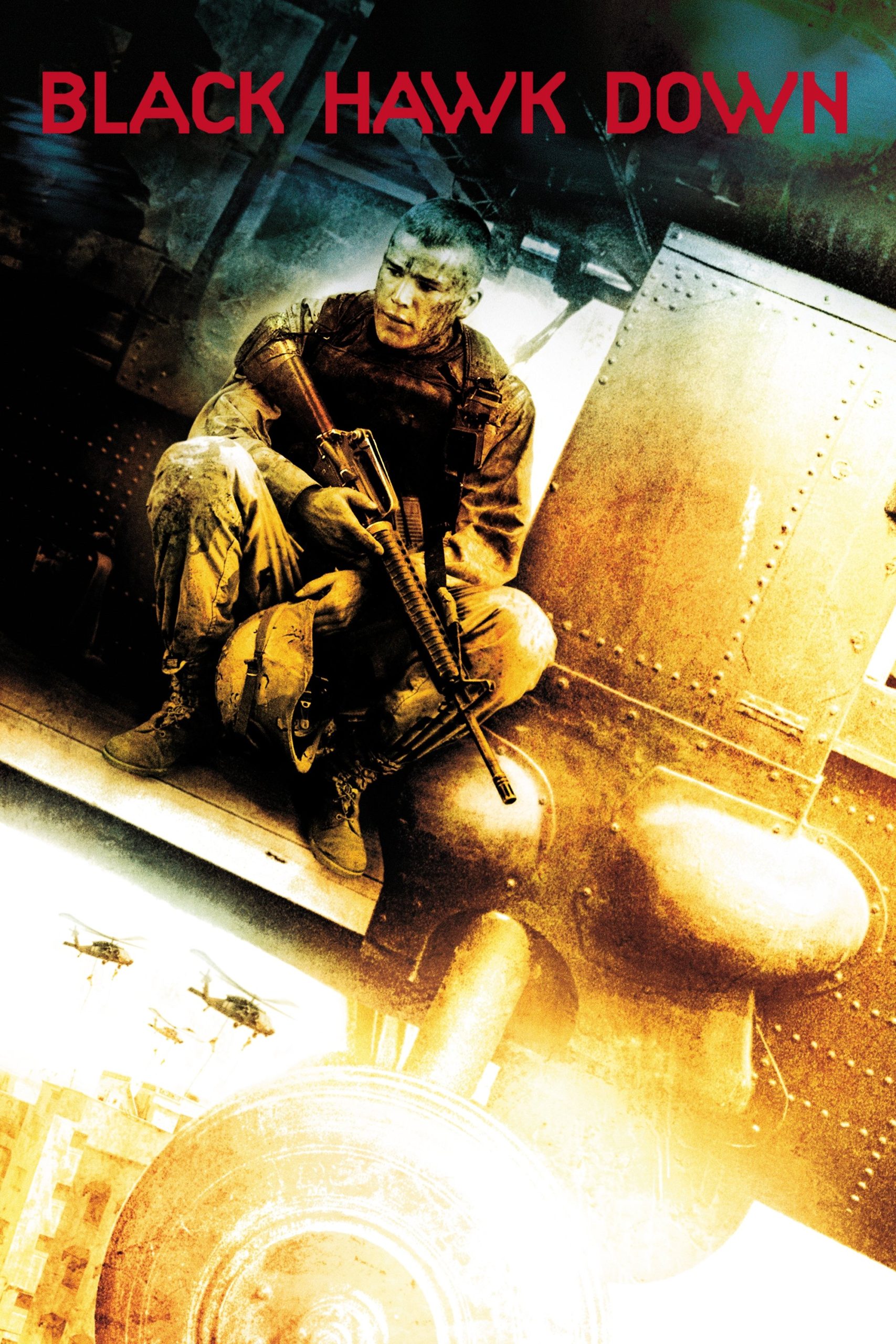
The Historical Era of the Film
When I first watched Black Hawk Down (2001), I couldn’t shake the sense that it came from a very particular moment in American history—one marked by both the optimism of a post-Cold War world and the anxieties that lingered beneath the surface. The film’s production spanned the late 1990s and wrapped just before the seismic events of September 11, 2001, which means its narrative reflects a window of time that now feels like a world removed. The United States, confident in its status as the sole global superpower after the fall of the Soviet Union, was navigating new military and humanitarian strategies, especially in regions like the Horn of Africa, where Somalia’s internal disintegration had caught Washington’s attention.
I remember how the early and mid-1990s were turbulent years, especially regarding America’s attempts at “humanitarian intervention.” The Somali Civil War and the subsequent U.S. intervention—the real historical events that inspired the film—emerged from a period when American foreign policy was caught between a desire to lead on the world stage and the lessons, or misadventures, of Vietnam. Domestically, the 1990s offered economic prosperity for many Americans, but that sense of security was counterweighted by uncertainties about America’s new global role, the shape of military power, and the ethical dilemmas of interventionism.
Politically, the Clinton administration, under which the real-life “Black Hawk Down” incident occurred, was grappling with balancing humanitarian impulses with the risk of “mission creep.” I sensed, watching the film, how much it echoed the era’s debates about the costs and consequences of intervention abroad and the trauma that could follow when things went wrong. This moment, shaped by a spirit of unipolar optimism but also by cautionary tales, provided the foundation on which the film’s story is set—and it is a climate I cannot separate from my interpretation of the film today.
- The collapse of the Somali state contributed directly to the mission’s volatility.
- American military involvement in humanitarian crises was being redefined after the Cold War.
- The optimism of the late 1990s masked unresolved anxieties about military power and limits.
Social and Cultural Climate
When I try to describe the social climate that permeated both the making and the initial release of Black Hawk Down, I find myself thinking about the era’s complicated relationship with military heroism, representation of war, and the ways Hollywood responded to contemporary cultural tensions. The late 1990s and early 2000s were a time when American society was reckoning with new ideas about patriotism, multiculturalism, and the responsibilities of intervention. There was a fascination with high-tech warfare but also a persistent questioning of why and when conflicts were worth the cost.
Military narratives dominated popular culture, but they had evolved from the rah-rah sensibility of earlier decades to something more introspective or skeptical. Films like Saving Private Ryan had just established a new standard of gritty visual realism; audiences (and I, as a watcher) had started to expect both spectacle and authenticity from war films. This social context encouraged Black Hawk Down’s filmmakers to pursue a story rooted in chaos and ambiguity, as opposed to easy triumphalism. At the same time, the film entered a world not yet altered by 9/11, but just on the cusp of a dramatic shift about how war, terrorism, and American idealism would soon be discussed.
I also remember the undercurrents of debate regarding representation—who gets to tell the story of war, and whose sacrifices are foregrounded or omitted. The public appetite for realistic depictions of soldiers was high, but there was growing sensitivity to the human cost on all sides of a conflict. The film’s focus on American troops reflected the era’s priorities, but it also mirrored an ongoing wrestling with the limits of empathy, cross-cultural understanding, and media responsibility. These social tensions were not just background noise; they deeply informed how Black Hawk Down was conceived and how it would subsequently be received in public discourse.
How the Era Influenced the Film
I’ve always been struck by how much Black Hawk Down bears the imprint of its production era, both in its narrative construction and in its technical execution. The film’s unrelenting pace, immersive style, and commitment to visceral realism seemed to me a direct response to the late ’90s and early 2000s appetite for authenticity. Audiences at the time had grown weary of sanitized, distance-war stories; they wanted to be thrust into the immediacy of battle, to see and almost feel what modern conflict looked like up close. The influence of cinema verité, combined with the technological advances of the era, allowed director Ridley Scott to realize this vision in a way that would not have been possible even a decade earlier.
The casting, too, speaks to the values of the time. As I watched, I noticed how the film assembled a cross-section of American masculinity—youthful, imperfect, but ultimately idealistic. It reflected a time when the national narrative around soldiers was in the process of shifting from symbols of aggression to reluctant men grappling with impossible circumstances. The absence of a defined enemy and the sense of confusion and chaos mirrored social anxieties about the unpredictable nature of post-Cold War interventions and the limits of even the most advanced military.
One of the most telling choices, in my view, is the film’s approach to the Somali perspective. The 1990s were not yet a time in which Hollywood routinely foregrounded the experiences of those on the receiving end of American power. Instead, the film, shaped by its era, privileged the vantage point of American servicemen, echoing both the national mood of introspection and, perhaps, the blind spots common to Hollywood productions at the time. I strongly feel that had the film been made even a few years later, after 9/11 and the wars in Afghanistan and Iraq, its focus and tone might have been very different—less certain, maybe, and more complicated by new experiences of conflict and loss. The film’s narrative direction was not inevitable; it was, in my eyes, a product of this particular crossroad in American history.
Audience and Critical Response at the Time
When Black Hawk Down premiered, I paid close attention to how it resonated with audiences and critics—because, at the time, America’s relationship with its military was undergoing significant shifts, and war films tended to become flashpoints in cultural debate. Released only a few months after the 9/11 attacks, the film quickly took on symbolic weight that extended far beyond its original context. People I spoke with, and commentators I read, brought fresh urgency to their reactions, connecting the film’s themes of chaos and sacrifice with the contemporary search for meaning in a suddenly more volatile world.
I recall reviews that praised the film’s gritty realism, its technical accomplishments, and its unsparing depiction of the futility and horror of urban combat. Some found in it a much-needed tribute to American soldiers, especially at a time when the U.S. military was again gearing up for new interventions overseas. However, others challenged the film’s limited depiction of Somalis and examined its potential for reinforcing a one-sided or even dehumanizing narrative. Conversations often turned toward questions of historical responsibility—how the story had been filtered through Hollywood sensibilities, and whether the balance between drama and truth had been struck with sufficient care.
For me, what stands out is that Black Hawk Down arrived at a juncture when American audiences were hungry for stories of courage and loss but also grappling with discomfort about war’s complexities. The surge in patriotism post-9/11 affected how the film was received: it was sometimes embraced as a reaffirmation of national resilience, yet also scrutinized for what it disclosed—and concealed—about American power. The response was not uniform, but it was undeniably heightened by the historical moment of its release; I saw the film’s debut as a mirror for America’s shifting self-image and a marker of the new uncertainties that would soon dominate public consciousness.
Why Historical Context Matters Today
As someone deeply invested in film history, I believe that understanding the historical context of Black Hawk Down is key to appreciating not just the film itself, but the anxieties, hopes, and limitations of the era that produced it. When I revisit the movie, I see a work steeped in questions about military responsibility and humanitarian intervention—questions that still resonate, but which were answered very differently at the time of the film’s making. Knowing the backdrop of the 1990s and early 2000s, I’m far more attuned to what the film both communicates and leaves unsaid. Its focus on the American experience—down to the smallest details of camaraderie, loss, and chaos—makes more sense when traced back to America’s search for purpose and clarity in a world that seemed both promising and unstable.
To me, the film’s limitations are not accidental. They tell us about a society that was, at the turn of the millennium, still figuring out how to wield power responsibly and how to represent the consequences of intervention in media. When viewers today critique the film for its narrow perspective or its aestheticization of violence, I can’t help but reflect on how these choices emerged organically from the moment of the film’s creation. Understanding this allows me to approach Black Hawk Down not just as a standalone war story, but as a document of how a powerful country and its cultural industries processed a messy, contradictory episode at the edge of a new century.
I find this kind of historical reading especially valuable in today’s debates over foreign policy, media responsibility, and representation. The world has changed dramatically in the decades since the film’s release, but its legacy—and the questions it posed, even unintentionally—remain relevant. Recognizing the interplay between the film and its era sharpens my critical engagement and gives me a richer appreciation of how cinema both shapes and reflects the broader currents of history.
After understanding the factual background, you may want to see how this story was received as a film.
🎬 Check out today's best-selling movies on Amazon!
View Deals on Amazon