
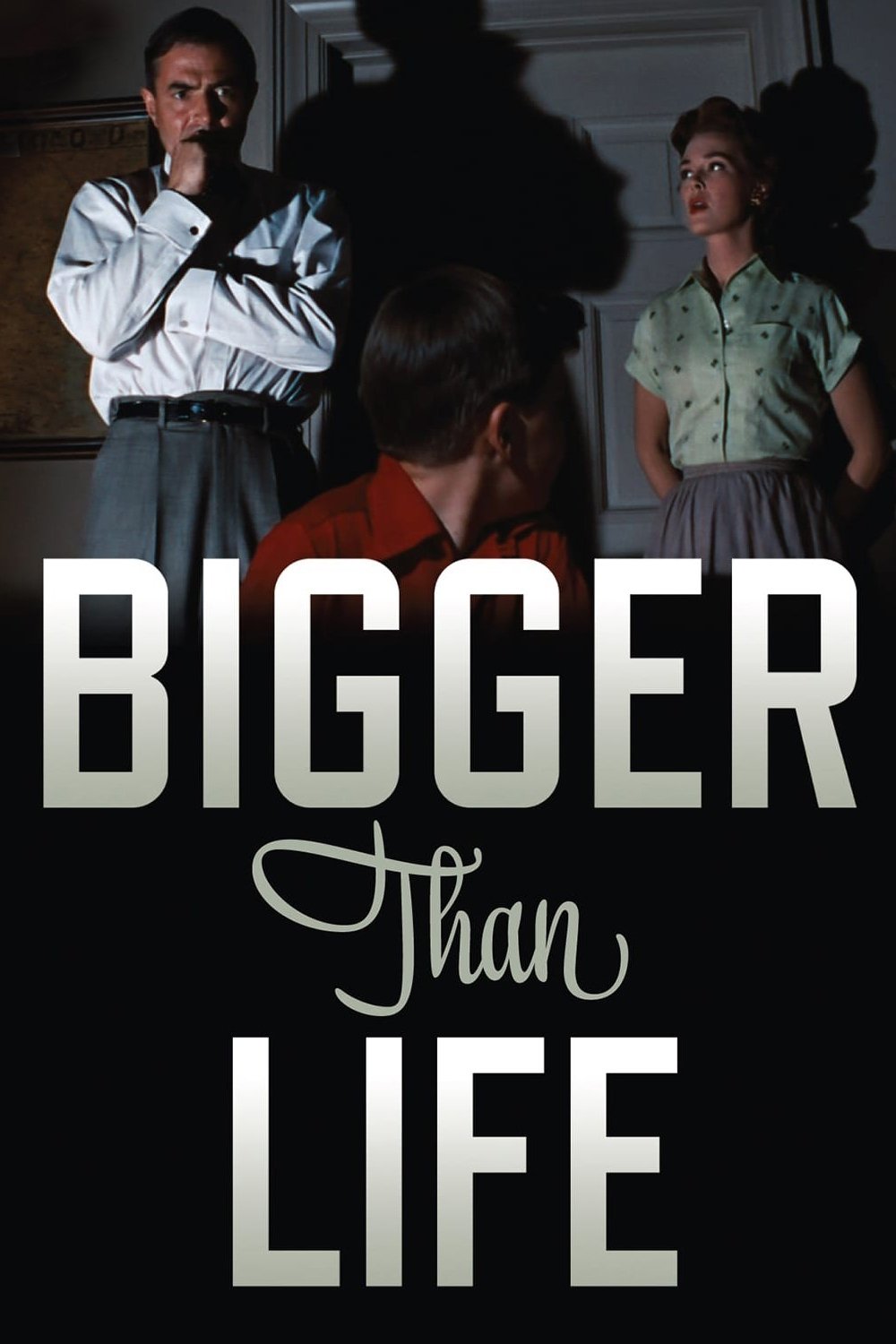
The Historical Era of the Film
When I first encountered Bigger Than Life (1956), what immediately struck me was how vividly it reflected its time. The mid-1950s in the United States marked a period defined by postwar prosperity, yet also pervasive anxiety lurking beneath the surface. I often see 1956 as a year wrapped in contradictions—there was economic optimism with the strong post-World War II economy, rising consumerism, and what many remember as the birth of the American middle class. Yet, the Cold War loomed ever-present, shaping not only political life but also domestic expectations and social behavior in countless invisible ways.
As I immerse myself in the political landscape, President Eisenhower projected a reassuringly steady image, yet there was a constant undercurrent of fear—fear of nuclear annihilation, fear of communist infiltration, and fear of internal subversion. I sense how these invisible pressures bled into daily life, leaving people clinging to their routines and to the sanctity of family as a touchstone of stability. Ironically, this era’s celebration of domestic order was as much about anxiety as about confidence in the nation’s future.
Socially, the era was one of both conformity and brewing dissent. The authority of institutions—schools, churches, medicine—was taken for granted by most Americans, and societal roles were sharply delineated. Yet as I reflect on the climate, I’m keenly aware of the fault lines beginning to show: the nascent Civil Rights Movement was stirring, rock-and-roll was unsettling cultural guardians, and the seeds of rebellion that would define the next decade were quietly germinating, even if they had not yet broken the surface.
Ultimately, viewing the production era of 1956 helps me place the film’s anxieties in context. This was a time when change surged beneath the smooth exterior of postwar America—something I see mirrored in the unsettling tone and subject of the film.
Social and Cultural Climate
When I think more closely about the social climate surrounding the film’s release, I notice how strongly traditional family values and suburban respectability dominated the American imagination. Conformity was not just expected; it was almost a civic duty. I often reflect on the way family life was held up as a kind of moral fortress, shielding Americans from the perceived dangers of the outside world—be they global threats like Communism or more intimate fears about psychological instability.
Cultural trends during this time idolized the nuclear family, the well-kept home, and a rigid sense of appropriate gender roles. I find the influence of television, which was rapidly coming into its own as a ubiquitous presence, fascinating here. It reinforced—and sometimes challenged—ideas of what it meant to live a proper American life, but by and large, the dominant message was that a person’s greatest achievement lay in fulfilling his or her role as a productive man, nurturing wife, or obedient child.
Medical authority held immense sway during this period. The white-coated doctor was regarded with near-sacred trust, seen as a guardian of public health and a staunch defender against threats both physical and psychological. Yet, beneath that trust, I sense an anxious curiosity—maybe even skepticism—that would soon begin to be articulated more openly, especially as prescription drug use increased and new forms of therapy were introduced.
Popular culture, too, was undergoing a shift. Hollywood was in flux, challenged by the growth of television and the encroaching influence of censorship boards concerned about content. Films that dared to probe the darker aspects of everyday life—illness, emotional distress, the breakdown of social roles—stood in stark contrast to the prevailing mood of cheerful confidence. When I think about this, I see Bigger Than Life as emerging at the edges of the cultural conversation, dramatizing issues that many viewers were only just beginning to confront.
- Postwar emphasis on traditional family values
- Rise of suburban living and gender conformity
- Cultural deference to professional authorities (medicine, education)
- Underlying fears about psychological and social breakdown
Considering these dynamics, I find that the film’s tensions are directly tied to the social pressures and anxieties of its day.
How the Era Influenced the Film
Reflecting on how these historical circumstances shaped the film itself, I see Bigger Than Life as inseparable from its time. To me, the choice to focus on a middle-class family unraveling amid medical and psychological crisis was anything but accidental. The film’s storyline—centering on a respected schoolteacher turned threatening stranger under the influence of cortisone—links directly to the period’s faith in scientific progress and, conversely, its suspicion of that same progress gone awry.
I find it fascinating that the character’s increasing reliance on prescription drugs mirrored real anxieties in 1950s America, when medical science was making leaps forward, but the side effects—both literal and psychological—were not yet well understood. The film, to my mind, dramatizes the era’s uneasy balancing act, where new treatments offered hope but also new forms of vulnerability. I can see how, in an age entranced by the promise of medicine yet wary of its dangers, the story of a “miracle drug” that upends a family was immediately resonant.
Additionally, the production context can’t be ignored. Hollywood studios were wrestling with changing audience tastes and facing increasing competition from television. Directors and writers who wanted to approach more challenging or controversial issues had to negotiate a delicate path—exploring real problems without running afoul of censorship or alienating audiences. I sense that much of the film’s power comes from its willingness to depict middle-class desperation, even though the production system of the time placed clear limits on how far such stories could go.
The characterization of authority figures in the film—teachers, doctors, parents—also reflects the broader American location of authority in professional roles. The film interrogates the pressures placed upon these roles at precisely the time they were seen as foundational to the nation’s stability. When I rewatch scenes that border on domestic melodrama, I read them as a window onto the latent mass anxiety: What if those we trust most with our children’s well-being fail us? What if science itself has limits? These questions were pressing for many Americans during the film’s production era.
The film’s visual style, often described as melodramatic, echoes the heightened anxieties of the production era. I find that the use of color, lighting, and suburban interiors aren’t just stylistic choices; they’re ways of amplifying the tensions that Americans felt but rarely voiced. In this way, the historical context seeps into every frame, shaping not just the narrative but the visual and emotional texture of the film itself.
Audience and Critical Response at the Time
When I delve into the film’s initial reception, I’m always struck by how contemporary audiences and critics responded with a mixture of fascination and apprehension. In 1956, many viewers were drawn to the film by its star, James Mason, as well as its unsettling premise, but the reception was far from uniformly enthusiastic. I noticed that the social climate fostered both curiosity and discomfort with the idea of a “normal” father descending into mania and violence. There was, at the time, a reluctance to accept portrayals that challenged cherished images of domestic harmony.
Critically, while some reviewers praised the performances and direction, others bristled at what they saw as a melodramatic or even sensationalist depiction of very private, and very American, troubles. I find that this split response is indicative of the broader societal reluctance to engage with issues of mental illness, addiction, and domestic instability. In an era so concerned with presenting a strong front, the film’s willingness to expose familial weakness unsettled many.
For the average moviegoer, the film may have felt both thrilling and uncomfortably close to home. Medical authority was rarely questioned in polite conversation, so a film that depicted its dangers was always going to provoke anxiety. I read some contemporary reactions as bordering on denial—many seemed unwilling to believe that such an ordeal could happen in the real suburbia around them. Others, perhaps more quietly, recognized in the film a depiction of cracks that they themselves perceived in the world they lived in.
Still, the film did not become an immediate box-office sensation, which I think speaks volumes about the climate of the period. Films that pressed too firmly against the boundaries of acceptable discourse—challenging the authority of medicine, family, and male professionalism—often struggled to find wide acceptance in 1950s America. Most notably, the film’s fate at the time revealed just how controversial its questions were, even as it helped lay the groundwork for more open explorations in decades to come.
Why Historical Context Matters Today
When I revisit Bigger Than Life now, I am constantly reminded how essential the historical context remains. Knowing the anxieties and taboos of the 1950s doesn’t just help me understand the film’s plot—it transforms the entire experience. It’s so easy today to take for granted how openly we discuss mental health struggles, how willing we are to question medical authority, or how often we reconsider traditional family dynamics. But to appreciate just how radical, even subversive, this film was in its own era, I try to immerse myself in the mindset of 1956, where such subjects were almost never addressed in public.
I feel that looking at the film within its historical context also encourages me to ask new questions about our own time. What anxieties, I wonder, shape the stories we choose to tell now? What issues are we, as a culture, still reluctant to confront directly? The film’s legacy, in my eyes, lies in its ability to hold a mirror up to its era—forcing its audience to see what might otherwise remain hidden. I believe that this deeper understanding also enriches my appreciation of the film as a work of art. Every stylistic choice, every moment of tension, every painful family confrontation takes on added meaning when I realize how daring it would have seemed to the first audiences who watched it.
Finally, I find that historical awareness invites compassion. Rather than judging the film’s characters—or even its viewers—for their limitations, I become more attuned to the difficulties of confronting change, of questioning norms, and of living with uncertainty. What seemed melodramatic or overwrought to a modern eye was, in fact, a courageous engagement with the fears and limitations of its own era. For me, the film is not just a product of its time; it’s a testimony to a society struggling, in its own way, to face hard truths.
After understanding the factual background, you may want to see how this story was received as a film.
🎬 Check out today's best-selling movies on Amazon!
View Deals on Amazon