
The Historical Landscape
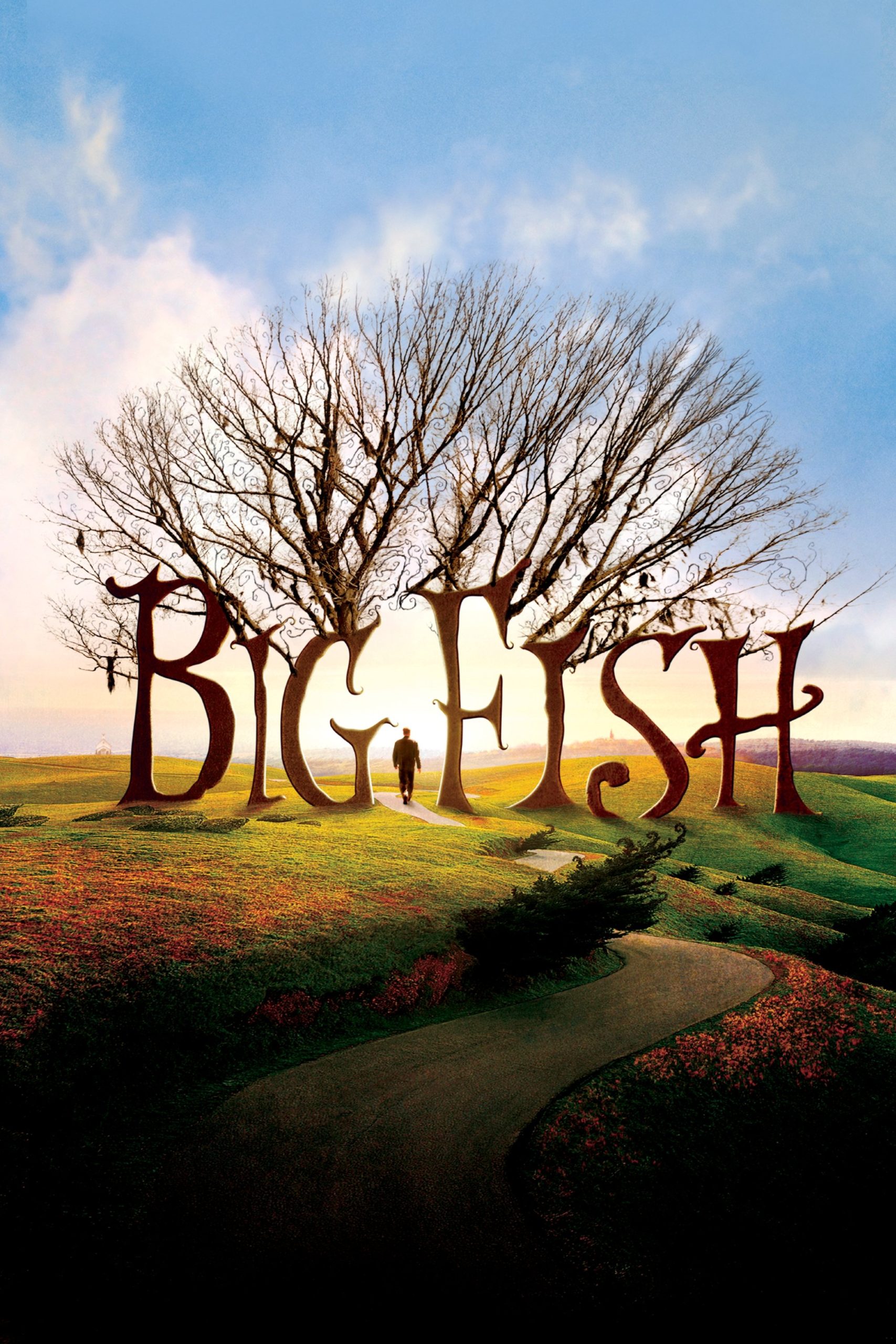
When I think back to my first encounter with “Big Fish” in the early 2000s, what strikes me most is how it seemed to drift in on a gentle breeze, carrying the smell of nostalgia and uncertainty. The world in 2003 wasn’t the same place I’d known in years past. America was freshly marked by the trauma of 9/11—a collective bruise that colored every aspect of public life. As someone who followed the emotional currents of the era, I remember how those years were dense with a kind of existential fog: suspicion in airports, rolling news cycles of fear, and yet, an almost desperate clinging to old things—family stories, familiar tales, folk wisdom—anything to ground oneself when the soil felt so loose underfoot. “Big Fish,” with its lush, whimsical storytelling, felt like a lifeline tossed out in a time obsessed with answers but eager for comfort.
In cinemas, blockbusters began shifting tone. The brash optimism of late ’90s films gave way to either escapist fantasy or introspective character dramas. Technology, too, was on the move—CGI had matured, cell phones were everywhere, and the internet’s promise of limitless information was tilting from hopeful to overwhelming. I felt, in my bones, the tension between an age that wanted to remember and one racing into digitized forgetting. The images in “Big Fish”—the Southern Gothic houses, the rivers, the strange carnivals—became a patchwork quilt of lost Americana, fluttering defiantly in a time that threatened to forget its own stories.
I can’t ignore, either, the shifting concepts of masculinity and fathers across the broader American landscape during these years. With national dialogues about war, loyalty, and what it meant to be a protector, the movie’s questions about fatherhood seemed especially pertinent. As I watched Will listen (and sometimes fail to listen) to his father Edward’s extravagant tales, I recognized the discomfort of a generational handoff—a negotiation between myth and reality, perhaps mirroring the country’s own search for a new identity as the millennium advanced. So for me, “Big Fish” arrived as both a love letter and a time capsule, a vivid outgrowth of the emotional, political, and cultural anxieties of the early 21st century.
Cultural and Political Undercurrents
To speak honestly, I believe “Big Fish” blossomed out of a moment of both intense doubt and longing. The American psyche in the aftermath of 9/11 felt fractured. My own generation was learning to live amidst the threat of violence while yearning for certainty and belonging. It was in that paradox—craving a story to make sense of things, knowing those stories could never fully deliver—that I found “Big Fish” most resonant. Tim Burton, never shy about plumbing the territory between darkness and whimsy, chose to forgo his usual gothic, isolated anti-heroes in favor of something more communal: a tale about origins, reconciliation, and, above all, storytelling as survival.
Politically, I remember there was a pressure to assert clear narratives. Governments justified war with heavily mediated stories; the ‘truth’ was routinely bent to cast national actions in a romantic light. Against this backdrop, the movie’s negotiation between fact and fiction seemed hauntingly relevant. Edward Bloom spins tales so tall they obscure his real self—a reflection, I felt, of the era’s unease about authenticity and truth in public discourse. People were tired of being lied to, yet they hungered for myth, for something that felt meaningful. It’s the same duality that colored debates on the nightly news: skepticism as defense, but an almost reflexive yearning to believe.
On the cultural spectrum, 2003 was a hinge year. The dot-com bubble had burst, handing anxiety to a generation promised unlimited opportunity. Technology and media brought the world closer, but also gave rise to a new kind of fragmentation. Family units weren’t just changing in movies; they were transforming in my own social circles too, with blurred borders of belonging. “Big Fish” didn’t just reflect these shifts—it grappled with them, insisting on the enduring need for stories as the glue of family and communal identity.
I also remember the slow, steady swing toward irony in popular comedy and art, with sincerity itself beginning to seem radical again. This is part of why “Big Fish” hit so hard: its earnestness seemed to swim against the tide. The film’s exploration of love, memory, and forgiveness wasn’t an escape from reality but an almost rebellious affirmation that meaning could still be hand-crafted, spun from the straw of memory and legend. In such an era, where detachment was the mask of choice, Burton’s sentimental optimism felt almost subversive.
The Film as a Reflection of Its Time
What I find most remarkable in “Big Fish” is how it stands as a mirror, not to the surfaces of 2003, but to its hidden currents. When I first experienced the film, I was struck by its deep, almost aching nostalgia. Yet it wasn’t a simplistic retreat into the past. The movie interrogated the past, pulling it apart like a patchwork, examining every seam for truth and illusion. For me, this was the spirit of those early post-millennium years: suspicion and longing, a will to see through stories and an equal impulse to cling to them for dear life.
Through Edward and Will’s relationship, I saw the era’s generational conflict. The older generation—Edward—was both mythic and opaque, promising grandeur but never quite answering the tough questions. His son, representing my own demographic of wary inheritors, wanted substance, not just spectacle. That tension lies at the heart of America’s mood in 2003: reverence for heritage, but an equally sharp demand for transparency. I recall conversations about government, religion, families—everyone seemed locked in this restless dance between wanting to believe and needing to dissect.
One scene that stays with me is the recurring motif of rivers. They’re places of crossing, transformation, and sometimes oblivion. In 2003, rivers—in the symbolic sense—were everywhere in American life: borderlines between old and new, certainty and ambiguity, trust and doubt. The story within the film, where even the big fish itself remains more metaphor than fact, turns uncertainty into something beautiful, not threatening. That reflected, for me, a subtle kind of hope during an age rattled by real insecurity.
Technologically, I remember how the movie used color, practical effects, and sparse CGI to evoke an almost out-of-time atmosphere. In an age when films increasingly leaned on computer-generated spectacle, Burton’s visual language here was a gentle protest—a reminder that even in a time of rapid change, there was power in handmade, lovingly considered images. That resonated with viewers searching for authenticity as screens proliferated and reality itself seemed filtered, cropped, and endlessly mediated.
Emotionally, “Big Fish” felt like a balm to wounds—personal, national, existential. It encouraged me not to run from painful questions but to recognize the necessity of beauty and invention, not as escape, but as method. Perhaps that was the secret yearning of the early 2000s: a way to recover wonder when the world felt robbed of innocence.
Changing Perceptions Over Time
As I revisit “Big Fish” years later, my relationship with its story has shifted. In 2003, everything smacked of immediacy—the sting of fresh loss, the suspicion toward official narratives, the hope that new technologies would eventually explain life’s mysteries. At the time, I viewed Edward’s fabrications with deep suspicion, much as I viewed the glittering promises of politicians and marketers. It seemed to me then a cautionary tale: don’t let the mythmakers run the show. But the film’s warmth, its insistent humanity, lingered, urging me to consider what gets lost when we demand that every story conform to sterile facts.
Now, the landscape has changed. A world even more saturated with digital ‘truths’ and competing realities makes the film seem strangely prophetic. The question, “Is it true?” feels almost quaint compared to the post-truth discussions and deep fakes of today. I’ve come to appreciate Edward not as a liar, but as a guardian of a necessary ambiguity—the very gray space that makes human connections possible. I now read “Big Fish” less as a parable about deception and more as an ode to the rituals that bind us when information alone can no longer suffice.
I sense, too, a growing appreciation for the film’s emotional honesty in critical circles. Where some initially dismissed its sentimentality, I now often hear praise for its refusal to flinch from the messiness of grief and forgiveness. My own reading has deepened from seeing it as merely a family drama to recognizing it as a meditation on mortality and the art of letting go—a far braver territory, I think, than any tall tale.
Through time, “Big Fish” has come to embody, for me, the perennial need for reconciliation—not just between fathers and sons, but between dream and reality, memory and fact. Each viewing feels like a dialogue with my past selves: the skeptic I was then, the reminiscer I am now. The film ages well, perhaps because it’s built on the scaffolding of emotional truths, not the headlines or the fads of any one year.
Historical Takeaway
If I were to pull one enduring lesson from “Big Fish,” it would be this: the early years of the 21st century were an inflection point—awkward, tender, and defiantly unresolved. The film stands as both artifact and oracle, mapping the ache for connection in a world that often trades in separation. For me, the movie charts a course through the terrain of doubt, insisting that stories, while never the whole truth, are nevertheless true in their effect. They heal, they divide, they bewilder, and—most essential of all—they outlast us.
The movie’s lasting value lies in its willingness to show how the search for understanding is itself a kind of love, a reaching out despite the impossibility of ever knowing all. Back in 2003, when so much felt unknowable, “Big Fish” offered not answers, but the permission to live with questions wrapped in meaning. Even now, with all the shifts in cultural and technological landscape since then, I find in it a gentle reminder that the currency of an era is not just its headlines, but its dreams, its old arguments, and the stories we tell to pass the time while the world remakes itself outside our windows.
To see how these real-world elements shaped the film’s impact, you may also explore its reception and legacy.
🎬 Check out today's best-selling movies on Amazon!
View Deals on Amazon