
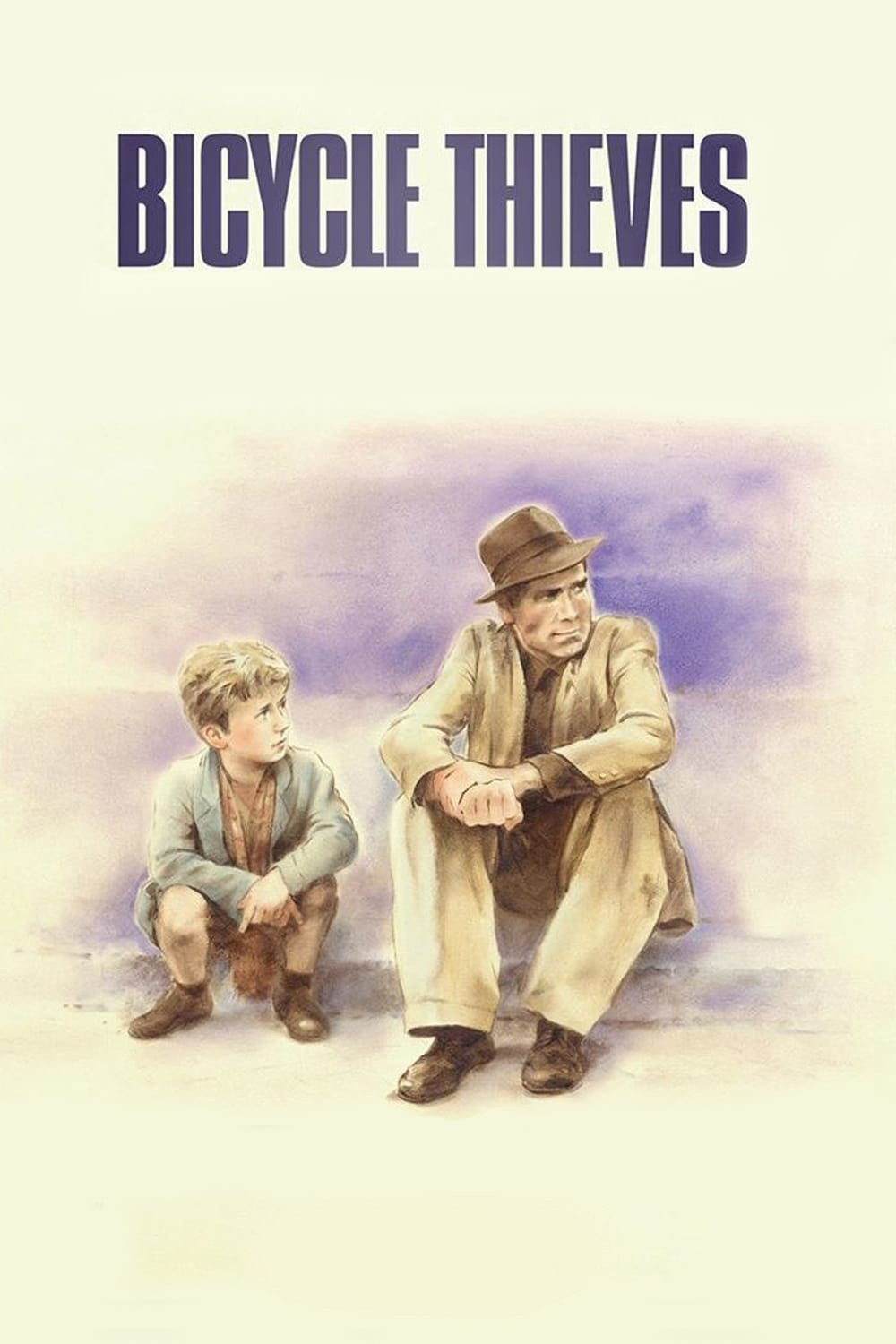
The Historical Era of the Film
Whenever I revisit Bicycle Thieves (1948), I’m immediately transported to the unsettled world of postwar Italy—a landscape marked by the bitter aftertaste of conflict and the hope for renewal. To me, the film doesn’t simply evoke a specific moment; it embodies an entire epoch reeling from the chaos of World War II. The Italian peninsula had just emerged from fascism and a devastating occupation, with entire cities scarred by bombings and civilian suffering. Mussolini’s reign was over, but what followed was not straightforward reconstruction; instead, I see an Italy where hunger, unemployment, and urban decay confronted almost everyone in the late 1940s.
The postwar economic devastation is, for me, the film’s unseen character. I often reflect on how the Italian economy stood in near ruins. Industry had collapsed, the lira was in freefall, and people survived on rations and black market deals. Every frame of the film resonates with the kind of struggle so many Italians knew intimately—lines for food, jostling for meager work, and the gnawing instability of daily life. I sense the lingering trauma of fascism coexisting with a deep-seated urge for democratic renewal, as new parties like Christian Democrats and Socialists jostled to define the country’s direction.
Social conditions, too, feed directly into my reading of the film. Families were often displaced, communities fragmented, and social services still embryonic. There was a tangible feeling of fatigue in the air, one that I believe the film captures in its depiction of weary crowds and half-repaired city streets. To me, the story isn’t just set in Rome in 1948; it’s embedded in a society still searching for anchor in the wake of defeat and humiliation. Urban space was rebuilding, but so was Italy’s sense of self—and that palpable uncertainty defines the era for me as I watch the film unfold.
- Italy’s postwar economy struggled with record-high unemployment rates.
- The transition from fascism to a republican government was fraught with instability.
- Everyday shortages and rationing colored daily experiences.
- Communities were adjusting to the scars and disruption of wartime bombings.
Social and Cultural Climate
If I try to picture the everyday emotional weather of Italy at the time, I find it’s impossible to overstate how fractured and tense everything must have felt. The dominant social attitudes, as I interpret them, were shaped by a rawness—the sense of mistrust, anxiety, and exhaustion that lingers after a national trauma. There was a fundamental shift in perspective on the value and dignity of labor. Traditional social hierarchies, even those of the family, felt like they were starting to erode under the pressure of economic hardship.
I am struck by how pervasive poverty was, not just as a statistical fact, but as a lived reality. People’s hopes were modest because their resources were threadbare. For many, finding work meant salvaging self-respect. I see how the film doesn’t just echo social despair, it also hints at solidarity—the kind that forms in breadlines or shared hardships. Yet, the notion of social alienation looms large. Many lacked safety nets or stable communities, leading to a rise in crime and petty theft, which the film mirrors so tellingly. Faith in authority—police, clergy, politicians—was fragile, with citizens more likely to count on neighbors or family than the state.
Artistically, this period fascinates me because it gave rise to Italian Neorealism—a movement that, for me, emerges directly from these very circumstances. Filmmakers rejected escapist fantasy, turning instead to raw, documentary-style accounts of ordinary life. This wasn’t just an aesthetic choice; I see it as an urgent response to social need—the need to be seen, heard, and understood as real people enduring real crises. The ideals of Neorealism, as I interpret them, were honesty, empathy, and the rejection of illusion—values that crystalize in the film’s focus on real settings, non-professional actors, and unvarnished stories.
How the Era Influenced the Film
I’ve always thought that Bicycle Thieves could not exist without its immediate historical context—it is, in many ways, a testament and a product of its time. Its story springs directly from the social and economic instability of postwar Italy. To me, the desperation of Antonio, the protagonist, is a distillation of a generation’s daily struggle. The stolen bicycle is more than a plot device; it’s the fragile thread that connects a working-class family to mere survival, mirroring how countless Italians saw their own fortunes teeter on the edge of disaster.
What stands out to me is not just the subject matter, but the way the film was produced. The practical realities—limited resources, few professional actors, and on-location shooting—weren’t simply artistic decisions, but necessities. In my eyes, the minimalism of the aesthetic echoes the material deprivation all around. The filmmakers, led by Vittorio De Sica, had to work within significant constraints: low budgets, damaged infrastructure, and general uncertainty. I’m convinced this necessity is the mother of the film’s authenticity—Rome itself becomes a living document of the age, its bombed-out neighborhoods and bustling streets providing an unadorned canvas for the drama. It’s no accident, as I see it, that the film feels as though it could be stumbled upon, not staged.
I’ve always been intrigued by the use of non-professional actors in the cast. Their unpolished performances capture something that, in my view, transcends scripted drama. The everyday faces, the real crowds, the authentic settings—these elements arise from both artistic philosophy and the practical inability to afford stars or elaborate sets. For me, the film is inseparable from Neorealism’s artistic rebellion against prewar cinematic norms, as well as from the production hardships of the late 1940s. In telling Antonio’s story with such raw honesty, Bicycle Thieves becomes, in my mind, a lens into its own era’s hunger, anxiety, and tenacity.
Audience and Critical Response at the Time
When I try to imagine what it must have been like to see Bicycle Thieves in 1948, I picture audiences encountering both the familiar and the shockingly new. Ordinary Italians, as I understand, saw their lives reflected with unsettling clarity—no glamorous escapism, just the daily grind most knew intimately. As I’ve read in contemporary reviews and audience accounts, many viewers responded with deep emotion, moved by the film’s authenticity and directness. For a public used to melodramas and historical spectacles, this felt like a jolt: here were real children, real hunger, and real consequences.
The film played a pivotal role in shaping expectations for what cinema could be. Among critics, especially abroad, I’ve always noted how it was instantly hailed as a defining achievement of postwar European filmmaking. Critics in Italy, while sometimes divided over the nation’s dirty laundry being aired, were generally galvanized by the film’s humanity and courage. Internationally, the reception was nothing short of passionate—many international festivals, including the Academy, celebrated its stark realism and moral clarity. The film gave rise to what I see as a second wave of Neorealism, inspiring filmmakers well beyond Italy’s borders to adopt a similar approach.
I find it fascinating how the film’s reception was tangled up in the stormy politics of reconstruction. Some were uncomfortable with its demand for social change, while others embraced its empathetic eye for the marginalized. For me, the public’s embrace demonstrated a hunger for new stories—narratives that rejected propaganda and spectacle in favor of human-scale truth. It was as if the country, still reeling from the war, found in the film a rare space to confront, mourn, and perhaps begin to heal wounds collectively.
Why Historical Context Matters Today
Each time I turn to Bicycle Thieves now, I’m acutely aware of how much richer my viewing becomes by understanding its historical context. Knowing the realities of postwar Italy doesn’t just illuminate the film’s setting; it transforms every gesture, setting, and encounter into a kind of encoded testimony. The director’s motivations, the actors’ faces, the dilapidated streets—all speak to me with layered meaning when I recall the broken world in which they were created. It’s not just art; it’s documentary, memory, and political statement, all woven together.
For me, appreciating the historical fabric behind the film offers two special insights. First, it reveals how a culture’s pain and recovery can fuel artistic innovation—the way deprivation led to a new visual language and philosophy of filmmaking. Second, it sharpens my empathy—not just for Antonio or his plight, but for whole generations caught between catastrophe and renewal. I find that when I teach or write about the film, I’m always encouraging others to dive beneath the surface, to see the texture of 1940s Rome not as backdrop, but as protagonist in its own right.
I’ve observed that even today, audiences who take the time to explore the film’s origins come away changed. Present-day crises—economic upheaval, refugee movements, labor struggles—can feel newly connected to the past, simply by seeing how everyday people navigated unthinkable adversity. In my view, the historical context of Bicycle Thieves is a living repository of warning and wisdom. It asks us to remember that art shaped in the crucible of collective hardship has a unique power to endure, to inspire, and to challenge us, long after its own needy, battered world has faded into history.
After understanding the factual background, you may want to see how this story was received as a film.
🎬 Check out today's best-selling movies on Amazon!
View Deals on Amazon