
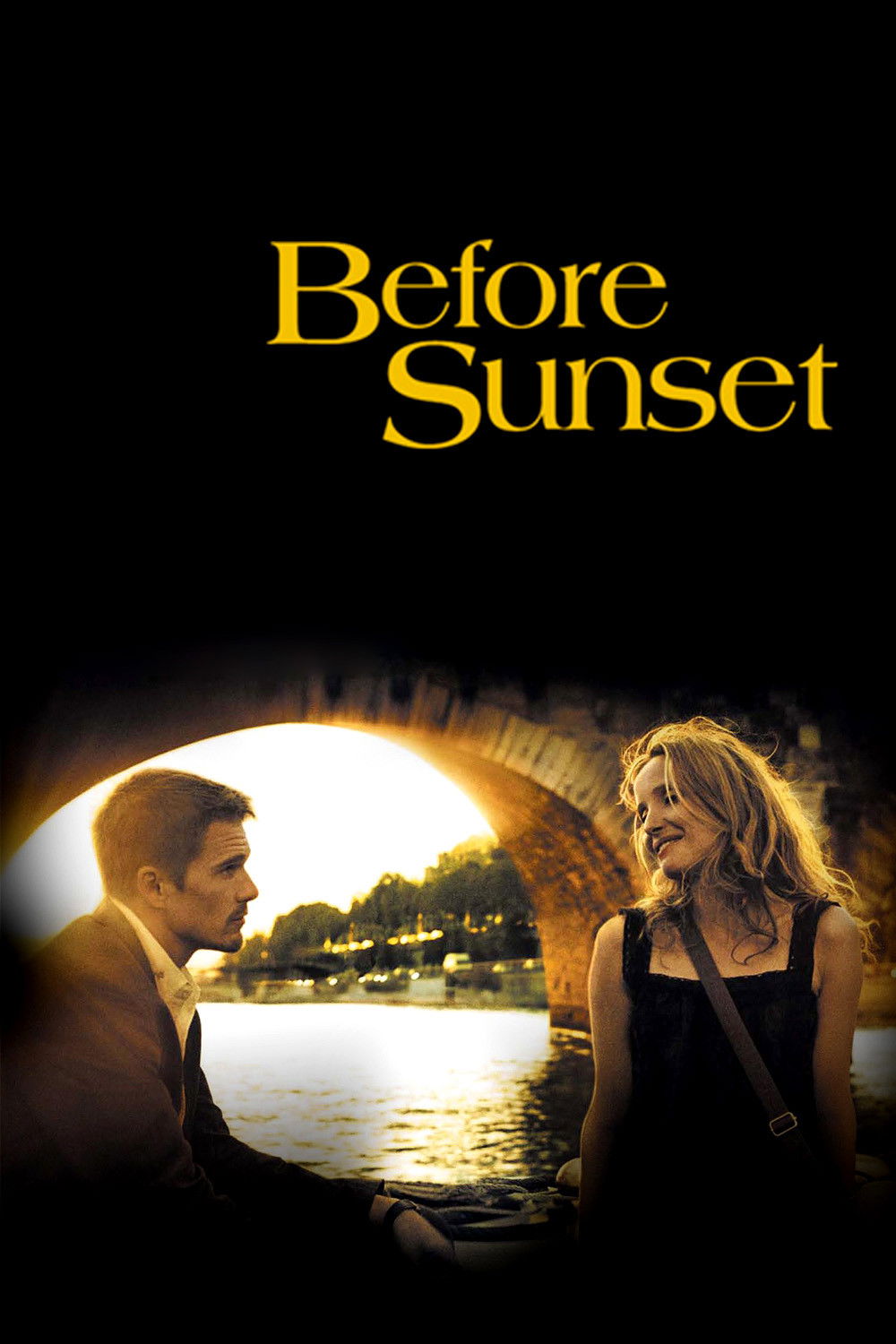
The Historical Landscape
I remember sitting in a darkened theater in the early summer of 2004, watching the opening frames of “Before Sunset.” It wasn’t just another film for me—it was a time capsule, a whisper of a world that felt fleeting and uncertain. I think back to that moment in history, an era suspended between analog memory and the embryonic digital future. The year 2004 always carries a distinctive texture in my memory. It was a time when the internet was rapidly evolving yet hadn’t completely devoured our social interactions, when cell phones were omnipresent but not omnipotent. I see the world of “Before Sunset” as a gentle bridge between two centuries, with one foot in the deep contemplations of the 1990s and the other bracing for the relentless information age that would soon explode.
World events swirled ominously beyond the quiet Parisian boulevards depicted in the film. The United States, still raw from the trauma of September 11th, was cemented in conflict overseas—both in Afghanistan and in the recently invaded Iraq. Globalization as a phenomenon was no longer a subject of theory; it was an often uncomfortable daily reality, visible in everything from the brands in our stores to the anxieties on our television screens. I recall the 2004 European Union expansion, a momentous event in which ten new countries joined the EU, reflecting a broader sense of possibility and trepidation about the world growing ever closer, yet feeling paradoxically more fragmented.
Culturally, there was a shared sense of searching for meaning amidst dull routine and political division. “Before Sunset” felt, to me, like a gentle act of resistance against the growing pace of life. As the world sped up technologically, the film stretched time, inviting me—as it did its characters—to listen, to walk, to reminisce. I think audiences of the time were beginning to miss the art of the slow conversation, the stroll with no destination. Against a historical backdrop that was feverish with anxiety, the film offered an antidote: two people daring to pause, reflect, and connect.
Cultural and Political Undercurrents
When I revisit “Before Sunset,” I can’t help but be drawn into its undercurrent of dissatisfaction and yearning, a yearning that seems to haunt the beginning of the twenty-first century. In my eyes, the film’s spirit is made uneasy by the era’s prevailing uncertainties. I’m reminded how, after the initial optimism that greeted the new millennium, there was a sharp descent into skepticism—about politics, about love, and, most pressingly, about time itself.
The film’s questions about life choices and missed opportunities resonate deeply with me because, in that moment of history, so many of us were preoccupied by the sense of alternative paths not taken. I think about the post-9/11 malaise that hovered over cultural production. I felt, and still feel, the subtle anxiety that emerged from living in a world where nothing could be taken for granted, not even simple train schedules or a lover’s promise. This was an age before social media platforms monopolized our relationships, when personal histories were largely analog, recorded in notebooks and memories rather than status updates. I see that analog nostalgia baked into the very texture of “Before Sunset”—it’s in the silences between Jesse and Celine, where much is said without words, and in the way the film lingers on small gestures instead of rushing toward a conclusion.
Politically, I sense in the film a muted reaction to American interventionism and a subtle mourning for a world that could have sustained innocence longer. Jesse, as an American, seems to carry that global baggage with him—good intentions complicated by reality, promises unraveled by time. The way he and Celine walk the streets feels, to me, like an act of reclaiming agency and intimacy in a decade increasingly defined by surveillance, suspicion, and a creeping sense of fatalism. Their dialogue isn’t just about romance; it’s a subtle commentary on how we try to preserve meaning and connection in a world where both feel increasingly vulnerable.
I also reflect on the generational anxieties just bubbling under the surface—both for the characters and for those of us watching. The film’s leads are in their thirties, an age I remember many of my peers regarding with a mixture of hope and dread. For those of us growing up as globalization took root, there was always an undercurrent of restlessness: the promise that we could do anything colliding with the realization that no path was immune to regret. That balance—between possibility and irretrievable loss—was, and still is, part of the political weather of the early 2000s, quietly permeating the film’s every moment.
The Film as a Reflection of Its Time
In watching “Before Sunset,” I continually marvel at how it distills the particular temperament of its era into its every frame. I find myself moved not so much by what happens, but by how the film lets time breathe. It’s striking to me that in a culture veering toward the instant gratification of text messages and 24-hour news cycles, the film dares to treat conversation as a pilgrimage rather than a pit stop. The characters’ dialogues arc over the course of a single afternoon, and I see in that structure a kind of rebellion against the anxious fragmentation of the early 2000s.
It seems significant to me that the film’s romanticism is not naive. “Before Sunset” doesn’t just showcase yearning; it interrogates it. I remember how, at that time, romance on the screen was often packaged into neat resolutions or tragic melodrama, yet this film insisted on ambiguity. To me, that ambiguity mirrors the uncertainty that defined so many of our choices during those years. In my mind’s eye, Celine and Jesse’s chance encounter in Paris reflects not just personal history, but the transience and contingency of our early 21st-century lives. The sense that everything might change at any moment—whether through global events or private missteps—was never far away. I see this in how the film refuses to indulge in nostalgia without skepticism; every tender memory is shadowed by the knowledge of what was lost.
I’ve always been particularly aware of how Richard Linklater’s directorial choices act as a kind of counterpoint to the era’s dominant cinematic trends. The early 2000s, when I look back, were awash with high-concept blockbusters, rapid-fire editing, and the beginnings of franchise fatigue. By contrast, “Before Sunset” draws its tension from silence, from two people simply existing in space and time—two souls talking, as if that alone might save them from the world encroaching outside. It’s as if the film wanted to bottle the very act of being present, to remind viewers like me that there’s meaning in unhurried communion, even when answers elude us.
I also notice the way the film privileges interiority—it’s as much about what’s left unsaid as what’s spoken. This, for me, feels inseparable from the post-9/11 mindset; suspicion and guardedness pervade both public and private life. The film gently exposes those layers, asking what happens when we risk vulnerability after years of armoring ourselves against disappointment and chaos. The chance of genuine connection seems both exhilarating and terrifying—much like the times themselves, when each new headline threatened to upend the fragile normalcy we’d constructed for ourselves.
On a visual level, I can’t ignore the subtle interplay between the film’s Parisian setting and the globalization underway outside the story. As I see it, the city, with its ancient facades and lively riverbanks, functions as both sanctuary and relic—a place where history is tangible, yet always out of reach. There’s comfort in those cobblestones, but also a quiet ache—the sense that, even surrounded by centuries of meaning, we might not know our own. The film’s focus on walking, meandering, and pausing beside old monuments feels like an assertion of continuity in an era too often convinced of its own novelty.
Changing Perceptions Over Time
Over the years, I’ve watched “Before Sunset” shift in meaning, both for myself and for new generations of viewers. When I first saw it, I was struck by its immediacy—how the conversations felt so present, so in tune with the way my friends and I talked about dreams, regrets, and the consequences of time. But as time itself wore on, I saw the film begin to recede from the pulse of current events, taking on the golden hue of nostalgia for a time when encounters were still unpredictable and privacy could be taken for granted.
I find it fascinating how younger viewers tend to regard the film—as a kind of ethnographic document, even an elegy for a lost kind of intimacy. In the era of smartphones, instant messaging, and hyper-curated online identities, the notion of spending an afternoon entirely absorbed in one person’s company—without interruptions—feels almost radical. I sometimes wonder if the film now serves, inadvertently, as a love letter to the last moment before connectivity became constant and exhausting. The handwritten notes, the longing looks, even the use of landlines and bookstores, strike newer audiences as almost exotic in their modesty.
For me, the heartbreak of “Before Sunset” has aged with me. Re-watching it, I feel the weight of accumulated years more acutely—the disappointments, the roads not taken, the quiet compromises that define adult life. The world that once seemed vast and full of possibility has, for many of us, narrowed into routines shaped by work, family, and social obligations. The film’s honesty about failed aspirations and enduring hope becomes more poignant. Its refusal to provide closure or easy answers feels even more courageous today, when so much cultural production is pressured to tie up loose ends.
Yet as the political climate has continued to shift—through new wars, financial crises, and resurgent existential anxieties—I’ve noticed “Before Sunset” take on an unintended political resonance. The longing for authentic connection, once primarily a romantic gesture, now doubles as a subtle rejection of polarization and digital alienation. I sense a desire, in myself and others, to recover the lost art of listening and wandering without purpose. The characters’ decision to explore ambiguity rather than certainty strikes me as a necessary act of humility, one that speaks to the dangers of dogmatism and the beauty of open-endedness in an age of sound bites and ideological rigidity.
Historical Takeaway
When I look back at “Before Sunset,” I see it as more than just a love story. In its modest way, the film captures a world caught between two tides—one pulling us toward reflection, the other toward distraction. For me, it’s inseparable from its moment in history: a moment defined by post-9/11 uncertainty, the rapid approach of digital conjunction, and the restless search for meaning when old certainties were rapidly dissolving.
What the film ultimately teaches me, as I try to pull its lessons into the present, is that history is always lived through small gestures as much as grand narratives. The art of conversation, of meandering without a map, of pausing to question and confess—these were and remain vital antidotes to eras saturated with noise. “Before Sunset” reminds me that human connection is both fragile and enduring, shaped as much by what we dare to say as by what we leave unsaid. Its very structure—unfolding in real time, without theatrical fireworks—embodies a kind of temporal honesty that feels more subversive now than ever.
Ultimately, when I step outside after a viewing, the film lingers not as nostalgia for a lost past, but as an ongoing challenge: to inhabit the present with more attention, compassion, and curiosity. In all its quietness, “Before Sunset” preserves a slice of history by showing us what it meant to be human at a crossroads—when the world was tilting toward the future and no one could say exactly where it would land.
To see how these real-world elements shaped the film’s impact, you may also explore its reception and legacy.
🎬 Check out today's best-selling movies on Amazon!
View Deals on Amazon