
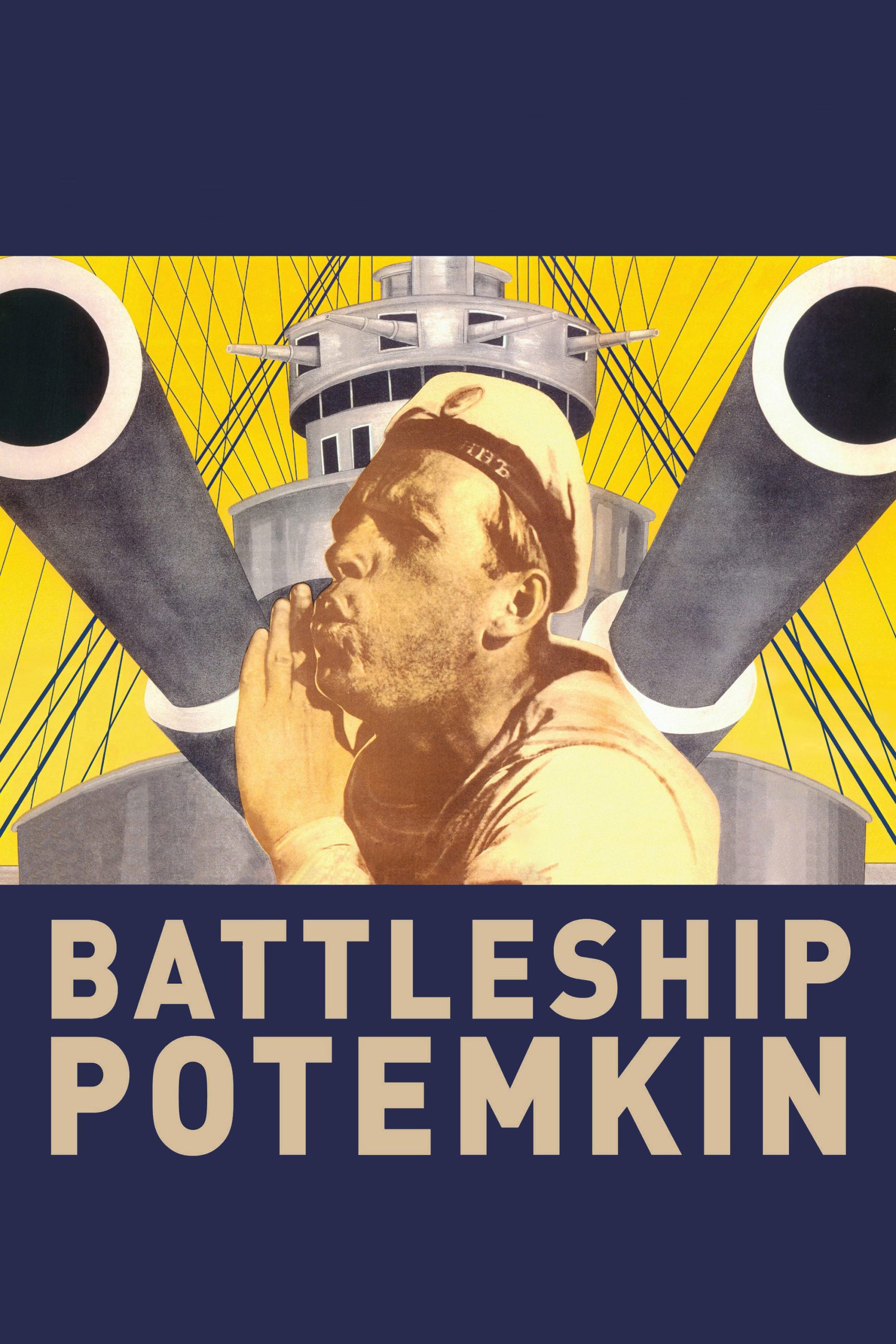
The Historical Landscape
Watching “Battleship Potemkin,” I feel as though I’m standing in a crowd at the edge of a revolution, hearing distant echoes of a world in transformation. The year 1925 did not exist in a vacuum—it pulsated with the convulsions of the early twentieth century, and every frame of Sergei Eisenstein’s film seems to pulse with those energies. When I reflect on the backdrop against which this movie was created, I can’t help but recall Russia’s turbulence: the tsarist order had crumbled, World War I’s traumas haunted every household, and the Bolshevik experiment in social engineering was still in its raw, uncertain infancy.
In that moment, the Soviet Union was a place where the idea of possibility collided with realities both grim and exhilarating. There was starvation alongside celebration, anxiety next to ambition. Lenin’s death was still fresh in the public mind, and his image lingered over the cultural conversation as the country’s new leaders, particularly Stalin, wrestled to define the revolutionary state’s direction. I find it remarkable how the Soviet government viewed art at that time—not merely as entertainment or aesthetics, but as a primary organ of mass education, a weapon to galvanize and direct public consciousness.
My sense is that every aspect of Soviet existence in those years was colored by the push toward collectivism and the eradication of the old hierarchies. There was a yearning for progress, but also a constant undertow of fear—about sabotage, about external enemies, about the chaos inherited from the imperial era. These emotional cross-currents permeated daily life, from the smallest local gathering to statewide endeavors in industrialization and literacy. The exigency to construct a new narrative for the Russian people—one that detached itself from the centuries of autocracy—gave art a sense of political urgency I haven’t found in many other historical periods.
In this context, film, still a relatively young medium, was given front-line status. When I see Soviet films from this era, I can sense both an enormous optimism and a defensive posture: the future was theirs to invent, but the ghosts of the past, and the uncertainties of tomorrow, pressed in from all sides. Watching “Battleship Potemkin,” with its dynamic crowds and monumental use of space, I see not just a story of mutiny, but of a society violently awakening to a new self-understanding, unsure whether the sunlight or the storm will break first.
Cultural and Political Undercurrents
I have always been struck by how deeply politics courses through the veins of “Battleship Potemkin.” For me, it’s almost impossible to separate the film’s artistry from the ideological tides that shaped every aspect of its creation. The Soviet state, still consolidating its legitimacy, saw itself as a project in the making—one where loyalty was to an abstract future rather than a stable present. In this shifting landscape, I sense that Eisenstein’s call was not just to bear witness, but to actively mold Soviet identity.
One aspect that consistently draws my focus is how the film operates as a vanguard piece within the tradition of revolutionary propaganda. It’s impossible, in my experience, to interpret Potemkin outside the framework of agitprop—the deliberate steering of public sentiment. The regime was acutely aware that film could be mass-produced and widely distributed, making it a perfect vessel for collective myth-making. My reaction, when I see the fevered energy of the Odessa Steps sequence or the iconic raising of the red flag, is that I am watching not just a fictional recreation, but a calculated invocation of memory and hope intended to fuse disparate communities into one heaving, rising force.
Yet, even so, I often feel that “Battleship Potemkin” captures more than its intended ideology. There is a rawness to the expressions of the seamen and townspeople, a palpable intensity in their suffering and revolt. For all its constructedness, the film encapsulates the lived trauma and frustration of an age when famines, strikes, and arbitrary violence were facts of daily life. This makes it, in my view, not only a piece of political theater but a window into the psychology of a people desperate for change, but uncertain of how to achieve or survive it.
At the same time, the film signals its modernity in more than just content. I’m particularly intrigued by Eisenstein’s fascination with montage—a technique that, for me, does more than create rhythm or pace. The splicing of shots in rapid, sometimes jarring sequences feels like an analogue for the period’s lived experience: fragmented, tumultuous, shaped by multiple, contradictory forces at once. The fact that montage became synonymous with Soviet cinema tells me that this was not happenstance, but an almost philosophical embrace of flux and transformation—the very qualities that defined the 1920s Soviet era.
I see this approach reflected in Soviet attitudes toward history itself. The past was to be reinterpreted, even rewritten, in service to the revolutionary project. “Battleship Potemkin,” in its heroic rendering of a 1905 event, becomes more than a historical drama—it’s an origin myth for the nascent state, collapsing individual pain and sacrifice into an abstract, collective victory. In its most ambitious moments, I feel the film both feeds off and contributes to the era’s culture: a world where facts and artifice blend seamlessly in the pursuit of a greater social narrative.
The Film as a Reflection of Its Time
There’s a moment, while watching “Battleship Potemkin,” when I realize how intimately the film’s structure and tone are married to the uncertainties and ambitions of 1920s Russia. For me, the overriding impression is not of a film looking backward with nostalgia or even pity, but one making a passionate plea for solidarity in the face of adversity. Eisenstein, through his work, forges an atmosphere of relentless movement—crowds surge, chaos reigns, and individual tragedies are swept up into larger historical necessity. Whenever I revisit the infamous Odessa Steps sequence, I’m overwhelmed by the sense that both the suffering and the rage depicted on screen are simultaneously unique to the characters and emblematic of the broader Soviet experience.
It’s in these scenes that I find the most striking correlation between the film and its context. I see, in the mothers clutching their wounded children, a metaphor for generational trauma, legacies of violence and deprivation passed down, with nobody spared. To me, the episode’s brutality is far from gratuitous; it reflects a period when violence, both physical and institutional, was not simply feared but expected. The imagery of boots, guns, and terrified faces feels almost like a diary of an entire nation’s anxious subconscious. I interpret these sequences as a coded plea: remember what we have endured, but also, consider what we might one day overcome together.
Eisenstein’s choice to forgo traditional heroes or clear protagonists—focusing instead on the collective—strikes me as a direct echo of the socialist ethos taking shape during the film’s production. Soviet cinema, at this moment, began to privilege the anonymous mass over the singular individual. When I observe the facelessness of the Cossack oppressors or the swelling, indistinct crowd of revolutionaries, it drives home the point that history, in this vision, is made by united action rather than singular ambition. This deliberate collectivism, for me, stands as both a testament to the ideological ambitions of the state and a reflection of genuine yearning among ordinary Russians, battered and exhausted, for connection and agency.
The technical innovation of the film also maps closely onto the era’s more radical artistic tendencies. Montage, as I experience it in “Battleship Potemkin,” is not just a stylistic flourish, but a language perfectly attuned to a world where history appears to break apart and reassemble itself overnight. For a society still reeling from years of war, revolution, and internal strife, montage offered a narrative technique that mirrored lived reality: discontinuous, intense, sometimes overwhelming in its violence and abruptness. That this style was born of necessity—a lack of resources, equipment, and experienced actors—only reinforces, for me, the sense of resilience and innovation that defined the Soviet 1920s.
But even more compelling, to my mind, is the film’s implicit answer to the question of where meaning is to be found. “Battleship Potemkin” seems to pose the argument that history is possible to change, not by waiting for the lone hero, but by coming together. The film’s crescendo, with the fleet’s collective refusal to fire on their comrades, embodies, for me, the momentary triumph of unity over fear and isolation—a spark of hope, as fragile as it is electrifying, amidst a society struggling for its very existence.
Changing Perceptions Over Time
Few films, in my experience, have undergone as complete a transformation in public perception as “Battleship Potemkin.” When I first confronted the work, it was within a tightly controlled, state-approved historical narrative, enshrined as the ultimate expression of revolutionary cinema. In the early days, Soviet audiences saw it as a passionate affirmation of their newly won freedoms and a call to vigilance against reactionary forces. But as the decades rolled on, and as the Soviet experiment grew more complicated—tainted first by purges, then by stagnation, and eventually by collapse—the film’s meaning became less straightforward.
I’ve noticed that, by the mid-twentieth century, Western critics approached “Battleship Potemkin” with a different agenda. Stripped of its initial political immediacy, it morphed into a cinematic landmark, lauded for its innovations in form and editing. In film schools and theory circles, Eisenstein became less a revolutionary and more an auteur, admired for his technical inventiveness rather than his political commitments. I find it fascinating how, as the West consumed Potemkin, the focus shifted: montage became king, while the film’s status as agitprop was discussed more as an academic curiosity than as living doctrine.
Increasingly, as I examine modern discussions of the film, I see a tension between admiration and ambivalence. Contemporary viewers, wary of propaganda and the abuses that often accompany utopian projects, approach the film with a degree of skepticism. What once inspired awe may now provoke discomfort—a realization that revolutionary passion can fuel both liberation and oppression. Many now look at the Odessa Steps sequence not only as a tour de force of editing, but as a potent example of cinematic manipulation, where emotional resonance is harnessed in pursuit of a larger, sometimes ruthless, agenda.
At the same time, I sense that the film’s universal themes—suffering, injustice, the cry for dignity—continue to resonate outside any specific historical regime. Where early audiences may have seen themselves reflected back, today’s viewers are just as likely to use Potemkin as a prism through which to interrogate the uses and abuses of power. I am often surprised by how contemporary protest movements have borrowed not only the imagery of Eisenstein, but the underlying message of collective defiance in the face of tyranny. The distance from the film’s original context can paradoxically make its core ideas both more flexible and more unsettling, as each generation finds its own analogues to Potemkin’s mutineers and oppressors.
In that regard, my personal understanding of the film has matured along with the times. What began, for me, as an awe for technical mastery has gradually become a complicated meditation on the costs and possibilities of social change. It’s a testament to the film’s complexity that I have never experienced two identical viewings—each decade, each historical crisis, seems to summon forth different meanings from within its frames. Whether as propaganda, artistry, or warning, “Battleship Potemkin” remains perpetually open to reinterpretation, forever entangled with the world outside the screen.
Historical Takeaway
Reflecting on “Battleship Potemkin,” I am always left with the impression that I have not simply watched a dramatization of past events, but entered into the emotional and intellectual climate of a world being born in fire. The film does not describe history—it immerses me in the whirlwind, demanding that I feel the longing, dread, and tentative optimism of those who lived through its epoch. For me, Potemkin’s enduring lesson lies in the messy, ferocious business of remaking reality: how revolution unlocks both hope and violence, how art becomes, for a moment, indistinguishable from social engineering.
The most significant thing I take from Potemkin is how it documents a population in transition—from subjects to citizens, from isolated suffering to the possibility of collective agency. Every sequence, every montage cut, provides not only an aesthetic experience but a record of psychological and societal upheaval. In watching it, I am reminded of the fragility and necessity of solidarity, especially in times of profound uncertainty. I see, too, the dangers of myth-making—how the drive to forge unity can both liberate and coerce, sometimes in the same gesture.
This film, for all its ideological baggage and mythic grandeur, ultimately teaches me more about ambiguity than certainty. It shows a society grasping for meaning, yearning for justice, yet haunted by violence both suffered and inflicted. Its resonance today, I think, springs from its refusal to give a simple answer—is liberation primarily a matter of raising a flag, or does it come at the cost of innocence and complexity? Potemkin, to my mind, refuses to resolve this tension, and in doing so, it gives a truer account of its era than perhaps any manifesto or speech could.
In the end, my engagement with “Battleship Potemkin” is an ongoing reckoning—between ideals and reality, past and present, personal memory and collective destiny. The film does not close a historical chapter so much as it reopens the debate, inviting each new viewer to grapple with the meaning, and the price, of transformation.
To see how these real-world elements shaped the film’s impact, you may also explore its reception and legacy.
🎬 Check out today's best-selling movies on Amazon!
View Deals on Amazon