
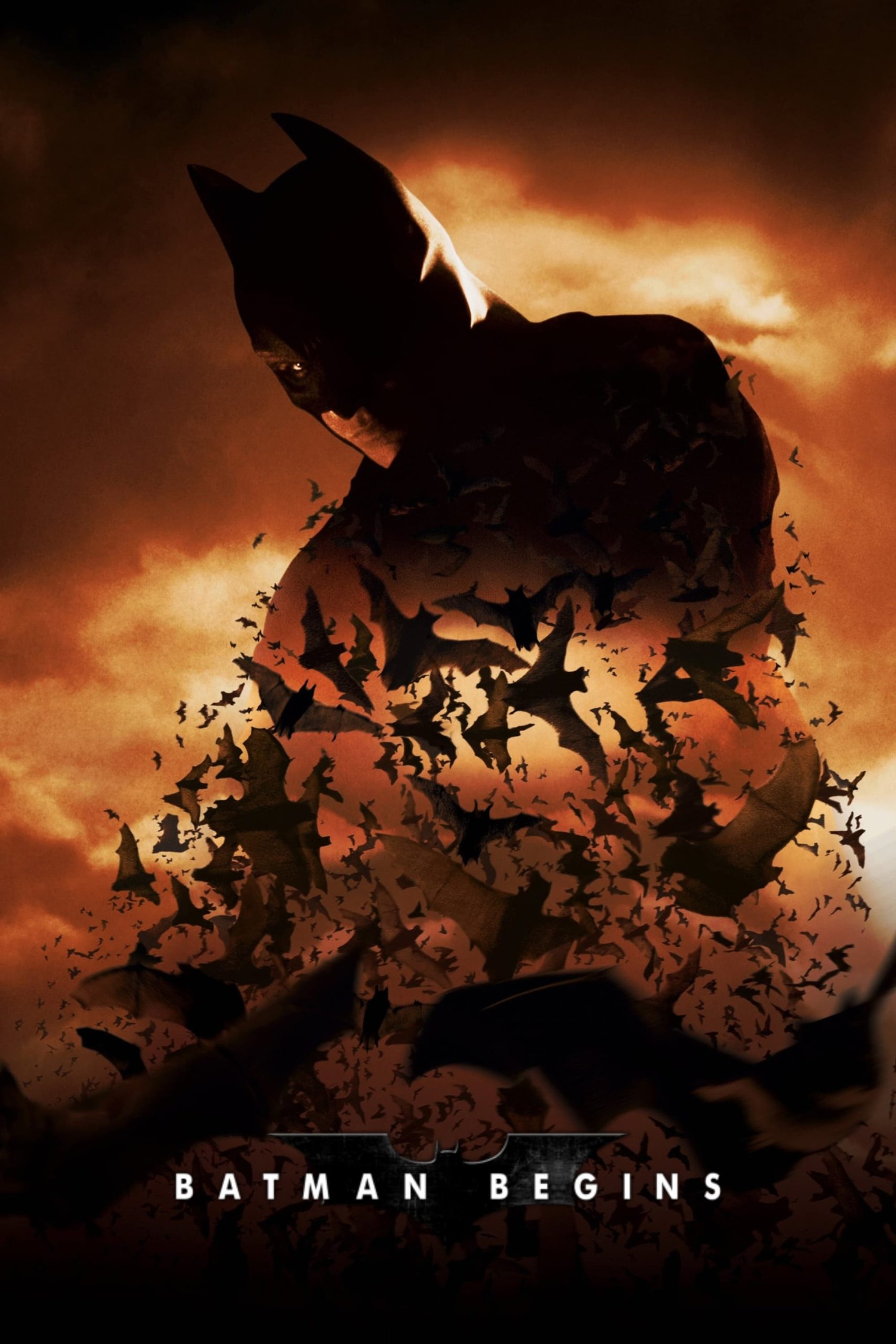
The Historical Era of the Film
My memories of the early 2000s are still vivid, especially when I look back at everything that led up to the release of Batman Begins (2005). As I watched the world transform after the events of September 11, 2001, I couldn’t help but notice how those seismic shifts in the political and social climate seeped into every corner of our culture, including cinema. There was a pervasive sense of uncertainty, even anxiety, about the world order—terrorism dominated the evening news, and Western cities, including my own, seemed to grapple with feelings of vulnerability that hadn’t existed to such an extent a decade prior. During those years, I often felt the collective anxieties of my generation reflected in the media we consumed.
Economically, I remember the United States—and much of the Western world—navigating a complicated period. While the dot-com crash of the early 2000s left some fallout, there was a sense of renewal and cautious optimism as technology and globalization expanded at an unprecedented rate. In my conversations with peers, a fascination with technology’s rapid growth was hard to ignore, but there was also a growing suspicion of powerful institutions. The War on Terror gave rise to an environment where concerns about trust, corruption, and the perils of unchecked authority became part of our everyday lexicon. When I reflect on Batman Begins, I see it emerging from this very crucible of unease and transition.
On the surface, entertainment during this period became darker and more ambitious. Popular franchises were reinvented to echo the seriousness of the age—think of the gritty tones in contemporary spy films and action thrillers. The superhero landscape was also in flux. I recall how Batman’s previous on-screen iterations—especially those in the 1990s—fell out of favor, partly due to their campiness and perceived disconnection from what audiences now wanted: realism, depth, and relevance. By 2005, it was clear that blockbuster cinema wasn’t just about spectacle; it was also an arena for exploring the pressing anxieties of its production era.
Social and Cultural Climate
When I consider the social and cultural attitudes of that time, it’s impossible not to recognize how insecurity and skepticism permeated public consciousness. The early 2000s, as I lived and studied them, were defined by a loss of collective innocence. The confident optimism of the late 1990s gave way to a more somber, introspective outlook as terrorist threats and global instability filled the headlines. As I moved through art galleries, bookshops, and university halls, I noticed that conversations often revolved around ideas of fear, resilience, and moral ambiguity. It was an era obsessed with questions of justice and vigilantism—themes that were suddenly not as abstract or safely escapist as they once seemed.
I remember superheroes being reimagined for a society that craved not only catharsis but a mirror. There was a strong current of disillusionment in my generation toward institutions that, traditionally, were supposed to offer us guidance and protection. Political scandals, dubious wars, and shadowy government initiatives left many of us wondering whom to trust. When Batman Begins arrived, with its focus on personal ethics and the corrosion of public trust, it felt entirely in tune with that mood of suspicion and soul-searching.
Popular culture during this period witnessed shifts toward realism, cynicism, and complexity. Films, novels, and television began to question simplistic ideas of good and evil, probing instead at the gray spaces in between. Socially, I saw renewed conversations around masculinity and trauma, perhaps as a reaction to perceived threats and the uncertainties that unsettled so many. It’s also hard for me to ignore how urban decay and the challenges faced by modern cities became metaphors—Gotham’s crumbling architecture and the moral rot at its heart seemed, to me, a reflection of widespread concerns about failing civic institutions and the fragility of urban life in the face of modern threats.
From my vantage point, these tensions—hope versus fear, vengeance versus justice—weren’t just artistic flourishes. They were the very substance of debates in classrooms and around dinner tables, and Batman Begins managed to capture them with uncanny precision.
How the Era Influenced the Film
I firmly believe that Batman Begins would not have taken its brooding, realistic shape without the unique pressures of its production era. Director Christopher Nolan and his team tapped into the spirit of the early 2000s by choosing to ground the film in a world that could plausibly be our own. While previous Batman films played up spectacle or surrealism, I was struck by how this iteration drew, almost obsessively, from real-world concerns. Watching it in theaters, I sensed that everything from Bruce Wayne’s psychological scars to Gotham’s descent into lawlessness was filtered through the lens of a post-9/11 sensibility.
The emphasis on fear as both a weapon and a weakness resonated deeply for me, as that concept preoccupied much public discourse during the period. The idea of overcoming one’s own terror—and using the myth of the Batman to instill a semblance of order—felt tied to contemporary debates about security, leadership, and the use (or abuse) of power. When I consider how the film’s antagonists aim to destroy Gotham from within, destabilizing its core by amplifying fear and chaos, I can’t help but draw parallels with how terror and instability were perceived as existential threats following the attacks on New York and Washington.
The choice to focus on Bruce Wayne’s formative years and his efforts to rebuild a broken city also seemed to echo contemporary aspirations for regeneration in the face of disaster, both literal and figurative. The urban setting, intricate corruption, and intrigue-laden plotlines felt close to home for anyone familiar with headlines from that era. The film’s production values—gritty cinematography, realistic action sequences, and detailed cityscapes—were, in my eyes, nods to a collective yearning for authenticity in storytelling.
- The post-9/11 atmosphere of fear and mistrust
- Cultural demands for more nuanced, realistic superheroes
- Increased public dialogue about corruption and civic responsibility
- Technological advances shaping urban imagery
Even the casting and performances seemed informed by the age’s preference for gravitas over flamboyance. I always felt Christian Bale’s intense portrayal of Bruce Wayne captured an emerging archetype for the mid-2000s: the flawed, uncertain hero contending with a world out of balance. It’s no accident, I think, that themes of vigilantism and the ethics of intervention—so pressing in the political climate—found their allegories in Gotham’s story.
Audience and Critical Response at the Time
When I recall the summer of 2005, the buzz around Batman Begins was, to me, unlike any superhero release in recent memory. Audiences—and critics—were primed for a departure from the campy excesses that had plagued the late-1990s Batman films. As someone who attended a packed opening-weekend screening, I saw firsthand how viewers responded almost with relief to the tonal and stylistic shift. People around me talked about how the film felt urgent and grown-up; it seemed to respect the audience’s intelligence, something I found refreshing.
Critical reviews from the time, which I collected obsessively, consistently praised the film’s serious and realistic approach. Critics highlighted Christopher Nolan’s decision to eschew sensationalism for psychological complexity. I noted an appreciation for the way the film reframed Batman as not just a superhero, but a product of trauma and determination struggling within a city on the brink of moral collapse. The word “authentic” came up repeatedly in my conversations with fellow film historians and casual fans alike.
Many were quick to draw connections between the film’s themes and the contemporary social climate. Critics lauded its willingness to engage with contemporary anxieties about terrorists, unseen enemies, and the thin line between justice and vigilantism—a line that seemed to blur in real-world headlines. I also remember a palpable sense that Batman Begins had, in a way, restored dignity to the superhero genre, setting a new standard for what audiences craved: depth, plausibility, and relevance. Box office numbers reflected this hunger, but so did the lively debates the film sparked online and in cultural forums.
Not everyone was enamored with the new direction. I heard some viewers lament the near-total absence of comic-book-style whimsy or visual extravagance, but these views seemed to me to be in the minority. More often, I encountered excitement at seeing a familiar franchise reinvented to match the concerns and cravings of a changed era.
Why Historical Context Matters Today
Whenever I revisit Batman Begins now, I do so with a deepened awareness of the historical forces that shaped it, and I’ve found that understanding this context makes the film vastly richer and more resonant. The early 2000s aren’t just set dressing for Batman’s latest incarnation—they’re the crucible in which every choice, from narrative structure to visual design, was forged. Each time I hear Bruce Wayne talk about fear, or see Gotham teetering on the edge, I’m reminded of the world I inhabited as the millennium turned—a world captivated by questions about trust, authority, and the possibility of renewal amid devastation.
Recognizing the social anxieties and political turbulence of 2005 allows me to understand why Batman Begins felt, and continues to feel, so urgent. The film stands as a cultural artifact that channels the collective consciousness of its time—its mistrust of institutions, its grappling with terror, its hunger for authentic heroes. Later superhero films have followed this blueprint, but I see Batman Begins as a foundational text for the modern era, one that captured the very real dramas of my own age and projected them through the lens of myth and fiction.
I’ve come to value historical context not as background noise, but as the key to unlocking a film’s deepest significance. Batman Begins is, for me, a textbook example of how cinema both shapes and is shaped by the society from which it springs. Its every frame is a conversation with the fears and hopes of the early 2000s, and watching it with that knowledge transforms it from mere entertainment to a window onto the recent past. For anyone wanting to grasp why this film mattered—and why it endures—I believe there’s no substitute for understanding the world in which it first appeared.
After understanding the factual background, you may want to see how this story was received as a film.
🎬 Check out today's best-selling movies on Amazon!
View Deals on Amazon