
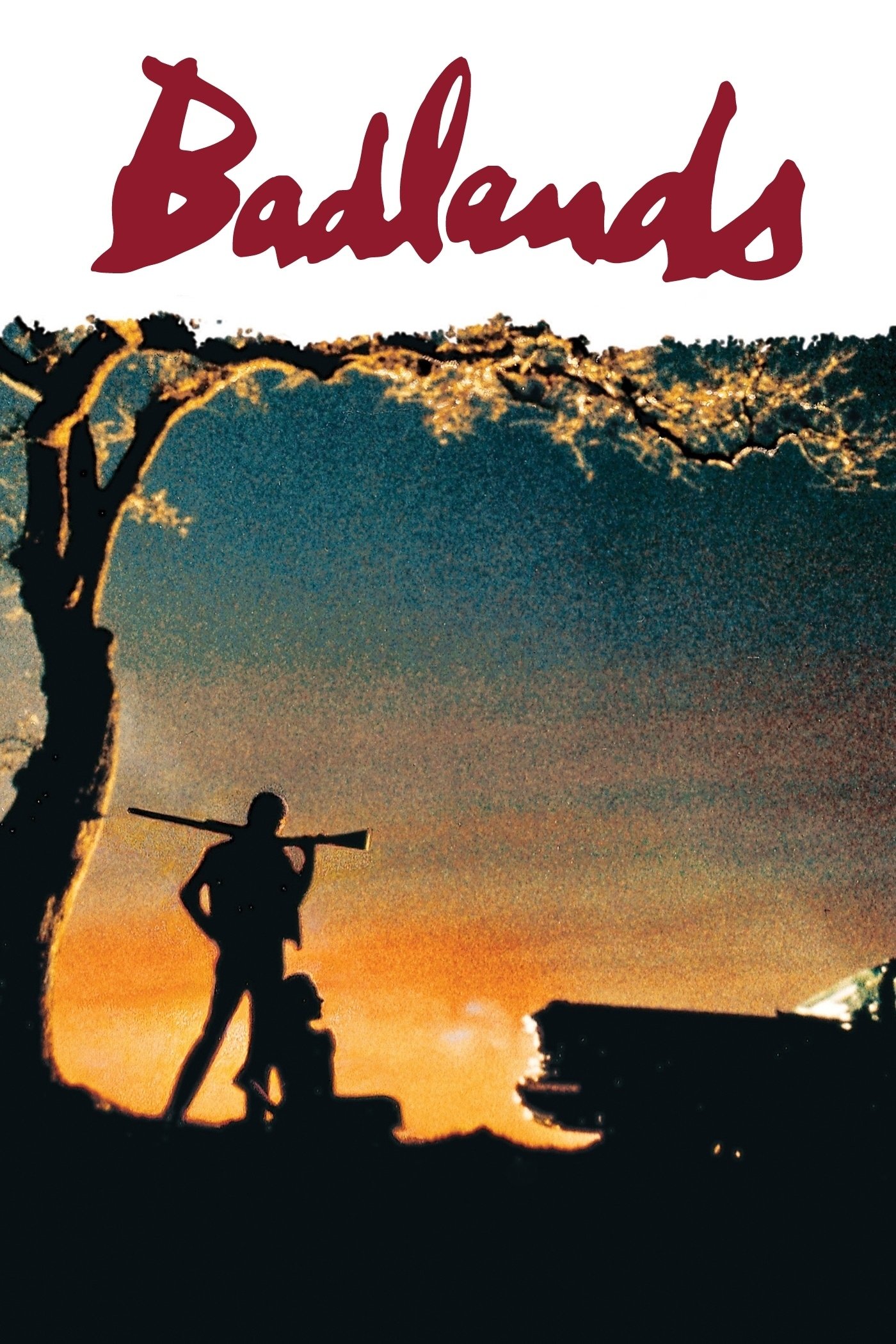
The Historical Landscape
To me, watching “Badlands” today is like peering through a crack in America’s self-image during the early seventies. There’s a specific kind of shadow that falls over the film, shaped by the lingering disappointment and existential melancholy of that era. The early 1970s were no longer the exuberant, idealistic days of the postwar period; instead, the nation seemed disoriented—a place haunted by unfulfilled promises. My mind always returns to images of Nixon’s not-so-triumphant leadership, the drawn-out fatigue of the Vietnam War, and the unraveling of postwar consensus, all accentuating a general loss of innocence. I often picture a whole generation questioning the stability of the world that raised them, those seamless American dreams now revealed as threadbare illusions.
The year 1973 marks not only “Badlands” but also the moment the United States officially withdrew from Vietnam. While I wasn’t alive to feel the rawness of that revelation directly, every frame of Malick’s debut film (and the ethos it channels) seems steeped in that pervasive uncertainty. It’s palpable: the sense that the anchors that held Americans in place have become unreliable. Headlines of the early seventies record a litany of political scandals—Watergate most of all—as well as growing activism from younger Americans disillusioned by both government and tradition. As I try to embody the anxiety and searching spirit of that time, it’s clear to me that people craved something beyond the surface, questioning all the gentle lies about family, success, and the future itself.
Meanwhile, American cinema was undergoing its own revolution. By 1973, Hollywood’s old gatekeepers had ceded control to a new generation of filmmakers, many of whom had come of age amidst protest and war. I am particularly struck by how “Badlands” fits into this so-called “New Hollywood” movement—a broader renegotiation of American storytelling that shed the artifice of earlier decades. Movies were suddenly allowed to ask dangerous questions or depict the world with unnerving realism. Personal expression took center stage, studio system conventions gave way to the idiosyncratic, and the lines between heroes and villains were becoming blurred, almost lovingly so. This is the “landscape” I see: one defined by cultural upheaval, by both despair and possibility, and by the tantalizing urge to dismantle the myths that had propped up American identity for so long.
Cultural and Political Undercurrents
Sometimes I think it’s impossible to fully understand “Badlands” without feeling the psychological weight of that post-1960s malaise. The phenomenon of young lovers on the run wasn’t new by 1973—echoes of “Bonnie and Clyde” lingered, but Malick’s film pulses with a different kind of restlessness. I’ve always read the film less as an outlaw romance and more as a meditation on the alienation at the heart of American suburbia, the numbing ache of the cultural vacuum that followed the great social movements of the previous decade. The characters’ emotional detachment—especially in the eerie, matter-of-fact narration—reflects not only the characters’ own damage but, in my eyes, a broader cultural numbness born of disillusionment and overexposure to violence, both real and televised.
Whenever I return to “Badlands”, I’m haunted by the way it channels America’s fascination with outlaw mythology—a mythology that feels increasingly hollow as the film unfolds. The hyper-normalized violence of the era, transformed into news spectacle and pop culture, seeps into every corner of Kit and Holly’s story. I found myself thinking about the way the nation, in the early 1970s, was absorbed by stories of spree killers and broken youth—Charles Starkweather’s real 1950s rampage (which inspired “Badlands”) was processed through the same lens that would be turned on the Manson Family or the Zodiac Killer. I see a deep anxiety about shifting social boundaries: the breakdown of the nuclear family, the creeping sense that innocence could not be protected even in the placid heartland. These sociopolitical fractures, to my eye, are not just background—they are the unstable ground the film’s every frame is built upon.
I’m also continually struck by the film’s austerity. The way Malick eschews sensationalism or overt judgments, letting the banality of Kit’s violence shock precisely because it’s so matter-of-fact, seems to me a direct response to the era’s exhausted relationship with violence and emotion alike. That restraint, that refusal to provide easy answers or tidy catharsis, feels like a kind of protest. In many ways, it’s the voice of a filmmaker and a society seeking to reckon with overwhelming complexity. I sense a longing for authenticity in “Badlands”—not the performance of rebellion, but the struggle to feel something real in a late-capitalist America grown both prosperous and spiritually hollow.
The Film as a Reflection of Its Time
What always arrests me about “Badlands” is how its atmosphere of detachment feels like a symptom of the era’s spiritual malaise. Watching Kit drift through the world—his James Dean mimicry, his almost childlike misunderstanding of consequence—I’m reminded of the decade’s uncertain youth, raised on American promises only to be abandoned by them. When I peer into Holly’s flat, dreamy narration, it feels as though I’m eavesdropping on a collective coming-of-age crisis. Kit and Holly are not just rebels without a cause; they strike me as products of a society that spoke in clichés about virtue but delivered little guidance, let alone meaning. Their disappointment is emblematic of a generation that looked for answers in cereal-box pop culture and faux-romantic escapist fantasies—and found only emptiness.
In my view, the film’s landscapes—bare, almost mythic in their emptiness—echo the psychological and moral void of the era in which they were captured. There’s a sense of vastness, of possibility, but also of dislocation. I think back to 1973, where headlines boasted of technological progress and societal change, yet so many people felt unmoored. “Badlands” seems to embody this tension: a wide country full of promise, but whose highways stretch into existential nowhere. The violence that punctuates Kit and Holly’s escape is never justified or glorified. Instead, it emerges from a kind of emotional vacancy, the cruel byproduct of a society unsure how to process its own rootlessness. I can’t watch Kit shoot Holly’s father without feeling the shiver of a national wound: the broken promise of security, understanding, and, most fundamentally, belonging.
The film’s cold, observational style seems to me a clearer reflection of America’s move away from traditional heroism and morality. The camera, like the era’s own gaze, is unflinching. There’s an implicit challenge in the way Malick intersperses jolts of violence with moments of childlike wonder: he’s asking whether America can continue to paper over its traumas with spectacle or nostalgia. The answer, “Badlands” suggests, is no. For myself, the film’s most honest moment comes in its refusal to moralize, to explain away atrocity by blaming society entirely or venerating the outlaw. The ambiguity left behind feels like both an indictment and a testament to the uncertainty that colored America during the early seventies.
One cannot overlook the way “Badlands” takes its inspiration from real-life violence, boiling complex trauma and criminality down to chillingly mundane routines. It’s not lost on me that by 1973, Americans had witnessed the assassinations of numerous leaders and the broadcast of war into their living rooms. Compared to the moral dramas of classic film, “Badlands” feels like a confession: we live in the shadow of things we cannot easily untangle, and our stories may not heal these wounds, but they can reveal their outlines. In this way, I see the film as a mirror held up to an America struggling to account for its own restlessness and pain.
Changing Perceptions Over Time
I’m fascinated by how “Badlands” has been reappraised in the years since its release. My first encounter with the film came decades after 1973, and I imagine my initial response would have baffled someone who saw it in its original context. For my generation, conditioned by postmodern irony and years of media dissection, Kit and Holly’s stilted romance and quiet violence read almost as a pastiche—a commentary on the meaninglessness of both narrative and morality in America. But as I’ve spent more time with the film (as any persistent historian does), I’ve become convinced that the emptiness its characters wander through was not just a stylistic choice, but a reflection of national mood. The sense of drift that pervaded the seventies speaks louder with each passing decade, especially as our own times grapple with fresh manifestations of dislocation and alienation.
I’ve noticed critics and audiences returning to “Badlands” with renewed curiosity, especially as questions of violence, media saturation, and cultural mythmaking have become more urgent. Where first it may have shocked with its minimalist approach to brutality, now it’s interpreted as both a condemnation and an elegy for American innocence. My own view is that today’s viewers, schooled in cynicism, see Kit’s blank mask less as shocking and more as prophetic. The film’s prescient sense of media spectacle—Kit’s self-conscious posing for the camera, Holly’s fantasy narration—seems eerily attuned to the way we later mythologize and consume violence as entertainment.
As someone who immerses myself in cinema history, I can’t help noticing how “Badlands” has shaped the DNA of countless later films, from the brutal beauty of the Coen Brothers to the haunted, elegiac road movies of David Lynch. Yet I’m keenly aware that the particular ache of its original context—America in the throes of loss, still searching for itself—now carries a historical patina. Today’s viewers often map their own anxieties onto the movie, reading Kit and Holly’s dissociation as both specific to the 1970s and uncannily part of today’s digital malaise. The film now exists at a strange crossroads: as both time capsule and living document, perpetually in dialogue with the era that gave it birth and the audiences that continue to find it unsettlingly familiar.
Historical Takeaway
The more I reflect on “Badlands,” the more it feels like a quietly devastating X-ray of its moment—one that rebounds, paradoxically, across decades. To me, what separates it from other outlaw movies or episodic crime stories of its time is its refusal to provide certainty where none exists. The film insists that America, in 1973, was at once haunted by loss and animated by longing; proud of its myths, yet increasingly aware of their capacity to destroy as well as inspire. Watching Kit and Holly’s drift through the wilderness, I constantly return to the awareness that the country itself was journeying just as aimlessly, groping for a new story to replace the ones that no longer rang true.
In my analysis, “Badlands” is meaningful not just for what it depicts, but for how it forces us (then and now) to contend with the cost of innocence lost. Its chilly surfaces and quiet beauty remind me that beneath America’s sprawling landscapes and heroic narratives lie deep, unresolved wounds. The film challenges me not to turn away from discomfort or moral ambiguity, but to see in Kit and Holly’s journey a reflection of the era’s broken dreams. As someone who has spent years mining cinema’s archives for such moments, I find its understated style and elusive truths to be among the surest signs of its historical value.
Ultimately, what I take from “Badlands” is a sense that cinema can do more than entertain: it can bear witness. In 1973, Terry Malick asked not who the real villains are, but how we became so estranged from our own humanity. While the context has shifted, the film’s capacity to provoke and unsettle remains undiminished. For me, its lesson is both simple and profound—the anxieties of one era often echo forward, and art, at its best, carries their shapes across generations.
To see how these real-world elements shaped the film’s impact, you may also explore its reception and legacy.
🎬 Check out today's best-selling movies on Amazon!
View Deals on Amazon