
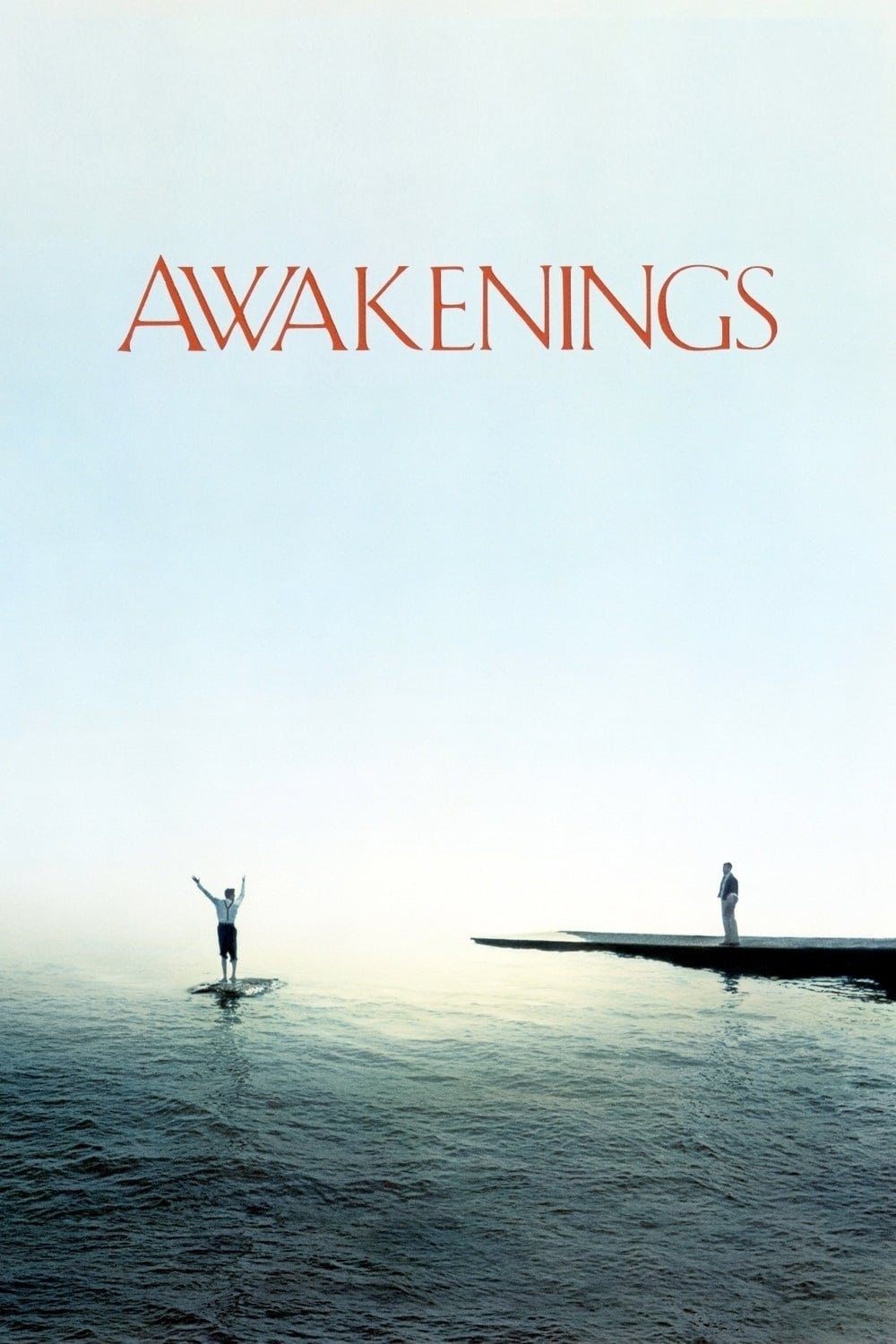
The Historical Landscape
When I first watched “Awakenings,” I remember being struck not just by the humanity of its story, but by how powerfully it seemed to echo the anxieties and aspirations of the late 1980s and early 1990s. Having grown up amidst that shifting cultural terrain, I can attest to the way films from that era captured a society balancing between cynicism and hope—a time when the Cold War’s long shadow was finally receding, but when mistrust in institutions was still a defining feature of the American psyche. By 1990, the Berlin Wall had only just fallen; people my age were beginning to ask new questions about what freedom and consciousness meant, now that the existential threats of the previous decades were ebbing. Economic optimism was tentatively returning, but was tempered by deep-seated uncertainties about the future. In that context, “Awakenings” felt like both a balm and a provocation: it challenged me to believe that extraordinary change was possible, even in the bleakest places, yet it never let me forget how fragile and fleeting those moments of transformation can be.
The late 1980s had been a period of accelerating medical advances, public conversations about mental health, and, notably, a philosophical reexamination of institutional authority. Films weren’t just a form of escape—they were grappling, often uneasily, with the idea of progress. I remember reading newspaper articles about new psychiatric drugs and debates over deinstitutionalization, about the complicated legacy of places like Willowbrook. In the arts, there was a yearning to recover stories that had been submerged, the so-called invisible histories. “Awakenings,” drawn from Oliver Sacks’ memoir about real patients catatonic for decades suddenly revived by L-DOPA, fit uncannily into this moment. The film emerged at a time when both the medical field and popular imagination were beginning to see the mentally ill and neurologically different as more than just subjects of pity or fear. To me, it seemed as though “Awakenings” captured a society teetering between an older era of neglect and a new, more humane sensibility—one more willing to see the person inside the patient.
Cultural and Political Undercurrents
Digging beneath its surface, I felt that “Awakenings” was saturated with anxieties about expertise, authority, and compassion—anxieties very much alive at the dawn of the 1990s. In my view, the portrayal of Dr. Malcolm Sayer (the film’s analog for Sacks, played with almost painful humility by Robin Williams) reflects the growing skepticism toward traditional, hierarchical models of medicine and psychiatric care. There was, at the time, an ebbing faith in grand institutional solutions; instead, the hope for change seemed to reside in small acts of empathy and ingenuity. Watching Williams’ character fumble tenderly through the bureaucratic labyrinth of the hospital, I am reminded of national conversations about both the limitations of science and the imperative to infuse it with humanity. The AIDS crisis was still raging, and with it came a public reckoning over how institutions responded to suffering—too often with detachment, fear, or apathy. The film’s gentle critique of medical authority felt like a reflection of this societal mood, subtly challenging viewers to confront the costs of indifference.
This was also a moment when deep currents of nostalgia and loss seemed to run through American culture. “Awakenings” evokes, for me, not just the sadness of wasted decades for its patients, but also a sense of collective mourning for lost possibility—a mourning, perhaps, for the triumphal narratives of the mid-century that now rang hollow. The appeal of stories about miraculous recoveries was part of a broader cultural search for redemption in a world that felt bruised by broken promises, from Vietnam to Watergate to the grim revelations about institutions supposedly built to care for the vulnerable. What caught me off-guard, however, was how the film inhabits that longing while refusing to indulge in simple catharsis. There is a pervasive sense of limits—medical, emotional, societal—that speaks powerfully to a nation accustomed, for better or worse, to the myth of continuous progress. This is a film that lets me feel the ache of hope and the inevitability of disappointment in equal measure.
In political terms, I see “Awakenings” as arriving at a juncture when America was being urged to reclaim optimism, but with a wary eye cast backward. The ‘American Century’ was ending, and with it, perhaps, the confidence that science and compassion could always deliver happy endings. I often think about how the late Reagan and early Bush years were characterized by a rhetoric of renewal but a reality, for many, of marginalization. Disability rights advocates were gaining visibility; the Americans with Disabilities Act would become law just months before the film’s release. The timing seems almost prophetic. “Awakenings” does not dwell on disability as a metaphor—it forces the viewer (and certainly forced me) to confront the practical and ethical dilemmas that surface when miracle turns out to be temporary. In doing so, it becomes a surprisingly nuanced meditation on what it means to be acknowledged, to be seen, in a society still learning to value every kind of life.
The Film as a Reflection of Its Time
When I revisit “Awakenings,” I’m always struck by how deeply it seems etched by the historical moment of its creation. This isn’t simply an artifact of period detail or casting, but of an emotional and philosophical climate. The film’s fascination with the boundary between life and non-life, consciousness and absence, feels to me like a metaphor for a society hesitating at its own threshold, wondering whether the future would be an awakening or merely a change in coma. The late 1980s and early 1990s saw movies increasingly grappling with questions of identity, agency, and the price of progress—think of “Rain Man,” or even “Philadelphia,” which would soon follow. Yet “Awakenings” stands out, in my mind, for the way it deglamorizes the medical miracle, revealing the tangled skein of yearnings, small joys, and inevitable griefs that define human recovery. It is as though the film—like its characters—must learn that grace is always temporary, that every brief interval of clarity comes bracketed by uncertainty.
I found myself particularly moved by the film’s visual language, which echoes the mood of the era as well. The institutional setting, bathed in drab greens and flickering fluorescents, reminded me of the waning confidence in brick-and-mortar solutions to human problems. In the years after the exposés of psychiatric hospitals in the 1970s and ‘80s, there was a palpable unease about places meant to heal but too often sites of neglect. Yet, the film never lets the institution become simply an antagonist. In my viewing, it vibrates with the careful optimism of the time—a belief that change, if it happens at all, does so through the overdetermined interplay of individuals and their systems. Leonard Lowe, played with ghostly precision by Robert De Niro, doesn’t merely “wake up” to the world; his struggle is to claim dignity, meaning, and agency in a world not prepared to welcome him. That arc—toward recognition, and with it, risk—felt to me like a poignant parable for a society gingerly rediscovering the value of marginalized voices.
What also defines the film’s perspective, for me, is its quiet assertion of the ordinary as miraculous. In an age increasingly fascinated by spectacle and acceleration, “Awakenings” pools its energies in patient, attentive detail: the stir of a hand, the focusing of an eye, the deferred ecstasy of a danced step. This is a profoundly countercultural stance, and I often wonder how radical it must have felt to audiences jaded by years of blockbuster excess and technocratic rhetoric. Here, awakening is not a matter of transcendence, but of painstaking labor—of being seen, listened to, held. The film’s emotional economy is not one of victory but of hard-won endurance, of taking joy where it can be found and bearing up under inevitable loss. For someone attuned to the disillusionments of the era, this seemed like a vision both sobering and beautiful, one that rejected easy consolation but held fiercely onto the possibility of grace.
“Awakenings” also mirrors, I think, the broader intellectual atmosphere in which Sacks himself was situated: an era newly attentive to narrative medicine, the interplay of science and story. The late 1980s were marked by a turn away from purely reductionist models of health toward a more holistic appreciation of the personal, the subjective, the singular. Watching Dr. Sayer’s awkward but genuine experiments, I saw reflected the growing conviction—shared by many at the time—that healing demanded more than clinical detachment or technical mastery. It demanded humility, imagination, and a willingness to honor the unique story of each patient. The film dramatizes these values not with bombast but with the quiet insistence of real encounter. For me, this remains one of the film’s enduring gifts—a statement of faith in care as something irreducibly personal, never merely procedural.
Changing Perceptions Over Time
Looking back now, I see how my own readings of “Awakenings” have shifted with the decades, and I sense this evolution mirrored in the broader culture’s relationship to the film. I first saw it as an earnest, almost solemn appeal for empathy at a time still haunted by older, more punitive attitudes toward difference. In the years since, I’ve noticed that newer generations—people for whom the scandals of deinstitutionalization and the optimism of the early ADA years are distant history—sometimes read the film as quaintly idealistic or even naïve. The medical miracle that once seemed groundbreaking now, to some, feels almost old-fashioned, dwarfed by today’s biotech narratives and digital revolutions. Yet, I find that the film’s central preoccupation—the struggle to see and be seen across barriers of silence and suffering—has not lost its potency. If anything, it resonates differently now, cast against a backdrop of intensifying debates over autonomy, quality of life, and the right to be heard.
I have also watched as disability studies and advocacy have given us new language with which to critique and reinterpret films like “Awakenings.” Whereas I once experienced the film as a plea for recognition, I now hear questions raised about agency and representation: whose experience is being centered, whose voice is privileged, which truths are left unspoken? This critical vantage point complicates the straightforward inspirational arc, but it doesn’t diminish the work’s emotional heft. Rather, it enriches my viewing, letting me see both its ethical urgency and its limitations. I think the film invites us to wrestle with paradox: to celebrate the moment of awakening even as we acknowledge that such moments do not erase histories of marginalization, nor do they free us from the hard work of listening to those whose stories are rarely told by Hollywood.
Interestingly, as medical culture itself has become more fragmented, more focused on metrics and managed care, “Awakenings” comes into sharper relief as an artifact of a world still invested in the possibility of relational, narrative-based healing. I often hear from younger viewers who find the film’s trust in the encounter between doctor and patient quaint or even suspect; the rise of patient advocacy, new legal frameworks, and digital health technologies have changed what we expect from medicine and from stories about medicine. Yet for those of us who remember the uncertainties of the early 1990s, the film’s commitment to slow, attentive care feels, if anything, more urgent now—one need only look at the contemporary crisis in mental health care to sense what has been lost.
Over time, I’ve also noticed how the film’s depiction of transient breakthroughs and inevitable decline has taken on new meaning. In the anxious optimism of its original moment, the patients’ brief return to life may have seemed a tragedy. Now, having lived through periods of instability and unexpected change—the roller-coaster of hope and disappointment that defines so much of modern existence—I find in these scenes a kind of wisdom. The value of an awakening does not reside in its permanence. Instead, the film suggests, it lies in the very act of bearing witness, of refusing to look away from the complicated, imperfect, fleeting joys and despairs of being alive. This is a hard lesson, but one I believe the film delivers better than almost any of its contemporaries.
Historical Takeaway
For me, “Awakenings” endures not as a grand narrative of medical triumph, but as a delicate, searching meditation on the limits and possibilities of human connection at a moment of profound cultural transition. The film records, with exceptional tenderness, the era’s struggle to reconcile skepticism and hope, to find meaning in the smallest gestures of care. Watching it now, I am constantly reminded of the ways in which the late 1980s and early 1990s were defined by their contradictions: a brittle faith in progress, haunted by the knowledge of histories suppressed or erased; a new language of rights and agency, colored by lingering habits of paternalism. “Awakenings” neither glorifies nor condemns—it makes us sit with uncertainty, exhorts us to honor fleeting grace even as we steel ourselves for loss.
In retrospect, I see the film’s resonance as inseparable from the historical headwinds of its time. It emerged from a world obsessed with the boundaries of consciousness and the unfinished business of institutional reform; it anticipated, with uncanny clarity, the debates that would swirl around disability and medical ethics in the years to come. Yet it is not a manifesto. Rather, it is a fragile, stubborn act of witness—an invitation to believe, if only for a moment, in the redemptive power of being seen. That invitation was timely in 1990, but to my mind, it is even more necessary now, in a time marked by fragmentation and haste. If “Awakenings” teaches me anything about its era, it is that every moment of encounter—however brief, however uncertain—is its own form of grace. That, in the end, may be the awakening we most need to remember.
To see how these real-world elements shaped the film’s impact, you may also explore its reception and legacy.
🎬 Check out today's best-selling movies on Amazon!
View Deals on Amazon