
The Historical Landscape
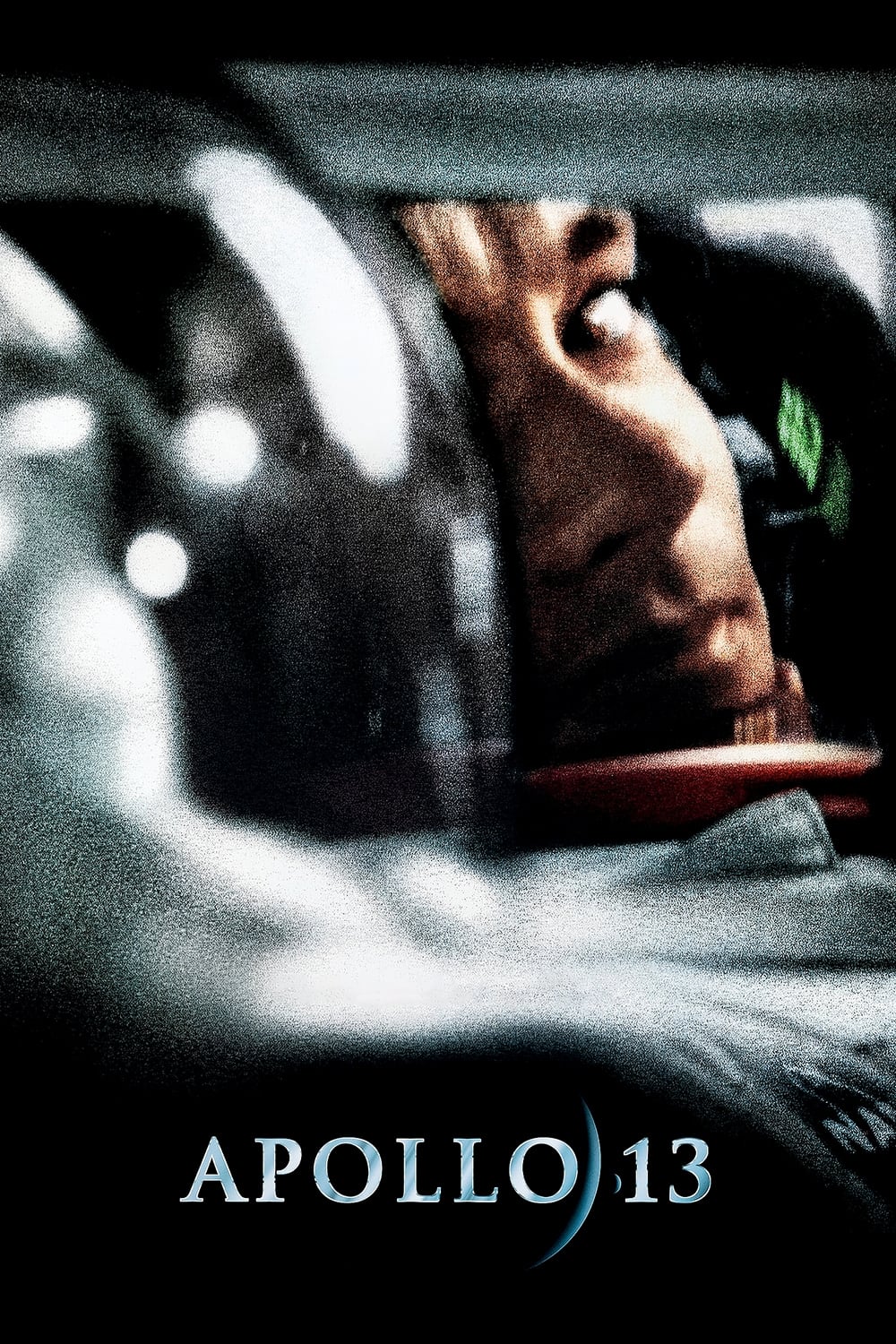
When I first watched “Apollo 13” in the dimly lit hush of a local theater in the summer of 1995, I felt transported—not just into space, but into the collective psyche of an era grappling with its own limits and aspirations. The film, while set in the fevered optimism of 1970’s spacefaring America, was undeniably a product of the 1990s: a decade marked by heady economic boom, surging technological innovation, and a renewed, nostalgic hunger to revisit the bold dreams of the past. To me, those years felt suspended between old certainties and new unknowns, an identity crisis I could sense humming beneath the surface of so much pop culture.
As the twentieth century pressed toward its close, the promise of American exceptionalism still hung in the air, though I sensed the confidence was no longer absolute. Bill Clinton was in the White House, touting the “bridge to the twenty-first century,” while domestic anxieties—a string of highly publicized mishaps in American institutions, from the O.J. Simpson trial to the Oklahoma City bombing—seemed to threaten the myth of national infallibility. Against this backdrop, “Apollo 13” arrived as a comforting salve, conjuring up memories of a time when even near-catastrophe could be tamed by cool rationality and teamwork. But watching it, I realized that the film, and perhaps the audience itself, was yearning not just for past triumphs, but for proof that the age of heroes—and the notion of collective competence—had not entirely ended.
In the broader culture, technology had become both messiah and menace. The internet was in its infancy, Windows 95 was about to be released, and a new vocabulary—”cyberspace,” “virtual reality”—was creeping into everyday speech. To me, “Apollo 13” echoed these preoccupations: its focus on ancient, analog computers and slide rules felt charmingly out of step with society’s digital future, and yet the reverence for problem-solving, for the sacred faith in engineering, resonated in a world hurtling toward its own technological revolutions. In this way, the film’s backdrop of space-age machinery felt like both a relic and a prophecy, inviting viewers like me to reflect on what we had gained and lost in our march toward an information age that was, in 1995, still partly a dream.
Cultural and Political Undercurrents
If I scratch beneath the surface of “Apollo 13,” I unearth a deep vein of cultural and political anxieties that suffused the American nineties. I remember the climate of the time: the Cold War was newly defunct, but its legacy—the narrative of competition, the fetish for technological display, the language of national survival—still shaped collective memory. To me, the film did more than dramatize a near-fatal mishap; it served as a meditation on the very nature of American ruggedness, institutional trust, and the power of collective will. Watching the film’s NASA engineers and astronauts, I couldn’t help but see it as an unconscious commentary on what it meant for a society to believe in itself, or fear that belief slipping away.
Politically, the nineties were rife with a yearning for bipartisan unity. This parallels stood out to me in “Apollo 13”: even as the astronauts fumbled valiantly on the edge of disaster, their struggle was never framed as the triumph of one political ideology over another. Instead, the film’s moral universe was one where Americans, when pressed, rallied together, setting aside differences in service of the greater good. In 1995, that was an almost radical message amid the culture wars and partisan scandals that dominated news cycles. For me, the film’s emotional power rested in that wistful invocation of national unity—something I sensed audiences deeply craved.
But there’s another, quieter current running through the film, obvious to my historian’s eye: the role of media and spectacle in shaping history. In “Apollo 13,” the American public’s initial disinterest in the mission, followed by its sudden, panicked emotional investment once disaster strikes, mirrors the era of 24-hour news cycles and reality television that was just taking hold. Watching the movie, I was struck by how deftly it evokes a world where narrative and reality blur together; where technological achievement and public faith are both managed, stage-managed in fact, for maximum effect. That felt keenly relevant to the Clinton years, when image and spin became cardinal virtues in politics and pop culture alike.
The Film as a Reflection of Its Time
What struck me most forcibly about “Apollo 13” as a reflection of 1995 was the way it re-framed heroism for a skeptical, transitional age. Unlike the brash, individualistic tales of the previous decades, this film put its faith in process—interpreting crisis as a communal affair, a puzzle solved by the collective brain rather than a single, swashbuckling savior. When I revisit the tense scenes in Mission Control, with teams calculating, scribbling, debating, I see a nostalgic validation of the institutions that, by the nineties, had begun to wobble under public scrutiny. In my mind, this was almost an act of wish fulfillment: a reassurance that, given enough ingenuity and cooperation, the system could still work.
The nineties, for me, always felt perched on the pivot of transformation, and “Apollo 13” embodies this liminality. As the world braced for Y2K and the impending dawn of the information economy, fears abounded about the fragility of complex systems—be they technological, economic, or political. Watching Jim Lovell (Tom Hanks) and his crewmates rely on limited resources, improvising with duct tape and sheer logic, I sensed a quiet anxiety about humanity’s dependence on machines we could neither fully understand nor wholly control. This unease echoed loudly in 1995, mirrored in films like “Jurassic Park” (technology running amok), “Strange Days” (virtual reality as existential threat), or “The Net” (paranoia about digital identity).
The gender dynamics, too, subtly betray their era. Although the wives and families of the astronauts are depicted with warmth and sympathy, I couldn’t help but notice their function as emotional anchors rather than active agents. In the mid-1990s, debates around gender roles were shifting quickly: the third wave of feminism questioned traditional narratives even as Hollywood still mostly consigned women to supportive sidelines. To me, “Apollo 13” unintentionally captures that in-betweenness—the film is respectful, even protective of women, but not yet revolutionary.
Visually and sonically, the movie’s style infected me with nostalgia as well. The lush orchestral score, the burnished lighting, and the meticulous recreation of retro technology all seemed to invoke a slow, analog world on the cusp of vanishing. Living in a time grappling with the early crush of digital culture, the film’s tactile affection for space capsules, dials, and handwritten checklists now felt almost like a requiem for a more visceral era. For me, the implication was clear: as American society raced toward virtuality, “Apollo 13” asked whether we’d forgotten the tangible, breakable, human-made roots of our miracles.
Changing Perceptions Over Time
Each time I return to “Apollo 13,” I find that its meaning slips and changes in tandem with my own experience of history’s onward march. Upon its release, both I and many contemporaries viewed it as a comforting look back—a story about how things used to work, how institutions could still be trusted to save the day, even when the odds were against them. But with each passing year, as cynicism toward authority deepens and public trust continues its long slide, I’ve begun to read the film a touch more skeptically. What once struck me as affirmation now sometimes feels almost mythic, even elegiac: a glimpse of a golden age that perhaps never fully existed as imagined.
The film’s treatment of crisis management—its faith in technical expertise, its faith in science itself—has also taken on new resonance for me in the wake of twenty-first-century traumas: 9/11, the Challenger and Columbia shuttle disasters, the global recession, the Covid-19 pandemic. I’m haunted now by the contrast between the calm, almost priestly authority of NASA’s figures in the movie and the climate of public distrust, polarization, and “fake news” that so often characterizes more recent responses to catastrophe. The world mapped in “Apollo 13” posits a kind of institutional competence I often find myself longing for, if only because it now seems so rare.
I also see the portrait of masculinity in the film—stoic, collaborative, humble—through a different lens. When I first encountered it as a young adult, I read the crew’s dynamic as refreshingly free from ego, a subtle rebuke to the testosterone-soaked action films then dominating multiplexes. In today’s climate, however, the model of teamwork and restraint feels endangered, rendered almost utopian by the rise of individualistic, influencer-driven culture. Watching it now, I marvel at its vision of leaders who listen, who apologize, who depend on each other. It makes me wonder what shifted in the intervening years; what was lost, and why.
Another layer emerges in conversations around space exploration itself. When “Apollo 13” premiered, the shuttle program was still very much alive and the International Space Station was just beginning. But in the decades since, as public interest waxed and waned and talk of Mars missions entered both scientific and commercial discourse, the film’s celebration of state-funded space achievement now appears tinged with nostalgia. Today, with private enterprises like SpaceX and Blue Origin at the vanguard, I see a subtle sadness in the film’s vision of the cosmos as a public, rather than corporate, adventure. The moonshot, once a metaphor for what “we”—a unified national “we”—could do, is now filtered through the lens of entrepreneurial bravado rather than collective aspiration.
Historical Takeaway
Looking back, my experience with “Apollo 13” offers a cracked but revealing mirror on the 1990s—a period suspended between reverence for the past and uncertainty about the future. What the film ultimately teaches me is less about the specifics of space travel and more about the stories America needs to tell itself in times of change: tales of courage under pressure, of fallibility redeemed by ingenuity, of faith in institutions whose very authority was beginning to erode. It’s a film that aches with nostalgia, but also one that slyly interrogates the fragility of order in a world where disaster is always lurking at the system’s margins.
My takeaway, as both film historian and citizen, is that “Apollo 13” is a profoundly 1990s artifact—ironic in some ways, aspirational in others. Its faith in technical know-how and institutional process hearkens back to a more optimistic era, even as the cultural turbulence of its own release year gnaws around the edges. For me, it stands as testimony to a brief interval in American life when the past felt both reassuring and critically unfinished, when the solutions to catastrophe were imagined not as acts of superhuman daring, but as collective triumphs of reason and hope. To experience the film today is, for me, to both mourn and celebrate that delicate, uncertain equilibrium.
To see how these real-world elements shaped the film’s impact, you may also explore its reception and legacy.
🎬 Check out today's best-selling movies on Amazon!
View Deals on Amazon