
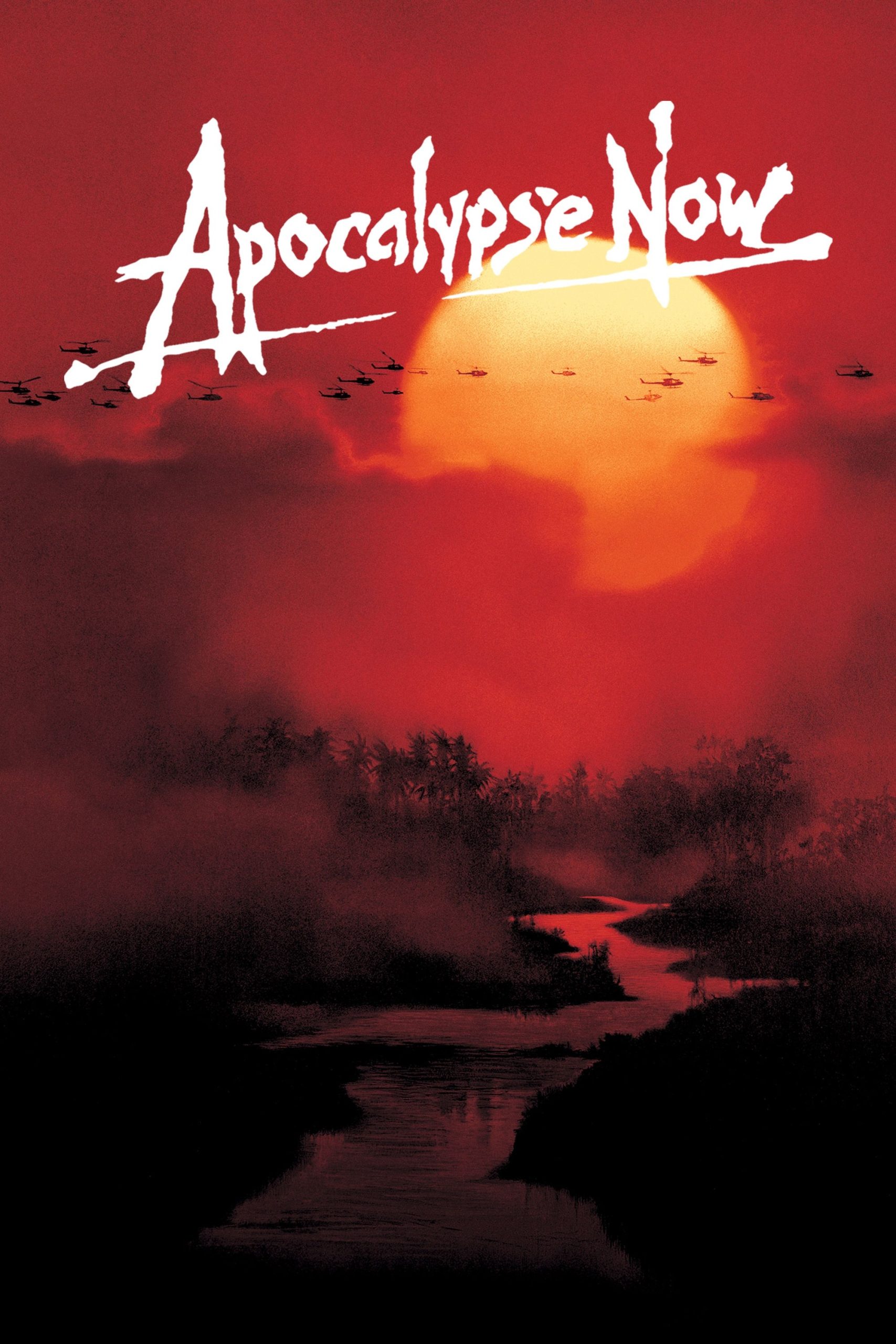
The Historical Era of the Film
Whenever I watch Apocalypse Now (1979), I’m instantly transported into the heavy, chaotic charge of the late 1960s and 70s, a period where every aspect of American life—political, economic, and social—felt like it was trembling under the weight of uncertainty. To me, the most striking element of the historical context surrounding its creation was the Vietnam War: a conflict that not only redefined contemporary geopolitics but penetrated the very psyche of the United States. The war dragged on from the early 1960s until America’s withdrawal in 1973, but its aftershocks—emotionally and politically—were still thunderous when the film was made and eventually released in 1979. I always sense that the United States was contending with a crisis of identity and purpose, caught between Cold War anxieties and the fresh traumas of defeat and division overseas.
Economically, there was a kind of malaise permeating the Western world in the 1970s that I feel presses in on the narrative drive of Apocalypse Now. The promise and prosperity of the postwar boom had given way to stagflation, unemployment, and an oil crisis that made the very idea of progress seem suspect. When I try to place myself in the shoes of an American citizen of that decade, I see a population weary from a decade of public assassinations, protest movements, and growing skepticism toward authority—most explosively evident in the Watergate scandal that brought down Nixon only a few years before the film’s release. The social contract seemed threadbare.
It also strikes me that Apocalypse Now emerged out of an era where trust in official narratives had withered. The Pentagon Papers, leaked in 1971, exposed secret government decisions about the war, and by the time Francis Ford Coppola began crafting his epic, the public’s faith in political institutions was at a historic low. That is why I see the film as doubly haunted: by the tangible horrors of jungle warfare, and by the abstract but no less terrifying sense that the machinery of government had lost its moral bearings. Everything felt up for grabs. The film reflects the cracked mirror of its era—fragmented, hallucinatory, and unresolved.
Social and Cultural Climate
When I look at the dominant social and cultural climate of the production era, I can’t ignore how intensely the Vietnam War shaped almost every sphere of American life, rippling out across music, art, television, and the counterculture. A powerful sense of cultural upheaval dominated: norms were challenged, authority questioned, and the line between right and wrong got increasingly blurry. I see it everywhere in the film’s DNA; the 1960s had given rise to a new sense of youthful rebellion, civil rights activism, and anti-war protest. For me, Apocalypse Now is less a direct account of Vietnam and more a hallucinatory echo of all the anxieties, fears, and wild hopes of the American people during that time.
As I reflect on this period, I notice that the trauma of the war was inseparable from the home front. Social divisions widened between those who supported the war effort and those who resisted, sometimes violently. I always recall how news broadcasts brought home the realities of combat in vivid, disturbing detail, and how returning veterans struggled to reintegrate into a society that often wanted to forget the whole ordeal. The aftermath of the My Lai massacre and the Kent State shootings, fresh in the collective memory, loomed as painful reminders of blurred lines between soldier and civilian, right and wrong.
Culturally, the late 1970s were a time when Hollywood was undergoing its own revolution. Directors like Coppola, part of what I think of as the “New Hollywood” generation, were challenging traditional narratives and studio authority, emboldened by the success of films that pushed boundaries in terms of style, subject matter, and moral ambiguity. Psychedelia and rock music hadn’t only altered the aural landscape; they commemorated, questioned, and mourned national trauma. Against this background, the making of Apocalypse Now feels to me like an exorcism and an act of rebellion against sanitized retellings of war.
I see the following historical factors as particularly important in shaping the social climate:
- Widespread opposition to the Vietnam War, exemplified by massive anti-war protests
- Disillusionment with government after the Watergate scandal
- The rise of youth counterculture and drug experimentation
- Societal struggles with the reintegration of Vietnam veterans
- A shift in Hollywood toward more experimental, director-driven films
The resonance of these events is, for me, palpable in every shadowed frame and hallucinatory river sequence of Apocalypse Now. The movie did not just reflect chaos and confusion—it drew its creative energy directly from a society living through it.
How the Era Influenced the Film
The historical climate shaped almost every aspect of Apocalypse Now, both on and off the screen, and I feel this deep, almost brute sense of creative improvisation whenever I engage with the movie. The most obvious influence appears in the way the story itself reflects the “madness” of a war that defied rational explanation—Vietnam was unlike any previous American conflict, with its guerrilla warfare, uncertain alliances, and shifting political aims. This sense of unpredictability, which haunted the war’s actual conduct, is mirrored in the film’s own production, famously plagued by delays, disaster, and what Coppola himself called “the war of making Apocalypse Now.”
I’ve often thought the filming—a logistical and psychological morass in the Philippines—mirrored the American experience in Vietnam: intentions fell apart, control slipped away, and the jungle swallowed up all sense of order. The cast and crew endured hurricanes, budget spirals, Martin Sheen’s near-fatal heart attack, and even Marlon Brando’s last-minute script improvisations. I interpret this tumult as a direct product of making a war film so soon after the conflict had ended; the wounds were still raw, the narratives unsettled, and the country was still groping for understanding.
On a character level, I see echoes of the period’s moral confusion in how Apocalypse Now treats its protagonists—not as traditional heroes or villains, but as fractured personalities navigating a world where meaning itself has collapsed. This, for me, is the imprint of a society shattered by Vietnam and battered by disillusionment. I’m struck by how Coppola used film technique—deep shadows, surreal lighting, and nonlinear storytelling—to evoke a cultural moment suspicious of clear answers. Techniques borrowed from the era’s innovative documentary and experimental scenes seep seamlessly into the film, blurring the line between subjective and objective reality.
Of particular significance is the influence of contemporary politics on the movie’s ending. Coppola and his crew reportedly shot multiple finales, uncertain about whether or how the film could provide closure. I see this as a function of living—and making art—amidst the unresolved trauma of the Vietnam experience. The history wasn’t settled; neither is the film.
Audience and Critical Response at the Time
When I read or listen to stories from those who crowded into theaters in 1979, it’s clear that the response to Apocalypse Now was as fevered and complex as the times that produced it. Many viewers were just a few years removed from the last American helicopters lifting off from Saigon, and the film’s brutal imagery and psychological depth struck raw nerves. For some, it felt like a long-awaited reckoning with experiences they’d either lived through or seen nightly on the news. For others, particularly veterans, the film’s abstraction and fever-dream logic felt both cathartic and deeply unsettling. I remember hearing from Vietnam vets who walked out or wept openly at what they saw—a testament to the persistent ache of national trauma.
Critical reviews from 1979 show that the movie’s historical context was inseparable from its reception. Critics like Roger Ebert and Pauline Kael engaged with the film as both an artwork and as a statement on the Vietnam era, debating whether its audacious style captured the truth of the experience or simply dramatized the chaos. I always find it intriguing that Apocalyse Now was almost immediately compared to earlier antiwar films, but stood apart for its hallucinatory approach and refusal to moralize.
The fact that the movie was awarded the Palme d’Or at Cannes—even before final edits were complete—says something, I think, about the appetite for art that grappled with the troubling legacy of Vietnam and America’s fractured sense of self. At the same time, there was a contingent of critics and audience members unsettled by its lack of political clarity, especially compared to documentaries and films like The Deer Hunter released around the same period. Watching audience interviews from its premiere, I notice reactions ranged from awe to bewilderment—people didn’t quite know what to make of it. That sense of confusion feels, to me, wholly appropriate given the film’s source material and its cultural moment.
The film’s place in the zeitgeist is perhaps best summed up by the persistent conversations that followed about war, madness, and responsibility. I see evidence that the chaotic production process and controversial subject matter only added to the film’s mythos, turning its reception into a national event rather than just another movie release.
Why Historical Context Matters Today
Understanding the historical context of Apocalypse Now—in all its messy depth—changes the way I watch and interpret the film. For viewers today, distant from the immediacy of Vietnam but still living in a world shaped by its consequences, this knowledge opens new levels of meaning. I believe it is essential to see that the film is not just about a war in Southeast Asia, but about the crisis of faith, authority, and identity that shook America to its core in the 1970s. Every dazzling shot, every instance of breakdown, becomes richer when placed against the backdrop of a society reeling from disillusionment and searching for purpose.
For me, the fact that the director and crew went through their own version of hell to make the movie isn’t just a footnote—it’s part of the text. The film has a pulse and texture that, in my experience, only emerges from projects forged out of real historical struggle and cultural confusion. Today’s audiences, often surrounded by media that looks backward nostalgically or forward optimistically, can learn a lot by confronting how the past actually felt to those living through it: painful, unpredictable, unresolved.
When I discuss Apocalypse Now in film history classes or conversations, I always insist that the movie cannot be divorced from its era. The same societal forces—skepticism about government, division over military intervention, fear of national decline—echo in current debates. Watching through the lens of history, I’m convinced, is not just an academic exercise: it’s a way of keeping alive the urgent questions asked by Coppola and his generation. It’s also, I think, a reminder that movies are more than entertainment; they are living records of their moment.
After understanding the factual background, you may want to see how this story was received as a film.
🎬 Check out today's best-selling movies on Amazon!
View Deals on Amazon