
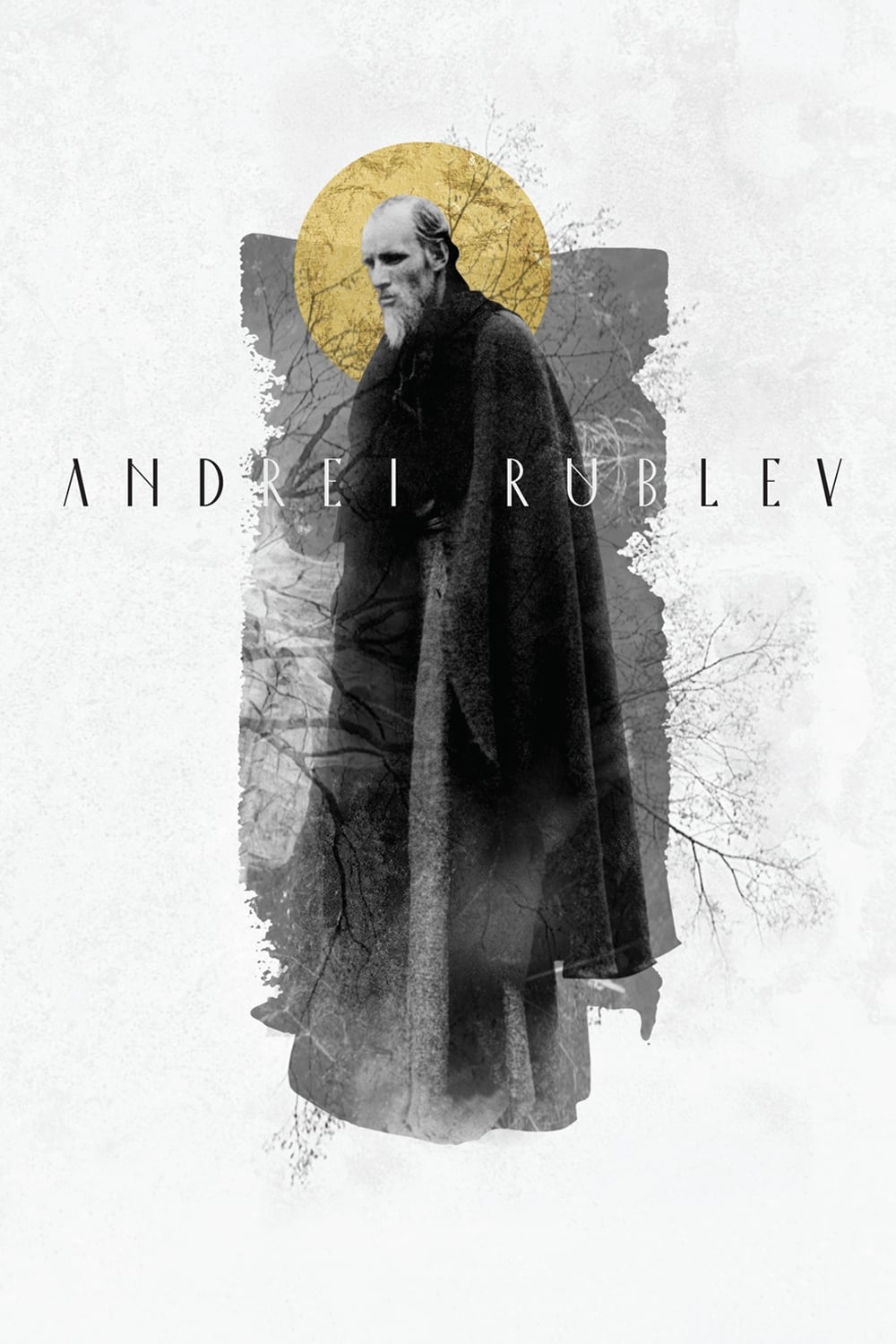
The Historical Landscape
When I first sank into the shadowy depths of Andrei Tarkovsky’s Andrei Rublev, the film seemed less a window to medieval Russia than a mirror reflecting the stormy world it was born into—the Soviet Union of the mid-1960s. It’s almost impossible for me to separate the film’s soaring imagery from the context of its origins. The mid-60s USSR was neither the iron-fisted police state of Stalin nor the crumbling bureaucracy that would mark the end of communist rule in the late ‘80s. It sat somewhere in between, in a place I always imagine as haunted by both hope and exhaustion. I can’t help but recall the Khrushchev Thaw—a brief, fitful period of cultural breathing space after years of oppressive control. Though Nikita Khrushchev himself had been ousted in 1964, the spirit of cautious, subversive experimentation still hung in the air. I feel the tension between old and new everywhere as I watch Tarkovsky’s work: gray Soviet modernism pressing in on every cultural memory, yet artists inching toward riskier, more personal visions.
When Andrei Rublev premiered in 1966 (or, more accurately, when it was completed, since its public release was stifled by censors for years), I see the Soviet Union grappling with its place not only in history but in its own fleeting present. The country was freshly triumphant in the space race, parading its scientific prowess with Gagarin’s orbit still echoing in the public imagination. Yet inside, citizens moved through a landscape mired in shortages, suspicion, and a muffled longing for meaning. For me, this era feels defined by contradiction: bureaucratic repression alongside the tentative blooming of new thought. Tarkovsky made his film in a world drunk on ideology but starved for the transcendent—a world that didn’t quite know what to do with mystery. Each time I watch, I sense that Andrei Rublev is not only about icons and medieval suffering; it is, in some sense, an argument with its own time.
There’s an undeniable elephant in the room whenever I discuss this period—the looming presence of state censorship. The Soviet Union’s film industry was tightly regulated by Goskino, the State Committee for Cinematography, which saw itself as both guardian and jailer of ideology. The late 1960s were not free, but they were more open than before: a window for experimentation had cracked, yet at any moment, the cold wind of repression could slam it shut. Tarkovsky’s film was a colossal gamble—one that somehow had just enough air to breathe, yet always bore the marks of having been watched, constrained, tugged this way and that by forces far larger than its creators. I’m always struck by how this tension infuses the film; I find scenes trembling with something unsaid, both fed and shackled by their context.
Cultural and Political Undercurrents
I have always felt that art in times of ideological rigidity does not simply reflect, but contends with its moment. Andrei Rublev is steeped in currents running far beneath the surface, currents that I believe shaped every frame. The Soviet vision of history—materialist, rational, often sanitized—was directly at odds with Tarkovsky’s personal mythology. The film’s preoccupation with faith, spiritual crisis, and artistic torment is intensely personal, almost an act of rebellion in an environment shaped by atheist dogma. Whenever I revisit the film, I sense a clarion call: it whispers of things the state preferred to erase or dissolve. For someone like me, schooled in the nuances of Soviet cultural production, the film’s religious overtones signal not piety so much as defiance—proof that there existed quiet spaces, even in public art, for doubt and yearning.
What shapes my reading of Andrei Rublev most is its meditative engagement with the act of creation under threat. The Soviet regime demanded that artists serve the state—glorify the worker, the peasant, the forward march of history. But Tarkovsky offers us an icon-painter paralyzed by silence and fear, a metaphor for every artist negotiating creative paralysis at the hands of institutional power. I can’t separate Rublev himself from the filmmakers of the sixties: artists forced to navigate labyrinthine censors, ideological straitjackets, and the ceaseless demand that art justify itself in service to “the people.” It’s no accident, in my view, that the film’s most poignant moments dwell in failure, absence, erasure—in the spaces between what is said and what cannot be voiced. Watching Rublev stumble through a landscape of devastation and doubt, I see Tarkovsky shining a light on his own embattled brotherhood.
The late 1960s were also an era of subtle social shifts percolating beneath Soviet surface order. I remember reading how young intellectuals, restless with their parents’ conformity, gravitated toward artists who conveyed spiritual hunger, even in coded form. Tarkovsky’s choice to focus on a national icon painter resonates for me on several levels: as a way to reclaim cultural traditions sidelined by Bolshevik zeal, as a reassertion of individuality, and as an expression of something fundamentally Russian that Soviet modernity struggled to contain. The film’s dialog with ancient forms—frescoes, chants, rituals—becomes a coded language, a way of asking: What does it mean to be Russian, and to create, when the modern world demands we forget so much of our past?
And yet, the film emerged as the Soviet Union was desperate to craft an image of unity and historical inevitability. I see Tarkovsky’s Russia—a landscape of violence, uncertainty, and doubt—as an implicit challenge to triumphant narratives. The political undercurrents are clear to me: the film stages the collapse of simple answers, placing spiritual ambiguity at the center of national myth. The authorities, quite naturally, responded with suspicion. Censors hacked away at scenes, delayed its release, and debated the film’s meaning, but could never quite extinguish its resonance. For me, those debates themselves became part of the artwork—proof that real engagement was possible, if only in oblique or subterranean forms.
The Film as a Reflection of Its Time
If you ask me what Andrei Rublev most forcefully reveals about the Soviet 1960s, I’d say it’s not a portrait of medieval life, but a fever chart of a society struggling with identity, faith, and the right to endure. Here I find the peculiar, magnetic alchemy of the film: its medieval setting becomes an allegory less about the 1400s than its own present. I have always felt that Tarkovsky’s sprawling, episodic narrative—punctuated by scenes of horror and transcendence—is a coded conversation with his censors and contemporaries, a way of speaking when direct speech was forbidden.
One thread I can’t shake from my own reading is the relentless depiction of violence and suffering. The 1960s Soviet Union, after all, was still digesting the trauma of war—both the Second World War and the civil conflicts that had shaped the nation’s early years. Mass death, destruction, chaos: these were not just memories, but foundational experiences etched into the collective psyche. As I watch Rublev’s Russia descend into carnage, I sense Tarkovsky plugging into unhealed wounds—transforming historical violence into a universally understood symbol of human endurance. What strikes me as uniquely Soviet, though, is the suggestion that suffering might carry meaning or even redemption—a hope that transcends ideology.
The film’s obsession with silence and artistic inertia struck me, from the first viewing, as a parable for creative paralysis in the face of ideological oversight. Rublev’s own struggle to paint—to give voice to the ineffable—feels to me like Tarkovsky’s own wrestling with the strictures of Soviet life. Every time I see the painter mutely witness atrocity, refusing to commit his vision to the cathedral walls, I sense Tarkovsky’s skepticism about “art for art’s sake” in a world so saturated with pain and repression. Yet the film’s final movement, when color blooms suddenly in the finale’s montage of Rublev’s icons, always gives me chills. This, I believe, is a wager about the endurance of beauty—about its fruitfulness, not in spite of brutality, but because of it. I read this as a pointed argument: art does not exist solely to serve power or soothe the masses, but to persist even (or especially) when the world seems indifferent.
I’ve heard critics call the film “pessimistic,” but I never see it that way. There’s exhaustion, yes; long stretches where faith and purpose seem lost. But in returning always to the iconist’s craft, and closing with images of beauty literally rising from ashes, I find the film profoundly hopeful within its historical predicament. I believe the story of medieval Russia became Tarkovsky’s secret conduit—a way to ask, what survives when everything else has fallen away? For Soviet viewers of the 1960s, this question must have cut deep. They were, after all, inheritors of both revolution and repression, miracle and ruin. In the painter’s journey, I see Tarkovsky inviting his own era to imagine renewal, even if it dares not name it aloud.
Changing Perceptions Over Time
Years after first encountering Andrei Rublev, I am still amazed by how protean the film’s reputation and meaning have become. In the Soviet era, I know its earliest viewers were sharply divided. Many in the artistic intelligentsia regarded the film as a masterpiece—a beacon of seriousness and depth during a time when cinema was often drained of ambiguity and bite. Among ordinary viewers (at least those who had access during its stunted initial release), reactions were more mixed: its slowness, bleakness, and spiritual tones often bewildered or unsettled. I imagine the secret screenings, the whispered assessments—how quickly word must have spread that something extraordinary had slipped through the censors’ nets, if only in fragments.
Once the Iron Curtain lifted and the Soviet experiment became history, I saw the film’s reception alter yet again. Russian viewers, suddenly free of official interpretation, began to revisit Andrei Rublev in all its complexity—not as propaganda or dissidence, but as something larger, more timeless. The film’s religious iconography, once dangerous, now became a site of cultural rediscovery. To contemporary eyes, Rublev’s spiritual struggle often reads not merely as individual torment, but as a metaphor for national trauma—a meditation on the survival and transformation of culture under immense strain.
Outside Russia, I’ve noticed that the film was quickly canonized by cinephiles and critics searching for traces of the “real” Soviet soul. For many Western viewers, cut off from the context that birthed it, the film became an archetype of “serious” cinema—a test of endurance, a portal to mystical depths. My own engagement with these readings is always double-edged: I cherish how Tarkovsky’s unruly vision has inspired so many, but I also sense how perceptions get flattened out when they lose sight of the peculiar pressures that shaped the film’s birth. In Russia, the movie is alternately celebrated as a spiritual epic, a historical reckoning, and a symbol of creative resistance; elsewhere, it is sometimes reduced to abstraction, leaving behind the sharpness of its intentional context.
What fascinates me most, though, is how the film continues to flicker with new meanings. I have seen younger generations gravitate toward the film’s themes of doubt and persistence, reading Rublev’s silence not as failure but as protest. In the post-Soviet world, resonances with contemporary anxieties—about nationhood, memory, and the responsibilities of the artist—seem to arise unbidden from Tarkovsky’s timeless tableaux. The icon, once a static artifact, becomes a vessel for living debate. In this, I find the ultimate proof of the film’s vitality: its refusal to stand still, its ability to draw forth fresh questions from each new wave of viewers.
Historical Takeaway
Above all, my immersion in Andrei Rublev convinces me that films serve less as documents than dialogues—conversations with the era that forged them, and with every era that follows. Tarkovsky’s work, to my mind, does not merely preserve the anxieties of 1960s Russia; it makes them palpable, urgent, insistent. It shows me how a film, made under suffocating scrutiny, can become an interrogation of power, history, and the soul’s irrepressible longing. By tracing Rublev’s pilgrimage through ruin and renewal, I see Tarkovsky reflecting the shattered optimism and searching intellect of his own time: a Soviet Union balancing between aspiration and fatigue, between the promise of collective transcendence and the weight of private sorrow.
To me, Andrei Rublev offers this era’s most fundamental lesson: even as ideology stifles and history shatters, the need to create—to reach for meaning in the chaos—endures. The film emerges, paradoxically, as both a monument to suffering and a testament to the possibility of beauty’s survival. Its making reveals the costs artists paid to speak their truth, and the subtle, subversive strategies they used to evade erasure. In Rublev’s long silence, I hear an entire generation wrestling with what it means to bear witness, to persist, to build something lasting in a world that is never stable for long.
In the end, what I find most striking is how little the film’s central concerns have faded. Because Tarkovsky’s questions—about the price of art, the nature of faith, the burdens of history—remain unresolved, alive, and somehow always urgent. For anyone tracing the tangled legacy of the Soviet 1960s, I can think of few better guides than Andrei Rublev: not a map, but a living, breathing record of what it once felt like to inhabit the eye of the storm.
To see how these real-world elements shaped the film’s impact, you may also explore its reception and legacy.
🎬 Check out today's best-selling movies on Amazon!
View Deals on Amazon