
The Historical Landscape
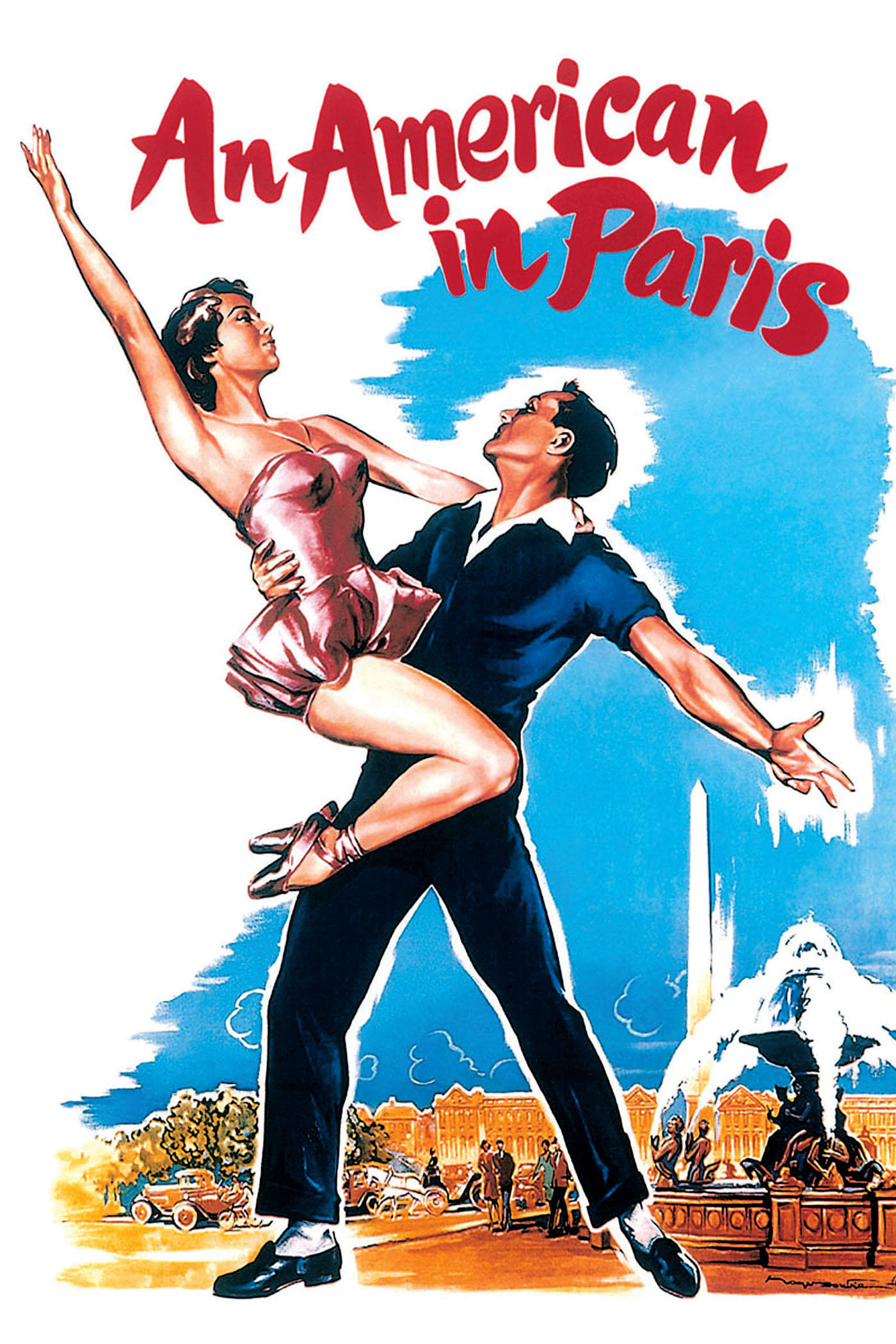
When I first encountered An American in Paris, my attention was immediately drawn not only to its dazzling musical sequences, but also to the broader historical winds swirling around its creation. I can never quite separate the sweeping colors of the film from the cautiously optimistic spirit of early 1950s America. Emerging just as the world was catching its collective breath after the horrors of World War II, the movie strikes me as a vibrant artifact from an era both restless and hopeful. The United States, flush with postwar prosperity but shadowed by Cold War anxieties, saw its popular culture reflect a peculiar blend of self-assurance and longing for escape.
I always sense an overriding mood of possibility in the air behind the film—a result not only of economic confidence but of emotional exhaustion. Returning GIs were settling into a new vision of domestic tranquility, while the baby boom was well underway, and yet beneath the radiant surfaces there was also unease. Americans were adjusting to a freshly minted place atop the international order, their cities humming with industry while international headlines grew more menacing with each passing month. Europe, on the other hand, was still in slow recovery mode—a continent scarred by war, its grandeur faded, yet retaining a seductive allure in the American psyche. With Marshall Plan funds flowing and the Iron Curtain rising ever higher, it’s impossible for me to watch An American in Paris and not see those swirling tides beneath its glossy veneer.
Hollywood itself was in a transformative moment—as I see it, teetering between the secure formulas of the studio system and the first rumblings of disruption that would shake that foundation in the coming decade. Musicals flourished in this atmosphere, offering lush Technicolor escapism just as television’s rise would soon threaten box office power. The city of Paris, portrayed through the eyes of eager Americans, carried with it a dual resonance: as both a place of refuge and an emblem of artistic ambition not easily found or afforded at home. So for me, the film is best understood as a glittering surface stretched over real and subtle tensions, reflecting not only what was seen but much of what was carefully avoided in American life at the dawn of the 1950s.
Cultural and Political Undercurrents
Peeling back the Technicolor layers, I’m always struck by the film’s fraught dance with the era’s cultural and political undercurrents. In the swirl of ballet shoes and Gershwin melodies, I find a subtext shaped by America’s growing fear of foreign ideologies and a stubborn insistence on optimism. The Cold War’s invisible hand hovers over every irrepressible grin and romantic overture. For me, the film’s celebration of Paris as a playground for American dreams feels almost pointed in its refusal to grapple with the darker realities of postwar Europe.
And yet, there’s more than mere escapism at work. I see in the movie an idealized vision of American innocence, one that positions the Yank abroad as both artist and romantic conqueror—never quite threatened by, yet always enchanted with, the sophistication or tragedy of the Old World. This, I believe, owes much to the era’s anxieties about identity. In a decade dominated by conformity and suspicion—blacklists, HUAC investigations, the tightening grip of anti-Communist sentiment—Hollywood often doubled down on colorful fantasy. Watching Gene Kelly’s Jerry Mulligan whirl through painterly Parisian tableaux, I sense a deliberate sidestep away from the thornier dilemmas of American politics: the Red Scare, escalating racial tensions, or gender conventions straining under the pressure of returning wartime roles.
At the same time, I can’t help but read the film’s fixation on art, romance, and the “American abroad” trope as an indirect meditation on cultural diplomacy. The United States was eager to export not only consumer goods but an entire worldview—rooted in democratic ideals, can-do optimism, and a belief in the healing power of art. An American in Paris functions for me as both a formal and informal ambassador, bearing witness to Hollywood’s mission to charm and influence through soft power. The use of Gershwin’s music, itself an emblem of immigrant-infused American cosmopolitanism, recasts the transatlantic relationship as a friendly, collaborative affair, even as real-world politics grew ever more fractious.
The Film as a Reflection of Its Time
When I try to discern what the film reveals about 1951, it’s less in the surface plot than in the subtextual signals and encoded optimism it projects. I’m fascinated by how the characters, for all their romantic tribulations, are essentially insulated from genuine despair or insecurity. Paris is presented not as a city still licking its wounds from occupation and conflict, but as an idyllic canvas—ripe for American transformation. This, to me, is an unmistakable byproduct of early-1950s American attitudes: the world as opportunity, trauma tucked discreetly out of frame.
What resonates most personally is the movie’s escapist bravado. I see the sheer length and extravagance of its climactic ballet, for example, as a bold assertion of American cultural capacity: a declaration that Hollywood could match, perhaps even outshine, the old world’s artistic traditions. The vibrancy of the sets and costumes—the almost feverish commitment to visual pleasure—feel, in my reading, like a counterweight to the anxieties hidden just beneath the decade’s well-manicured surfaces. With every lavish musical number, to me, the film insists on possibility in the face of postwar uncertainty.
I also notice the absence of less palatable realities. There is no sign in the film’s Paris of shelters still being rebuilt, refugees seeking new homes, or the simmering tensions between Allies turned competitors. Even the personal struggles of the characters are resolved not through confrontation with hardship, but through a kind of fanciful grace. I find myself thinking that it is precisely this retreat into fantasy—complete, unapologetic, and all-encompassing—that reflects the era’s greatest paradox: the simultaneous embrace of progress and denial of consequence. The film feels bound to the impulse to celebrate American triumph while quietly brushing aside the deeper costs of that ascendancy.
For me, the narrative’s underlying attitude towards romance—full of longing, misunderstanding, and eventual reconciliation—mirrors the broader American search for new beginnings in a fractured world. The artist’s journey, so central to the plot, also echoes the aspirations of the new middle class: seeking self-expression without sacrificing security. Watching the film, I feel caught between the swirl of optimism and the silences that speak volumes about the unease lurking in the national psyche. It is as though Hollywood, in moments like this, sought to will into being the harmony so elusive in life beyond the screen.
Changing Perceptions Over Time
My own evolving relationship with An American in Paris mirrors a broader critical and cultural reevaluation over the decades. When I first viewed the film, its buoyant musicality and painterly Paris seemed timeless, almost beyond the reach of political gravity. But as I dug deeper—returning to it in different cultural moments—I began to see how flexible its meanings have proven over time. What was once read as celebratory escapism is, from a modern vantage, increasingly understood as both artifact and argument: a window into the complicated yearnings and evasions of its moment.
Over the years, I have watched critics and viewers alike interrogate the film’s gender politics and representations of foreignness, subjects largely ignored at the time of its release. What once passed as harmless fantasy is itself now a source of debate: Were the expatriate ambitions of Gene Kelly’s Jerry Mulligan and his fellow Americans a well-meaning tribute or a form of cultural naiveté? Was the film’s erasure of war trauma an act of healing—or avoidance? For some contemporary audiences, the absence of real-world strife reads as a kind of historical blindness; for others, it remains a precious example of the healing powers of art and optimism.
What has most fascinated me is the way the film’s technical bravura—the audacious color palette, the extended ballet finale—has come to be seen as more than decorative. With hindsight, I appreciate how these flourishes are acknowledgments of an anxious era’s need for spectacle. Radical in their willingness to bend “reality” in pursuit of beauty, they’ve inspired generations of filmmakers seeking to reconcile artistic ambition with commercial storytelling.
Even the film’s romantic mythologies—once taken as universal truths—now undergo interrogation. Modern readings often ask what is left unsaid about the relationships at the film’s core: the power dynamics, the cultural assumptions, the sense of American entitlement in a foreign city. Revisiting the film today, I find myself tuning into these deliberate silences as much as the melodies, questioning not only what the film says, but what it leaves in shadow.
All the while, I remain aware of the powerful nostalgia the film continues to evoke. For those who grew up watching it, An American in Paris still stands as a touchstone for the lost elegance and possibility of the early postwar years. And yet, with each viewing, I see more clearly how its meaning is not fixed, but ever-shifting—shaped as much by the questions we ask of it as by the intentions it first carried on its shimmering debut.
Historical Takeaway
Ultimately, An American in Paris has taught me more about America’s midcentury state of mind than I could have expected from any historical document or newsreel. The film, in its exuberance and denial, offers a snapshot of a nation at a crossroads—eager to believe in the redemptive power of art, anxious to keep darker memories at bay, yet restless beneath the gloss of prosperity. At its heart, the movie embodies the capacity for self-invention that defined the 1950s: the notion that reinvention, both personal and national, is not only possible but necessary in a changing world.
I treasure how the film encapsulates a profound tension—between the urge to escape and the responsibility to remember, between the lure of Europe and the assertion of American identity. By refusing to dwell in tragedy, it reflects the early 1950s’ ambivalence about vulnerability. Yet it also reminds me of the profound gifts of artistic ambition and communal dreaming—even when those dreams are filtered through the pastel lens of fantasy. In spotlighting what Hollywood chose to celebrate, and what it left unsaid, the film continually brings me back to the era’s deepest hopes and hesitations.
There’s a lesson in the film’s balancing act, one that lingers for me whenever I hear its swelling orchestration or see an American abroad, paintbrush in hand, staring out at a cityscape shimmering with possibility. The glitter is not just a mask, but also a testament to a nation collecting itself for whatever might come next—defining itself in part by the very stories it tells to the world, and to itself.
To see how these real-world elements shaped the film’s impact, you may also explore its reception and legacy.
🎬 Check out today's best-selling movies on Amazon!
View Deals on Amazon