
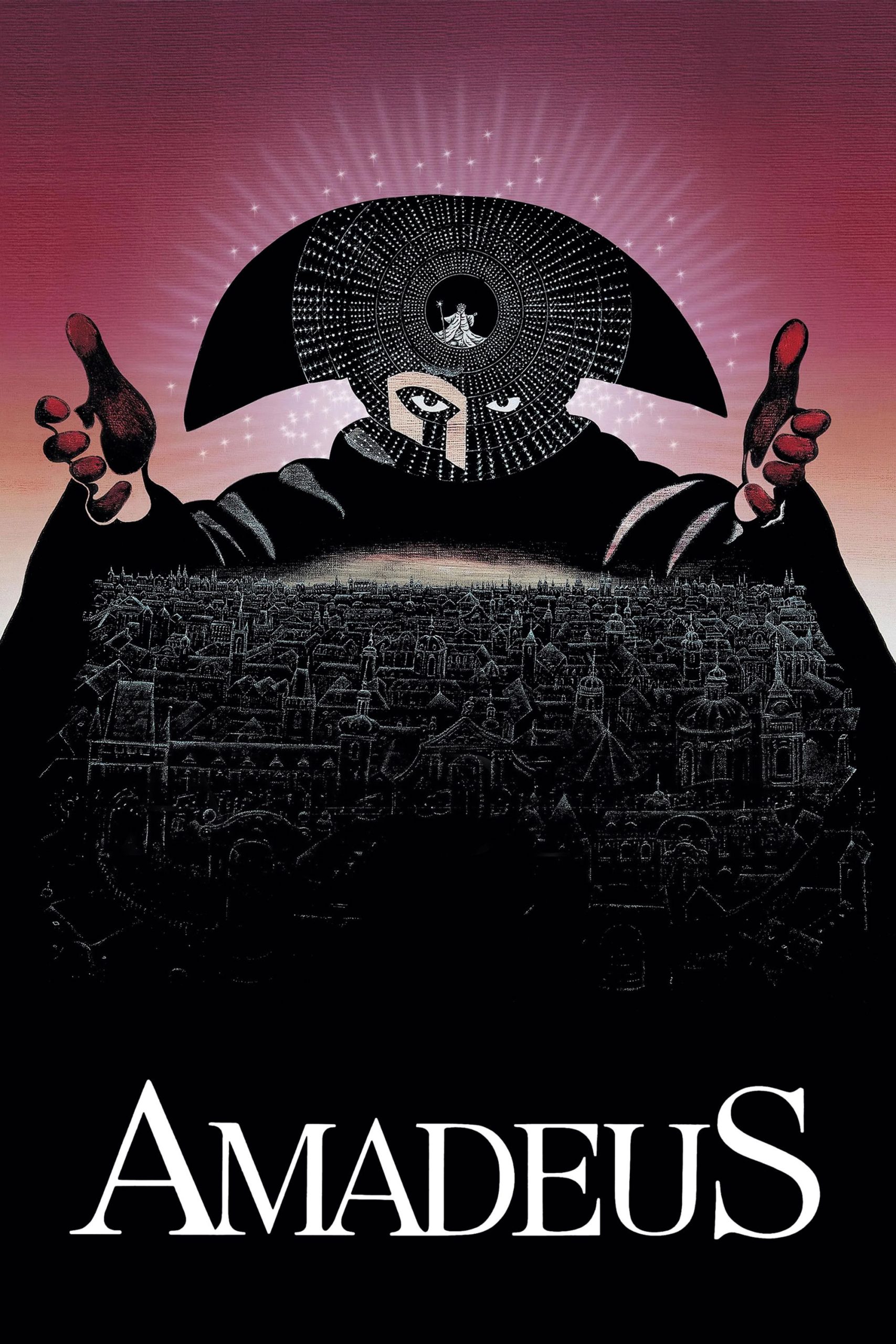
The Historical Era of the Film
Every time I sit down to rewatch Amadeus (1984), I can’t help thinking back to the tumultuous social and political landscape of the early 1980s. This was a period when the world seemed to oscillate between old certainties and unpredictable change, a time marked by a pervasive sense of both nostalgia and upheaval. I remember vividly how the Cold War exerted a chilling effect on Western culture, and America in particular was navigating both domestic and international anxieties. The presence of the nuclear threat, economic uncertainty in some regions, and the rise of conservative politics under figures like Ronald Reagan were constant backdrops to everyday life.
The conservative shift in the United States ran deeper than mere party politics; it seeped into the broader cultural milieu, invigorating a reevaluation of European traditions and the supposed values of Western civilization. At the same time, the economic boom in the 1980s created a strange juxtaposition: materialism was celebrated, yet there was also an undercurrent of cynicism and existential dread. In my view, films that emerged from this moment—whether consciously or not—often reflected a fascination with historical periods that seemed, on the surface, more stable or noble. The use of Vienna at the height of the Habsburg Empire in Amadeus felt, to me, like both an escapist fantasy and an implicit commentary on the frivolity and fragility of wealth and power. The past, reframed through the lens of the present, could serve as a foil for contemporary anxieties, and I always saw this in the lavishness of the film’s production and its focus on classical music.
This sense of cultural cross-current was heightened by the fact that, abroad, Eastern Europe was simmering with dissatisfaction under authoritarian rule. The idea that Amadeus, though set in the 18th century, was shot in communist-controlled Czechoslovakia is itself a telling historical anecdote. To me, it’s almost poetic that a film about the destruction of genius and the machinations of power played out against the fading grandeur of real imperial palaces, themselves relics of lost empires. This layering of eras—1980s America, Enlightenment Vienna, and Cold War Eastern Europe—makes the historical context of the production both complicated and truly fascinating.
- Renewed interest in European culture and history during the 1980s
- Cold War tensions influencing choices of film location
- Conservative and materialist currents shaping culture and art
- Economic prosperity juxtaposed with existential anxieties
For me, these elements create a complicated, interconnected network of historical resonance that is impossible to untangle from the film itself. Every time I look at the candlelit banquets and hear the cheers for Mozart’s next masterpiece, I think of how we, in the 1980s, were seeking meaning in the past while hurtling toward an uncertain future.
Social and Cultural Climate
As I reflect on the dominant social attitudes and cultural trends during the era Amadeus was made, I see a society eager to revisit its cultural roots while also negotiating a crisis of identity. The early 1980s saw an explosion of interest in the arts, especially in revivals of “high culture” such as classical music, opera, and period drama. I remember sensing that there was both a genuine appreciation for the European musical canon and a tendency to commodify these traditions for a broader, sometimes less specialist, audience.
There was a strong current of individualism running through Western societies at the time, sharpened by both economic forces and philosophical debates. Concepts like creative genius and personal expression were back in vogue, but always in tension with anxieties about success, envy, and societal approval. I’ve always felt that this tension echoed through the way Amadeus depicted its main characters—who are both products of their time and filtered through the obsessions of 1980s Western culture. The film’s focus on competition, recognition, alienation, and institutional gatekeeping resonated with many contemporary viewers, myself included, because it mirrored the professional and artistic anxieties of our own era.
Cultural life was also marked by a move towards spectacle and opulence, a response, perhaps, to a world that felt increasingly uncontrollable. From fashion to entertainment, the 1980s reveled in excess—and Amadeus, with its ornate costumes and lavish set design, fit perfectly into this cultural moment. I saw the decadent world of imperial Vienna not just as a historical setting, but as a reflection of the consumerist ethos permeating society. The fact that the film’s director, Miloš Forman, came from Eastern Europe and understood firsthand the difference between oppression and artistic freedom, made the film’s examination of the limits to creative expression seem more personal and urgent to me.
It’s impossible, in my mind, to separate the film’s stunning visual pleasures from the decade’s fascination with style and image. The 1980s were uniquely ambivalent: yearning for substance while often presenting everything as surface. The popularity of period films like Amadeus and others in the same vein seemed to be about more than just nostalgia; it was a statement about the eternal recurrence of human passions, played out on a stage that was irresistibly beautiful and, in some ways, unattainable for contemporary audiences.
How the Era Influenced the Film
When I analyze how the 1980s production era of Amadeus influenced the film’s style and substance, I return again and again to the way contemporary anxieties found expression in a story set centuries earlier. The decision to adapt Peter Shaffer’s play into a grand cinematic spectacle was, to me, perfectly in keeping with Hollywood’s revived appetite for lush, ambitious productions that drew upon the heritage film tradition. This wasn’t just about aesthetics; it was also about using the safety of historical distance to grapple with persistent questions of envy, mediocrity, ambition, and the cost of artistic excellence.
The fact that the film was shot almost entirely in Prague (with Forman’s unique connection to the city) had, I believe, a profound impact on the atmosphere and authenticity of the film. While the 1980s were often considered a period of superficial gloss in American film culture, the realism and grandeur of the actual baroque locations provided a grounding in history that was rare for the time. I’ve always suspected that the oppressive regime in Czechoslovakia created its own resonances—a palpable sense of constraint and surveillance that paralleled the film’s themes of institutional scrutiny and personal repression. The Iron Curtain was not just a metaphor; it was part of the logistical and emotional fabric of the production.
The technological developments of the era also played a crucial role. Advances in lighting, sound recording, and camera movement allowed Forman to bring both intimacy and complexity to the screen in ways that echoed the theatricality of the source material while feeling utterly cinematic. I have always been struck by the film’s use of music—not just as background, but as dramatic fuel. In an age when classical music was being rediscovered and recontextualized by mass audiences through new media, Amadeus made Mozart’s compositions feel immediate and vital. The very act of depicting the act of musical creation so vividly on film felt to me like an act of cultural reclamation, a reminder during the 1980s of how genius and beauty could transcend political and historical barriers.
When I reflect on how this production moment shaped Amadeus, it’s impossible not to see the interweaving of art, history, and politics. The film’s lavish depictions of privilege and poverty, of fleeting fame and permanent frustration, seemed to me like coded commentaries on 1980s society as much as on 18th-century Vienna. Even in the smallest details—the wigs, the makeup, the lighting—I see the fingerprints of an era obsessed with both reinvention and authenticity, with seeking refuge in history while remaining haunted by the pressures of the present.
Audience and Critical Response at the Time
The way audiences and critics responded to Amadeus in 1984 is something I remember clearly; conversations after opening nights were electric with enthusiasm. I saw a real hunger for films that could dazzle both intellectually and emotionally, and Amadeus managed to satisfy both. There was widespread admiration for the performances, the spectacle, and above all, the audacity of turning a story about classical music into a mainstream phenomenon. Among my colleagues and in the cultural press, the film’s achievements were hailed with both surprise and delight—nobody seemed to expect that an extravagant period drama about Mozart and Salieri could capture the public’s imagination to such a degree.
When I looked at contemporary reviews, I noted a universal appreciation for the film’s visual and aural richness, with critics lauding the authenticity of the production design and the power of the music. The performances of F. Murray Abraham and Tom Hulce received particularly glowing praise. Yet what sticks in my mind is the way critics seemed to connect the film’s central rivalry with broader concerns of the day: the fear of anonymity, the burden of talent, the seduction of power. One review I remember framed the story as a “timeless meditation on creativity and envy”—but there was always a subtext relating to Reagan-era ideas about striving, competition, and individual achievement.
Among general audiences, there was a noticeable sense of awe at witnessing Mozart’s genius in a way that felt both intimate and grand. The film’s accessibility—despite its subject matter—was something I discussed repeatedly with fellow film historians. Many people who had never attended an opera or listened to a symphony were enthralled by the music simply because Amadeus presented it as vital and human, rather than academic or remote. The cultural trends of the time, especially the rebirth of “high culture” in popular form, made this possible.
As the film swept through awards season, winning eight Academy Awards including Best Picture, Best Director, and Best Actor, I saw it become almost mythic in stature. To me, the triumph of Amadeus was more than just industry recognition; it was a moment when the art house and the multiplex found common ground. Its place in the cultural conversation was so secure that by the end of the decade, it was already being referred to as a touchstone for historical drama and a model for future filmmakers.
Why Historical Context Matters Today
Whenever I teach Amadeus or write about it today, I find that understanding its historical context transforms how modern audiences engage with the film. The social climate of the 1980s, with its blend of conservatism, consumerism, and cautious optimism, is not entirely remote from our own era. To me, the film’s allure lies as much in its historical positioning as in its artistry. Recognizing how the anxieties and aspirations of the Reagan era, the prestige of “heritage cinema,” and the shadow of the Cold War all shaped the production and reception of Amadeus helps me see the film not as a timeless, isolated artifact, but as a living conversation with both the past and the present.
When viewers today notice the energy, excess, and sense of spectacle in Amadeus, I always argue that these qualities reflect the time in which the film was made just as much as 18th-century Vienna. Understanding the production’s reliance on real baroque locations, the impact of living under an authoritarian regime, or the contemporary audience’s fascination with “great men” and their flaws, gives extra resonance to every scene. I find that even students with little formal training in history or music relate to the tensions between creativity and constraint, spectacle and suffering, once these backstories are illuminated.
For me, what sets Amadeus apart from so many other period dramas is this double historical layering: the Enlightenment ideals of reason and art seen through the anxious, competitive, and indulgent lens of the 1980s. Awareness of this context doesn’t diminish the film’s sensual and emotional impact; if anything, it enhances it, deepening my appreciation for the artistry and courage involved in its making. The best historical films, I believe, never simply recreate the past—they reveal as much about their own time as about the eras they depict. Amadeus, for me, is a brilliant case study in how a film becomes a conversation across centuries.
After understanding the factual background, you may want to see how this story was received as a film.
🎬 Check out today's best-selling movies on Amazon!
View Deals on Amazon