
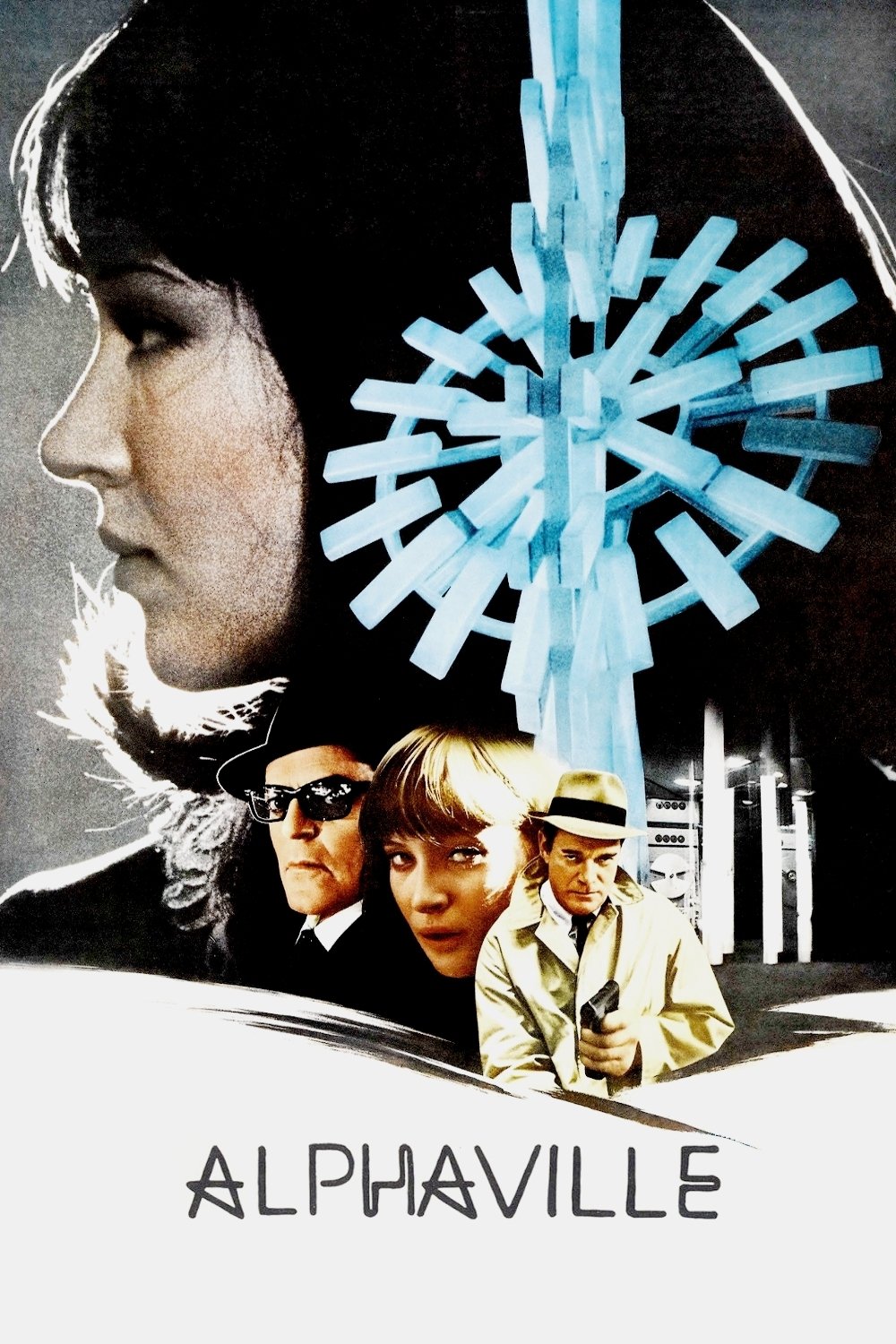
The Historical Landscape
Whenever I recall my first encounter with Jean-Luc Godard’s Alphaville, what strikes me isn’t merely its jarring blend of science fiction and film noir, but the shadow it casts over the mid-1960s. Paris in monochrome, a city I’d always associated with light and vibrancy, becomes a sterile labyrinth of glass, steel, and bureaucratic menace in Godard’s hands. Watching the film, I was transported not to a distant, fantastical future, but back into the heart of 1965—a world bracing itself between decay and transformation, hope and existential dread.
That year, the air was thick with both anxiety and possibility. I remember reading about the mounting tensions of the Cold War; the Cuban Missile Crisis was a recent scar in collective memory, and the Vietnam conflict had Americans and Europeans alike questioning the very morality of technological “progress.” In France, the tremors of the Algerian War still reverberated through society, its wounds fresh beneath the lacquered veneer of postwar prosperity. The French intellectual landscape, shaped by existential philosophy and structuralist critique, buzzed with challenges to tradition and reason. It felt like a time when art wasn’t merely decorative, but essential—an urgent language for making sense of a world teetering on the edge of transformation.
I also recall how the French New Wave, of which Godard was a leading figure, had been reshaping cinema since the late 1950s. These films, with their jump cuts and rejection of conventional narrative, mirrored the restlessness of a generation disillusioned by authority, eager to rebel against the confines of the “old cinema” and by extension, the old order. It was, in a way, a broader search for authenticity—a challenge to the sanctioned narrative spun by governments, corporations, and even the popular arts.
Yet, despite outward markers of modernity—space exploration, computers, and booming consumerism—there was a palpable fear lurking beneath. I recognized this as the era when faith in rational progress began to curdle, replaced by a suspicion that the very things meant to liberate humanity were rapidly closing in, becoming cold and dehumanizing. Alphaville feels, to me, like a warning flung into this very moment, rendered through stark cityscapes and a relentless, computerized logic that drowns out poetry, emotion, and personal memory.
Cultural and Political Undercurrents
What I found most provocative about Alphaville was the way it siphoned the fraught energy of its time into every frame. This wasn’t simply a film made in the shadow of political repression; it was, I felt, an outright revolt against it. The 1960s in France were steeped in suspicion: surveillance, censorship, and the omnipresence of the state pressed in on daily life. I can’t help but draw parallels to the clinical, omnipotent computer Alpha 60, which in the film presides over Alphaville with its monotone decrees and mechanical enforcement of order. The machine dictator didn’t feel like science fiction to me; it was a direct echo of the growing unease about bureaucratic control and the reduction of the individual to data points—a theme that now seems both prescient and deeply rooted in the anxieties of its era.
Intellectually, I see Godard channeling the currents of French existentialism and the writings of figures like Sartre and Camus. These thinkers, who filled the cafes of Paris with spirited debate, were grappling with questions about authenticity, freedom, and the meaning of existence in a world increasingly dominated by impersonal institutions. When I watched figures in the film recite poetry as acts of courage, I recalled Sartre’s insistence that human beings define themselves through their choices, even (and especially) under the threat of annihilation.
The use of language as a tool of oppression in Alphaville was more than a narrative device for me; it mirrored real political fears. This was the era of Orwell’s lingering influence, when “Newspeak” from 1984 felt like a genuine warning. Around 1965, the French government had tightened its grip on media and culture, fearful of subversion both from the left and right. I sense that Godard was responding to these external pressures through his depiction of a society where forbidden words—like “love”—had literally been erased from the dictionary, and with them, the capacity for resistance and hope.
I’m always reminded, too, of the broader technological fascination and anxiety that rippled through Europe and America at the time. The proliferation of computers, the promises of cybernetics, the space race—all these developments inspired utopian dreams and dystopian nightmares. For me, Alpha 60’s cold, rational voice embodies both the allure and terror of entrusting human fate to technocratic elites or machines. It’s a reflection of a moment in history when the beneficial and the threatening potential of technology were coming into stark relief.
And finally, I can’t overlook the impact of decolonization. The year 1965 sits right in the midst of France reconciling with the collapse of its empire. I see echoes of this historical reckoning in the film’s critique of imposed order and the suppression of individuality—reminders that any technocratic utopia comes at a cost, often paid by those on the margins.
The Film as a Reflection of Its Time
When I dwell on the ways Alphaville reflects its era, I see more than just atmospheric cityscapes or chilling monologues. To me, it’s an x-ray image of a civilization struggling to hold onto its soul amidst relentless modernization. The choice to shoot in real Parisian locations, transforming contemporary office buildings into the architecture of a totalitarian future, feels to me like Godard’s assertion that dystopia is not a remote, abstract threat; it’s lurking in the details of everyday life. The neon signs, anonymous corridors, and bureaucratic rituals in the film don’t signify another galaxy—they remind me of my own world, with its creeping sense of standardization and alienation.
I’m drawn to the way the film’s plot—a detective navigating a controlled, loveless metropolis—mirrors the navigation of modern life under bureaucratic regimes. The protagonist’s bewilderment is my own, wandering through an era where individuality is both threatened and desperately asserted. The suppression of emotional expression, the policing of language, and the ritualized executions for “illogical” behavior all speak to the era’s anxiety about conformity versus authenticity. I interpret this as Godard’s meditation on what it means to remain human when society’s very structure seems designed to eradicate the messiness of feeling, creativity, and dissent.
When the film’s heroine, haunted by her inability to utter certain words or comprehend concepts like love, breaks through with vulnerability, I’m reminded of the climate of self-censorship that can pervade societies under intense political or social pressure. The way Godard stages dialogues as battlegrounds—logic versus poetry, law versus desire—feels deeply connected to the philosophical wars playing out in 1960s France. As I see it, Alphaville isn’t just a parable; it’s an anguished protest against the narrowing of the human experience in the name of efficiency or security.
The film’s hybrid style, merging film noir’s shadowy intimacy with the alienation of avant-garde science fiction, suggests a world in flux. I recognize in its genre-bending approach the sense of cultural experimentation flourishing in the 1960s. The collapse of boundaries—between the real and the artificial, past and future, fact and fantasy—reflects the era’s own uncertainties. I’m convinced Godard meant not just to entertain, but to unsettle, to jolt his audience into recognizing the silent, slow creep of mechanization and its erasure of what makes life unpredictable, passionate, and ultimately free.
There’s a deep poignancy, for me, in the film’s finale—the “victory” of poetry over logic, emotion over control. While such optimism might seem naive post-1968, in the moment it captures a critical tension that defined the decade: the belief that art, language, and intimate human connection could, at least for a time, resist even the most encroaching forces of technology and ideology. Watching Alphaville, I don’t see prophecy so much as diagnosis—a deeply personal, almost desperate search for what must be preserved as the world threatens to obliterate it.
Changing Perceptions Over Time
Over the years, my experience of Alphaville has changed alongside, and in conversation with, shifting societal currents. When I first viewed the film, I saw it as a relic—an artifact of 1960s paranoia, perhaps overwrought in its depiction of mechanized evil and the triumph of feeling. But as my own world has become more saturated by digital surveillance, algorithmic governance, and the quantification of everyday experience, the film feels uncomfortably prescient.
I remember, in the late 20th century, how critics debated Godard’s intentions—was he mocking the conventions of genre, using the trappings of science fiction and noir to comment on cinematic artifice itself? Or was he truly sounding an alarm against the dangers of unchecked rationalism? For me, the film has always operated on both levels. But what was once interpreted mainly in the context of Cold War fears has, in recent years, found new resonance as a critique of the data-driven society. The dehumanizing logic of Alpha 60 now recalls for me everything from corporate algorithms to social credit systems, making the film’s warnings less abstract, more real.
I’ve noticed that younger viewers, encountering Alphaville in a world already shaped by the internet and smart devices, often find its setting oddly familiar. Its “future” is now our present, though with different trappings. The film’s evocation of urban alienation, mediated communication, and state intrusion speaks even more directly to the realities of contemporary life than it might have in 1965. Yet, the stark black-and-white imagery, the surreal logic, and the poetic defiance now register as a kind of nostalgia—an artifact from an era when resistance felt possible through language and art alone.
Some critics today, I’ve observed, focus on the film’s ambivalence about technology. They’re less inclined to see Alpha 60 as the embodiment of pure evil and more as a mirror for our own complicity in the systems that promise order and efficiency at personal cost. That’s a shift I find fascinating and sometimes unsettling; it speaks to a broader cultural change, a diminishing certainty that love or poetry can, in fact, save us from the forces we have unleashed.
I now view Alphaville as a living text. Its reception has expanded beyond the intellectual debates of Parisian film journals or the counterculture ferment of the late sixties. Each generation projects its own anxieties onto the film, shifting the emphasis from political dystopia to questions about communication, intimacy, autonomy, and resistance in a technology-dominated landscape. The fact that the film still provokes, still unsettles, is testament to how closely it captured—and continues to capture—the shape of fear and hope.
Historical Takeaway
Sitting with the afterglow of Alphaville, I’m left most haunted by the gulf between utopian promise and lived reality—a gulf that defined the mid-1960s, and, despite all transformation since, persists still. The film does not just speak of the dangers of autocratic regimes or heartless machines; it shows me the quiet, everyday erosions of individuality and empathy that accompany modernization. It reveals an era fixated on rationality, organization, and progress, but terrified that these very values might ultimately extinguish what is most vital in us: our unruly emotions, our longing for connection, our irreducible uniqueness.
For me, Alphaville is a historical cipher. Through its foggy corridors and impassive cityscapes, I read the struggles of a society grappling with the costs of “progress.” Its pessimism, masked as pulp fiction, is a record of the anxieties that plagued French intellectual life—anxieties about the loss of authenticity, the violence embedded in bureaucracy, and the existential price of surrendering too much to systems. The film’s insistence that poetry and love contain liberating power—however quixotic—captures the defining tension of its era: faith in humanism pitted against a rising tide of structural determinism.
The age in which Godard crafted Alphaville was one marked by the clash of tradition and revolution, optimism and dread, and a persistent belief that art could provoke, reveal, and maybe, just maybe, resist. My personal engagement with the film has deepened as our world has come to resemble its cautionary tale. Ultimately, Alphaville reminds me that the questions confronting its characters remain our own. It is a call to vigilance—not only against the obvious threats of technological tyranny, but against the subtler temptations to streamline experience, to silence complexity, to banish poetry from the language of daily life. In this, the film provides not only a record of its own anxious century, but a challenge to those of us who still dream and struggle on its far side.
To see how these real-world elements shaped the film’s impact, you may also explore its reception and legacy.
🎬 Check out today's best-selling movies on Amazon!
View Deals on Amazon