
The Historical Landscape
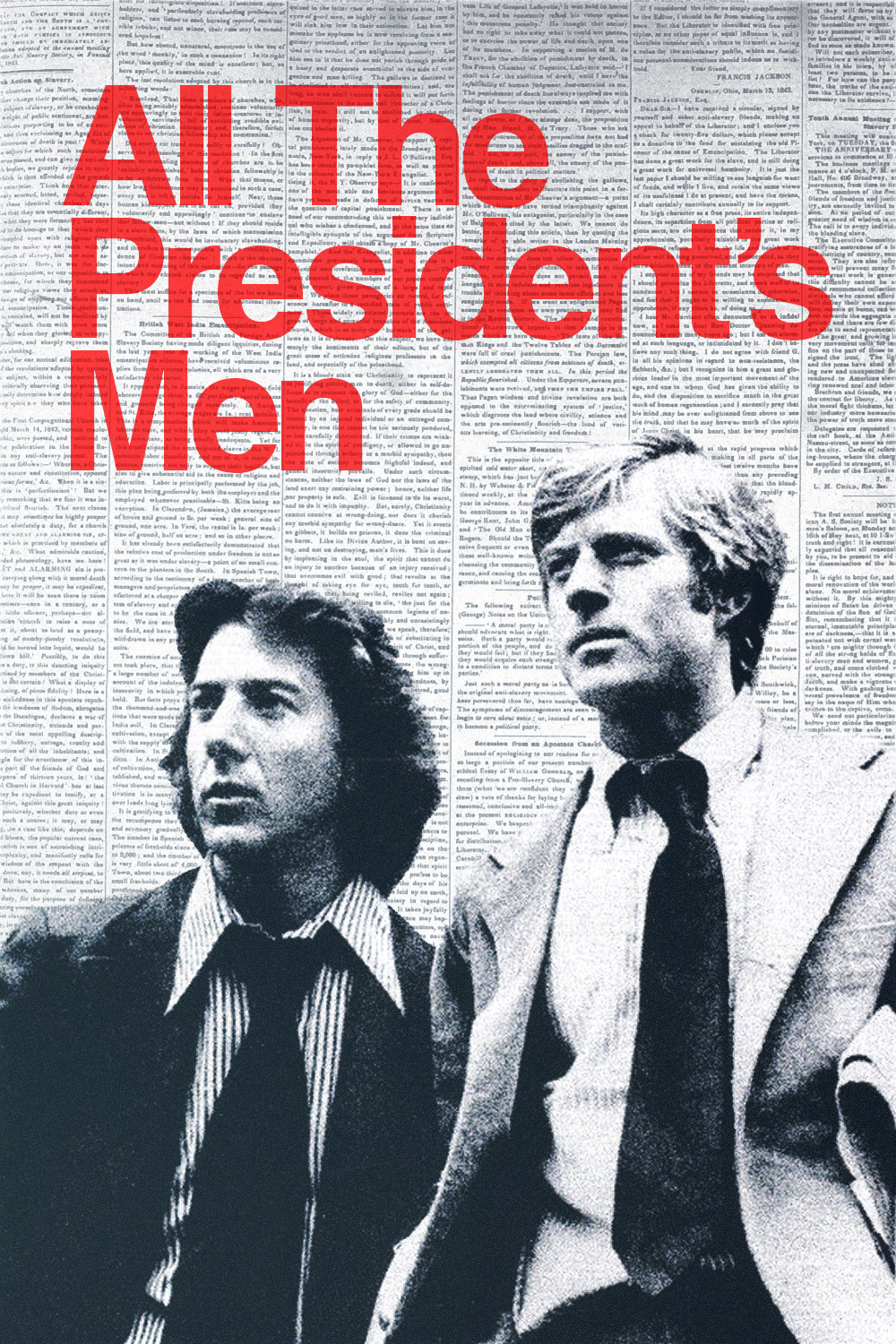
All the President’s Men debuted in American cinemas in April 1976, a period marked by profound turbulence and transformation. The United States was exiting an often tumultuous postwar era. The optimism of the 1950s had long since faded, and the countercultural revolutions of the 1960s had left an indelible mark. By the mid-1970s, the nation had just weathered the Vietnam War’s divisive end, the OPEC oil embargo, and a series of economic shocks now remembered as “stagflation.” Most notably, the social contract between American citizens and their government was being fundamentally questioned.
The country, bruised and introspective, continued to reel in the aftermath of President Richard Nixon’s resignation in August 1974—a first in U.S. history—after the Watergate scandal irrevocably undermined public confidence in political institutions. Earlier generations had largely accepted official narratives; now, skepticism was a national mood. Congress had responded to public outrage with new laws aimed at government transparency, oversight, and campaign reform. In this climate, investigative journalism was not just lauded—it was urgently needed. This was the world into which All the President’s Men arrived, dramatizing the dogged reporting of Washington Post journalists Carl Bernstein and Bob Woodward as they followed a trail of corruption to the highest office in the land. The film’s launch was as much a product of its historical context as of the story it depicted—the convergence of a battered democracy earnestly searching for accountability and truth.
Cultural and Political Undercurrents
In examining the film’s underlying forces, it’s vital to consider the pervasive sense of disillusionment that hung over American society in the 1970s. The civil rights and antiwar movements had fostered a new generation accustomed to protesting institutionalized injustices. The assassinations of John F. Kennedy, Martin Luther King Jr., and Robert F. Kennedy further eroded faith in the establishment. Television, now the dominant household medium, brought the Vietnam War and the Watergate hearings into American living rooms, making governmental malfeasance inescapably visible.
Against this backdrop, the boundaries between “insider” and “outsider” were rapidly shifting. The media, especially newspapers, assumed a watchdog role, echoing public anxieties and holding those in power to account. Cultural output—from New Hollywood’s auteur-driven cinema to protest music and political satire—often focused on antiheroes, paranoia, and conspiracy. Filmmakers responded with a wave of stories rooted in reality, reflective of the public’s hunger for authenticity and skepticism toward authority. All the President’s Men wasn’t simply recounting a news story; it was channeling an era’s collective apprehension, capturing the very mechanisms by which power could be hidden and, crucially, exposed.
The Film as a Reflection of Its Time
All the President’s Men serves as a distinctive cinematic time capsule. Rather than presenting the Watergate affair as a distant historical lesson, the film dramatizes the painstaking pursuit of truth by two “everyman” reporters. The storytelling is methodical, almost documentary-like in its attention to detail. Scenes charged with tension often play out not in the halls of Congress, but in the drab offices of The Washington Post or in shadowy parking garages, emphasizing diligence, anxiety, and the slow accumulation of evidence rather than facile heroics.
The choice to focus on process—lists, phone calls, notes, cold doors, whispered sources—directly reflects the contemporary valorization of transparency and investigation. In the wake of governmental betrayal, the film champions the notion that democracy can only endure via relentless, principled scrutiny. Stylistically, director Alan J. Pakula’s use of muted colors, shadow, and ambient sound mirrors the era’s uncertainty. The protagonists, played by Dustin Hoffman and Robert Redford, are depicted not as all-knowing crusaders but as fallible, sometimes confused individuals—mirroring the public’s own search for understanding.
Notably, the film omits scenes of Nixon or top-level White House intrigue, underscoring a societal preoccupation not merely with powerful individuals, but with the corrupting system itself. The aura of paranoia—a signature of 1970s American cinema—infuses each scene; trust must be earned, and truth is elusive. The very form and rhythm of the film evoke a nation careful, even weary, in its efforts to hold the powerful to account.
Changing Perceptions Over Time
With the passage of decades, All the President’s Men has taken on new meanings for successive generations. Originally, it resonated as an affirmation of Fourth Estate heroism and the necessity of a vigilant press. For audiences living through Watergate, the film gave cinematic form to contemporary fears and offered catharsis—the system, though flawed, could still self-correct.
In the ensuing years, as public trust in government institutions continued to fluctuate, the film became not just a record of one scandal but emblematic of an entire period defined by investigation, doubt, and accountability. In the 1980s and 1990s, aftershocks of Watergate—such as the Iran-Contra affair—invited viewers to reconsider the capacity of journalism to effect systemic change. By the 21st century, amidst debates about “fake news,” media consolidation, and rapid digital disruption, All the President’s Men has been revisited through a lens of nostalgia and anxiety. For some, it’s a marker of “golden age” journalistic idealism; for others, it emphasizes the laborious and contested nature of truth-seeking in any era.
Film scholars have also traced the legacy of its clear-eyed procedural style and implicit commentary on the relationship between the press and political power. Younger audiences, witnessing fresh revelations of malfeasance in government and corporations, often draw parallels between Watergate and modern whistleblower cases. The film’s insistence on skeptical inquiry and institutional accountability appears as urgent as ever, though now refracted through new cultural debates about who gets to tell the story—and how truth is negotiated in public discourse.
Historical Takeaway
All the President’s Men emerges, on historical reflection, as an artifact etched by its era’s conflicts, anxieties, and aspirations. It encapsulates mid-1970s America: a nation battered by disappointment yet determined to confront its own fault lines. The film’s narrative and aesthetic choices bear the marks of a society grappling with government deceit, seeking safeguards against future abuses of power, and elevating the unglamorous, persistent work of investigative journalism.
This film teaches us that the fallout from Watergate went far beyond partisan politics; it redefined civic expectations for transparency and recalibrated the role of the press. All the President’s Men demonstrates how cultural products both document and interrogate their times, employing the tools of cinema not just to recount events, but to place viewers inside the machinery of democracy at a moment of crisis. Even as perceptions change, the film endures as a tribute to a crucial transitional moment—a time when Americans, uncertain and chastened, recommitted themselves to the ideals of accountability and public scrutiny.
To see how these real-world elements shaped the film’s impact, you may also explore its reception and legacy.
🎬 Check out today's best-selling movies on Amazon!
View Deals on Amazon