
The Historical Landscape
Released in the shadow of postwar America, “Ace in the Hole” (1951) arrived during a moment of profound national transformation. World War II’s seismic aftermath had altered not only the United States’ status abroad but its own self-perception. The late 1940s and early 1950s pulsed with economic optimism reminiscent of the American Dream, evident in booming suburbs, the proliferation of consumer goods, and a swelling middle class. Yet, beneath the veneer of prosperity, anxieties simmered. The dawn of the Cold War and fears of communist infiltration permeated everyday life, manifesting in widespread suspicion and the rise of McCarthyism. The press became a battlefield, with journalists both victims and purveyors of the era’s mounting paranoia.
Hollywood, once solidly ensconced as the fountainhead of American mythmaking, found itself in flux. The disintegration of the studio system, along with increasing scrutiny from government agencies, produced films that publicly affirmed American values while, in their shadows, expressing misgivings about contemporary institutions. The era’s movies, genre films especially, often masked their doubts and social criticisms beneath allegory or melodrama, reflecting a cautious but persistent questioning of the times.
Cultural and Political Undercurrents
Billy Wilder’s “Ace in the Hole” could only have emerged from a landscape suffused with skepticism about traditional institutions. The power of the media—a crucial player in American society since the war—was under fierce debate. Newspapers were a lifeline, but also seen as exploitative; they could shape opinion and sway public fates. This was a period when headlines could build or break careers, prompt national hysteria, or destroy reputations with a single edition. Sensationalism was not just a tactic but a fact of life, as confirmed by the widespread coverage of real tragedies—echoed in the film’s story of a trapped man and the media circus that follows.
Politically, the film’s cynicism was inseparable from the climate of the early 1950s. McCarthy’s anti-Communist crusades, loyalty oaths, and “witch hunts” stoked a general atmosphere of suspicion, where truth and self-interest became blurred. Americans were contending with uncomfortable questions about the integrity of their institutions—ideas usually kept to the margins of polite discourse. Technology’s spread—especially radio and the dawn of television—introduced competition for newspapers, heightening the urgency for story dominance and innovation. Meanwhile, the fading but lingering legacies of the Depression and the war contributed to a collective unease regarding trust, power, and the potential for human exploitation.
The Film as a Reflection of Its Time
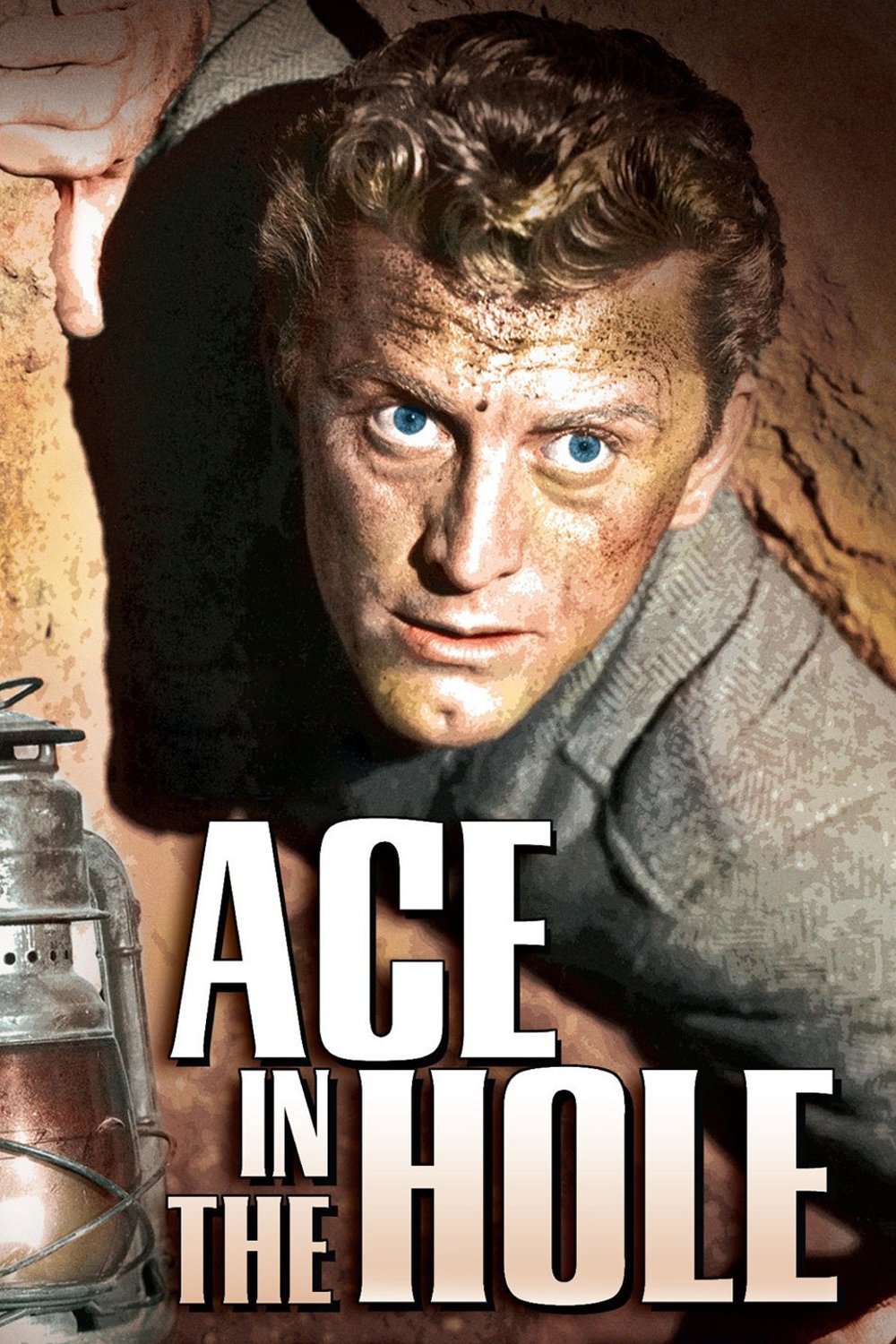
“Ace in the Hole” channels its era’s skepticism and cynicism through both form and content. At its center is Charles “Chuck” Tatum, a jaded reporter whose morally bankrupt pursuit of a “big story” catalyzes calamity. The film’s unrelenting bleakness and sharp-edged satire attack not just individual ambition, but the complicity of the press, the public, and even victims. Wilder’s film, deeply pessimistic, stands as one of the few Hollywood movies of its era to skewer the Fourth Estate without apology.
This narrative speaks to the growing disenchantment with American institutions. The press, once lionized as a bulwark of democracy and truth, is here portrayed as manipulative and self-interested. Tatum’s willingness to prolong human suffering for profit is less a personal aberration than a systemic indictment. The film’s depiction of the ever-growing crowd at the accident site—gawkers, tourists, and entrepreneurs—mirrors both the burgeoning culture of spectacle and the darker truths of American collective psychology in the period. Wilder’s choice to set the story in the arid desert, far from the urban centers of power, underscores a wider sense of alienation and spiritual vacancy running through early Cold War America.
Another key reflection lies in the film’s handling of authority. Law enforcement, local politicians, and business interests are shown to be equally complicit, readily following the press’s lead or leveraging the situation for selfish gain. This broad condemnation illuminates 1950s America’s mounting distrust in leadership—whether in government, media, or business—a far cry from the idealistic unity presented during the Second World War. By situating the story firmly within the mechanisms of both old and emerging mass media, Wilder asks viewers to interrogate the newfound omnipresence of spectacle in postwar life and its consequences for empathy, ethics, and truth.
Changing Perceptions Over Time
Upon release, “Ace in the Hole” confounded and alienated much of its audience. Accustomed to morally clear narratives and sympathetic protagonists, early 1950s moviegoers were unsettled by Tatum’s unvarnished ambition and the film’s caustic view of the American public. Critics, too, balked at its harshness, with some interpreting it as an attack on cherished pillars of American life. The movie struggled at the box office, and its legacy languished for decades, often cited as one of Wilder’s failures rather than a triumph.
However, as decades passed and skepticism toward both media and celebrity culture intensified, “Ace in the Hole” gained resonance. The Watergate era and the erosion of trust in public figures of the 1970s prompted reconsideration of the film’s themes, and its prescience became increasingly appreciated. In the context of the late twentieth and early twenty-first centuries—marked by nonstop news cycles, live media events, and recurring ethical debates about journalism—the film’s once-provocative message now seems eerily prophetic. Modern critics routinely praise its unflinching honesty, and filmmakers such as Sidney Lumet and Oliver Stone have cited its influence.
The film’s social critique has also been reassessed. What once appeared as a uniquely American parable about the dangers of sensationalist storytelling is now recognized as a broader indictment of spectacle, complicity, and the human tendency to commodify tragedy. The evolution in interpretation reflects a society grappling openly with issues the film first explored in taboo whispers, making “Ace in the Hole” a touchstone for debates about the responsibilities of the press and the consuming public alike.
Historical Takeaway
Viewed through the lens of history, “Ace in the Hole” offers a piercing snapshot of America at a crossroads. It exposes the ambiguities and contradictions of an era defined by technological progress, institutional suspicion, and the uneasy coexistence of optimism and dread. The film’s dark vision broaches subjects largely absent from contemporaneous cinema: media manipulation, the cult of spectacle, and the commodification of human suffering. By stripping away illusions, Wilder’s film stands as a testament to the period’s psychic turbulence while highlighting the enduring complexity of truth, justice, and morality in public life.
Perhaps most importantly, “Ace in the Hole” reveals that postwar America’s apparent confidence coexisted with, and was often shadowed by, doubt—about the motives of its institutions, the meaning of its prosperity, and the price of its progress. In chronicling the spectacle of tragedy and the complicity it engenders, the film anticipates the ethical dilemmas that would come to dominate American media and culture in decades to follow. It remains a potent reminder that every era’s mirrors, cinematic and otherwise, reveal both what is and what is feared—charting not only who Americans were in 1951, but who they might become.
🎬 Check out today's best-selling movies on Amazon!
View Deals on Amazon