
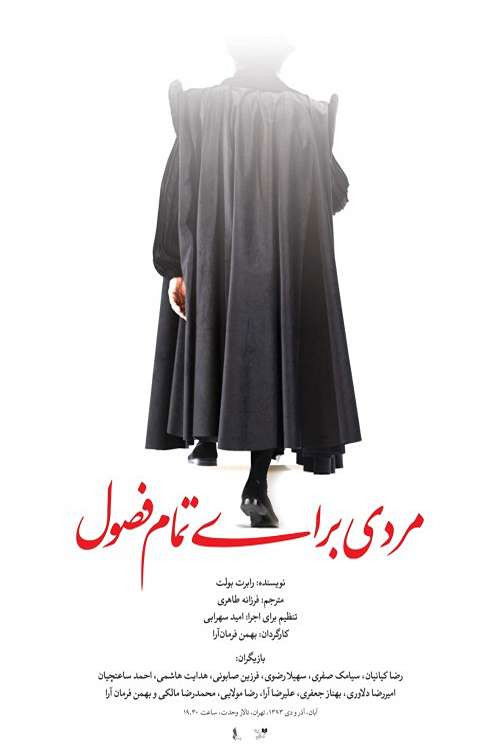
The Historical Landscape
In 1966, when “A Man for All Seasons” first appeared in theaters, the world found itself in the throes of transformation. The two decades leading up to the film’s release had witnessed seismic shifts across the global landscape. The Second World War and its aftermath had redrawn borders, altered economies, and forced nations to confront questions of morality, sovereignty, and the power structures that governed their societies. Internally, many Western countries, and particularly Britain where the film was made, were experiencing a struggle between the old guard and the forces of modernity. It was a time when steadfast traditions were increasingly being challenged by new ideologies, generational attitudes, and the rapid pace of social change.
In Britain, the 1960s marked the end of the age of deference. Post-war austerity had given way to an era glimmering with newfound optimism and economic growth, driving a curiosity about identity and values. The world witnessed the emergence of the youth culture that would define the decade, from swinging London and The Beatles to the civil rights marches in America and the questioning of entrenched authority. By the mid-1960s, debates about conscience, personal integrity, and the tension between individual and state were not confined to history books; they permeated everyday life and artistic expression.
In cinema, these years saw a flowering of British filmmaking, with a wave of social realism and thought-provoking adaptations. Studios and filmmakers grappled with stories that echoed the anxieties and uncertainties of the age, looking either to contemporary society or, as in “A Man for All Seasons,” back to pivotal moments in the past to reflect on present-day dilemmas. Released less than a year after the Second Vatican Council concluded its sweeping reforms within the Catholic Church, and just as modern Europe began to grapple with the legacy of its religious and political conflicts, “A Man for All Seasons” emerged as a product—and a subtle question—of its historical moment.
Cultural and Political Undercurrents
The political and cultural climates of the 1960s were infused with a spirit of questioning and, for many, of latent unrest. In Britain, the government, led at the time of the film’s release by Labor Prime Minister Harold Wilson, was choosing modernization over traditionalism. The country’s role on the global stage was shifting, its empire fading but not entirely vanished; there was a clear awareness that dogma and doctrine were no longer the only arbiters of policy and power.
Cultural undercurrents also influenced the narrative thrust of “A Man for All Seasons.” The film’s focus on Sir Thomas More—a statesman who refused to acquiesce to King Henry VIII’s demands—struck a particular chord. Here was a tale of an individual facing down the overwhelming machinery of the state, torn between private conscience and public duty. This theme resonated in a society wrestling with the aftereffects of totalitarian regimes, the memory of Nuremberg, and the ongoing Cold War paranoia, where questions about complicity and conscience were not mere abstractions but matters of policy and public discourse.
Intellectually, the 1960s were heavily influenced by existentialist thought and skepticism. The notion that the individual must grapple with questions of right and wrong—sometimes at great personal risk—felt urgently applicable. The decade’s popularity of theater and literature that pondered such questions, from Beckett’s existential dramas to the new wave in French and British cinema, further solidified an appetite for stories with moral complexity.
The religious dimension, too, cannot be overlooked. The film’s release shadowed major changes within institutional Catholicism and Protestant Christianity, questioning long-standing alliances between faith and state. “A Man for All Seasons” focuses not just on the exterior trappings of power, but on inner conviction—a subversive message in an era when traditional structures were under scrutiny.
The Film as a Reflection of Its Time
“A Man for All Seasons” serves as more than a tale recounting the downfall of Sir Thomas More; it is a cinematic parable for an age in transition. The film’s careful attention to the intricacies of moral choice and its measured pacing harken back to classical storytelling, while its characterization of More as an everyman beset by impossible demands captured precisely the ambivalence and tension of the 1960s.
In an era skeptical of grand narratives—and often wary of heroes constructed by earlier generations—director Fred Zinnemann and screenwriter Robert Bolt did not portray More as a martyr detached from human frailty. Rather, More is shrewd, self-reflective, and resistant to easy glory; he embodies the conflict of a person caught between public expectation and personal belief. This subtle reading of character echoed the growing public suspicion of simplistic authority figures, whether in politics, religion, or society at large.
The film’s production design and cinematography, while lush with period detail, reveal a starkness and severity that mirror 1960s austerity. The quiet, deliberate performances, the tight framing of faces during moments of crisis, and the avoidance of overt spectacle all reflect an age weary of the excesses of propaganda and spectacle. In this way, the film reflects the broader cinematic movement of its time: a return to stories about human integrity, contradiction, and the private struggles that shape history.
On another level, the timing of the film’s release in both Britain and America amplified its resonance. Audiences, especially those aware of ongoing political scandals, the Vietnam War, and civil rights movements, found in More’s silent resistance a compelling model for grappling with conscience in the face of institutional pressure. The film did not simply valorize nostalgia for lost certainty; it presented moral steadfastness as a living question for contemporary viewers.
Changing Perceptions Over Time
As decades have passed since the film’s release, the reception and interpretation of “A Man for All Seasons” have shifted, reflecting the evolving preoccupations of society. Initially, the film was celebrated for its elegance, its measured tone, and its profound performances—attributes that won it several Academy Awards, including Best Picture and Best Actor for Paul Scofield’s portrayal of More. To contemporary viewers in the 1960s, the film’s meticulously drawn conflict between individual conscience and political authority appeared both timely and timeless, imbued with the urgency of current events.
Over time, however, as new generations with different social concerns discovered the film, fresh interpretations have emerged. In the 1970s and 1980s, as debates over government transparency and personal liberty intensified amidst Watergate, the oil crisis, and the conservative resurgence, audiences revisited the film’s central questions through the lens of suspicion toward authority. More’s struggle was seen less as an abstract tragedy and more as a pointed metaphor for whistleblowers, dissidents, and those resisting institutional overreach.
In our own era, where conversations about pluralism, gender, and intersectionality have entered the mainstream, some have revisited “A Man for All Seasons” to critique its focus on a male, religious protagonist. Modern critics question whether the film distances itself too much from the complexities of political alliances, or whether it romanticizes the past at the expense of grappling with the messy realities of power. At the same time, many still find relevance in its exploration of inner integrity, especially as contemporary life presents new iterations of moral dilemma, from corporate whistleblowing to challenges in the digital age.
Internationally, the film’s reception has also evolved. In countries struggling under authoritarian regimes or grappling with historical reckonings, More’s story has provided a point of reference for debates about personal versus collective responsibility. The film has been adopted in academic settings to prompt discussions about law, ethics, and governance, further broadening its legacy as a reflection and a catalyst for historical inquiry.
Historical Takeaway
Ultimately, “A Man for All Seasons” stands as a testament to the enduring anxieties and aspirations of the mid-20th century. Crafted at a moment when questions of authority, conscience, and the limits of power were being reexamined worldwide, the film distilled these concerns into a story rooted in history but alive with contemporary meaning. Its nuanced portrayal of Sir Thomas More offered a mirror to a society in flux—a world trying to balance the demands of tradition with the imperatives of change, and seeking out stories that would help chart a moral course through uncertain times.
Seen through the lens of historical documentary analysis, the film reveals how the past is continually reimagined to serve the needs of the present. “A Man for All Seasons” not only dramatized an iconic 16th-century conflict but also invited 1960s audiences, and those who followed, to confront the universality of moral freedom, the cost of dissent, and the intricate connections between private belief and public action. If cinema, at its best, helps a society understand itself, then this film encapsulates not merely a moment in Tudor England, but a pivotal era of reflection and reckoning for the modern world. Its legacy, therefore, is not just one of historical narrative, but of the ceaseless dialogue between then and now, urging each generation to revisit and redefine what it means to be, in times of trial, a person whose season endures.
🎬 Check out today's best-selling movies on Amazon!
View Deals on Amazon