
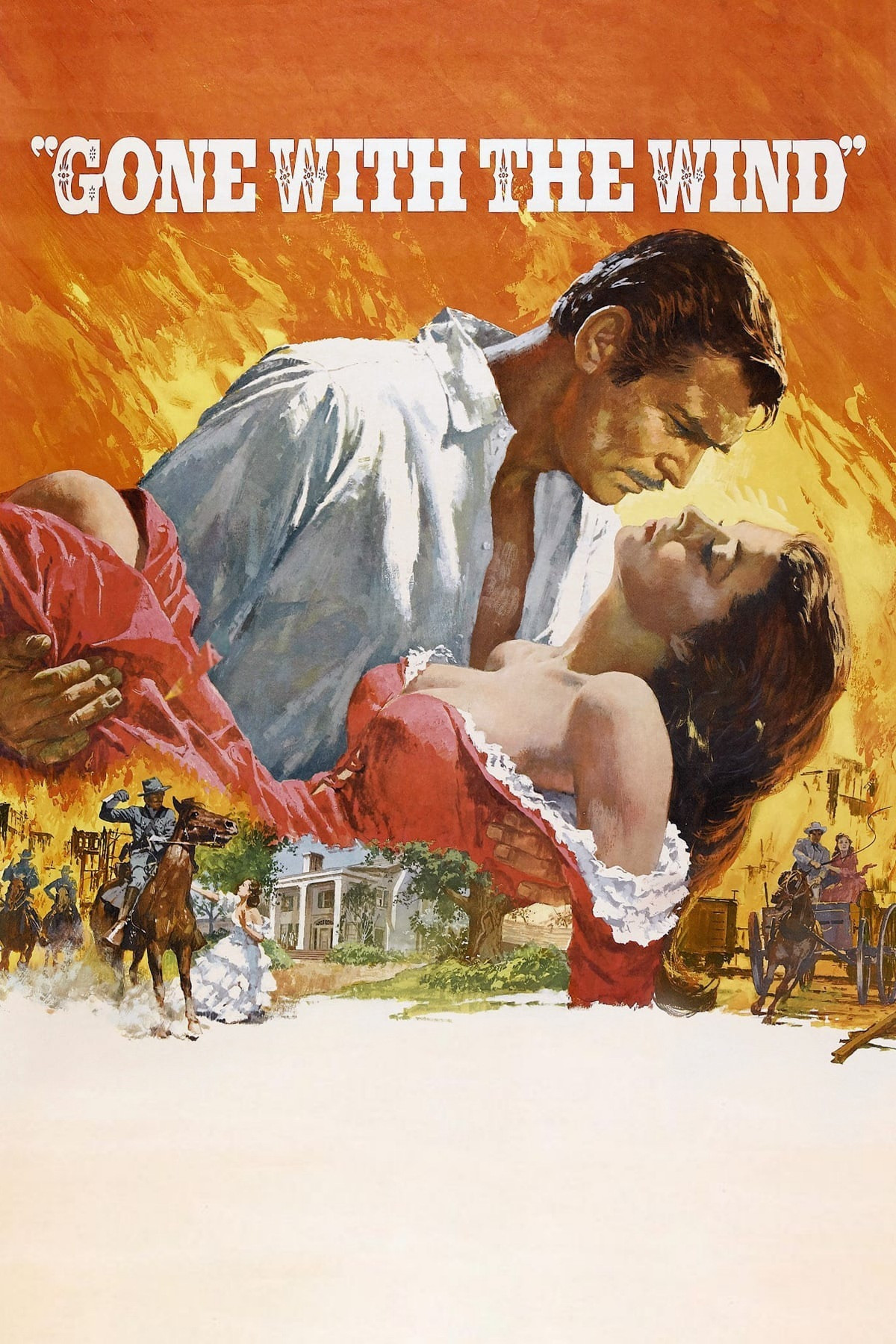
The Historical Era of the Film
Whenever I revisit Gone with the Wind (1939), I’m immediately transported into two entwined epochs: the Civil War era depicted in the film, and the late 1930s America in which this movie was crafted. It’s impossible for me to separate the romantic sweep of Tara from the anxieties and ambitions of a country on the brink of world conflict and still reeling from the bruises of the Great Depression. The political climate during 1939 was fraught with uncertainty. I’ve always sensed that the looming shadow of the Second World War colored every major cinematic enterprise of the time, casting a particular urgency over escapism and nostalgia in entertainment.
This was an America still marred by the aftershocks of the Depression, but economically, the motion picture industry had found ways to thrive. Many families had exhausted their savings or struggled to find steady work, and a night at the movies became one of the few affordable luxuries. Social unrest was palpable. Segregation laws were still enforced in the South, limiting the opportunities—and even the visibility—of Black Americans both on and off the screen. The Jim Crow era was not just background noise; it was an unspoken reality for millions. This context gave rise to films like Gone with the Wind, where the South’s past was memorialized through a singular lens, unquestionably that of white Southern memory.
Globally, I’m always aware that as the studios rolled out their biggest productions, storm clouds gathered over Europe. Hitler’s territorial expansion had already begun, and American isolationism dominated the political discussion. That year, Gone with the Wind competed for headlines with the outbreak of war in Poland. Studio heads in Hollywood, many of whom were recent immigrants or children of immigrants, gauged the pulse of America’s fears and dreams, ready to give the public stories rooted in comfort.
The entertainment industry in 1939 was sometimes known as the “Golden Year” of Hollywood. As I’ve pored over box office figures and contemporary accounts, it’s clear to me that this period was marked by both innovation and a desire for grandeur. With vivid Technicolor and lavish sets, the film’s production stands as a testament to the era’s bravado. MGM and Selznick International invested a herculean effort into creating a kind of historical spectacle unseen before, echoing a national longing to believe in the romance of the past even as the present seemed precarious.
- Economic hardship from the Great Depression influenced film audiences
- Political uncertainty with the approach of World War II
- Hollywood’s “Golden Year” ambition and innovation
- Continuing segregation and Jim Crow laws in the American South
Social and Cultural Climate
When I examine the film’s debut and the social atmosphere, what stands out to me is the prevailing yearning for idealized narratives of American identity. In the late 1930s, many Americans were swept up in nostalgia for a past that never truly existed, one constructed by lost causes and antebellum myths. As I’ve dug through periodicals, personal letters, and media coverage of that era, it’s impossible to ignore just how powerfully those notions shaped the collective worldview—particularly in the South.
Prevailing social attitudes championed conformity, tradition, and a specific heroism tied to white Southern narratives. This mindset was reinforced by decades of “Lost Cause” mythology and Dunning School histories of Reconstruction that depicted the Confederacy as tragically noble and the antebellum South as an idyllic world disrupted by war. I find it telling that audiences seemed hungry for stories that validated these biases, so much so that Hollywood tailored its largest projects to satisfy that appetite. The social climate also trivialized or outright ignored systemic racial injustice, and in many cases, major studios perpetuated stereotypes without scrutiny.
I see Gone with the Wind as emerging from a period where films about the Civil War and Reconstruction, such as The Birth of a Nation, had already established the conventions of epic Southern storytelling. In my research, I’ve read accounts of Black critics and intellectuals protesting such films, but their voices were largely ignored in the mainstream press. At the time, discussions of American identity often excluded the perspectives of minorities, especially in Southern-set films, which further entrenched a monolithic and romanticized vision of the past.
The 1930s were also marked by the rise of escapist entertainment in response to daily hardships, with grand narratives and sweeping romance providing an antidote to uncertainty. The dominance of the Hays Code was another digital line in the sand—I always think about how strictly enforced morality clauses limited onscreen depictions of sexuality, race relations, and violence. The film’s portrayal of plantation life, social order, and gender roles reflects the anxieties and desires of a country seeking reassurance rather than confrontation.
How the Era Influenced the Film
I am always struck by the way historical circumstances shaped every level of Gone with the Wind, from casting choices to visual composition. The story, built around Scarlett O’Hara’s resilience, was designed to echo the sense of hardship and determination Americans knew intimately in the late 1930s. As I reflect on the film, I see the Depression-era mindset in Scarlett’s resourcefulness: her desperation is not far removed from that of a nation craving self-reliance and survival. The sweeping Technicolor visuals and elaborate sets weren’t just for show; they invited viewers to escape from economic drudgery and political uncertainty into grand nostalgia.
The film’s depiction of the South is firmly rooted in the era’s comfort with mythmaking. Rather than a critical look at the realities of slavery or civil rights, its view of the antebellum world mirrors dominant social tastes—elegant balls, sprawling plantations, and gallant soldiers, all sanitized of the brutality inherent in the historical context. I view this not as an oversight, but as a conscious shaping of collective memory, one that benefited from and reinforced Hollywood’s economic interests in reaching white, Southern, and national audiences.
The strictures of the Hays Code also left their mark. I’ve traced the film’s scripts and noted how censors scrutinized dialogue and relationships, ensuring any acknowledgment of sexual passion or racial conflict was heavily coded or pushed off-screen. This constraint forced the filmmakers to be inventive with innuendo and implication but ultimately limited authentic confrontation of the past’s complexities.
I’m also fascinated by how the mass audition process for Scarlett O’Hara exemplified the participatory culture of the time—thousands of women were considered, with national publicity stunts orchestrated to engage a weary public. I see this as Hollywood’s way of harnessing and shaping public enthusiasm, making the film an event with broad social resonance. Such tactics made the film a touchstone not only for escapism but also national self-perception.
Audience and Critical Response at the Time
As I pore over audience surveys, critical columns, and box office receipts, I find Gone with the Wind’s initial reception to be nothing less than feverish. Crowds lined the streets for hours, sometimes days, to catch a glimpse of the premiere in Atlanta or secure a ticket. I am consistently struck by the scale of the film’s embrace; some contemporaries even likened its release to a public holiday. For many, this film delivered exactly what was promised: a sweeping, cathartic journey, quintessentially American in both tone and ambition, and an epic testament to the possibilities of cinema. I get the sense that an America still wracked by the Depression and fearful of global instability was more than ready to lose itself in a vision of the past.
Among white audiences in particular, the film’s lush romanticism and mythical rendering of the Old South resonated profoundly. The press often described rapturous applause, lines around the block, and the sheer spectacle of its roadshow release as historical milestones for Hollywood. Critics lauded the film’s technical achievements—color photography, costume design, and length—while many singled out Vivien Leigh and Hattie McDaniel for their performances. However, concerns regarding representation and the legacy of the Confederacy were sporadic in mainstream reviews.
As a historian, I cannot ignore that Black audiences and intellectuals often experienced—and recorded—a sense of frustration or anger at the film’s depictions. Newspapers such as The Chicago Defender and organizations like the NAACP condemned its romanticization of slavery and demanded that the realities of Black life be honestly represented. Many Southern cities enforced segregated seating or excluded Black patrons entirely from showings, making the reception highly stratified according to region and race. I’ve always felt that this duality—the film’s massive popularity alongside pronounced criticism—offers a unique window into American cultural fault lines at the time.
For the industry, Gone with the Wind was confirmation that spectacle, nostalgia, and familiar tropes could create a phenomenon. Its soaring box office returned confidence to the studios, enabled riskier experiments, and established a model that would influence epic filmmaking for decades. To me, the audience and critical response reveals as much about what Americans valued and hoped for in 1939 as it does about the film itself.
Why Historical Context Matters Today
Whenever I introduce someone new to Gone with the Wind, I find myself returning to the bedrock of historical context. To me, understanding the production era answers not only the “what” of the film, but the “why.” Without an appreciation for the social climate that produced it, the film becomes just a lavish relic—a visually sumptuous but emotionally opaque artifact. When I place it back within the anxieties of the Great Depression and the creeping sense of war, I see Scarlett O’Hara’s struggles as so much more than melodrama; they embody a nation’s hunger for survival, resilience, and continuity.
For modern audiences, recognizing the social climate of 1939 complicates any simple enjoyment of the film. I believe this awareness is essential. It foregrounds why the story was framed as it was and offers insight into the blind spots, elisions, and overt celebrations that characterized its portrayal of antebellum and Reconstruction South. When I acknowledge that the film reflects mainstream white attitudes and the limits of studio-era Hollywood in recognizing the full humanity of Black Americans, I can better engage with both its achievements and its failures.
This act of contextualization isn’t about condemning or dismissing the film; instead, for me, it’s about deepening engagement—wrestling with the contradictions and aspirations that underpinned the American imagination. When I encounter popular debates over the film’s legacy, it seems clear that examining the history of its making and reception clarifies why its legend endures and why it remains a flashpoint in cultural memory. Reassessing the film through a historical lens grants me new tools for appreciating artistry as well as recognizing the work that remains in confronting myths and telling fuller stories about the past.
I am convinced that the historical context doesn’t just shape my reading of Gone with the Wind—it transforms the conversation entirely. It opens space for new questions, difficult truths, and the possibility of discovering both the splendor and limits of a cinematic landmark crafted on the precipice of global and social transformation.
After understanding the factual background, you may want to see how this story was received as a film.
🎬 Check out today's best-selling movies on Amazon!
View Deals on Amazon