
The Historical Landscape
There’s a singular unease I sense every time I watch Full Metal Jacket—a tension that feels embodied in the very grain of its film stock. Released in 1987, I perceive the film as emerging from a uniquely unsettled moment in American history. As I reflect on this era, the late 1980s, I find myself standing at a crossroads—a global Cold War simmering low, with the threat of all-out nuclear confrontation beginning to recede, but hardly vanishing. The shadows of Vietnam still fell long across American culture, not just as a memory, but as a festering wound in the national psyche. For me, it’s impossible to watch Kubrick’s vision without feeling the echoes of a society unsettled by both its recent past and its uncertain future.
As I recall, 1987 was far from a year bathed in nostalgia or confidence. Ronald Reagan held office, projecting soothing rhetoric about American might, all while the Iran-Contra scandal unraveled trust in government behind the scenes. I was struck, at the time, by a kind of performative optimism—a mainstream desire to tidy away the messiness of earlier decades, coupled with a boom in self-serving consumerism. But beneath that surface, I always felt anxiety and skepticism, especially among the generation who had seen friends or family sent off to Vietnam, or had themselves narrowly avoided the draft. There was a sense of reckoning: mainstream culture seemed desperate to move on, yet couldn’t quite escape the ghostly handprint Vietnam had pressed on the nation’s soul. Movies like Platoon (1986) and Hamburger Hill (1987) weren’t just entertainment—they were acts of public therapy, probing wounds that had scarcely begun to heal. To me, Full Metal Jacket arrived at a moment when American society was compelled to look backward, compelled to interrogate the very machinery that had generated such conflict and trauma.
Not only did the film belong to this blooming era of Vietnam retrospection, it also arose amidst technological and economic change. The personal computer was entering homes, global capitalism was wiring together new markets, and traditional norms were beginning to fray around the edges. Even sports, fashion, and music seemed possessed by a spirit of contradiction—MTV’s brash kineticism clashing with sudden celebrations of 1960s idealism. The result, as I witnessed, was a culture dangling between nostalgia and nihilism, self-reflection and denial. Within that moment, Full Metal Jacket made its entrance, and I’ve always understood it as a mirror to that particular ambivalence.
Cultural and Political Undercurrents
Whenever I revisit Full Metal Jacket, I find myself struck by the sharp undercurrents that drive its narrative—the unseen flows of anxiety, cynicism, and cultural unrest that shaped not only the film’s story, but the air I breathed at the time. I see in Kubrick’s lens a challenge to the jingoism of the Reagan 1980s, a jingoism that promised order while sidestepping the traumas of a generation. It was an age when “Morning in America” was the slogan, yet the dominant mood among artists, intellectuals, and even ordinary people was a gnawing distrust: Could any institution, be it the military or government, truly be believed? All around me, I would sense the tension between patriotic fervor and private doubt. Kubrick, characteristically, gave that tension cinematic flesh.
I notice how the film’s opening act, set in the dehumanizing crucible of Parris Island, strikes a chord that resonated deeply with those who had lived through the 1960s and 1970s. For me, that first half is not simply about military training; it’s a blistering indictment of the machinery of conformity and the manufacture of obedience. It reminded me of the stories I’d heard from veterans—stories of broken spirits, of individuality crushed under the bootheel of discipline. But in the context of the 1980s, I also read it as a subtle rebuke to emerging discourses around discipline, toughness, and what it meant to be a “real man” in the post-feminist, post-Watergate world. Reagan-era conservatism, after all, was in many ways a backlash against the perceived chaos and softness of the preceding decades. Yet, as I see it, Kubrick’s film refuses to let the fantasy of restored order go unchallenged. In the brutality of Gunnery Sergeant Hartman, I sense the era’s fear that discipline and patriotism are merely masks for trauma and violence.
Political context, too, seeps into the fabric of the movie. I never fail to notice the subtle ways the film interrogates the very narrative of American intervention and leadership. By the mid-80s, the consensus around Vietnam had shifted: the war was no longer defended as a “noble cause,” but increasingly seen as a blunder born of arrogance, bureaucracy, and geopolitical hopscotch. I hear this skepticism in every sardonic quip the film’s characters utter, every hollow mantra they recite. By framing the Vietnam conflict as a theater of futility, where slogans replace substance, Full Metal Jacket echoes the era’s exhaustion with hollow rhetoric—be it patriotic or revolutionary.
On a quieter level, the movie’s relentless dark humor, its pitch-black irony, and its fragmentation of narrative identity all seem to echo the intellectual mood of the late 1980s. Postmodernism, with its suspicion of metanarratives and embrace of fractured perspectives, was sweeping academia and the arts. Watching the film now, I remember how much it resonated with the growing belief that history itself had become untrustworthy—a collage of propaganda, trauma, and half-remembered slogans. For me, this is present in the way protagonist “Joker” shifts roles—from participant to commentator, from a believer in the system to a skeptic negotiating his own morality. I’ve always found that deeply reflective of the culture that spawned him: uncertain, searching, and haunted by the contradictions it can neither escape nor admit.
The Film as a Reflection of Its Time
Each time I delve into Full Metal Jacket, I am compelled to read it not only as a war film, but as a time capsule of late 1980s consciousness. What I find most enthralling isn’t the film’s narrative propulsion, but rather its layered critique—one that works both as an autopsy of American militarism and a sardonic reflection of Cold War exhaustion. For a society grappling with the aftermath of Vietnam, and with renewed questions of what it meant to participate in world affairs, Kubrick’s searing vision left nothing comfortably untouched.
The formal structure of the film—the bifurcated storyline, fractured into the recruit training and the visceral chaos of Vietnam—mirrored the collective American attempt to compartmentalize traumatic memory. I see in this division a representation of the country’s drive to rationalize its participation: boot camp as a ritual of purification, the war zone as a fall from grace. But the split never really resolves; by the end, I always feel a lingering sense of incompleteness, as if the film is daring me to accept the irreconcilability of trauma and patriotism. This, to my mind, was central to the cultural moment I inhabited: a search for closure that remained maddeningly out of reach.
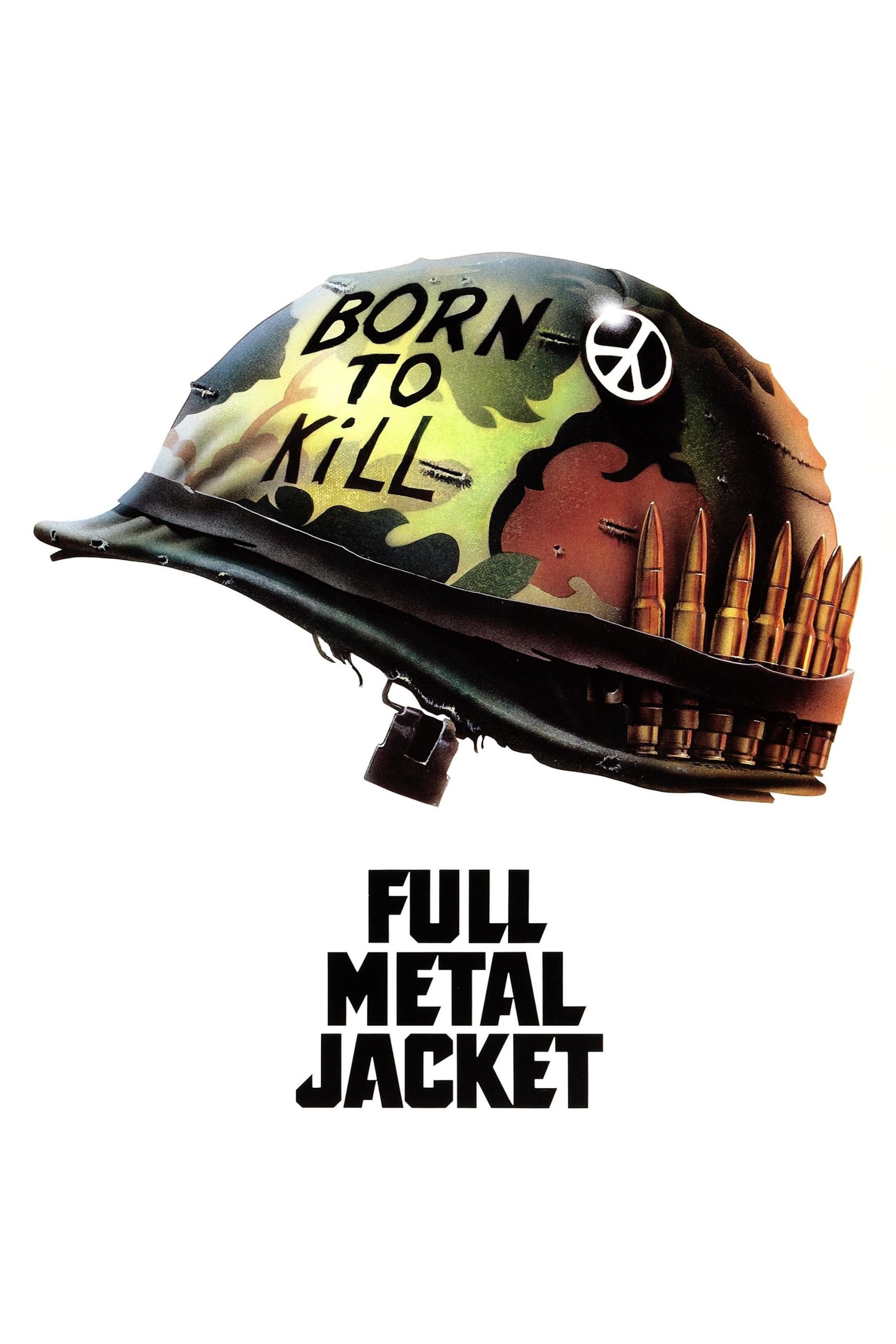
There’s something unnervingly relevant in the way the film’s characters adopt both soldierly and journalistic roles—as if the only way to survive is to comment on, rather than fully participate in, the absurdity of it all. I’ve often interpreted this blurring of identities as a reflection of my era’s obsession with mediation, self-awareness, and meta-critique—a generation raised on Vietnam footage and nightly news broadcasts, performing war even as it endured it. To me, Joker’s famous helmet, stenciled with “Born to Kill” and adorned with a peace symbol, encapsulates the schizophrenia of the age: a longing for moral certainty colliding violently with existential doubt.
What also stands out in my memory is the way Kubrick weaponizes banality and repetition. Unlike war films that sought to glorify or even humanize combat, Full Metal Jacket is relentlessly unsentimental. When I think of the era’s slogans—“never again,” “a war to end all wars,” “support our troops”—I see in Kubrick’s approach a refusal to allow easy catharsis. The horror is unexceptional because it is institutional, systemic, and ongoing. In this way, the film echoed a phase in American society when platitudes rang hollow, when even the language of progress was suspect. I recognize in this refusal a central dilemma of the 1980s: how to speak the truth after a decade of lies, how to represent trauma without exploiting it.
Even the film’s female characters, often objects of commodification or sources of derision, strike me as a sly indictment of the era’s burgeoning debates over gender roles and sexuality. Watching these scenes, I’m reminded of both the advances and limitations of women’s liberation by 1987—the sense that, for all the progress won, objectification and transactional relationships remained omnipresent in cultural memory.
Changing Perceptions Over Time
As the years have rolled on, my understanding of Full Metal Jacket has undergone its own evolution. Upon initial viewing, I remember being staggered by its bleakness and raw cynicism. At the time, it was easy for me—and for many critics, I think—to read it as a direct confrontation with America’s failed attempts at moral rectitude, both abroad and at home. Yet as I’ve revisited the film in subsequent decades, I’ve come to realize how it functions, paradoxically, as both a product of its specific historical moment and as something eerily prescient.
In the early 1990s, when the Soviet Union collapsed and American triumphalism reigned, Full Metal Jacket seemed momentarily out of step—a grim counterpoint to the prevailing sense that history might, in fact, have ended. But by the time the United States found itself in protracted, ambiguous conflicts in Iraq and Afghanistan, the film’s depiction of ideological incoherence and the psychological cost of war began to resonate in fresh ways. I started to notice that younger viewers, removed from the immediate memory of Vietnam, found in the film an uncanny premonition of twenty-first-century anxieties: wars without clear enemies or endings, institutions incapable of offering meaning, trauma as the dominant inheritance of modernity.
Through repeated viewings, I also began to see how attitudes toward the film’s humor and irony have shifted. In the late 1980s, the sardonic tone was read as bitter commentary, a kind of purge. Now, with irony having become the default cultural register, the film’s bleak laughter strikes me as deeply humanizing—a way of forging community, however fleeting, when meaning collapses. I’ve watched as new generations debate the film’s legacy: Is it a denunciation of militarism or a lament for lost innocence? Is it escapist, nihilistic, or simply truthful about the limits of representation? Each reappraisal, to my mind, reveals as much about the new viewers as it does about Kubrick’s original intentions.
Most notably, I sense that the film’s visual style—cold, methodical, almost clinical—has come to influence a generation of filmmakers and artists wrestling with how best to approach difficult history. The earlier tendency toward melodrama and sentimentality in Vietnam films has yielded, in part thanks to Kubrick, to a mode of puncturing myth with deadpan realism. When I teach or discuss cinema now, I am keenly aware of how Full Metal Jacket continues to haunt the language of film: the slow zoom, the bravura tracking shot, the willingness to let horror linger rather than crescendo. The film’s relentless focus on process, on institutional rhythms, feels more vital than ever in an era saturated with spectacle but yearning for truth.
Historical Takeaway
So what does Full Metal Jacket ultimately teach me about the world that produced it? At its core, I believe Kubrick’s film exposes late twentieth-century America in all its contradictions: the desire for discipline and meaning, the irrepressible suspicion of authority, and the trauma that lingers when institutions fail. For me, it is a work both of exorcism and of diagnosis, a cultural artifact that refuses to allow history’s wounds to scar over too neatly.
On a personal level, I see in the film an ongoing struggle with memory, masculinity, and the meaning of patriotism—struggles that defined the late 1980s, when the myth of American invincibility had cracked but not fully collapsed. The film’s unblinking disdain for easy answers or consoling narratives strikes me as both courageous and humane; it asks not for forgiveness, but for recognition, for confrontation with the truth in all its messiness. I find it remarkable that a movie this unremittingly honest could be released in a culture so invested in illusion and amnesia. And yet, that very tension—between memory and myth, spectacle and reality, healing and forgetting—is, I think, what gave the film its unique charge at the time.
Looking back, I am struck by how much the film still asks of me. It insists that I remember history as an ongoing negotiation, that I see war as not merely a policy choice but a crucible that reshapes the souls of nations and individuals alike. Full Metal Jacket does not offer closure, but instead lingers as a question—a demand that each viewer, in their own generation, reckon with the legacies of violence, obedience, and disillusionment that history inevitably leaves behind. To watch it now is to remember how fragile our narratives are, and how necessary it is to interrogate them, even and especially when they hurt.
To see how these real-world elements shaped the film’s impact, you may also explore its reception and legacy.
🎬 Check out today's best-selling movies on Amazon!
View Deals on Amazon