
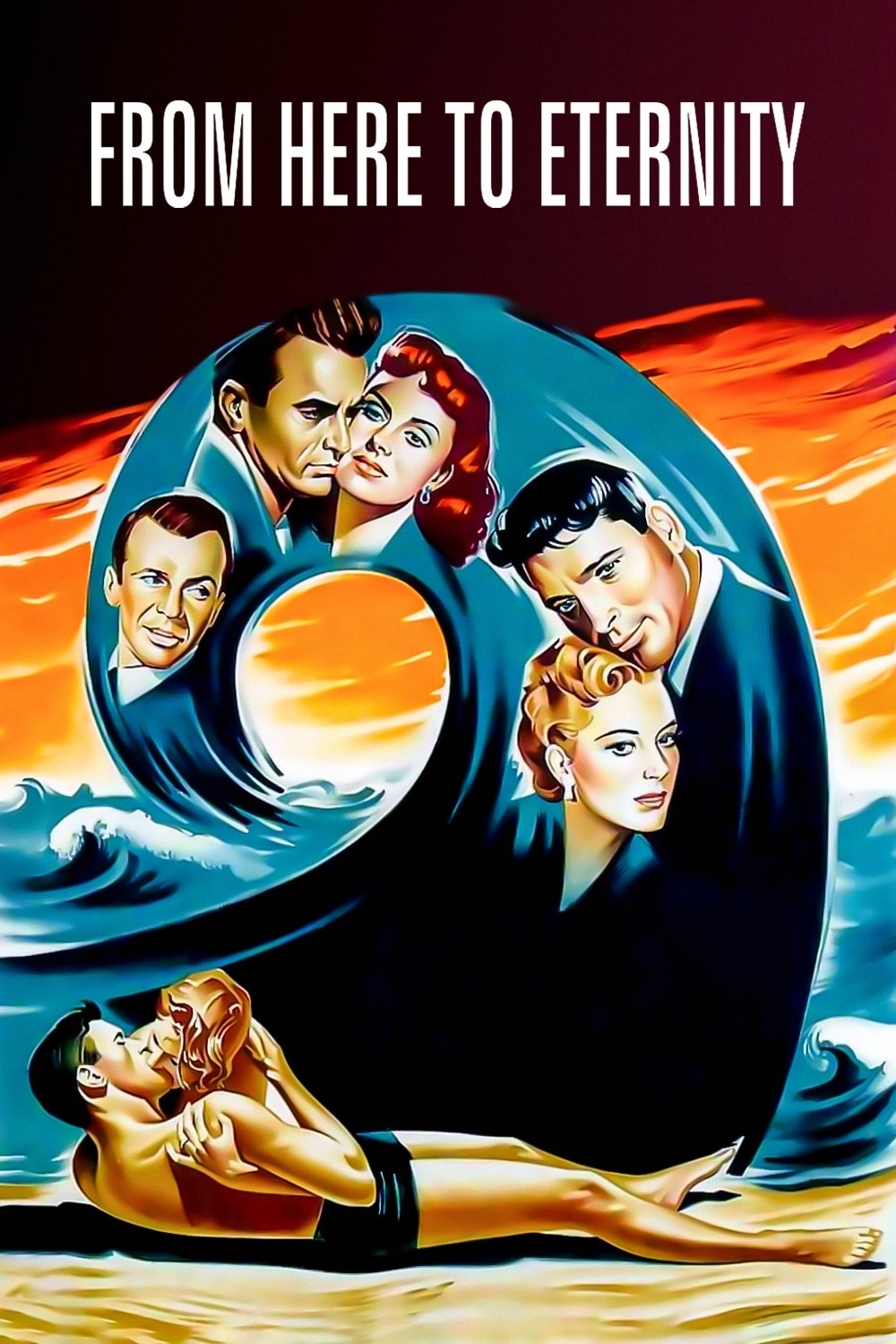
The Historical Landscape
When I first immersed myself in “From Here to Eternity,” I was struck not only by the story unfolding on screen but by the currents of history surging beneath its surface. I can almost feel the weight of the early 1950s pressing against its frames: a world in flux, nations still trembling from the aftershocks of World War II, and America stepping gingerly but determinedly into a new era of both anxiety and hope. Released in 1953, the film occupies this twilight space—only eight years past Hiroshima, not yet a decade into what some called peacetime, and already overshadowed by the looming shape of the Cold War. To fully appreciate the film’s resonance, I must wrap myself in the textures of that time: Korean conflict flickering nightly on television screens, the hydrogen bomb now a headline, and a nation still struggling with the uneasy peace it had so recently secured with spectacular violence.
The America I see in the backdrop of “From Here to Eternity” is proud but haunted. Suburbs are swelling; prosperity bustles, but there’s an undercurrent of mistrust and yearning. Political loyalty oaths are whispered in the corridors of power, with McCarthyism gripping the nation’s intellectual consciousness. Hollywood itself—where this film was conceived—is feeling the squeeze of the blacklist. Meanwhile, the younger generation is grappling with the etiquette and rigor bequeathed by their parents: should they obey, or begin to question? These contradictions—confidence and conformity, enterprise and lingering pain—infuse the world in which “From Here to Eternity” took shape. I find that the film carries the tension of these times in its marrow; its very existence seems shadowed by the drama of an America caught between memories of war and the uncertainties of peace.
Cultural and Political Undercurrents
I’ve always felt that the early fifties were an era of collision—a meeting point where the implacable forces of tradition and innovation crashed together in American life. Watching “From Here to Eternity” through this lens, I’m drawn again and again to the film’s willingness to crack the façade of cozy postwar contentment. The novel on which the film is based was famously critical of institutional authority, exposing cracks beneath the military’s seemingly unyielding discipline. Yet the adaptation and release of such a story in the climate of 1953 tell their own story. I can see, woven through the terse barracks dialogue and forbidden encounters, America’s conflicted relationship with itself: both reverent and skeptical of its own myths.
It’s impossible for me to ignore the shadow of McCarthyism curled around the edges of the film’s production. The era’s Red Scare wasn’t just a series of political hearings—it was an atmosphere of fear that infiltrated creative decisions. Hollywood’s artists had to navigate perilous terrain; dissent was dangerous, complexity suspect. That “From Here to Eternity” manages to probe issues of obedience, individuality, and institutional cruelty within these constraints is, to my eyes, a subtle act of rebellion. When I watch the relentless company bugler refusing to bend, or the sergeant torn between duty and compassion, I feel as though I’m glimpsing a code—a veiled conversation with viewers who understood the cost of defiance.
Sexual mores of the era press in too, both onscreen and off. To me, the relationship at the heart of the film—a married woman and a non-commissioned officer, their desire both desperate and tender—crackles with the tension of the times. The censors of the Production Code demanded alterations, softening the raw edges of the source material, yet enough remains to hint at suppressed energies straining for release. I sense, in every longing glance and every stolen touch, the friction between public morality and private yearning. America in the fifties, I’ve come to realize, was a society polished to shine on the outside, but beneath its gloss, the real battles for honesty and justice raged on. The film’s refusal to paint its characters or institutions in black and white feels, to me, all the braver for this context.
The Film as a Reflection of Its Time
When I sit with “From Here to Eternity,” what resonates most is how deeply it draws from its historical landscape, turning social anxieties and military routines into raw drama. This isn’t a film that serenades American heroism in the unambiguous style of earlier wartime cinema; instead, it seems to hold up a mirror to postwar weariness, longing, and doubt. Every time I revisit it, I notice how the characters’ dilemmas—identity, loyalty, sacrifice—echo the silent struggles I imagine playing out across the country in 1953. Private Prewitt’s refusal to box for the company team is about more than stubborn pride; for me, it’s an act of personal integrity that takes on the flavor of civil disobedience, an assertion that the individual might stand against the demands of authority, even at great cost.
What fascinates me is how the film dramatizes the constant negotiation between public duty and private desire, a reflection not only of military life but the larger society too. The military in “From Here to Eternity” is a microcosm: as I watch officers enforce regulations and soldiers struggle for dignity, I see echoes of an America where new rules and expectations were emerging. The specter of Pearl Harbor looms outside the frame, a reminder that the nation’s identity was forged on both courage and tragedy. When the attack finally descends, it feels—in my mind—a bit like reckoning: a moment when the past crashes into the present, and the characters are stripped to their essentials. That collision of calm and chaos mirrors, to me, the instability of the 1950s: the surface serenity constantly threatened by forces just out of sight.
There’s something especially potent in the film’s depiction of gender and sexuality for someone like myself who’s fascinated by cinematic taboos. The sea-splashed kiss between Deborah Kerr and Burt Lancaster, one of the most iconic images in Hollywood history, no longer feels merely steamy or sensational; it’s charged with the forbidden. Behind the sand and surf, I sense the repressed sexuality of an era that talked of purity but was beginning to yearn—quietly, sometimes desperately—for something more honest and human. This, to me, is the emotional undercurrent of postwar America: the drive to break from restraint, to test what desires and dreams could survive outside the narrow fences of custom. The subtle but clear depiction of infidelity, frustration, and yearning made me realize just how audacious the film was, even in its softened cinematic form.
What also strikes me is how bluntly the material addresses the cost of institutional injustice—a subject I sense that many in 1953 preferred to avoid. The brutality of Fatso Judson, the guard who terrorizes the stockade, is depicted with a frankness that would have unsettled many contemporary viewers. For me, it’s impossible not to read this as an allegory for abuses of power all around the nation, from the military’s ranks to the halls of Congress. The beating of the individual by the machinery of authority is something “From Here to Eternity” presents with almost documentary honesty. In an era when the cost of speaking out could be personal and professional ruin, the very act of dramatizing such abuses seems, to me, another coded challenge to the culture of silence and conformity creeping across the land.
Changing Perceptions Over Time
The years have taught me that no film remains anchored to a single interpretation or historical moment; “From Here to Eternity” is no exception. Watching it now, decades after its explosive debut, I see its meanings multiply and shift. In the 1950s, I imagine many viewers approached it through the lens of nostalgia or trauma or perhaps, for some, simple escapism—the stark Hawaii landscapes and passionate romance inviting audiences to forget, if just for a moment, the gathering clouds of international tension. Yet, with time, I notice how critics and audiences have excavated ever-deeper layers, turning the film into a repository of questions about power, justice, and the cost of loyalty in an unsteady world.
When I talk with those who lived through the blacklist era, or read their recollections, I’m reminded how much courage the film’s cast and crew needed to traverse the thickets of censorship, both governmental and studio-imposed. As the civil rights movement gathered force and gender roles began to crack wide open in later decades, I marvel at how certain aspects of the film, once considered daring or scandalous, now seem oddly quaint. The taboo-breaking love affairs are less shocking to younger viewers, perhaps, but the undercurrents of resistance and personal sacrifice continue to resonate. For me, that means the film has become almost a palimpsest—its original meanings fading into the background while new generations inscribe their own anxieties and desires over its story.
There’s also the matter of the military’s image. At the time of release, public attitudes were awash in patriotism; America’s armed forces were still honored as the bulwark against totalitarianism. Over the decades, as trust in authority has waned and the complexity of military institutions has come into sharper focus, scenes that once seemed like simple narrative friction—Prewitt’s struggle, Maggio’s fate—have become, for me, lacerating indictments of institutional callousness. I recognize now how the film, whether intentionally or not, forecast the coming cultural changes that would explode in the 1960s and 1970s: skepticism toward authority, empathy for rebels and outsiders, and a growing discomfort with the costs of conformity.
Every time I revisit “From Here to Eternity,” I find my attention shifting, my sympathies realigning. The romance, once front and center, sometimes recedes behind the shimmering outlines of power and resistance. The image of the bugler refusing to play according to someone else’s rules now seems to me a quiet anthem for all those in any era who fearlessly hold their ground for what they believe is right. The film’s reputation, then, has become, in my eyes, less about forbidden love or even the bombing of Pearl Harbor, and more an allegory for the struggles that shape each generation anew.
Historical Takeaway
More than a simple war story or melodrama, “From Here to Eternity” functions, for me, as a living archive—one that preserves and refracts the anxieties, hypocrisies, and aspirations of its midcentury moment. I see in it the shadows of McCarthyism, the glimmers of postwar hope, and the persistent ache for honest self-expression. The film makes it impossible for me to romanticize the era without remembering its contradictions: a society heady with victory but uncertain what to do with its uneasy peace, eager to celebrate renewal yet anxious about the high cost of freedom and individuality. I find myself contemplating how much of American history turns not on grand, decisive victories but on the smaller, daily battles for dignity, love, and autonomy—battles waged on the beaches of Hawaii as surely as in any legislature or labor strike.
My historical takeaway, then, is grounded in the film’s jagged honesty. “From Here to Eternity” refuses to be an airbrushed portrait of the ‘greatest generation.’ Instead, it invites me—and anyone else willing to look deeper—into the struggles of ordinary people flashing with courage and doubt. In the end, I am left with the sense that the film’s greatest value lies in its resistance to easy answers, its demand that history be seen not as a procession of heroes and villains, but as a vast, complicated theater where every character fights, loves, and dreams at great personal risk. Through its charged silences and small rebellions, I learn something not just about 1953, but about the tension that forever animates American life: the desire to belong, and the equal desire to break free.
To see how these real-world elements shaped the film’s impact, you may also explore its reception and legacy.
🎬 Check out today's best-selling movies on Amazon!
View Deals on Amazon