
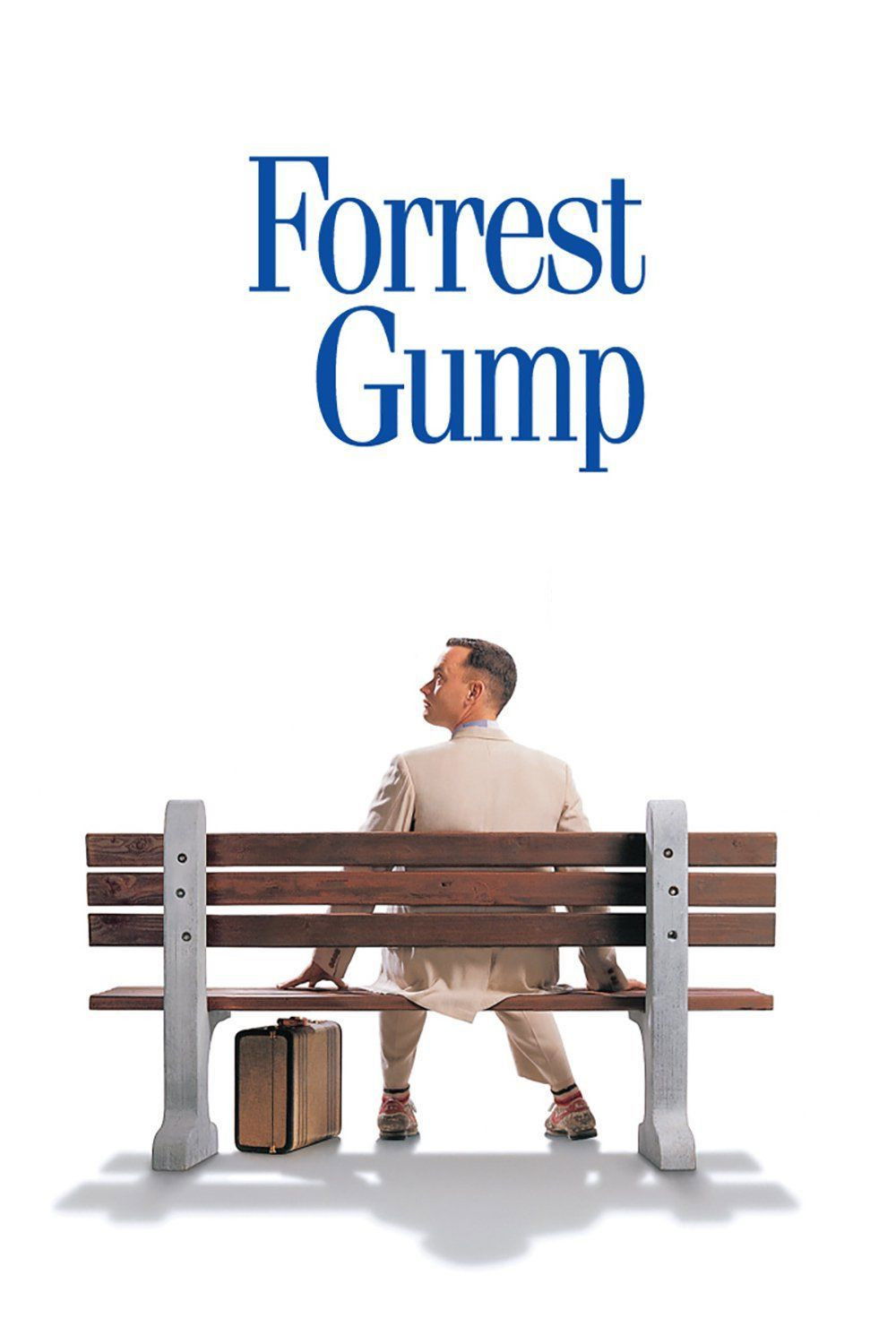
The Historical Landscape
When I first experienced Forrest Gump in 1994, the world around me felt perched at a crossroads: anxieties about the end of the twentieth century mingled with a sense of unprecedented technological and social transformation. The film arrived in theaters during a decade when the United States was renegotiating its place in a rapidly changing global landscape—a post-Cold War world freed from the shadow of nuclear standoff, yet still uncertain about its ideological bearings. I remember how, in the span of a few short years, the Berlin Wall had crumbled and the Soviet Union had dissolved, leaving many Americans (myself among them) wrestling with questions about identity, history, and what would fill the vacuum left by vanquished adversaries.
The early 1990s pulsed with optimism and unrest alike. The first Persian Gulf War was already a memory, NAFTA and a burgeoning internet promised new interconnections, and the memory of the Vietnam War—which had cast such a long shadow on earlier decades—began its slow transformation from open wound to source material for national reflection. In pop culture as well as politics, the Clinton administration’s energetic centrism and the “end of history” thesis were in the air; the sense that America could finally look back on its past mistakes with something like objective distance, even irony, began to influence a new wave of cinema. As I look back on it now, I see Forrest Gump as deeply infused with the nostalgia and longing for stability that defined much of the 1990s’ mood, but also as evidence of the era’s sometimes uneasy relationship with that past.
That was the landscape—the atmosphere of retrospection infused with cautious hope—in which I first encountered Forrest Gump. Computer graphics were on the cusp of remaking visual effects; at the same time, the public’s appetite for stories that spanned eras of American history was obvious. I saw it as a cultural moment hungry to repackage trauma and triumph alike, smoothing over chaos with the balm of sentiment and a folksy wisdom that spoke, however indirectly, to the uncertainties of its own time.
Cultural and Political Undercurrents
Sifting through the cultural and political crosscurrents that shaped Forrest Gump, what stood out to me even then was the film’s longing to reconcile a fractured historical narrative. My own sense of the film’s underpinnings has always been colored by the popularity of a kind of “boomer nostalgia” that was everywhere by the early ’90s. With Ken Burns’ The Civil War documentary captivating millions, and with retrospectives on the 1960s and 1970s crowding bookshelves and cable TV, America seemed obsessed with compressing decades of upheaval—civil rights struggles, assassinations, failed wars—into a digestible narrative. Forrest Gump arrived as both a product and driver of this impulse, inviting viewers to experience the second half of the twentieth century through the eyes of its unwaveringly innocent protagonist.
This drive to look back, to find meaning (or sometimes, I felt, simply comfort) in the historical record, was fed by powerful undercurrents. As I watched the film, I couldn’t help but notice how the ambiguity of the Vietnam War and the trauma of Watergate—a pair of events that defined my formative years—were rendered with a kind of magical realism. The film gave viewers a chance to revisit these collective memories, not as sites of pain or protest, but as stages on which a lovable outsider could float without bitterness or cynicism. At a time when the language of “values” was increasingly present in the American political discourse—Bill Clinton’s triangulation strategy, both progressive and nostalgic, epitomized this—I regarded Forrest Gump as art shaped by the politics of reconciliation.
Yet, in my eyes, there was also a subtler social anxiety just below the film’s surface. The 1990s, for all their embrace of change, saw bitter debates about what constituted “real” American identity. The so-called “culture wars” were in full swing: questions about multiculturalism, sexuality, and historical memory divided classrooms, families, and government. When Forrest Gump evoked everything from desegregation and peace marches to disco and the burgeoning tech boom, what I saw was an attempt to collapse all these contradictions into a single, palatable narrative. I remember sensing in the film a tension—a subtle push-and-pull between nostalgia for an imagined past and an uneasy acceptance of change—that mirrored debates swirling through newsrooms and dinner tables alike.
The Film as a Reflection of Its Time
What struck me most, even on my initial viewing, was how Forrest Gump enveloped the uncertainties of its time within a reassuring tale of endurance and simplicity. I’ve always felt that the film’s cinematic vision—layering digital trickery onto old newsreels, placing Forrest in the midst of historical events—was not just a feat of technical wizardry but a metaphor for a generation’s impulse to insert itself into the American epic without confronting the messiness of reality head-on. Those computer-generated moments, so cutting-edge then, felt like an expression of a broader desire in the 1990s to reshape memory through technology, to make history accessible and even lovable.
I found it impossible to ignore how the character of Forrest, with his benign naivete and relentless decency, embodied an older and more traditional vision of American goodness. In the 1990s, this figure echoed a perceived need for moral clarity in an age growing wearier with irony and moral relativism. For me, Forrest represented the contemporary longing to retreat from the complications of “the real world”—sex, drugs, racial conflict, war protest, and the rest—even as the film’s background teemed with those very images.
Watching Forrest “stumble” into fame, fortune, and even historic significance, I was struck by how much the film privileged destiny over agency. This seemed in step with the era’s own discomfort regarding self-determination. I recall debates about whether the individual truly mattered in a world of globalization and massive historical forces. Forrest’s success owed nothing to cunning or ideology; it came, I saw, from being a “good person” in the most superficial sense: obedient, strong, and free of doubt. It was easy for viewers (myself included) to read this as comforting, especially at a time when the consequences of striving toward utopias—whether in Vietnam or in economic policy—had produced such harm in recent memory.
For me, the film became a canvas onto which a culture in flux projected its collective anxieties about direction and meaning. I noticed that Forrest’s journey wasn’t just a personal odyssey: it was an attempt to smooth over the jagged edges of the American story, offering a vision of progress stripped of ideology, struggle, or even real pain. I recognized in this a distinctly 1990s yearning for resolution—one shaped as much by fear of change as by hope for the future.
Changing Perceptions Over Time
Re-watching Forrest Gump years later, I’ve noticed how the film’s meaning has evolved as new generations grapple with a different set of anxieties and aspirations. In the aftermath of 9/11 and the divisive conflicts of the Iraq and Afghanistan wars, the American optimism that once animated viewers has soured with an awareness of the complexities that beset national identity. When I revisit the film, it now seems to romanticize passivity and accident at a time when many believe history demands participation, protest, and political responsibility.
I have also perceived a distinct shift in the way younger audiences process Forrest’s lack of engagement with the injustices and controversies swirling around him. In the 1990s, I—along with many others—found solace in his innocence, but today, I often hear critiques that read the film as an evasion, a way of sanitizing trauma and excusing complicity. In the context of #MeToo, Black Lives Matter, and calls for greater historical honesty, Forrest Gump’s glossing over of rape, racism, and the Vietnam War feels increasingly like a relic of a less self-critical age. My own appreciation for the film’s craft remains undiminished, but I cannot help but feel the discomfort of its simplifying lens growing sharper with each passing year.
What surprises me most, however, is how some viewers now celebrate or satirize the film’s idiosyncrasies. Internet culture, with its love for quoting film lines and “meme-ifying” pop culture, has granted Forrest’s catchphrases a new kind of digital afterlife—often divorced from the film’s original context. I find this both charming and telling: where once viewers read the film as a meditation on fate and virtue, it is now as likely to be revisited as an example of Hollywood’s penchant for nostalgia or as a punchline to conversations about American memory. When I talk to new audiences, I notice the discussion increasingly centers around what the film elides or misremembers, rather than what it attempts to affirm.
Changing attitudes toward the film’s portrayal of gender and disability are just as striking to me. What read as sensitive or even progressive in 1994—Forrest’s earnest devotion, Jenny’s quietly tragic arc—now invite reassessment. I hear more questions about the film’s assumptions: does it truly celebrate difference, I wonder, or does it quietly reinforce old stereotypes and hierarchies? My own answer shifts with time, shaped by evolving social awareness and the debates that have come to define more recent decades.
Historical Takeaway
When I reflect on what Forrest Gump reveals about the era of its making, I see it as an emblem of 1990s America’s uneasy negotiation with its history. Personally, I am compelled by how the film distills years of discord into what feels, in retrospect, like a fairytale—one in which happenstance and virtue suffice to smooth away the sharpest edges of American experience. This isn’t a flaw so much as a testament to the decade’s peculiar ethos: a widespread desire to step back, take stock, and find a story that could heal rather than divide.
I find the film’s historical approach both poignant and problematic—an effort to claim all of America’s legacy, both joyful and shattering, as part of a singular, sentimental journey. My sense is that Forrest Gump exposes the limitations of nostalgia: in its desire to reconcile contradictions, it sometimes erases the depth of conflict and the necessity of dissent. Yet as a piece of cultural history, it also reminds me how profoundly a nation can crave reassurance after decades of upheaval. I don’t see this as unique to America or the 1990s, but rather as a pattern that recurs whenever societies face new uncertainties and look backward for meaning.
Holding the film in my mind now, I remain struck by the tension between the simplicity it celebrates and the complexity it sidesteps. Forrest Gump teaches me more about the year 1994 than it does about the eras it seeks to retell: its very evasions and sentimentalities are artifacts of the moment when Americans were deciding how—or even whether—to remember. Watching it today, I find myself full of questions rather than answers, and perhaps that is the most honest reflection possible of a time poised between remembering and forgetting, between history and myth.
To see how these real-world elements shaped the film’s impact, you may also explore its reception and legacy.
🎬 Check out today's best-selling movies on Amazon!
View Deals on Amazon