
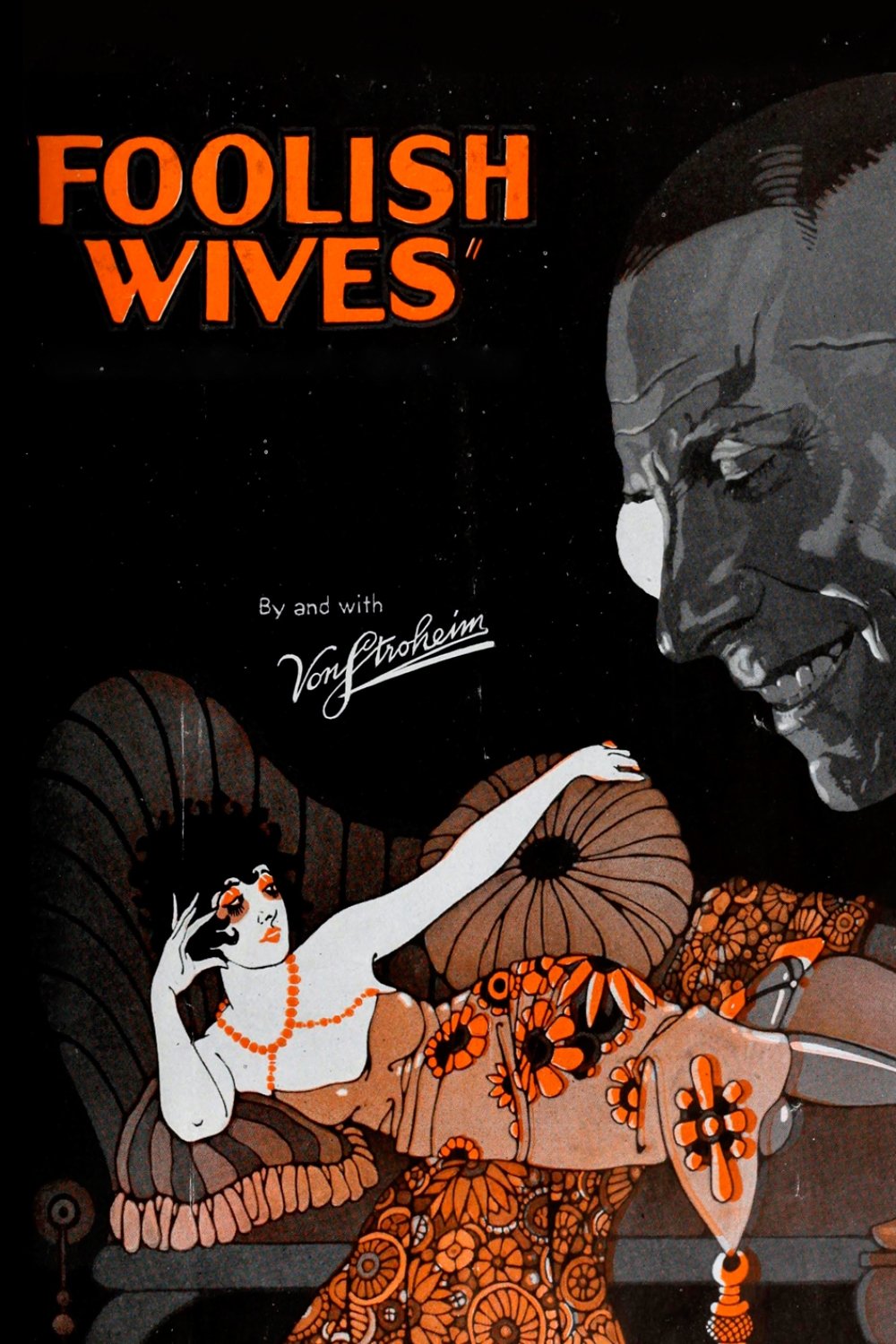
The Historical Landscape
I remember the first time I sat down with Foolish Wives, I was struck not only by its grandeur but by how much of its epoch it wears on its sleeve, like a proud tapestry of 1920s anxieties and aspirations. The world around Foolish Wives was one still reeling from the aftermath of World War I, and I’ve always found it fascinating how the early 1920s seem to pulse with a nervous energy—caught somewhere between the desperate need to party and the heavy burden of grief. In the United States, the Roaring Twenties were just beginning to roar, though not yet at their deafening peak; prohibition laws had only recently begun to clamp down, and with them came both moralistic fervor and a growing underbelly of organized crime and clandestine revelry.
While watching Foolish Wives, it becomes clear to me just how much the images on the screen are haunted by the devastation of the European continent. The film’s Monte Carlo is a shimmering dreamscape, but behind its surface lies a sense of displacement—echoing the lost generation that emerged from the war. Paris and Vienna had been cultural centers before the conflict, yet by 1922, they had become shorthand for decadence tinged with a hint of sadness, and I think Foolish Wives uses its setting as a metaphor for the moral uncertainties of the decade. For me, von Stroheim’s vision is inescapably shaped by these transatlantic currents: the tension between old-world allure and new-world skepticism, a mixture of longing and suspicion, of romanticism and cynicism that colors everything on the screen.
I also feel the shadow of technological and artistic transformation. The film industry itself was undergoing rapid evolution; Hollywood was carving out its place as the planet’s dream factory—on the verge of solidifying a style and code all its own. When I watch Foolish Wives, I see not only an aesthetic of excess—with its opulent sets and expensive production values—but also a kind of cinematic manifesto for what movies could be. Von Stroheim’s willingness to push boundaries, both in length and in subject matter, hints at the artistic restlessness that permeated the 1920s. For people in the audience, seeing such lavish spectacles on screen must have felt like a glimpse at a new world—a world battling between the liberating promise of modernity and the lurking anxieties that accompanied it.
Cultural and Political Undercurrents
When I reflect on the forces flowing beneath Foolish Wives, I’m drawn to how the film tangles itself in the web of post-war disillusionment and suspicion about foreignness. The early 1920s in America and Europe were fraught with anxieties about the “other.” In the United States, the Red Scare had stoked paranoia about immigrants, socialism, and everything that was perceived to threaten a fragile social order. It’s impossible for me not to sense the resonance between these fears and von Stroheim’s characterization of Count Karamzin—the mysterious, predatory Russian émigré—whose very presence in Monte Carlo seems meant to provoke unease. I often find it hard to separate the film’s fascination with Old World aristocracy from the undercurrent of skepticism and even disdain lurking just beneath. The character is a product of his era’s fascination with, and fear of, displaced nobility—those who, after the Russian Revolution, landed in European capitals with enigmatic pasts and uncertain motives.
Moreover, Foolish Wives strikes me as deeply entwined with issues of sexuality, gender, and power. The early 1920s were a crucible for shifting expectations: women, newly empowered by suffrage and wartime employment, were testing the boundaries set before them. Flappers would soon come to symbolize a new kind of liberated femininity. Yet in the film, I see both envy and anxiety about these changes—an exploration of temptation and transgression that doubles as a warning. There’s a seductive charge to Erich von Stroheim’s direction, but also a moralizing edge: the seducer Count is both captivating and monstrous, and the women in orbit around him oscillate between agency and peril. It’s a paradox that makes me ponder how much the film is titillated by, but ultimately fearful of, the era’s sexual emancipation.
The political dimensions of the film also stand out to me. There’s an unmistakable commentary on American naivety abroad, which I interpret as a coded critique of US foreign policy and post-war confidence. The story of the American ambassador’s wife, lost among the wiles of old Europe, has always felt to me like a metaphor for the broader American discomfort with the complexities of the wider world. It’s subtle, but the film seems to ask: what happens when American innocence meets the cunning, jaded society of a continent that has bled itself nearly dry? I think von Stroheim, whose own experiences bridged the Old and New Worlds, understood this tension intimately, and Foolish Wives draws from both cultures to pose questions about trust, identity, and the dangers of unchecked desire.
The Film as a Reflection of Its Time
Every time I return to Foolish Wives, I’m amazed by how nakedly it wears the era’s contradictions. I’m particularly fascinated by how the film’s moral ambiguity mirrors a world shaken loose from pre-war certainties. There isn’t a simple villain and victim dynamic here; instead, I sense a lingering uncertainty about human nature and motivation. The character of Karamzin is seductive but hollow—a simulacrum of nobility, as artificial as the paper palaces and simulated luxury surrounding him. In many ways, I see this as a reflection of the larger crisis of authenticity and identity that the 1920s embodied. The masks people wear, the roles they play, and the lies they tell themselves: to me, these are the very questions that haunted modernity after the war.
What always strikes me about the film’s depiction of Monte Carlo is how much it feels like both a playground and a trap. The city’s casinos are more than glamorous backdrops—they’re metaphors for risk, temptation, and the volatility that defined post-war society. When I watch the characters bet with money and affection, I feel like Von Stroheim is subtly invoking the era’s broader sense of having gambled on the future—whether with new technologies, social structures, or political experiments. The house always wins, the film seems to suggest. There is a hard, almost cynical wisdom beneath the surface excess, and I interpret this as a commentary on the lingering repercussions of the era’s overconfidence.
I also can’t help but see the film’s attitude towards women as a direct response to evolving gender norms. Within the stylized melodrama, I find coded anxieties about female autonomy—a fear that, left unchecked, liberated women would fall prey to smooth-talking charlatans like Karamzin. The American ambassador’s wife, for example, is both empowered—willing to defy the expectations of her role—and yet dangerously naive. This double-edged portrayal makes me think of the way society both celebrated and punished transgressive women in the 1920s. Foolish Wives dramatizes the consequences of stepping outside prescribed boundaries, aligning sexual liberation with the dangers of foreign corruption—a formulation I find echoed throughout the popular culture of the decade.
From a technical perspective, I’m continuously wowed by the film’s excess: the sprawling Monte Carlo set, the meticulous attention to costume, the willingness to linger on moments of seduction and deceit. For me, these choices are not just about spectacle—they’re expressions of a culture obsessed with surfaces, with display and illusion. At the same time, there’s a sense of fin de siècle nostalgia at work: a longing for an imagined past of eye-popping luxury, even as the real world was moving toward austerity and modernism. The film’s opulence feels almost defiant, as if to say that, despite all the world had suffered, beauty and vice endured in tandem.
Ultimately, I interpret Foolish Wives as a kind of elegy for lost innocence—both personal and collective. The carnivalesque atmosphere, the parade of vice and virtue, and the blurring of truth and pretense all seem to me like an effort to process the disorienting new reality that the 1920s had brought. The war had shown the limits of reason and progress; the film, with its intoxicating mix of allure and anxiety, reflects a world still groping toward meaning in the ruins of certainty.
Changing Perceptions Over Time
What fascinates me about Foolish Wives is not just how it reflected its own moment, but how it’s been read and re-read as time has marched on. When I talk with contemporary audiences or read historical reviews, I’m always struck by how mutable its meaning has become. In 1922, the shock value was undeniable—reviews I’ve seen from the period focus on its scandalous subject matter, its luxurious sets, its apparent critique of morality and societal norms. Erich von Stroheim was both lionized and condemned for his unflinching gaze—and for his willingness to batter at the walls of Hollywood convention. Some viewers recoiled from what they saw as decadence; others thrilled at the spectacle, sensing in it a piece of social truth that few filmmakers dared to show.
Over time, however, the film’s lurid energy has mellowed in the popular imagination, and I find it’s viewed less as a work of scandal, more as an artifact—a record of how people once understood the world and themselves. Modern critics, I’ve noticed, are often less interested in the shock, more intrigued by the ways Foolish Wives documents transitional attitudes toward gender, class, and nation. Students and scholars I’ve discussed the film with tend to be fascinated by von Stroheim’s obsessive attention to authenticity (though ironically, no one can watch the film the way 1922 audiences did, given the considerable cuts and re-edits over the years). Its surviving form—fragmented, reconstructed, but still potent—reminds me of the way all artifacts from the past lose something, yet gain a kind of patina that adds intrigue.
I hear many contemporary viewers remark on von Stroheim’s complexities, calling him one of cinema’s first true auteurs—a director who stamped his personal aesthetics and obsessions on every frame, even when they clashed with studio expectations. In the years since its release, Foolish Wives has become a touchstone for discussions about censorship, studio control, and the crisis of artistic authority in Hollywood. The battles over its running time, content, and presentation have taken on legendary status for film historians like me; they’re a microcosm of the broader struggle between creative risk and commercial calculation that haunted the industry throughout the twentieth century.
There’s also a growing recognition of how the film’s treatment of outsiders, sexuality, and power reflect not only the visible anxieties of its own moment, but also persistent questions of cultural representation. I see conversations now about the exploitation and vilification of foreignness in American media, and Foolish Wives is cited as both a symptom and critique of those tendencies. At the same time, younger audiences seem increasingly attuned to its depiction of women’s agency—the way it both frames and undermines their independence. These shifting readings remind me that the film, for all its historical rootedness, is still very much alive in the questions it raises.
Even as tastes and values evolve, I remain convinced that Foolish Wives endures because it is haunted by its own historical moment—so much so that every new generation discovers not just what the film says about 1922, but about the permanent uncertainty at the heart of the human experience. Watching it now, I sense both a distance—a vanished world—and a closeness, a kind of echo of our own conflicted hopes and worries.
Historical Takeaway
If Foolish Wives teaches me anything, it’s that history is not just written in grand events but in the textures of our fears, ambitions, and ambiguities. The film’s surface excesses—so gaudy, so seductive—belie a world shaken by invisible wounds. For me, the ultimate lesson is that culture absorbs and processes trauma in ways both obvious and sly: through stories of seduction and betrayal, through dreams of luxury and warnings about corruption, through the endless play of innocence and experience.
It’s tempting to judge the era by its contradictions, to wonder at a time that craved both distraction and depth. But what I take from Foolish Wives, above all, is a sense of longing—a yearning for meaning after catastrophe, for beauty in a scarred world, and for certainty amid endless change. Von Stroheim’s film stages this drama not on a battlefield, but in a casino, not through generals and leaders, but through lovers and liars. The echoes of the 1920s—its heady optimism, its latent dread—are captured in every sumptuous frame. As a window into its peculiar moment, Foolish Wives doesn’t just chronicle its era; it embodies its restless spirit, grappling for clarity in a world that refused to be simple.
To see how these real-world elements shaped the film’s impact, you may also explore its reception and legacy.
🎬 Check out today's best-selling movies on Amazon!
View Deals on Amazon