
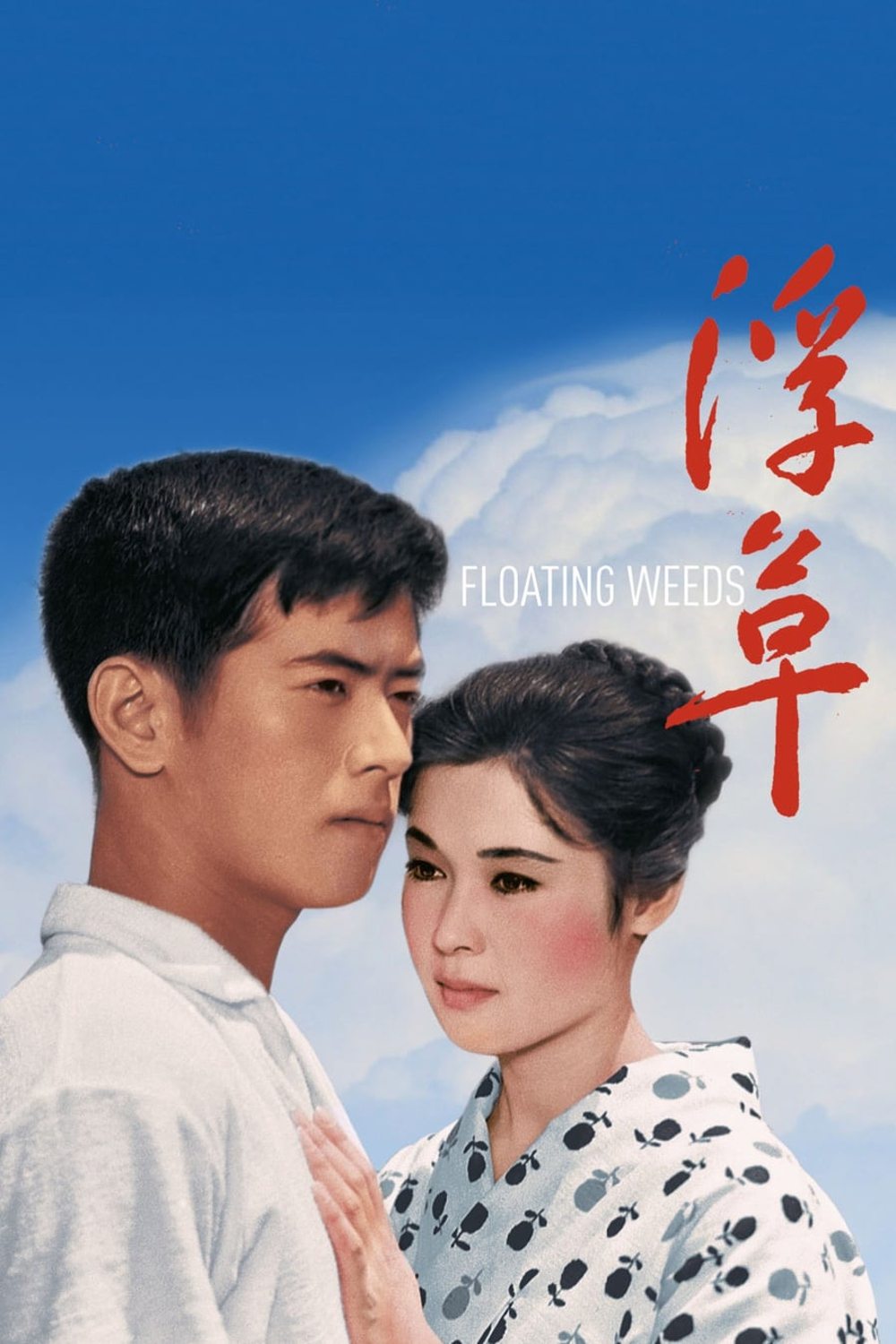
The Historical Era of the Film
When I first saw Floating Weeds (1959), I was immediately drawn not only to its artistry, but to the way every frame radiated with the complexities of its production era. For me, grappling with where—and when—a movie like this comes from isn’t an academic exercise; it’s foundational to the way I interpret what unfolds on screen. Japan in the late 1950s stood at a curious crossroads, shaped by the recent past and the uncertain promise of the future. The political climate was turbulent yet transitional—barely more than a decade after World War II’s devastating end, the country was breaking free from the shadow of occupation and accelerated into rapid recovery under a newly formed democracy. This postwar transformation, marked by the 1947 Constitution’s commitment to peace and the reduction of imperial influence, created a distinct psychological and social landscape that I always sense in the subtler textures of films from the period.
Economically, Japan was experiencing a gradual move into what would soon be labeled its “miracle” years, but by 1959 that miracle was still in its early stages. Instead, what I notice captured in the mood of Floating Weeds is the ambivalence of a society caught between scarcity and the first taste of affluence. Consumer goods and Western cultural imports became increasingly visible, yet much of Japan’s rural life remained marked by tradition. The film’s production era was thus one of palpable contrasts—a tension between lingering prewar values and the embrace of modernity, between hardship endured and hope anticipated. Labor unions were active, women were slowly gaining rights, and a collective desire for national self-definition simmered under the surface of daily life.
Socially, people were negotiating these changes in real-time, and that’s where I feel Floating Weeds resonates so deeply as a period piece. The class system, altered by defeat and occupation, left Japanese identity itself in flux. The rural settings and traveling performers in the film strike a nostalgic chord with me because they evoke a nearly vanished way of life—one that was being replaced at breakneck speed in cities but lingered in the countryside. To watch this film is, for me, to inhabit a liminal moment: people emerge from ruins with both residual trauma and an inextinguishable urge to reinvent their connections, habits, and aspirations. The complex emotional tapestry of the script and performances, I believe, is inseparable from that larger national mood.
Social and Cultural Climate
I see the social climate of 1959 Japan as one teeming with debates over tradition and modernity, over obligation and personal desire. The weight of Confucian values—loyalty, family hierarchy, filial piety—still held sway for many Japanese, especially those in small towns and rural areas. However, this was an age when the allure of Western cultural forms, from cinema to fashion, was becoming undeniable. As I immerse myself in the film, what I notice most acutely are the layers of anxiety: the push and pull between old expectations and new freedoms, especially visible in relationships between the generations.
The performing troupe at the heart of Floating Weeds is, in my reading, a microcosm of this broader societal flux. In 1959, Japan’s population was going through accelerated urbanization. Both laborers and intellectuals were drawn to Tokyo, Osaka, and Nagoya in search of opportunity and reinvention. As a historian, I find it crucial not to reduce this to mere economics; there were deep, often painful questions about what it meant to leave behind family, rural roots, or traditional roles. Patriarchy and gender roles remained entrenched—women were largely expected to support male ambition or adhere to domestic duties. Yet, increasingly, women were entering workplaces, schools, and the cultural mainstream, sparking both hope and resistance.
What also stands out to me is the subtle but palpable presence of postwar trauma. The generation that endured the war, the bombings, and the occupation still bore the scars of upheaval. Questions of legitimacy, reputation, and personal worth became intensely fraught as society scrambled to redefine its new sense of self. The “floating weeds” metaphor felt to me like an allusion to those in Japanese society—especially artists and itinerant workers—who lacked conventional roots or stability, and thus hovered between acceptance and marginalization.
Japanese pop culture in 1959 was also in a dynamic stage. I see the vitality of kabuki and traditional theater forms persisting alongside waves of American rock-and-roll, jazz, and cinema. This cultural pluralism resulted in a unique creative ferment, even as deeper tensions churned beneath the surface. The film world, influenced by new technologies and color cinematography, reflected but also contested these boundaries, often using period stories or classical motifs as vehicles for contemporary anxieties.
How the Era Influenced the Film
I’m always fascinated by how the swirl of external events seeps into the marrow of a film’s story, choices, and even production design. With Floating Weeds, the influence of its production era is everywhere I look. Technologically, the decision to shoot in color with the aid of Cinemascope marked a bold step for director Yasujiro Ozu, and for me, it signals Japan’s new openness to innovation—a clear break from the black-and-white films of the earlier postwar years. But that lush palette also illuminates the fading world of the itinerant stage actors, creating a paradox that only makes sense against the broader backdrop of the late 1950s: beauty competing with anticipated obsolescence.
The story’s setting in a rural town, coupled with the performers’ nomadic existence, is to me a direct lens on the unresolved tension between rootedness and transience that defined Japanese self-conception in this era. While the economic “miracle” hadn’t yet swept the entire country, people were already haunted by the sense that old customs were slipping away. I interpret the troupe’s wandering, the shakiness of their livelihoods, as representations of the thousands of Japanese living in a kind of suspended transition—neither fully traditional nor wholly modern.
The film’s depiction of gender roles and family structure cannot, to my mind, be separated from the concurrent debates about women’s rights and changing family expectations. Characters who resist, subvert, or suffer under these constraints feel intimately connected to dilemmas faced by real Japanese men and women in 1959. For me, the presence of a strong, independent female character within the troupe echoes the quiet surge of agency women were beginning to assert, however imperfectly, in postwar society.
- Rapid urbanization and rural decline
- Lingering impact of WWII and Occupation
- Technological advances in film and media
- Evolving gender roles
As an analyst, I’m also conscious of how financing and studio backing in the late 1950s impacted the sorts of stories that could get made. The economic upturn allowed for bolder artistic risks, yet I sense a wistfulness in Floating Weeds—a knowingness that the very subject it immortalizes might soon be obsolete. This blend of nostalgia and forward-looking uncertainty, shaped inexorably by Japan’s changing fortunes, informs everything about the film’s tone and structure for me.
Audience and Critical Response at the Time
I always find it instructive to probe the immediate response a film gets, if only to understand what it was pushing against—or resonating with—in its original context. When Floating Weeds premiered in Japan, audiences greeted it with a mix of reverence and bittersweet nostalgia. I sense that many older viewers saw their own disappearing worlds reflected in the film’s gentle rhythms and melancholy grace. The monochrome world of pre-war and early postwar films was giving way to Technicolor spectacle, but Ozu’s meticulous pacing and focus on everyday suffering and longing elicited genuine emotion in a generation hungry for both continuity and catharsis.
Critical reaction, from what I have gathered, straddled admiration for the craft and a kind of implicit anxiety about the relevance of such stories. The rise of youth culture in late 1950s Japan meant that younger audiences were increasingly drawn to films featuring rebellion, romance, and explicit modernity—directions typified by the emergence of other directors like Nagisa Oshima or Shohei Imamura later on. Yet, within artistic and academic circles, Floating Weeds was acknowledged as the work of a master reflecting on vanishing traditions. I see this duality—fresh acclaim mingled with melancholy detachment—as key to situating the film’s contemporary reception.
The international response was, interestingly, more clear-cut. European and American cinephiles, already attuned to Japanese cinema through Kurosawa and Mizoguchi, found Ozu’s work a bracing corrective to exotic stereotypes. Festivals and critics abroad, in my view, elevated Floating Weeds as emblematic of a cinematic voice both globally accessible and intensely local. I interpret this as part of a broader fascination with the “otherness” of Japanese domestic drama in the West—a reflection of shifting global cultural currents as well.
What remains most striking to me is the delicate balancing act the film had to pull off: speaking to an audience eager to move forward, while simultaneously inviting them to remember what might be lost in the process. That tension, I believe, resonated in the subdued but genuine affection reported in period reviews, and in the film’s steady, lasting reputation.
Why Historical Context Matters Today
Over the years, I have come to believe that grappling with the historical context of Floating Weeds isn’t simply a matter of academic rigor or curiosity. For me, it is what unlocks the deeper significance—and fragility—of what Ozu accomplishes. When I return to the film now, I’m struck by how its meaning expands when viewed through the lens of Japan’s mid-twentieth-century turmoil. The long takes, measured dialogue, and evocation of fleeting relationships are all colored for me by the urgency and uncertainty that marked everyday life in 1959. Suddenly, what might seem like mere politeness or passivity becomes, in my reading, a vital strategy for survival and adaptation.
Understanding the film’s context also gives me a window into the fears and hopes of its original audience. The drama of the parent-child relationship, the melancholy of impermanence, the struggle against obsolescence—all these, for me, are never abstract themes. Instead, they are grounded in the actual dilemmas faced by Japanese individuals and families forging a path between memory and reinvention during an era of dizzying change. Knowing that the actors, the director, and even the crew were negotiating these transformations adds a palpable urgency to what unfolds on screen.
At a time when nostalgia for pre-industrial ways of life often gets romanticized, the film’s historical context reminds me not to shrink its world to sentimentality or distance. Floating Weeds makes visible, for me, what it costs to hold on to tradition in a world that is moving relentlessly forward. By grasping the postwar transformation and the creative ferment of the 1950s, I can better appreciate not only the film’s melancholy beauty, but its clarity about what was at stake for a generation living through—rather than merely after—catastrophic upheaval.
In sum, recognizing the interplay between era and artwork allows me to see Ozu’s choices as deeply rooted in a specific historical moment, amplifying my sense of empathy for both characters and creators. Every time I rewatch Floating Weeds, I’m reminded that great films, far from being artifacts frozen in time, are living documents—shaped by, speaking to, and sometimes resisting the pressures and possibilities of their making.
After understanding the factual background, you may want to see how this story was received as a film.
🎬 Check out today's best-selling movies on Amazon!
View Deals on Amazon