
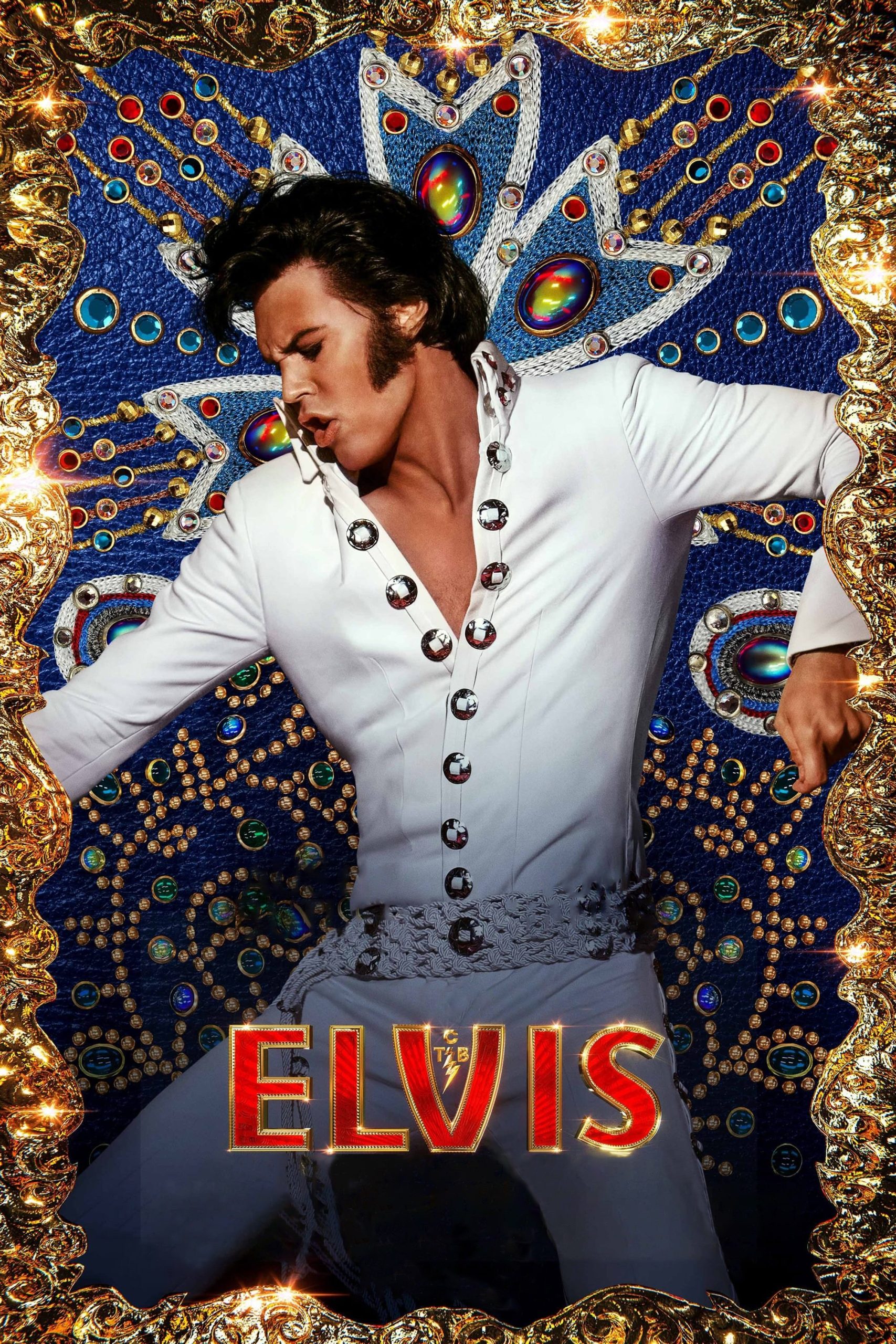
The Historical Landscape
I remember the first time I stepped into the theater to watch “Elvis” in the summer of 2022, it felt as if the electric pulse of post-pandemic life vibrated just beneath the surface of the audience. Sitting there, masks still hanging from ears or tucked into pockets, I realized how much the communal act of moviegoing had shifted, and how hungry we all seemed for a spectacle—something grand, immersive, nostalgic, and energetic. The excitement around this biographical epic didn’t just emerge from a renewed interest in Elvis Presley as a historical figure; it radiated from the force of a collective yearning to revisit, reconstruct, and perhaps romanticize simpler times when icons seemed to transcend the confusion that characterized our contemporary moment.
Looking back, the early 2020s were defined by an odd mixture of collective trauma and technological hyper-acceleration. In 2022, the scars of the COVID-19 pandemic marked nearly every aspect of daily life: from the restrictions that governed our movements, to the persistent uncertainty and fatigue that became daily companions. As I observed, people were reassessing values—debating which traditions were worth resurrecting and which should be left in the dustbin of history. In the United States, there was a palpable tension between nostalgia and progress, a cultural wrestling with the ghosts of the 20th century. Streamed content dominated entertainment, but there was also a pronounced desire for physical experiences, for the kind of spectacle that could only be justified by the silver screen. With “Elvis,” I watched a film that seemed keenly aware of this tension.
I also found myself enveloped in a world grappling with the meaning of celebrity itself. Social media had entirely redefined the boundaries between public and private life. Fame, I noticed, was more accessible yet more ephemeral than ever. The arrival of “Elvis” brought with it not just a study in stardom, but an echo of a time when a single individual—one man and his music—could unite generations, and create seismic cultural shifts. In retrospect, the early 2020s movie landscape was shaped by hybridized releases, with streaming platforms and theaters vying for primacy. Yet, when Baz Luhrmann’s “Elvis” debuted, it signaled both a return to big-budget, big-screen storytelling and a fascination with American mythology—something that resonated deeply as I moved through the anxieties and longings of the era.
Cultural and Political Undercurrents
Something that immediately struck me while watching the film was the scrutiny it invited around questions of race, cultural appropriation, and the origins of American pop culture. In 2022, these issues were not abstract debates; they played out everywhere from dinner tables to viral Twitter threads. My own experience as a viewer was shaped by this omnipresent dialogue. I found myself paying close attention to how the film navigated Elvis’s entanglement with Black musical traditions, gospel, and rhythm and blues—the very sounds that shaped his meteoric rise but which history has often seen him both elevate and overshadow. The “Elvis” I witnessed on screen was wrapped up in all the complexities that 2022 demanded: a palpable sense of reckoning with the ways culture is borrowed, transformed, and at times, exploited.
What fascinated me was how the national conversation around race, intensified by the Black Lives Matter movement and a groundswell of activism in the previous two years, became an inescapable lens through which audiences—myself included—interpreted Elvis’s legacy. Social justice movements pushed filmmakers to address uncomfortable truths, or at least to signal an awareness of them. Baz Luhrmann’s direction seemed always to be balancing reverence with critique, celebration with indictment. I felt the film, perhaps more than any of its predecessors, grappled with the limits of mythmaking, acknowledging the debts owed to overlooked artists while still indulging in the glorious spectacle of Elvis the showman.
Through my own lifelong engagement with history and culture, I perceived another seismic undercurrent: the shifting definition of masculinity and American identity. In the twenty-first century, I saw the old paradigms of stoic, unassailable masculinity give way to more vulnerable, psychologically complex portrayals. This Elvis was an emotional, sometimes fragile, always pressured figure, battered by forces beyond his control—managerial exploitation, addiction, fame’s isolating glare. That sensitivity echoed broader societal changes I observed, as men were increasingly encouraged to express their pain and self-doubt rather than suppress it. It felt, in a sense, as if the film was responding not only to the historical figure of Elvis, but to a contemporary desire to reconsider what it meant to be strong, famous, and loved in America.
And then, of course, there was the presence of technology: both in the film’s aesthetic (the hyperactive editing, the musical mashups, the barrage of iconography) and in the world outside the theater. I was conscious of how our ability to remix, repackage, and re-invent culture had reached new heights—TikTok clips, YouTube retrospectives, endless nostalgia-driven content on demand. “Elvis” unfolded as a highly mediated experience, echoing the dizzying, information-saturated context of its own release. Every frame seemed touched by the chaotic, internet-born energy of the 2020s, even as it evoked the mid-century grandeur of Presley’s heyday.
The Film as a Reflection of Its Time
The personal resonance I felt watching “Elvis” came as much from my own place in 2022 as from Presley’s own story. When movies are at their best, they don’t just show us the past; they speak to our present with a clarity that can be unsettling. Sitting in the darkened auditorium, I found myself musing on the way “Elvis” rendered myth and memory—its refusal to present just a biopic, and instead, a swirl of emotion, spectacle, and cultural critique. This approach struck me as unmistakably contemporary. In a time when easy answers to complex social questions felt elusive, Luhrmann’s film seemed to offer complexity over clarity, contradiction over comfort.
I saw in “Elvis” a direct answer to the era’s growing appetite for “complicated heroes.” The film wasn’t content with lionizing or vilifying its subject. Instead, it explored the aesthetic, ethical, and existential dilemmas that defined Presley’s arc. In my eyes, this ambiguity reflected a period when audiences—myself included—demanded more than just entertainment or nostalgia. We wanted stories that recognized how legends are made, and at what cost.
The editing and structure of “Elvis” unfolded to me like social media feeds: frenetic, nonlinear, bombarding the senses with images, music, and information. It was a stylistic choice that spoke volumes about my own attention span, fractured by years of scrolling and streaming, constantly distracted yet desperate for connection. Even as the film lingered on key relationships—Elvis’s controlling manager, Colonel Tom Parker, and the performer’s complex intimacy with family and fans—it never lost the restless pace that seemed to reflect the hyper-stimulated brains of my generation. The result was a film that told a mid-century story through an unmistakably 2020s sensibility.
Even more interesting, I noted the film’s deep intertwinement of race, opportunity, and loss. As I watched Little Richard’s ecstatic performance or heard the gospel strains of the Black church that nurtured Presley, I felt the film struggling with the story America often tells itself—about who gets credit, who gets remembered, and who is omitted. To my mind, this was directly tied to the moment of reckoning and revision that 2022 embodied. The film mirrored public anxiety about the erasure of Black contributions to American culture, using Elvis as both symbol and symptom of a much larger, unfinished conversation.
Of course, the film held up a mirror to contemporary anxieties about manipulation and control in the entertainment industry. I felt the critique—subtle, but persistent—of how artists are shaped, consumed, and sometimes discarded by the hungry machine of fame. In Parker, I saw shades of present-day industry moguls; in Elvis, the blueprint for the countless stars whose rise and fall are endlessly repeated in the headlines and, now, on our phones. The question haunted me throughout: was this film about Elvis, or about all of us, living in a moment when performance and exploitation had become inextricably linked?
Changing Perceptions Over Time
As months slipped by after the film’s release, I watched conversations about “Elvis” morph and mature. At first, the response seemed dominated by spectacle—Austin Butler’s uncanny performance, the opulent set pieces, the relentless pace. In my film history circles, however, discussions quickly shifted toward the representation of historical complexities. Friends and colleagues found themselves returning to key questions: had the film finally addressed the aching wound of appropriation, or had it repeated old omissions under a veneer of modernity? Over time, my own perception deepened. What started as awe at Luhrmann’s technical audacity became a more complicated meditation on which histories get privileged on the big screen, and why.
I noticed patterns in the debates sprouting online. Some viewers were exhilarated by the film’s boldness, seeing in it a reclamation of myth, a celebration that was finally mindful of the roots it sprang from. Others, including myself at times, questioned whether the film’s gestures toward historical justice went far enough. It became increasingly clear to me that part of what defined the early 2020s was the intensity and speed with which art and culture were interrogated—no representation went unchallenged, and no story was taken at face value. Through this lens, “Elvis” felt less like a finished text and more like an open debate about identity, legacy, and ownership.
My own journey with the film was shaped by repeated viewings. The more I watched, the more I sensed how “Elvis” was less about resolving history than about exposing the very struggle to do so. In that sense, it echoed the broader project of its era: Americans—myself included—were collectively mining, unearthing, and critiquing their past not just out of academic curiosity, but from a deep-seated need to understand what stories to carry forward. I found it particularly telling that even Presley’s failures and excesses were given as much narrative weight as his triumphs. The result, for me, was an almost therapeutic confrontation with the raw, unresolved tension of loving imperfect icons in an imperfect world.
By the end of 2022, I felt a noticeable shift in the wider conversation. Nostalgia for the simplicity of Elvis’s era gave way to a realization that the myths of the past were, in fact, always fraught and conflicted. Many who initially saw the film as a dazzling distraction from contemporary darkness began to interpret it as a call to deeper engagement with the sources of American creativity—and pain. I shared this evolution. My reflections were less about the music or the style, and more about the persistent questions the film refused to answer: What are the costs of adulation? Can fame ever be innocent? Who profits from the stories we tell?
Historical Takeaway
After immersing myself in “Elvis” and the zeitgeist it channeled, I find that its greatest lesson is not about Presley himself, but about where we stood in 2022. It strikes me as almost uncanny how films of the early twenties repeatedly asked: how do we reckon with the inheritance of flawed heroes? How do we celebrate art without erasing those who made the artists possible? Through its lush visuals and restless energy, “Elvis” reveals a generation struggling to reconcile the comfort of myth with the discomfort of truth. My own perspective continually returns to the fractured spirit of the age—the sense that we are both drawn to and troubled by the glittering icons of the past.
In the end, what I value most about the film is its willingness to honor complexity: the cost of showbiz glory, the pain and beauty of cultural fusion, the way race, power, and pain shape even our most beloved legends. The film’s refusal to tell a single, settled story mirrors the exhaustive, sometimes exhausting conversations I observed and participated in throughout its release year. We had entered, I believe, an era in which histories could no longer be accepted uncritically; every story was subject to scrutiny, skepticism, and reinterpretation. The vibrance and chaos of “Elvis” is the vibrance and chaos of the times that produced it.
So for me, “Elvis” is more than a dazzling retelling of one man’s life. It bears witness to an epoch of disruption and reflection, when the boundaries between truth and legend, past and present, responsibility and adoration were continually renegotiated. The cinematic choices, the fervent debates, and the emotional resonance all mark it as a film shaped by—and shaping—its complicated, searching age. If nothing else, it stands as a testament to the inescapable pull of both nostalgia and critique, twin forces that, in 2022, defined not just the movies, but the very way I—and so many others—sought meaning in the legacies we inherit.
To see how these real-world elements shaped the film’s impact, you may also explore its reception and legacy.
🎬 Check out today's best-selling movies on Amazon!
View Deals on Amazon