
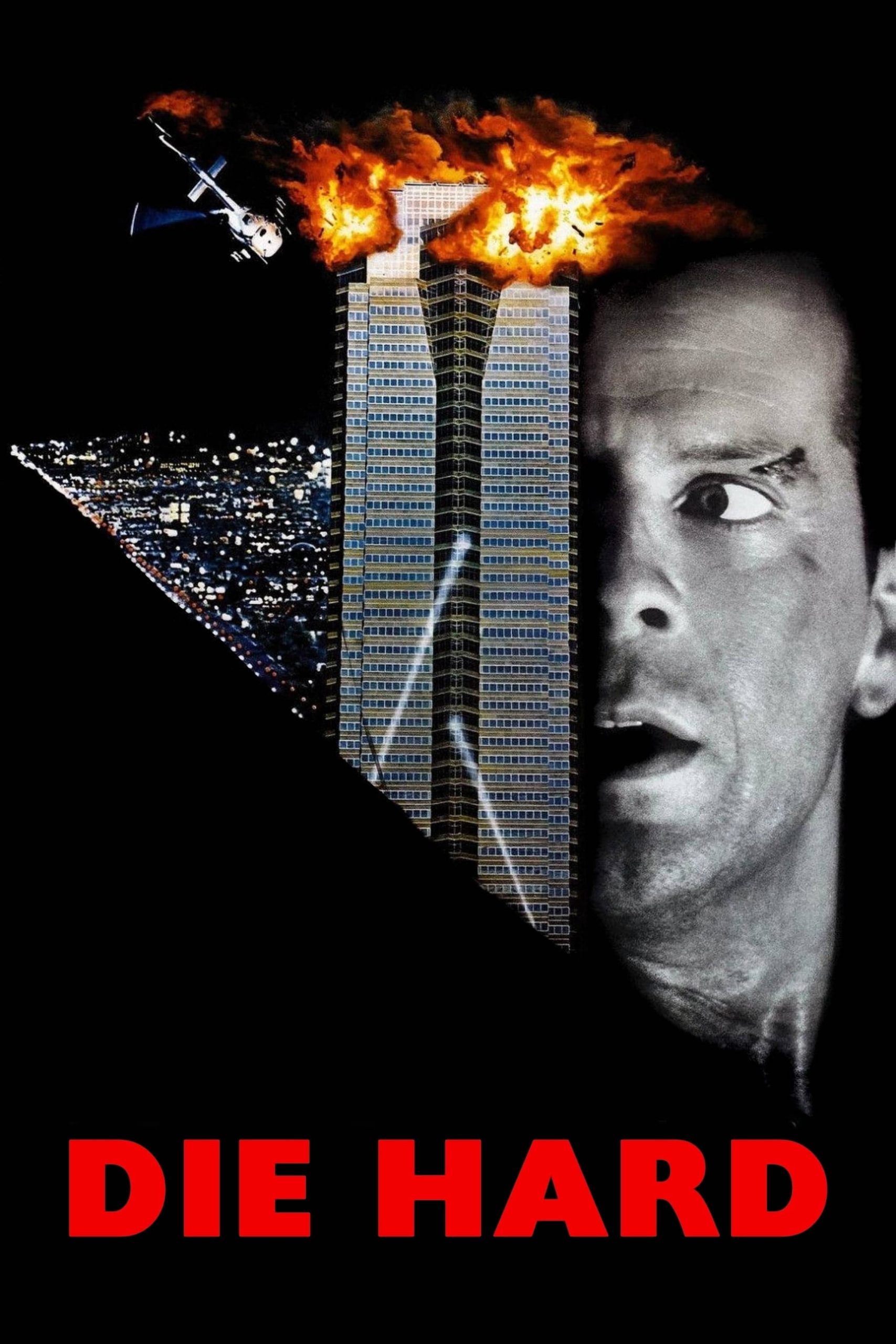
The Historical Era of the Film
Personal memories and professional research always intermingle when I think about Die Hard (1988), and the world that produced it. For me, the film is inextricably linked to the waning years of the Cold War, an era brimming with contradictions—there’s a palpable sense of anxiety and bravado that seeps into every aspect of American culture at this time. Die Hard landed in theaters in July 1988, a moment when the United States found itself trying to recalibrate both its domestic expectations and global position. The presidency of Ronald Reagan was nearly at its end, but his influence was everywhere: eight years of conservative leadership had shaped everything from economic policy to public consciousness. As I see it, the so-called “Reagan Era” meant people were both celebrating the apparent triumph of free-market capitalism and grappling with sharp divides—especially as the era’s financial deregulation contributed to growth as well as volatility. The shadow of the 1987 stock market crash was still fresh in people’s minds, instilling both uncertainty and a certain nervy optimism in urban economic centers like Los Angeles, where Die Hard is set.
The sense of intertwined fear and optimism also existed in the political and social climate. As I reflect on 1988, I recall the final stages of the Cold War: Mikhail Gorbachev’s perestroika and glasnost reforms were changing the Soviet Union’s relationship with the West, and the imminent collapse of old rivalries brought about a complex mixture of relief and unease. This feeling echoed in all sorts of American cultural output. There was a latent anxiety about threats at home and abroad, a residue of countless action films of the early to mid-1980s which often featured clear-cut heroes fighting shadowy terrorists or foreign agents. Domestic issues—from rampant urban crime to the AIDS epidemic—also played a constant background note. The period was marked by assertive law enforcement policies and a public appetite for stories about rugged individualists as antidotes to a rapidly changing world.
Economically, the late 1980s presented a paradox. Wall Street boomed, yet there was growing unease over rising inequality. The “yuppie” phenomenon—ambitious young professionals thriving in high-octane work environments—was especially prevalent in major cities and infused workplaces with a hyper-competitive atmosphere. Corporate excess, pop culture power suits, and the iconic glass-walled skyscrapers like the fictional Nakatomi Plaza all signaled that this was the age of capitalism. I sense in Die Hard’s DNA a kind of double vision: America relishing its power while nervously glancing over its shoulder, wondering when the next crisis might hit. The Los Angeles skyline—shimmering and intimidating—becomes more than mere background. It’s a monument to the era’s ambition and anxieties.
Social and Cultural Climate
When I think about the social and cultural climate into which Die Hard arrived, what stands out most to me is the tension between old forms of masculinity and the shifting social roles of the 1980s. There was a transition underway: traditional gender expectations still held sway, yet there was noticeable skepticism about authority—whether it was institutions, law enforcement, or executive leadership. The film echoes these dynamics. I often reflect on how the late 1980s saw a craving for strong individuals who could cut through bureaucracy and get results, but there was also an increasing fascination with vulnerability and introspection. Bruce Willis’s John McClane doesn’t fit the mold of invulnerable action heroes like Schwarzenegger or Stallone; he’s resourceful, yes, but constantly battered and exhausted—his struggles to reconcile his professional life with his familial responsibilities felt to me like a mirror of the anxieties so many Americans faced in a dual-income, high-pressure society.
Another significant aspect for me is the way the film engages with ideas around corporate power and transnational capitalism. The Nakatomi Corporation—a fictional Japanese firm with its American headquarters in Los Angeles—evokes memories of a genuine social anxiety at the time: the rise of Japan as an economic powerhouse. I remember the 1980s as a time when American politicians, media, and citizens debated fiercely whether foreign investment would erode national autonomy. Headlines fretted over Japanese acquisitions of U.S. assets, and Die Hard’s Japanese-owned skyscraper is more than a setting; it’s a subtle cultural marker of those fears and fascinations.
Popular culture in the 1980s, especially in the U.S., was shaped by the rapid ascent of global media networks. I see this reflected in Die Hard’s depiction of television journalists, the 24-hour news cycle, and the growing public obsession with spectacle. Sensationalism, a drive for ratings, and a certain cynicism about media accuracy were rapidly becoming part of the public conversation. In my experience, this era also saw a transformation in what audiences expected from movies: big set pieces, but also more layered characters—gritty realism blended with high drama. The film’s blend of relentless action and everyday vulnerability caught that spirit perfectly.
- Corporate globalization and fear of foreign economic influence
- Changing gender roles and expectations of masculinity
- Mistrust of authority and fascination with individual action
- Growth of sensationalist media and 24-hour news coverage
For all these reasons, the cultural temperature of 1988 was uniquely charged. There was an ongoing conversation about what it meant to be powerful or powerless in an era of both prosperity and trepidation. As a film historian and lifelong lover of cinema, my reading of Die Hard is always shaped by this push and pull between the allure of spectacle and the messy, unsettled realities just beneath the surface.
How the Era Influenced the Film
The historical circumstances of Die Hard’s era shaped every element of the film’s story, characters, and production design—as I see it, perhaps more powerfully than many realize. The movie isn’t just an action flick; it’s a time capsule for the economic ambitions, cultural anxieties, and shifting moral landscapes that defined the late 1980s. One of the most pointed examples for me is its approach to authority: while the film offers a fantasy of decisive heroism, it doesn’t actually display unwavering faith in institutions. The Los Angeles police—slow to respond, hampered by incompetence and bureaucracy—strike me as quintessential products of a society experiencing crisis in confidence. Meanwhile, John McClane emerges as an everyman hero, combining rugged individualism with bruised vulnerability—a legacy of the Reagan era’s valorization of the lone wolf. This is the era that gave rise to the “action hero,” but in McClane’s battered, mouthy presence, I see hints of the coming decade’s skepticism towards the very notion of heroism itself.
Also, the film’s depiction of terrorism and criminality is a direct echo of contemporary anxieties. In 1988, the word “terrorist” no longer conjured only shadowy foreign threats; it had started to take on a more complex, even transactional quality. The European villains in Die Hard—sophisticated, cynical, and motivated as much by profit as ideology—felt to me like avatars for an era in which geopolitical lines were blurring, and traditional “enemy” figures seemed less certain. The film exploits the anxiety around the permeability of American borders, both metaphorically and literally, by positioning outsiders—invaders of the corporate citadel—as the ultimate threat to the sanctity of the homeland.
Other aspects of production speak to their time. I find it notable that Nakatomi Plaza serves as the central set, a new skyscraper emblematic of glitzy corporate ambition. During my research, I’ve learned this mirrored real shifts in Los Angeles’s skyline and rising influence of international business. The building itself, with its open architecture and gleaming surfaces, embodies the twin obsessions of 1980s America: progress and vulnerability, openness and exposure. The anxieties of technological dependence—the elevators, the radio communication, the labyrinthine security systems—feel pulled straight from the headlines of the era. This was a time when technological optimism jostled with acute apprehension over how rapidly things were changing.
I’m also struck by the fact that the film’s casting breaks with conventions of the day. Bruce Willis, then best known for television comedy, was not the typical action hero, and audiences responded to that freshness. This risk-taking reflects a period when studios were both eager for reliable box office hits and willing to gamble on new formulas—an echo of the late 1980s’ restless creativity and risk tolerance in entertainment and beyond.
Audience and Critical Response at the Time
Recalling the initial reception of Die Hard, I’m always reminded how unpredictable box office culture could be in the late 1980s. When the film first hit screens, there was a mixture of excitement and skepticism. Audiences, from my reading of contemporary reports and personal conversations with moviegoers of that era, were hungry for escapism, but there was also a desire to see something different from the endless parades of muscle-bound heroes. Die Hard, with its vulnerable protagonist and claustrophobic setting, hit a nerve. Many viewers I’ve spoken to remembered being gripped by suspense rather than spectacle—and for them, that was the film’s defining quality.
Critically, the response was equally charged with surprise. I’ve pored over reviews published at the time and noticed how frequently critics expressed initial doubts about both Bruce Willis’s casting and the increasingly implausible set pieces. Yet by the end of its theatrical run, even skeptical reviewers admitted that the film’s pace, tension, and blend of dark humor marked a step forward for action cinema. I remember reading speculation about whether it would become a lasting classic; it’s telling that, within a few years, Die Hard had all but set the template for the entire “one-man-against-the-odds” subgenre.
What stands out to me most is how the public responded to the blending of action and vulnerability. The era’s audience was accustomed to almost invincible heroes, but there was a sense that McClane’s pain, sweat, and sarcasm were both refreshing and cathartic—an antidote to larger-than-life masculinity but not an outright rejection. For many, the film was more than just an action showcase; it felt relevant to the workaday realities of a society testing its own resilience.
After understanding the factual background, you may want to see how this story was received as a film.
It didn’t hurt, of course, that the movie was a commercial triumph. I remember the buzz around its box office performance, and how quickly the industry shifted to imitate its formula. Studios realized audiences wanted action films that combined real jeopardy with human-scale drama—something I believe was as much a reflection of social longing as of mere entertainment trends.
Why Historical Context Matters Today
For me, engaging with Die Hard through the lens of historical context isn’t just an academic exercise—it radically reshapes my appreciation for the film’s staying power. So much of what makes it arresting, decades later, is its palpable sense of a world in transition: the anxieties about technology and globalization, the shifting definitions of heroism, the undercurrents of vulnerability that run below the film’s bravado. When I show Die Hard to students, or just revisit it myself, I notice anew how each of these themes emerges from its production era as much as from its script. Understanding the late 1980s’ blend of optimism and anxiety allows me to see every creative decision—from casting to set design to the subversive humor—in sharper relief.
Historical context, for me, also illuminates the film’s unique resonance with present-day audiences. Die Hard’s anxieties over corporate excess, technological dependence, and the limits of authority feel if anything more prescient after decades of globalization and technological upheaval. I find that audiences who grasp the realities of the Reagan-Bush transition, the rise of international capital, or the early days of 24-hour news can better appreciate how the film balances satire with sincerity. There’s a kind of double vision at work: the film is about the late 1980s, but by understanding its origins, I can trace a line from past fears to today’s cultural touchstones.
On a deeper level, I think the historical context solidifies Die Hard’s status not merely as a cornerstone of the action genre but as a portrait of a nation caught between old certainties and an uncertain future. Every time I hear John McClane’s wisecracking defiance or see the glass-and-steel maze of Nakatomi Plaza, I recognize echoes of America grappling with its own identity. Appreciating the layers of its historical influences reframes every scene for me—not only as entertainment, but as a living record of how popular stories absorb and respond to their own moment in time.
🎬 Check out today's best-selling movies on Amazon!
View Deals on Amazon