
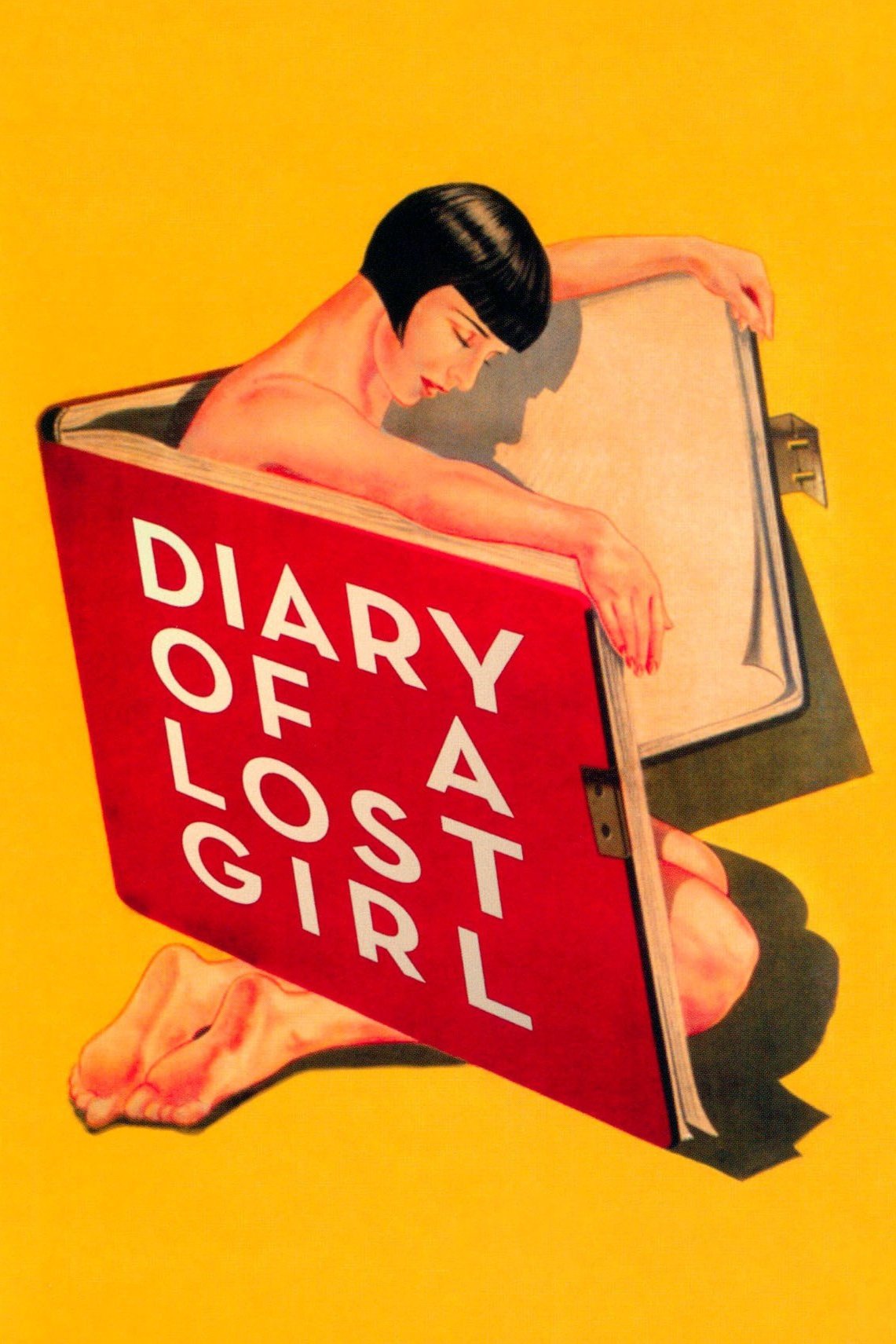
The Historical Landscape
As I settled in to watch “Diary of a Lost Girl,” I couldn’t shake the weight of its setting—the final days of the Weimar Republic’s cultural bloom before shadows crossed Germany’s horizon. For me, 1929 represents a particularly precarious chapter in world history: on the one hand, modernity seemed possible, whispering promises of personal freedom and artistic innovation; on the other, those whispers were battered by storm clouds of economic collapse and social anxiety. Film, in that moment, felt almost like a time capsule—delicate, precious, and at risk of being swept away.
The cinema of late-1920s Germany, at least from my vantage, appears as a spirited testament to a nation wrestling with the aftermath of a lost war and the turbulence that followed. In this period just before the seismic shift brought by the Great Depression and the rise of National Socialism, I sense in German films a feverish experimentation—a hunger for radical storytelling, a willingness to question even the most sacred conventions. If I close my eyes, I can imagine Berlin’s cafes and theaters teeming with artists, writers, and audiences hungry for something truthful amidst the dissonant cacophony of change.
The industrial strides of the decade seem both exhilarating and menacing when I reflect on “Diary of a Lost Girl’s” landscape. Urbanization was drawing people out from rural roots, creating labyrinths of anonymity and temptation. I picture an energetic nightlife mingling with uncertainty on nearly every street. At the same time, traditional social fabrics were fraying; the old codes of class and gender were being renegotiated, their seams tugged with each passing year. This, to me, is the world into which “Diary of a Lost Girl” was born—a world shivering at the brink, seeking itself in flickering black-and-white images.
Technologically, the silent era was ceding to sound, and that transition alone carries a metaphorical weight for me: voices—once silent or filtered through static intertitles—were starting to clamor for attention. Yet, the film remains defiantly silent, holding on to a final vestige of that earlier cinematic language. Watching it, I sense not only the end of an artistic form, but the climax of ideas about what stories could do: provoke, unsettle, and above all, illuminate those parts of life too dangerous for polite conversation.
Cultural and Political Undercurrents
Whenever I return to “Diary of a Lost Girl,” the cultural currents swirling beneath its surface seem even more urgent than before. I am especially struck by the way the film seems to wrestle with embattled notions of morality and autonomy. In 1929, debates about sexuality, women’s rights, and family structures were not only current—they were incendiary. The suffrage victories were recent; the desire for self-determination was pulsing through artistic salons and popular magazines alike.
For me, the film’s subtext becomes a battleground between old authority and burgeoning individualism. More than merely a story of one woman, it strikes me as an allegory for an entire society at war with itself. Censorship, always lingering in Weimar Germany, feels especially palpable in the lens through which the film’s subject matter is filtered. I imagine director G.W. Pabst and his collaborators threading a precarious path between public outcry and private outrage. The topics of sexual exploitation, institutional cruelty, and the plight of the marginalized weren’t absent from German headlines; what’s extraordinary to me is how bluntly the film turns those topics into lived experience through its narrative gaze.
I can’t help but recall that Germany in 1929 was a place where women’s presence in public life was increasing yet constantly policed. The New Woman became a symbol and a provocation, her bobbed hair and cigarette another way of testing limits. Personally, I find “Diary of a Lost Girl’s” portrayal of Louise Brooks’ character as both victim and actor a deeply poignant response to these debates. The character’s fate is enmeshed in legal, familial, and class-driven constraints that speak to the era’s contradictory movements: the desire to liberate clashing with the compulsion to control. Watching the film, I feel the heartbeat of women and men attempting to construct new identities from the fragments of a shattered order.
Politically, it’s difficult for me not to see the encroachment of reactionary forces as a shadow haunting every frame. Right-wing activism was on the rise, and the liberal sensibilities that colored much of Weimar culture were under growing siege. The film’s sense of helplessness—paired with glimpses of resistance and quiet dignity—mirrors the historical forces pressing on its creators. When I view “Diary of a Lost Girl” now, I keep returning to that tension between hope and foreboding: the film, like its era, feels alive with both possibility and threat.
The Film as a Reflection of Its Time
When I immerse myself in “Diary of a Lost Girl,” I’m not simply watching a melodrama; I’m witnessing a record of anxieties and aspirations specific to a society at a crossroads. The film feels to me like a raw nerve, vibrating with the tensions that defined Weimar Germany. What fascinates me most is how it takes private suffering and makes it a public discourse—transforming the social into the cinematic in ways that still sting nearly a century later.
I’m struck by how the film exposes the cruelty and hypocrisy of institutions—family, law, social services—that claim to safeguard the vulnerable. At every turn, I sense the sting of injustice faced by those least able to defend themselves. Brooks’ character, wounded by betrayal, is not only exposed to personal tragedy but also to a world willing to exploit—or, worse, to ignore—her pain. When I consider the social structures of 1929, I find in them the building blocks of the film’s indictment: benevolent language masking authoritarian control, charity as a pretext for discipline, and public morality weaponized against women’s agency.
The interwar period in Germany was, to my mind, marked by extraordinary psychological unrest. Freudian ideas about repression, sexuality, and trauma had permeated popular conversation. I see their echo in nearly every encounter Louise Brooks’ character has—with herself, with others, and with the world at large. This is a film obsessed with what lies beneath surfaces, and, as I watch, I interpret its silences as a reflection of all that is unsaid in polite society. The very fact that the film is silent becomes, for me, a metaphor in itself—the unspoken ache of lives constrained by propriety and fear.
Another theme that resonates for me is the film’s queer, shifting gaze. The way Pabst frames his protagonist avoids reducing her to a mere object. Instead, I sense a feminist consciousness slowly awakening—a challenge to prevailing narratives that situate women as either saints or sinners. The film refuses easy answers or neat redemptions, and in this, I detect an echo of the era’s political ferment. The end of the 1920s was no time for certainty, and “Diary of a Lost Girl,” in my reading, mirrors that ambiguity. It upsets the conventions of melodrama just as society was struggling to escape tradition’s grasp.
Watching the film in my own time, I’m particularly attuned to how it conveys isolation. The alienated heroine, adrift in a world of impassive authority figures, summons for me the sense of rootlessness that haunted many Germans between wars. There’s an urban melancholy, a feeling that the security of old certainties has evaporated, leaving only the possibility—terrifying and exhilarating—of self-invention. For all its sorrow, the film ultimately gives me a glimpse of hope: the hope that stories, even those marred by suffering, can catalyze new ways of seeing and being.
Changing Perceptions Over Time
Whenever I revisit “Diary of a Lost Girl” now, I realize how profoundly time shapes the meanings I extract from its images. What initially struck contemporary audiences as scandalous or subversive now seems not only honest but prescient. Decades of shifting social mores have recast the film from a controversial melodrama to a touchstone for discussions about gender, power, and resistance. In the early years after its release, I imagine the shock it must have induced—its directness unsettling viewers accustomed to subtler critiques. I can almost hear the rapid censure, feel the pressure that studio heads and censors applied in response to its themes.
Over time, though, I notice how scholars, cinephiles, and activists have reclaimed the film’s radical edge. What was once dismissed as a provocative tale of moral decline or personal tragedy is now, for me, a rallying point for understanding the ways society disciplines and punishes female autonomy. Feminist critics, especially in the 1970s and beyond, have inspired me to reconsider the protagonist not as a passive victim but as a complex figure whose suffering and survival indict the very systems that oppress her. With each successive viewing, I find myself more aware of the film’s challenge to patriarchal narratives; its willingness to expose hypocrisy feels fresh, even invigorating.
I am also fascinated by how Louise Brooks’ performance, once controversial for its opacity and reserve, has come to be recognized as a masterclass in subtlety—her gestures now read as coded signals of agency and resistance. My own impressions have changed with time; what seemed mournful to me in earlier viewings now feels quietly defiant. The camera lingers on her face not for spectacle but as insistence: she must be seen and, crucially, understood on her own terms. This shift in interpretation, I think, mirrors broader transformations in how we approach silent cinema: not as relics but as vital, challenging works that demand conversation with the present.
Context matters too, and as I trace the film’s legacy, I recognize the interruptions wrought by history itself. The banished films, the broken careers, the loss of artistic freedom in Nazi Germany—all these realities deepen my sense of the film’s urgency. That it survived at all now feels miraculous, and gives weight to every frame. Restoration efforts in the late twentieth and early twenty-first centuries have only heightened the film’s historical resonance for me. Now audiences encounter the work as both document and provocation: an artifact of pain but also of stubborn beauty.
Recent decades have also brought technological advances that make the film accessible to new generations, and I am heartened by the conversations it prompts. Social media screenings, academic symposia, and feminist film festivals now celebrate its significance, often framing it as a tool for broader discussions about rights and representation. My encounters with those audiences have enriched my own perspective. The meaning of “Diary of a Lost Girl” is, for me, now inseparable from the history of its many viewers: each era brings its own questions, its own answer to what the film dares to reveal.
Historical Takeaway
If I had to distill what “Diary of a Lost Girl” has taught me about the world of 1929, it would be this: that art’s greatest power lies in its capacity to hold a mirror to discomfort, to make visible those lives and struggles others would rather ignore. Each time I return to the film, I am reminded that Weimar Germany was a society balanced precariously between hope and dread, its people searching for meaning amidst the ruins of certainty. The film’s unflinching look at social outcasts and institutional cruelty brings into focus how fragile ideals of progress and compassion truly were—subject, always, to the sway of politics, prejudice, and fear.
For me, the film stands as a testament to the necessity of creative risk in troubled times. In its willingness to challenge conventions and provoke debate, “Diary of a Lost Girl” embodies the spirit of its era’s arts and letters, a spirit embattled but not yet vanquished. I am moved by how it grants dignity to voices rarely heard, and by how its silences speak volumes about the unspoken burdens carried by ordinary people. The themes it navigates—sexual autonomy, institutional corruption, the quest for selfhood—remain as urgent as ever. In giving these issues a face and story, the film continues to spark not only empathy but anger, not only reflection but a conviction that things need not always remain as they are.
As I see it, “Diary of a Lost Girl” will always serve as both prophecy and lament—a vision of a society slipping toward catastrophe, but also a whisper of resilience. Its lessons are not trapped in amber but alive and mutable, awaiting rediscovery. The fragility and courage on display are, for me, reminders of the stakes of history: that between the lines of suffering and struggle, there always flickers the possibility of resistance, renewal, and—if we are vigilant—change.
To see how these real-world elements shaped the film’s impact, you may also explore its reception and legacy.
🎬 Check out today's best-selling movies on Amazon!
View Deals on Amazon