
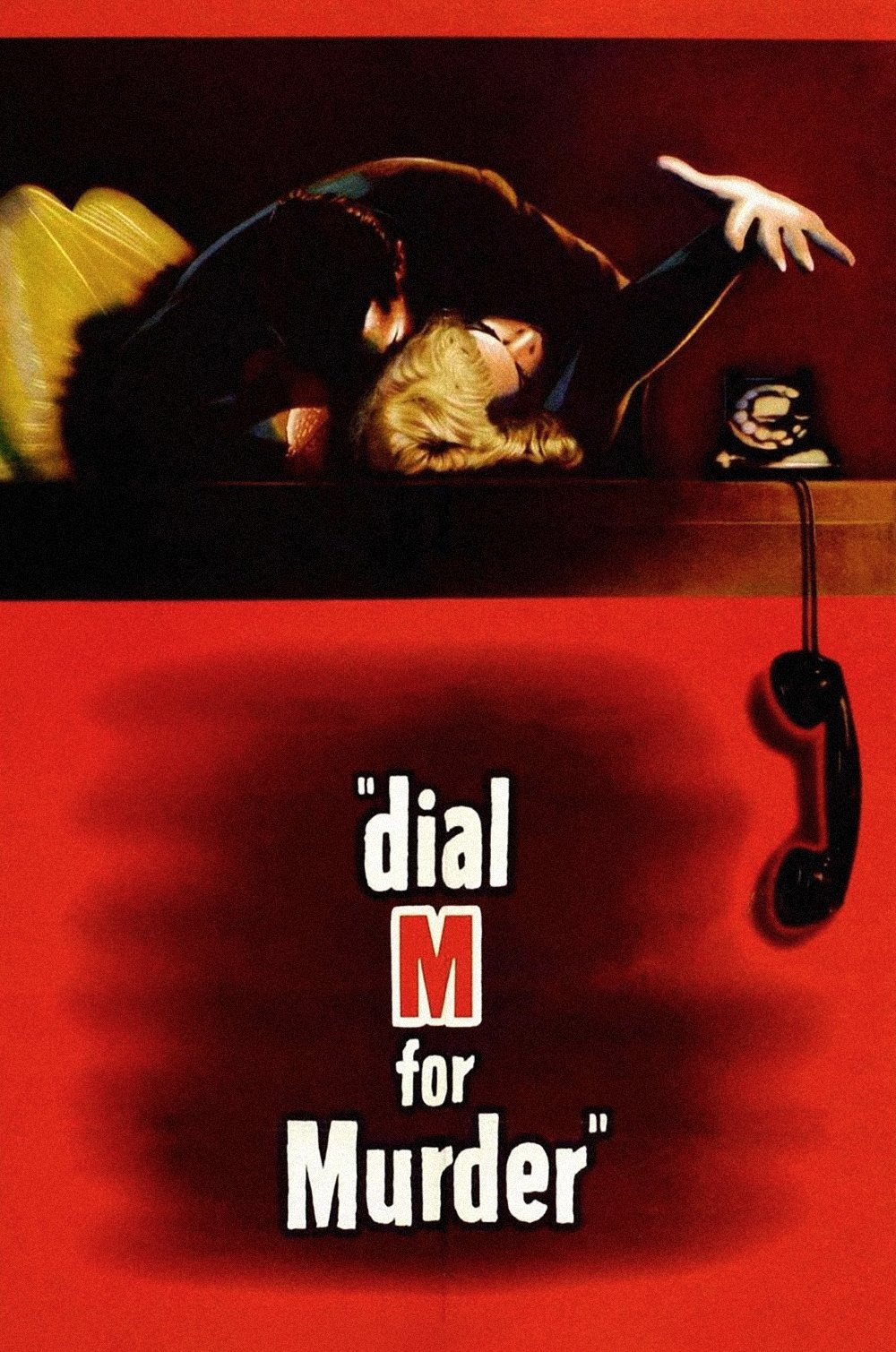
The Historical Era of the Film
There’s something about encountering “Dial M for Murder (1954)” that drops me straight into the postwar European psyche—perhaps because living in the twenty-first century makes the early 1950s feel like an era both familiar and curiously out of reach. As I recall the film’s world, I realize it is unmistakably shaped by the aftermath of World War II. London, where the story unfolds, was a city still coming to terms with the emotional and physical scars of the war. The United Kingdom was navigating a labyrinth of economic recovery, stiff rationing, and a society that had been upended by years of conflict. Prosperity was a distant promise for many; the effects of austerity and rationing still lingered, casting a shadow on daily life and even the entertainment industries.
From my perspective as a film historian, the political climate was between subtle stability and quiet paranoia. The Cold War was quickly tightening its grip. 1954, in particular, was marked by global uncertainty, espionage as a daily headline, and a growing consciousness about domestic security. There was palpable tension regarding loyalty, secrecy, and what dangers might lurk behind closed doors—even right at home. The social structure, shaped by old class lines and new aspirations, added yet another dimension. The British class system hadn’t disappeared—it mutely exerted its influence in everything from marriage to employment to law enforcement. That’s one reason why I find the specific choices about setting, occupation, and character in “Dial M for Murder” so revealing: they’re not just aesthetic, but deeply rooted in the production era’s realities.
At the same time, the American audience coming to theaters in 1954 brought their own historical baggage. While the U.S. boasted postwar economic growth, it was an era still haunted by McCarthyism and the “Red Scare.” This American context subtly echoes in the film’s underlying anxiety about trust and betrayal. To watch the film through the lens of its time is to recognize that behind its glossy Technicolor surface lies a world anxious about change, security, and the encroachment of the unknown. So when I sit down to view the film, I never forget that it emerged alongside the contradictions and complexities of the early Cold War era—a moment suspended between optimism, suspicion, and the will to reconstruct both private and public life.
Social and Cultural Climate
I’ve always found the social and cultural context of early 1950s cinema fascinating, especially when exploring the crevices of films like “Dial M for Murder.” Postwar Britain, where the film is set and where its characters exist, reflected a society reluctant to relinquish tradition but unable to resist change. I’ve seen how the film’s milieu naturally absorbs the unease and ambition that defined this period. For example, gender roles in the 1950s were being renegotiated: I see the era’s women pushing for new freedoms and more independence, even if society continued to cling to conventional domesticity. The tensions in the film between public respectability and hidden passions mirror the contradictions I’ve sensed within British society at that time.
The grip of the British class system is, to me, always present in the carefully cultivated politeness, the casual snobbery, and the assumptions that drive the narrative forward. The way I read the film, the characters’ concerns about appearance and reputation speak volumes about a culture invested in keeping up appearances. At the same time, I know it was a period when American culture was becoming irresistible across the Atlantic. The impact of Hollywood’s global dominance meant British productions were frequently cross-pollinated with American stars, capital, and sensibilities. The presence of Grace Kelly, an American actress, in the lead is no accident; I interpret that as an attempt to appeal to international tastes and enhance box office returns.
Social anxieties of the time—fear of crime, dissolution of marriages, scrutiny of private life—are channeled directly into the film’s construction. The relentless fascination with crime stories, especially those involving “respectable” families, seems to reflect my own understanding of what preoccupied mid-century audiences. I find the era’s particular blend of decorum and transgression encapsulated in the film’s atmosphere, where drawing rooms can so easily become scenes of violence or duplicity. The film’s London is an elegant but perilous place, much like the city as imagined by people living on the threshold between old-world confidence and new-world uncertainty.
- Persistent influence of traditional gender roles
- Strength of the British class system
- Growing American cultural influence in the UK
- Public anxiety about crime, privacy, and reputation
In my eyes, this social tapestry is vital to understanding why the story and its characters resonate—and why their personal crises reflect a nation reconfiguring itself in the shadow of war and the burgeoning promise (and peril) of the modern age.
How the Era Influenced the Film
The impact of the early 1950s production era on “Dial M for Murder” is, in my view, everywhere in the film’s design and tempo. When I consider the narrative—a tightly wound plot about a seemingly respectable man planning the perfect murder—I can’t help but hear the echoes of contemporary fascination with the double lives led behind closed doors. The idea that danger could exist within the home, that anyone could be hiding something sinister, speaks directly to a period defined by suspicion and secrecy. The Cold War mentality of “Who can you trust?” is, for me, subtly stitched through the characters’ every interaction.
The production itself also bears the imprints of its historical moment. I’ve always found it significant that the film was adapted from a successful stage play, a practice common in the era as studios sought cost-effective, dialogue-driven stories that reduced the need for large sets and costly location shoots. The use of Technicolor is another piece of the period’s puzzle. Although color had been around for years, there was a deliberate choice to employ it in a suspense film—perhaps, as I see it, to capitalize on the novelty and draw audiences away from their new televisions, which were rapidly becoming household staples.
When I look at the casting decisions, particularly Grace Kelly’s involvement, I see evidence of the cross-cultural blending so typical of the 1950s film industry. Casting an American star in a British-set film wasn’t just about international appeal; it reflected the shifting balance in film production and the increasing importance of the U.S. market. The presence of Ray Milland and Robert Cummings has a similar effect—offering both gravitas and familiar faces to transatlantic audiences. That appeal to “respectable” viewers, while simultaneously tapping into darker, subversive themes, feels to me like a product of a world unsure whether to uphold tradition or to challenge it.
Technological advancements of the era—especially major studio investments in 3D and widescreen formats—cast their own shadow over the film’s ambitions. While “Dial M for Murder” was initially shot in 3D, a novel and much-hyped technology at the time, the format’s waning popularity meant the film was widely shown in standard 2D prints. Yet I find that the experiment with 3D, and the elaborate staging that went along with it, speaks to the economic and technological contests raging among Hollywood studios during the 1950s—a period when studios sought every possible advantage to lure back audiences lost to television.
All these details—thematic, visual, technological—strike me as inseparable from the era’s historical texture. When I watch the film, I am acutely aware that it is the artifact of a world grappling with its own contradictions, where modern anxieties pressed against deeply embedded notions of honor, respectability, and domestic security.
Audience and Critical Response at the Time
For me, studying how 1950s audiences and critics reacted to “Dial M for Murder” provides another vital window into the film’s historical context. I’m always fascinated by the extent to which viewers of the time recognized—or perhaps simply felt—the shifting undercurrents of society reflected back at them from the screen. The initial release met with enthusiasm and curiosity, not just because of Alfred Hitchcock’s reputation, but for the technical novelty of its 3D presentation. I know from archival research that 1954 was a moment of fevered competition among cinemas; theaters were eager to offer something spectacular, and the promise of 3D heightening suspense fit the bill.
Yet, what stands out to me is that while the 3D element drew interest, it was the story’s calculated psychological tension and the performances—especially Grace Kelly’s portrayal of the endangered Margot—that left a more lasting impression. Critics of the time, as I’ve noted in their reviews, appreciated Hitchcock’s ability to create suspense from ordinary circumstances. They were attuned to his meticulous direction, the film’s stylish dialogue, and the insidious quiet of its violence. There were also, I noticed, those who found the staginess of the adaptation a little too reminiscent of its theatrical origins—a common critique of play-to-screen projects in that era.
From everything I’ve read, 1950s audiences seemed to respond to the familiar fears that the story played upon. The threat faced by Margot, the complexities of marriage, and the unsettling possibility that evil could invade even the cosiest domestic settings felt relevant in an era defined by public caution and private concern. The economic realities of the time, and the novelty of color and 3D, meant “Dial M for Murder” was able to draw significant crowds despite being a relatively contained, dialogue-heavy thriller.
I always sense that the critical response was colored by the film’s British setting and American influences. Reviewers often commented on the mixture of cool British restraint and American glamour, suggesting even then that the film straddled two worlds. When I encounter accounts from everyday moviegoers, I can almost feel the way the film’s combination of meticulous plotting and technological flair offered a kind of escape—one rooted in the very anxieties and contradictions that defined their own historical moment.
Why Historical Context Matters Today
In my own work and when I recommend “Dial M for Murder” to students or fellow enthusiasts, I always emphasize just how crucial it is to grasp the film’s historical context. For me, a film like this doesn’t exist in a vacuum; it’s a living document shaped by—and in conversation with—the time that produced it. When I view it now, some of its anxieties might feel distant or replaced by modern ones, but the patterns of suspicion, the preoccupation with secrets and domestic vulnerability, all become richer when I remember what anxious, rapidly-changing era produced them.
Understanding the social climate of early 1950s Britain and America helps me make sense of the story’s focus on reputation, marriage, and crime as more than mere plot devices. They were, at the time, hotly debated touchstones in everyday life. Thinking about the film’s ambition to use new technology or to bridge British and American sensibilities reveals the ways filmmakers tried to address not just their stories, but the world of their audiences. The restrained emotional style, the focus on manners, even the claustrophobic domestic setting—they all mean more to me when I connect them back to wartime trauma, ongoing austerity, and a society on the brink of modern transformation.
I find the historical lens deepens the film’s relevance now. Issues of trust, fidelity, surface harmony masking private discontents—these didn’t disappear with the 1950s. By appreciating the specific forces that shaped “Dial M for Murder,” I feel more attuned to the echoes between its world and mine. The more I understand about Cold War paranoia, the shifting role of women, or the seduction—and threat—of American popular culture, the more I see these same themes repeated throughout later cinema and even contemporary life. For me, knowing the context behind “Dial M for Murder” doesn’t just enhance the film; it helps illuminate the continuing interplay between art and history in all eras.
After understanding the factual background, you may want to see how this story was received as a film.
🎬 Check out today's best-selling movies on Amazon!
View Deals on Amazon