
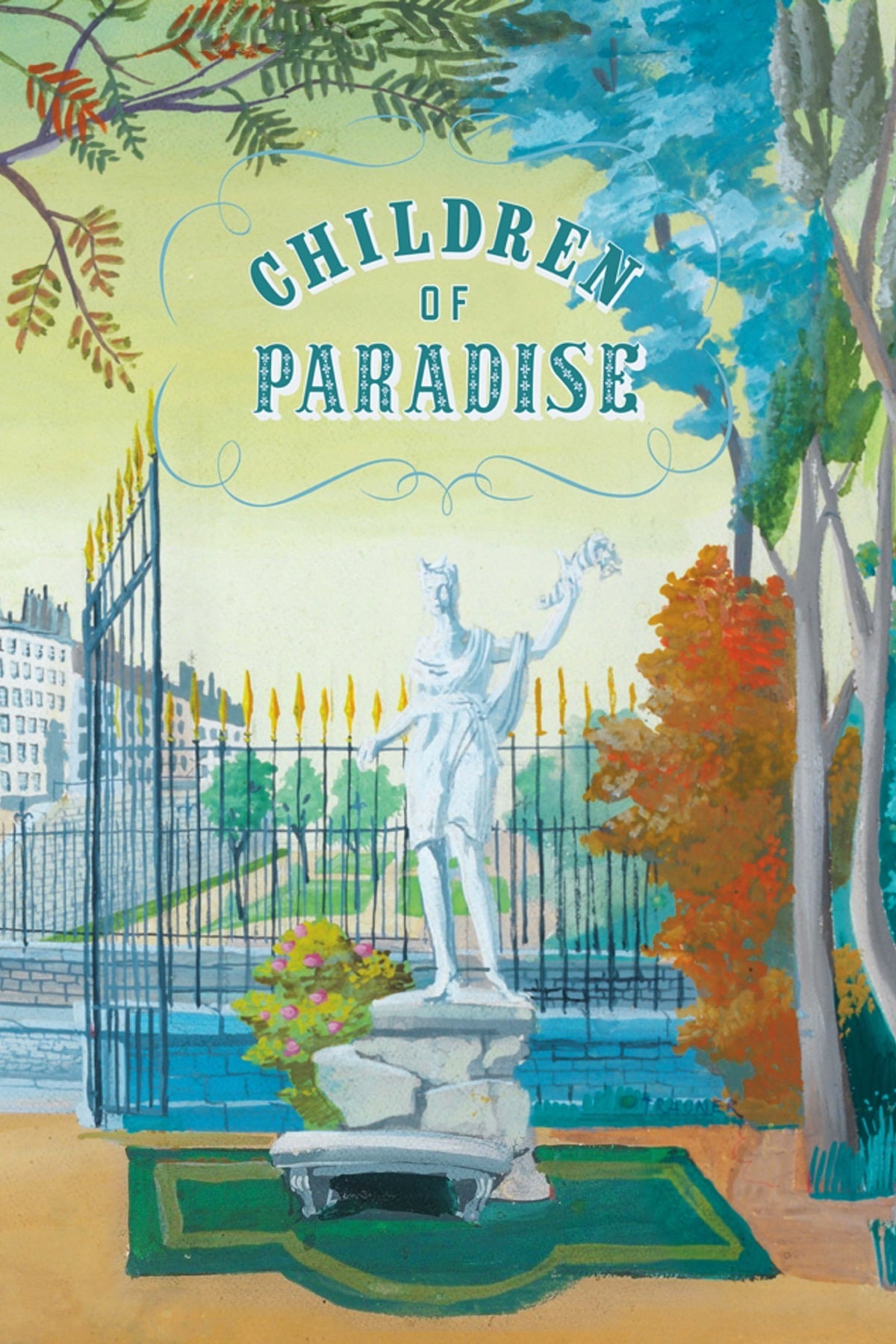
The Historical Era of the Film
Whenever I return to Children of Paradise (1945), I cannot help but position myself amid the tense political landscape of Occupied France that birthed it. World War II was raging, and the atmosphere throughout Europe was heavy with suspicion, hardship, and upheaval. France existed in a state of ongoing crisis since 1940: after the German Wehrmacht’s swift Blitzkrieg, the country was divided into the Occupied Zone, directly controlled by Nazi Germany, and the so-called “Free Zone,” administered by the Vichy regime, which actively collaborated with the occupying forces.
For me, what is most striking is the juxtaposition of deprivation and resilience. The French economy struggled under rationing and restrictions, so daily survival was fraught with shortages and long queues. I read stories of Parisian families stretching food supplies, of the black market flourishing, and of a palpable sense of improvisation threading through every aspect of life—including the arts. The Vichy government’s censorship and Nazi directives dictated what could appear in newspapers, books, and films. Citizens lived with constant fear, uncertain of loyalties, and wary of informers who might be working for the Gestapo.
Socially, daily life for Parisians was a series of negotiations with invisible boundaries. The old cosmopolitan vibrancy of the city was subdued. Many artists, writers, and actors, if not directly targeted because of their ethnicity or politics, felt pressure to choose between cooperation, silence, or the very real dangers of resistance. Unemployment was high and resources depleted, so for me, it is nothing short of astounding that a production as ambitious as Children of Paradise could emerge from this era at all. I always marvel at the fact that its filming began in 1943, with Occupation at its most suffocating, and continued through the Liberation.
Certain historical terms seem to define this era for me: censorship and collaboration. No creative act in occupied France could escape these concerns. Yet, despite—or perhaps because of—these constraints, the film’s production stands as a testament to the endurance of creative vision in one of the twentieth century’s darkest chapters.
Social and Cultural Climate
Approaching the film through the lens of its social and cultural climate, I’m always aware of how layered French society felt in the first half of the 1940s. Wartime France did not merely endure the external shock of defeat and occupation, but also underwent massive upheaval internally. I see, in every frame of the film, echoes of a divided society wrestling with questions of loyalty, secrecy, and the meaning of national identity.
Cultural life was at once repressed and urgently alive. Paris, long the stage for avant-garde artists and bold experiments, was draped in a peculiar stillness. Yet, in this stillness grew an underground vibrancy. Theatres remained open—sometimes as a form of subtle resistance or respite from daily anxieties. Cinema, in particular, became a cultural lifeline, drawing crowds who sought distraction or symbolic forms of resistance within the safe confines of storytelling. I sense a hunger for nostalgia, too. The longing for the “old Paris” of the nineteenth century—glamorous, chaotic, teeming with possibility—courses throughout Children of Paradise.
The question of identity dominated social conversations. Vichy authorities attempted to promote a mythologized version of ‘Frenchness’, celebrating tradition and authority. Simultaneously, the Resistance fostered alternative symbols and codes, often hidden in plain sight. Artists, craftspeople, and intellectuals I admire had to navigate a maze of restrictions, weighing personal risk against professional and moral imperatives.
Recalling oral histories and memoirs from those years, I am reminded that, despite deprivation and surveillance, a remarkable resilience pulsed beneath the surface. Friendships, networks, and artistic collaborations thrived amid scarcity. The line between public and private blurred, as many artists hid Jewish friends, circulated underground newspapers, or conveyed coded messages in paintings, poems, or performances. I can trace this coded creative courage throughout the DNA of Children of Paradise. For everyone involved, including director Marcel Carné and screenwriter Jacques Prévert, creative choice was inseparable from the political situation.
- Nazi occupation brought strict censorship
- Food and resource shortages led to hardship for civilians
- Cultural production was both an act of necessity and defiance
- Division and suspicion permeated social relationships
Overall, I experience the cultural environment that produced this film as one of paradox—where artistic innovation flowered within and against a background of widespread suppression.
How the Era Influenced the Film
Contemplating how these historical circumstances seeped into the soul of Children of Paradise, I always come back to its sheer scale and ambition. For a film to run over three hours, featuring lavish set design and large crowd scenes, during a period when material shortages defined everyday existence, is astonishing to me. The production itself became a microcosm of wartime resourcefulness and adaptability.
I often reflect on the choices the filmmakers made—such as shooting scenes out of order, hiding collaborators and resistance members among the cast, or employing Jewish crew under false papers—as both acts of necessity and quiet rebellion. The sets, I have learned, were sometimes sabotaged by weather or Allied bombings, requiring rapid, creative reconstruction and intense labor. Even the extras, some of whom were real members of the Resistance or people in hiding, turned the act of filmmaking into a profoundly political gesture.
Setting the story within the 1820s and 1830s—an era of political unrest and theatrical flamboyance—always strikes me as a strategic masterstroke. I sense in this “old Paris” an allegory for contemporary struggles: the juggling of multiple identities, the façade of spectacle, the push and pull between oppression and freedom. The bustling theater world, with its masks, secrets, and shifting alliances, quietly echoes the social realities of Vichy France.
The very casting nuances draw from this context. Several actors and crew were at personal risk due to their background or beliefs. Notably, set designer Alexandre Trauner and composer Joseph Kosma worked in hiding throughout production, supported by protective colleagues. For me, the fact that the finished film evokes themes of love, freedom, and art’s resilience makes it both an artifact and a product of its era’s struggles.
The heightened atmosphere of Occupation also shaped how I read the film’s dialogue, the coded exchanges, and the wary interplay between intimacy and secrecy. When I watch, I perceive layers of meaning—what can be said, what must be hidden, and how artistry offers one of the only safe refuges for dissent.
Audience and Critical Response at the Time
When the film finally premiered in March 1945, the Liberation of Paris had just occurred. My research and encounters with period testimonials reveal a heady mix of relief, catharsis, and awe rippling through French audiences. After years of Occupation and deprivation, crowds flocked to the cinemas, eager for the sense of grandeur and hope that Children of Paradise offered. I imagine how people felt, seeing their city and its mythic past resurrected in glorious black and white, their own recent suffering refracted through the grand passions and heartbreaks on screen.
Film historians and critics of the time, as I have noted, were quick to hail the film as a masterpiece. The French press attributed a kind of poetic heroism to the filmmakers’ labors against adversity. Many saw the film’s lush romanticism, its generosity of spirit, and its profound evocation of theatrical tradition as both a balm and a subtle political statement. I think about how the film’s opening night became as much a celebration of survival as of artistry. The notion that creative achievement—and beauty—had not only persisted but triumphed, was deeply moving for a war-weary audience.
Yet, the response was not without tension. Some conservative or collaborationist voices privately disliked the audacity and subtle ambiguity woven through the narrative. I’ve read letters and criticism that hint at suspicion toward the coded messages and allegories many felt the film contained—an undercurrent of resistance present in the grandeur.
For mainstream viewers, however, Children of Paradise represented both escape and memory. Many saw in its sweeping storytelling a tribute to lost freedoms and the irrepressible nature of love and art. To this day, I sense that this emotional impact lingers, rooted in the communal catharsis felt in those first screenings.
Why Historical Context Matters Today
To me, grasping the historical context of Children of Paradise is essential to any genuine appreciation of its artistry and endurance. Knowing the conditions under which the film was created—its production amid censorship, material scarcity, and personal risk—changes how I engage with every scene and performance. I see not only a rich narrative, but also a collaboration of individuals who, by working together, defied prevailing circumstances to produce something beautiful and true.
Modern viewers sometimes approach the film as a relic, famed for its lush period reconstruction or poetic script. But it is the story behind the story—the mesh of quiet defiance, solidarity, and unyielding creativity—that, to my mind, enlivens its themes far beyond the screen. When I revisit the casting, the evocative score, or the elaborate crowd sequences, I do so with an awareness that many of those faces belonged to people marked as “undesirable” by the regime in power, and that every day of production was an exercise in navigating shifting peril.
Whenever I guide others through the world of Children of Paradise, I encourage them to see it not just as a theater of nineteenth-century Parisian romance, but also as an echo of its own time. Each choice in costume, set, or script becomes a testament to continuity, cultural memory, and creative resistance. The intense conditions of the wartime era are inscribed in the film at multiple levels—shaping mood, casting, design, and even the rhythm of storytelling.
Ultimately, I believe the film’s persistent acclaim—and its ability to move audiences decades later—stems from the rare combination of artistry and circumstance in its making. The historical forces that endangered its creation are precisely those that give its scenes such depth and resonance for me today. Every time I watch Children of Paradise, I am reminded that cinema is not only a reflection of its society, but a living record of resistance, aspiration, and community forged under crisis.
After understanding the factual background, you may want to see how this story was received as a film.
🎬 Check out today's best-selling movies on Amazon!
View Deals on Amazon