
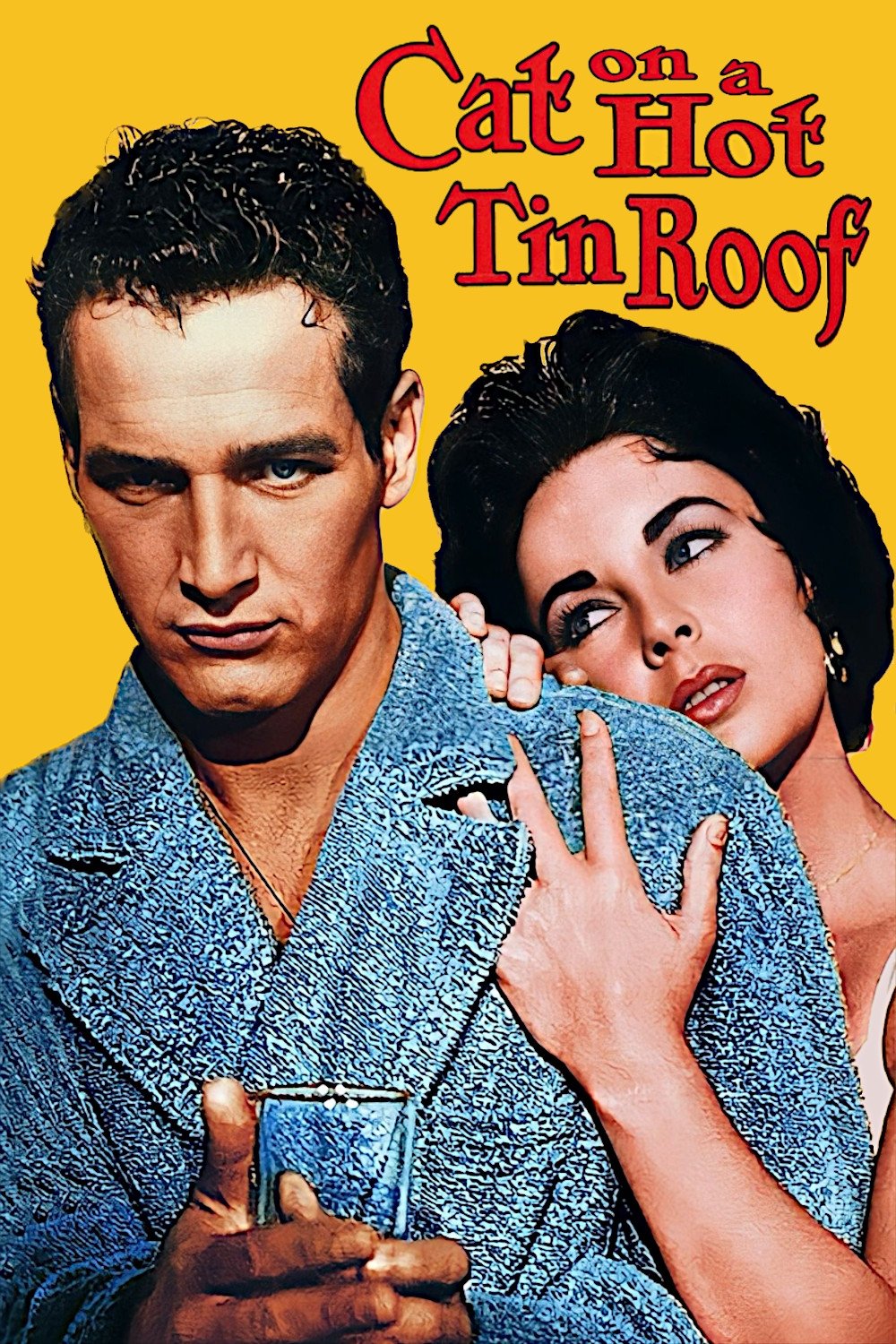
The Historical Era of the Film
The first time I watched Cat on a Hot Tin Roof (1958), I felt like I’d been dropped into a world suspended between old Southern traditions and new postwar anxieties. The film, to me, is a vivid product of its late-1950s context—a time that shaped everything about its mood and content. When I think about its historical era, I see the postwar United States brimming with economic optimism, yet carrying deep currents of social unease. This was a moment when America was enjoying the benefits of a booming economy: suburban homes sprung up rapidly, mass consumerism flourished, and television started to redefine daily life for millions. Even as prosperity seemed accessible, a persistent sense of anxiety lingered beneath the surface, especially concerning the changing roles of men and women, and the rigid structures of American family life.
Politically, I picture 1958 as being smack in the middle of the Cold War. Senators sparred over American identity and loyalty, and the threat of nuclear conflict loomed constantly in popular consciousness. The Red Scare had begun to wane, but the bruises of McCarthyism remained fresh, making everyone just a bit more cautious about how they presented themselves. On the home front, the United States grappled with the early stages of the modern Civil Rights Movement: the 1954 Brown v. Board of Education decision had declared segregation in public schools unconstitutional, and the Montgomery Bus Boycott had only recently grabbed national headlines. Yet, in the South—which forms the backdrop of Cat on a Hot Tin Roof—the old social order was fiercely resistant. I can’t separate the film’s Southern setting from its real-life context: class boundaries, racial divides, and entrenched ideas about gender shaped every interaction, both on the screen and beyond.
All of these elements converge, for me, in the film’s distinctive atmosphere. As I watch characters struggle with personal pain and family secrets, I’m always aware of the wider economic security cushioning them, yet see how the era’s anxieties constantly bubble up. Historical context turns what might seem like an isolated family drama into a pointed reflection of American society as a whole.
Social and Cultural Climate
The social climate infusing this film’s release year was both charged and constrained, and when I try to trace how it pulses through the story, I sense the era’s dominant attitudes everywhere. 1958 America was a land where conformity was extolled as a virtue; ideals of the “normal” nuclear family—complete with devoted homemaker, breadwinning father, and obedient offspring—were hammered home by advertising and television sitcoms. Yet, I find that beneath that carefully cultivated image, there was immense social pressure: everyone was expected to repress inner turmoil and maintain the façade.
- The postwar years reinforced traditional gender roles, even as women sought greater autonomy.
- Strong stigma surrounded discussions of sexuality and mental health.
- Regional tensions simmered as the South resisted changes wrought by the Civil Rights Movement.
- Mass media shaped notions of respectability, privacy, and propriety.
When I place myself in the seats of a contemporary 1950s audience, I feel the push-and-pull between the world’s desire for stability and its simmering, sometimes unspoken, unrest. One of the most important social factors I can’t ignore is the period’s approach to sexuality. Topics like same-sex desire or marital dysfunction were rarely addressed openly, and strict censorship—the infamous Hays Code—dictated what Hollywood could show or even hint at onscreen. Similarly, the patriarchal family structure was seldom critiqued in mainstream culture, even as private dissatisfaction with those expectations grew.
Culture was also shifting in less overt ways. I notice the rise of the “Method” acting style associated with Marlon Brando or James Dean, which elevated psychological intensity and emotional realism. On Broadway and in Hollywood, adaptations of Southern literature—by authors like Tennessee Williams—brought regional tensions and social hypocrisy into the spotlight. All of these trends, in my opinion, shaped how Cat on a Hot Tin Roof was interpreted and received during its time.
How the Era Influenced the Film
I find that Cat on a Hot Tin Roof is soaked through with the contradictions and expectations of its era—not just in what the story dares to show but, crucially, in what it has to omit or transform. The play’s original author, Tennessee Williams, injected it with a rawness that challenged taboos around drinking, sexuality, and honesty. But in the translation to film, I see the unmistakable hand of 1950s Hollywood censorship at work. Entire aspects of Brick’s pain—particularly his relationship with his friend Skipper—had to be reframed or left ambiguous, because the era’s social and legal climate refused open acknowledgment of homosexuality.
Reflecting on the roles the characters inhabit, I’m struck by how tightly their family unit embodies midcentury anxieties. Brick’s sense of failure and detachment, Maggie’s desperation for recognition and love, and Big Daddy’s blustering authority all mirror contemporary unease with shifting gender roles and the fragile nature of the masculine ideal. In a decade defined by both celebration and suspicion of American prosperity, the family’s squabbles over inheritance, property, and legacy reveal what I see as the shadow side of the “American Dream.”
In production terms, I can’t ignore the importance of casting and star power during this period. Stars like Elizabeth Taylor and Paul Newman were not just chosen for their acting—though both turned in performances that, to me, have lost none of their power—but also for their broader public personas. Their images allowed MGM to tackle controversial material under the guise of prestige, providing a measure of protection against backlash. The production design and cinematography echo the era’s taste for bold color, stagebound interiors, and a certain studied theatricality. To my mind, these choices were as much about reflecting the period’s own artifice as they were about staying within budget or technological limits.
Audience and Critical Response at the Time
When I dive into contemporary reviews and box office reports, what stands out to me is how audiences of 1958 approached the film through the double lens of entertainment and social expectation. Cat on a Hot Tin Roof became an immediate commercial success, and critics praised its performances—especially those of Elizabeth Taylor (whose recent personal tragedy generated immense publicity) and Paul Newman, whose brooding intensity fit the era’s appetite for psychological drama. Broadway fans brought high expectations to their viewings, wondering how much of the play’s original bite would survive Hollywood adaptation.
Yet, there was a double-edged reaction. Some prominent critics celebrated the movie for tackling difficult topics within the confines of mainstream filmmaking. Others, especially those familiar with the play, lamented the dilution of its more provocative content—even as censors and social gatekeepers tacitly approved the changes. For me, what’s fascinating is the film’s ability to generate conversation: audiences rarely agreed on how much was implicit or what remained unsaid, but nearly everyone sensed that the film was grappling with something uneasy and complex.
Ordinary viewers, newly accustomed to seeing serious, “adult” themes onscreen, responded positively to the film’s emotional intensity. At the same time, I think many sensed the quiet presence of cultural taboo in the background—whether they could name it or not. This tension, packaged for public consumption, meant the film became not just a sensation but a subtle bellwether for changing tastes and increasing willingness to tackle darker family dynamics.
Why Historical Context Matters Today
Whenever I introduce Cat on a Hot Tin Roof to a modern audience, I argue that historical context isn’t just background—it’s the substance that fills out every shadow and silence in the film. Watching it now, I am acutely aware of how much was left unsaid, and how much the characters’ struggles mirror both the restrictions and the possibilities of 1950s America. For viewers today, questions of authenticity and repression, of the comfort and suffocation provided by traditional roles, resonate all the more powerfully when we recognize the social pressures at work during the film’s creation.
Analyzing the film through this lens, I notice the marks of self-censorship everywhere, showing how the era’s silence around sexuality and mental health haunts the characters’ interactions. The context also deepens my understanding of how the film’s simmering tensions reflect broader anxieties about who gets to belong, who can speak, and what stories are allowed to be told. When I see Big Daddy’s brashness or Maggie’s relentless ambition, I don’t just see characters—I see reflections of a society negotiating the boundaries of success, propriety, and desire.
Context makes the film’s boldness all the more striking to me: within the constraints of its time, Cat on a Hot Tin Roof manages to crack open private pain and challenge the myth of the perfect American family. For anyone engaging with the film today, knowing its historical setting provides a powerful lens to appreciate not just its craft but its courage in confronting social expectations. Without that background, much of its nuance and power—especially the language of suggestion and omission—would be lost.
After understanding the factual background, you may want to see how this story was received as a film.
🎬 Check out today's best-selling movies on Amazon!
View Deals on Amazon