
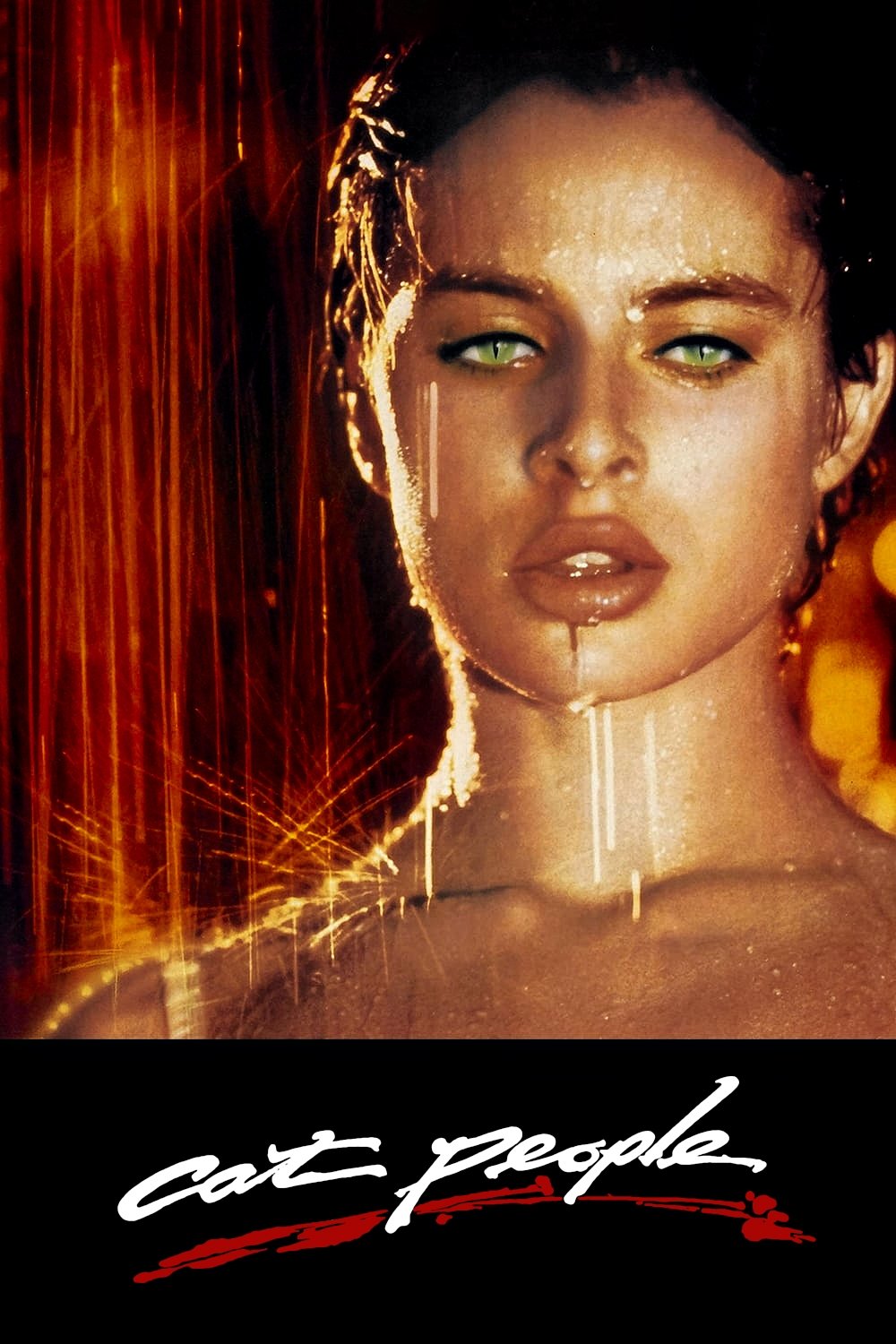
The Historical Landscape
I can still recall the first time I watched “Cat People”—not as a passive entertainment, but as an artifact pressed between the pages of twentieth-century history. I approached the movie not with the clinical eye of a cataloguer, but with the burning curiosity of someone investigating a riddle left behind in the shadows of the 1940s. The world in which “Cat People” first flickered to life was perched on the edge of enormous uncertainty, marked by war, fear, and cautious hope. Every creative decision seemed to echo the throes and aspirations of an era overshadowed by looming global conflict.
By 1942, the United States was no longer a bystander in World War II, but a full participant. When I consider the collective psyche of the nation at that time, what stands out to me is both the visible and invisible effects of war stretching into the everyday lives of ordinary Americans. There was an ever-present anxiety—rationing, absence of loved ones, the threat of Axis powers looming abroad and at home. Hollywood, always a keen mirror, could hardly avoid reflecting both fears and fantasies that permeated society. Film studios balanced morale-boosting fare with stories that channeled pervasive unease, sometimes overtly, sometimes beneath the surface.
The expectation for escapism clashed with the psychological weight of the times. As I wade through the cultural ether of 1942, I can sense how people sought solace and entertainment while straining under the pressure of war. Psychological horror, though it now strikes me as an everyday genre, was not a given. “Cat People” arrived at a moment where budget-minded ingenuity met the necessity to evoke dread not with spectacle, but with suggestion—shadows, implications, what wasn’t shown. The darkness in the film mirrored a world careening toward an uncertain dawn, one in which every softly lit corridor felt as threatening as the headlines from the front.
It’s impossible for me to disregard the pressures shaping the industry: the Hayes Code constricted creative content, inflation loomed on production budgets, and a hunger for fresh stories provided new filmmakers with unique opportunities. Val Lewton, who produced “Cat People,” became, for me, emblematic of the mid-century studio outsider—someone who worked magic within tight constraints. The era practically forced films to become leaner and more atmospheric, transforming conventional horror into what I felt as psychological unease.
Cultural and Political Undercurrents
I find the emotional tenor of “Cat People” impossible to disentangle from currents running much deeper than its narrative surface. Underneath, I sense the anxieties of immigration and identity that resonated throughout American society during this period. The protagonist, Irena, hails from Serbia, and although that might seem like a mere plot detail on first glance, to me, it represents the broader American unease over foreigners and “otherness.” As someone who pores over these stories, I read in her isolation the palpable suspicion of the unfamiliar—a motif as American as the Statue of Liberty itself, reinterpreted in an era clouded by international conflict.
When I watch the film, I am repeatedly struck by how gendered the depiction of danger and repression feels. The early 1940s marked a crossroads for women in the United States: men departed for war, and women shouldered both domestic and industrial burdens. While the war effort lauded the “Rosie the Riveter” archetype, I sense a countercurrent of discomfort concerning shifting gender roles. Irena’s struggle—with her own identity, desires, and society’s expectations—maps onto the larger national unease about female autonomy and sexuality. The allegory of transformation lurking just beneath her surface is, in my reading, about far more than folklore. It’s the film whispering about anxieties over women’s desires and bodies in a world unsettled by change.
I can’t help but see the film’s handling of sexual repression as a coded discussion of taboo subjects that could not be named directly. The Hayes Code—Hollywood’s enforced moral guidelines—circumscribed overt displays of sexuality, violence, and even certain psychological afflictions. I perceive the horror in “Cat People” as more internal and intimate because, frankly, it had to be. An entire apparatus of censorship redirected powerful, primal fears into metaphor and subtext. Watching the interplay between characters, I find myself tracing a roadmap of unspoken anxieties—fear of sexual awakening, dread of uncontrollable desires, suspicion of outsiders—all simmering just beneath the surface.
Having absorbed period newsreels and popular culture ephemera, I am also keenly aware of how the film trades on wartime paranoia. Trust, community, and the sanctity of marriage—themes that “Cat People” nimbly explores—were under substantial strain in 1942. I interpret the encroaching darkness, the ever-present threat lurking around every corner, as not just supernatural, but social. A nation at war is rife with visible and invisible enemies; paranoia about infiltration and betrayal found a ready audience in a public increasingly trained to “watch the skies.” In Irena’s transformation, I read the coded anxiety about loyalties displaced and communities infiltrated—anxiety as pervasive as ration coupons and blackout curtains.
The Film as a Reflection of Its Time
As I reflect on “Cat People,” I am struck by how the film wraps the fears and ambiguities of its era in the velvet glove of supernatural metaphor. For me, its central conceit—a woman grappling with a monstrous alter ego—mirrors not only individual strife, but the larger psychological battles being fought on the home front. When I think of Irena, unable to reconcile her identity with the expectations imposed upon her, I see a potent image of a society wrestling with its own capacity for violence and transformation. The threat she poses is not external, but internal. Watching the film through the historical lens, I recognize that it’s not the monster outside the door, but the monstrosity within, that haunts 1942 most profoundly.
The atmosphere of dread, constructed with remarkable economy and a reliance on shadow and suggestion, seems to me a direct response to wartime austerity but also an unconscious reflection of national mood. Scarcity—of certainty, of resources, of safety—bled into every aspect of life, and “Cat People” makes scarcity its aesthetic. There are no elaborate special effects; instead, what I remember most vividly are pools of inky black, unexplained sounds, and a sense of the unseen moving just out of reach. Having spent years exploring similar period films, I am always impressed by how the film’s minimalism heightens rather than diminishes the terror. The less there is to see, the more my imagination is forced to participate, mirroring the way Americans lived surrounded by uncertainty, compelled to supply their own narratives in the absence of reassuring truths.
On a deeper level, I find that “Cat People” grapples with anxieties surrounding assimilation and the maintenance of identity under pressure. Irena’s foreignness is never incidental—it is persistently foregrounded, and every interaction she has underscores her isolation from the prevailing American “normal.” I find the story quietly radical in its depiction of a heroine at war with herself and her adopted culture, never allowed to fully belong. In a nation obsessed with unity in the face of outside threats, “Cat People” dares to question whether unity is even possible without crushing difference. The American melting pot, as seen here, is less a harmonious stew than a cauldron in which foreign elements are either suppressed or destroyed. I am compelled to see in Irena’s fate a warning about the costs of denying one’s nature for the sake of assimilation, a theme that speaks volumes about the nativist tensions stoked by wartime fears.
What lingers for me is how the film’s treatment of intimacy and trust feels so specific to its moment. Marriage, portrayed as both possibility and prison, becomes a metaphor for the negotiations between public duty and private longing. Characters tiptoe around what cannot be spoken outright—sex, fear, displacement—their hesitations echoing the caution shaping American public life. One could not, during this era, openly discuss psychological trauma or sexual ambiguity, and so “Cat People” layers its story with glances, unsaid words, and loaded silences. Its real horror, I find, springs from the gulf between what is felt and what can be acknowledged; the monster, in the end, is not only supernatural but social prohibition itself.
My favorite sequences are not the overtly suspenseful ones, but the quieter moments where the threat of transformation symbolizes the ever-present risk of losing oneself. I interpret these segments as cinematic meditations on repression and the thin line between ordinary and monstrous, which must have resonated for an audience undergoing rapid, sometimes frightening, change. The film offered an arena in which unspeakable anxieties could be contained and confronted, all while adhering to the strictures of a system terrified of excess honesty. In these tangled metaphors, I see a generation quietly screaming about what it dared not shout.
Changing Perceptions Over Time
My own evolving perspective on “Cat People” has mirrored broader shifts in how the film is understood. Initially dismissed by some as a modest genre entry, it has taken decades for critics (myself included) to appreciate the subtlety and daring embedded in its ambiguities. When I revisit writings from its initial release, I see caution and, at times, condescension—reviewers baffled by its lack of clear monsters or grand spectacle. Yet, from my modern vantage, what once seemed a limitation now feels revolutionary. Today, viewers trained on psychological thrillers or stories of “the uncanny” recognize “Cat People” as a forebear, a work that demanded the audience read symbol as much as surface.
What I find especially revealing is how feminist and psychoanalytic interpretations have flourished since the film’s release. Where earlier critics might have seen only a story of jealousy or madness, my present-day colleagues and I discern a meditation on gendered subjectivity, the policing of desire, and the social violence of conformity. The “monster woman” motif, once a tool of simplistic othering, is now read by many—including myself—as an indictment of structures determined to punish difference. The tension between exoticism and victimhood in Irena’s character has become a lens through which scholars discuss the enduring tension between assimilation and cultural survival.
Having tracked restoration efforts and the film’s recurring presence in repertory screenings, I am always heartened by the new generations discovering its layers. Contemporary viewers—attuned to coded representation and the limitations imposed by past censorship—now treat “Cat People” as a case study in subversive storytelling. The very limitations that once frustrated audiences have become invitations to reinterpret. I find it rare to encounter a film whose reputation grows as the restraints of its own time become more legible in retrospect.
Of course, my own readings are shaped by contemporary concerns: when I look at “Cat People,” I now see echoes of debates about immigrant integration, mental health stigma, and the lingering effects of social repression. These weren’t necessarily the film’s direct subjects, but the ambiguity of Lewton’s approach allows each viewer—myself included—to bring new anxieties to bear upon the text. The film acts as a screen, literally and figuratively, onto which the fears of successive generations are projected. What began as a story about one woman’s curse has, to my mind, become a vessel for discussions about gender, identity, and the psychological impact of social taboo far beyond anything its makers could explicitly articulate.
What most strikes me through years of watching and re-watching is how the film remains unsettling, not only for what it shows, but for everything it leaves unsaid. That unsaid—once a necessity born of censorship and constraint—has become a generative force, making the film feel both timely and timeless, haunted by history and by interpretation alike.
Historical Takeaway
After a lifetime spent mining films for their historical resonance, I hold “Cat People” close as a particularly rich vein. To me, its enduring power lies in how precisely it preserves the anxieties, paradoxes, and innovations of a turbulent moment. It is a work forged in austerity and censorship, yet brimming with resistance, subversion, and implication. The nation that produced it was beset by uncertainty, riven by its own contradictions, and urgently searching for new forms of self-understanding. In the figure of Irena, I see not just the monster of legend, but the modern individual pressed by social and internal pressures beyond articulation.
This film does not merely entertain or distract; it testifies. If I have learned anything from my years dissecting its shadows, it is that no era is free from fear, and every fear finds expression—often oblique, often encoded—in its art. I watch “Cat People” and feel the pulse of 1942: a society balancing hope and horror, liberation and repression, belonging and alienation. Its psychological ambiguity and understated terror are not accidents of budget, but artifacts of living in a world whose boundaries—social, national, and personal—had become suddenly porous.
Ultimately, “Cat People” reveals to me an era wrestling with itself, a nation forced to reinvent the language of its nightmares. Its legacy is not only cinematic but historical, teaching me that what is feared and what is forbidden are often two sides of the same coin. In haunting the line between what we desire and what we deny, the film offers a singular record of a people in the throes of transformation—fragile, wary, endlessly searching the darkness for answers. Its shadows have not faded with time; if anything, they’ve grown deeper, reminding me that every age hides its monsters in plain sight.
To see how these real-world elements shaped the film’s impact, you may also explore its reception and legacy.
🎬 Check out today's best-selling movies on Amazon!
View Deals on Amazon