
The Historical Landscape
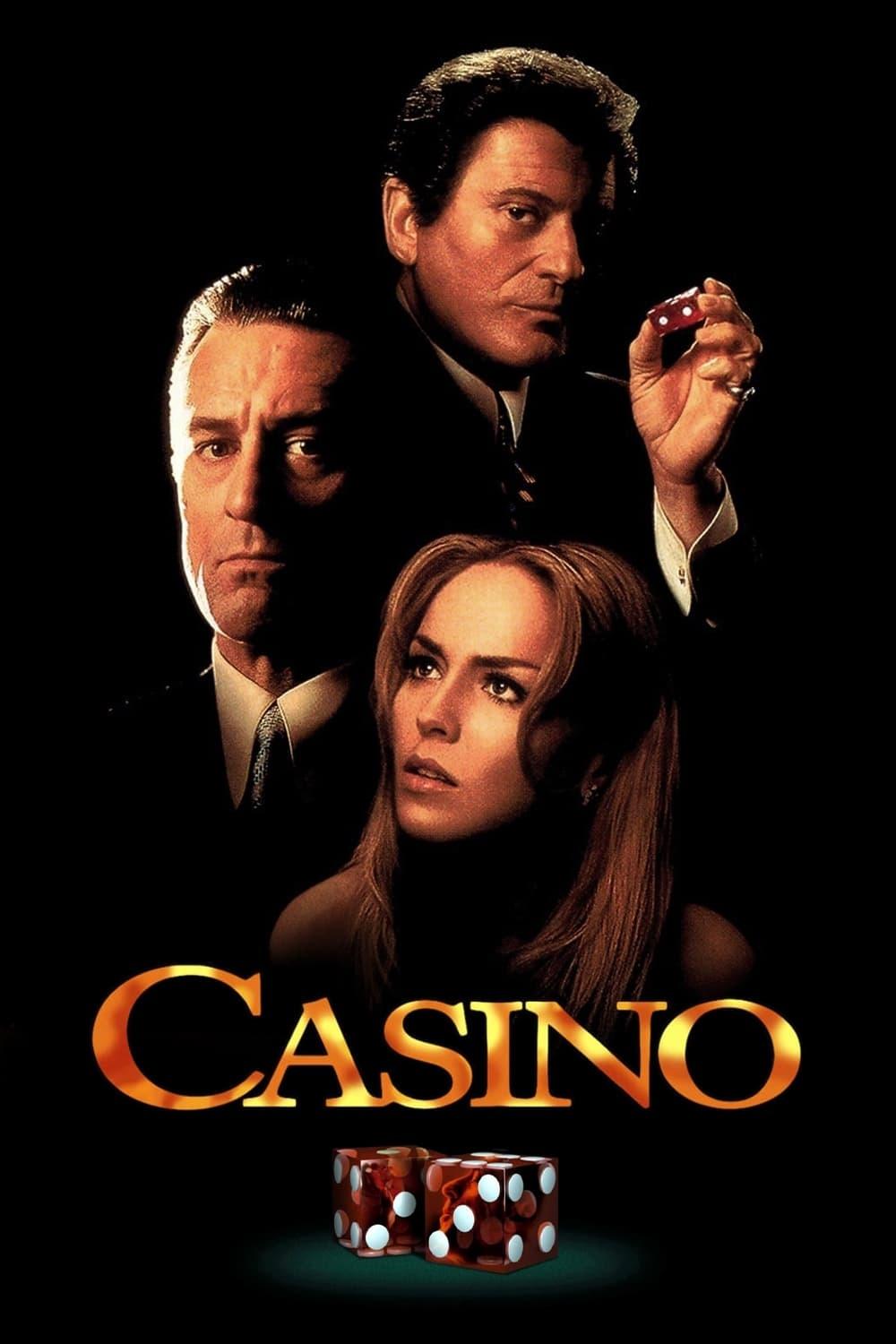
If I close my eyes and let my memory drift to the mid-1990s, I can almost feel the contradictions of that time vibrating beneath the surface. In 1995, the world I inhabited seemed perched on a curious precipice: one foot deep in the shadow of a turbulent twentieth century, the other gingerly seeking balance amidst the new freedoms and uncertainties of a fast-approaching millennium. When I first sat down to watch Casino, I wasn’t just seeing a story about mobsters and neon-lit Las Vegas; I was staring at a mirror, one that reflected both my own cynicism and the restless disposition of an entire era.
The mid-90s, to me, have always felt like a decade suspended between the analog and the digital. The World Wide Web was new and uncharted — something I recall approaching with a blend of curiosity and skepticism. Yet everywhere, promise and anxiety walked hand-in-hand: the Cold War’s end hadn’t really delivered total peace, and globalization, that word repeated endlessly in newsrooms and classrooms, was reshaping old certainties into confusing novelties. In the United States, there was still heady talk of prosperity — unemployment rates ticked down, and the stock market ticked up. But behind the hum of technological excitement and economic boom, a quieter sense of insecurity hummed, like static on the line. The Los Angeles riots were barely distant, O.J. Simpson’s trial dominated headlines, and the Rodney King video was still fresh in my consciousness. There was no escaping the reality that beneath America’s glitzy surface, deep fissures of inequality, corruption, and disenchantment yawned wide.
I see Casino as a product of that cultural moment — a piece of cinema that doesn’t just tell you about the 1970s and 80s, but rather catches the anxious air of 1995, a time when our trust in institutions, authority, even the American Dream itself, was up for grabs. The film’s bright lights and grim fatalism seemed to echo the very world in which I watched it: one fascinated by spectacle yet haunted by the knowledge that all that glitters might be doomed to vanish overnight.
Cultural and Political Undercurrents
When I reflect on what drove the making and reception of Casino, I sense a society grappling with its complicated relationship to power, greed, and the meaning of progress. The 1990s, from my vantage, were not a time of naive optimism; in fact, it was an era deeply suspicious of simple narratives of good and evil, winners and losers. I recall a time when the monoculture was beginning to fracture, birthing a thousand niche voices, each clamoring for attention. The rules, once so clear in mainstream Hollywood, seemed malleable — now, protagonists could be villains, and even evil wore a sympathetic face.
The rise of antiheroes in cinema corresponded to my own disillusionment with leaders in politics and business. I remember watching the Clinton administration twist through scandal after scandal, while Wall Street’s excesses were metastasizing into something both alluring and toxic — foreshadowing crises yet to come. That cultural appetite for controversy found a natural home in movies like Casino, which refused to offer me any pure heroes. Instead, it presented flawed, driven characters grasping at power in a system already rigged. The relationship between organized crime and legitimate enterprise was not just the stuff of bygone mafia tales; it felt eerily reflective of Wall Street’s speculative games and the ruthless mergers and acquisitions making headlines in my daily paper.
Immersed in the glossy chaos of Las Vegas, I couldn’t help but see a metaphor for America itself. The spectacle of excess, the false promise of endless prosperity, the gradual erosion of ethical boundaries — these were not simply the traits of casino bosses, but of a consumerist culture that was, in many ways, coming to define the late twentieth century. The bright casino floors, teeming with possibility and ruin, mirrored the era’s high-risk, high-reward ethos. I remember business culture in the 90s: larger-than-life personalities, get-rich-quick mentalities, and the creeping realization that the game might be rigged more often than not.
But politics were only half the story. Social anxieties, too, ran deep. As I watched discussions around race, gender, and inequality gain volume, I noticed how a film like Casino subtly mirrored a society unsure of how to reconcile its glamorous myths with its darker realities. The film’s treatment of its female characters, for example, felt to me like a painful commentary on the limits of empowerment in a system built for the pleasure and profit of powerful men. In all its chaos and brutality, the film seemed less like a celebration of the past and more like a warning shot fired at the present.
The Film as a Reflection of Its Time
What strikes me most, looking back on Casino, is how it stands as a living imprint of the 1990s’ obsessions, crises, and creative energies — not just through its specifics but through the mood that permeates every scene. I remember the first time I saw those slow-motion tracking shots of the casino floor: the choreography of money, power, and illusion set to an operatic swirl of violence and betrayal. To me, those images were not merely a nostalgic look backward, but a deeply resonant commentary on how the world I lived in trafficked in similar spectacles and scams, albeit in slicker, more digitized forms.
I read the film’s fascination with the underbelly of capitalism as a response to the decade’s own anxieties about unchecked ambition. In 1995, I was very aware of how businesses were growing ever bigger, swallowing up smaller competitors in waves of consolidation. Watching the casino bosses in Scorsese’s film exert control through surveillance, manipulation, and complex alliances, I couldn’t help but see echoes of real-world corporate titans and their boardroom machinations. The moral ambiguity that cloaked every character seemed to capture my own sense that clear divisions between legal and illegal, right and wrong, had blurred nearly to invisibility — in boardrooms, backrooms, and beyond the neon strip.
The film’s stylistic bravura, with its rapid editing, eclectic soundtrack, and almost clinical attention to detail, mirrored the era’s changing attitudes toward the past. Rather than romanticizing the Mafia or the “old Vegas,” Casino seemed to me a story of entropy. The dream, carefully constructed, was always bound to spiral out of control — much like the prosperity narratives America told itself. There’s a particular weariness in the film’s tone, a recognition that cycles of gain and loss, dominance and decline, are inevitable in any hierarchical system. In the 90s, that kind of fatalism resonated. I’d see, in corporate fiascos, political scandals, and widening inequalities, the ways in which seemingly impervious empires, no matter how glamorous, could unravel almost overnight.
I remember being especially struck by the film’s final act, with the collapse of mob dominance and the rise of faceless corporations running the new Vegas. This felt personally meaningful as I watched long-established parts of American culture — from mom-and-pop shops to major institutions — give way to the impersonal, efficiency-obsessed forces of globalization. The nostalgia in the closing narration wasn’t comforting; it was almost mournful. In that, the film offered me a poignant meditation on how societies move from rule by individual will (however corrupt) to rule by corporations and machines — a transformation characterizing the 1990s more broadly than many realized at the time.
Changing Perceptions Over Time
Over the years, I have found my understanding of Casino evolving in tandem with the wider world. When I first encountered the film, I saw it as a bleak, dazzling testament to a lost era of American criminal mythmaking. But as years passed and I lived through economic downturns, corporate scandals, and the unstoppable march of the surveillance state, I began to read the film in more contemporary terms. What once seemed a hyper-stylized tale of bygone mobsters and corrupt casino bosses now felt like a prescient commentary on the soul of modern capitalism itself.
Watching the world change — living through September 11th, the 2008 financial collapse, the ascent of Silicon Valley, and the widespread disillusionment with political elites — I found the film speaking to my anxieties in new ways. What struck me upon rewatching was how the very systems of monitoring and control that defined Sam “Ace” Rothstein’s management tactics had become a template not just for criminal enterprise but for government and corporations worldwide. Surveillance, risk management, and image manipulation — all tools wielded by both Scorsese’s casino bosses and the emerging class of tech entrepreneurs and policymakers whose impact I began to feel everywhere.
The moral ambiguity that once shocked me now feels like a commonplace feature of our era. In the 1990s, Casino seemed daring for refusing to moralize its characters’ actions. Now, after decades living with the consequences of unchecked ambition and systemic corruption, the film feels almost subdued in its warnings. I find myself less preoccupied with questions of justice or retribution — instead, I’m captivated by the film’s nuanced exploration of human fallibility, its recognition that every system, no matter how glittering, contains the seeds of its own undoing.
Recently, I’ve noticed younger audiences reading the film less as a gangster saga and more as a critique of the American Dream — an examination of how institutions, ideals, and relationships are commodified and ultimately destroyed by the unending drive for more. The 1990s’ fascination with “winners” has given way, in many circles, to a skepticism of both the winners and the game itself. That shift in cultural focus resonates deeply with me, as does the enduring uncertainty about whether the world can find anything new to believe in after the towers of old myth and new money have collapsed into dust.
Historical Takeaway
For me, Casino is much more than a tale of mafia intrigue or Vegas excess; it’s a living document of 1995, a year when illusions glittered, trust crumbled, and the future felt as precarious and seductive as a jackpot waiting to be hit. The film aches with the tensions of its own making — caught between nostalgia and fatalism, bravado and despair. When I recall that era, I am reminded that the mid-90s were saturated with both dazzling hope and gnawing anxiety: optimism fueled by economic boom tempered by a gnawing recognition that the center could not, perhaps should not, hold.
What the film most powerfully reveals to me about its era is not just its critique of organized crime or its tribute to a vanished Vegas, but its deep and often unspoken skepticism of all institutions — a skepticism nurtured by decades of scandal, inequality, and disillusionment. It’s a cinematic prayer for something real behind the facade, something that persists when the lights go out and the chips are cashed in. The way Scorsese orchestrates spectacle and ruin feels almost prophetic in hindsight: a warning that any culture which worships money, power, and spectacle above all else is destined to repeat cycles of hubris and collapse.
As I reflect on Casino today, I am compelled not just to recount its story, but to acknowledge how fully it embodies the currents and contradictions of its time. The film, through my eyes, captures the pulse of an era still searching for meaning in the ruins of its grandest illusions. It stands, for me at least, as both artifact and oracle. I remain haunted by its vision, ever aware that the world illuminated by neon remains, at its edges, as restless and uncertain as the one I wandered through in 1995.
To see how these real-world elements shaped the film’s impact, you may also explore its reception and legacy.
🎬 Check out today's best-selling movies on Amazon!
View Deals on Amazon