
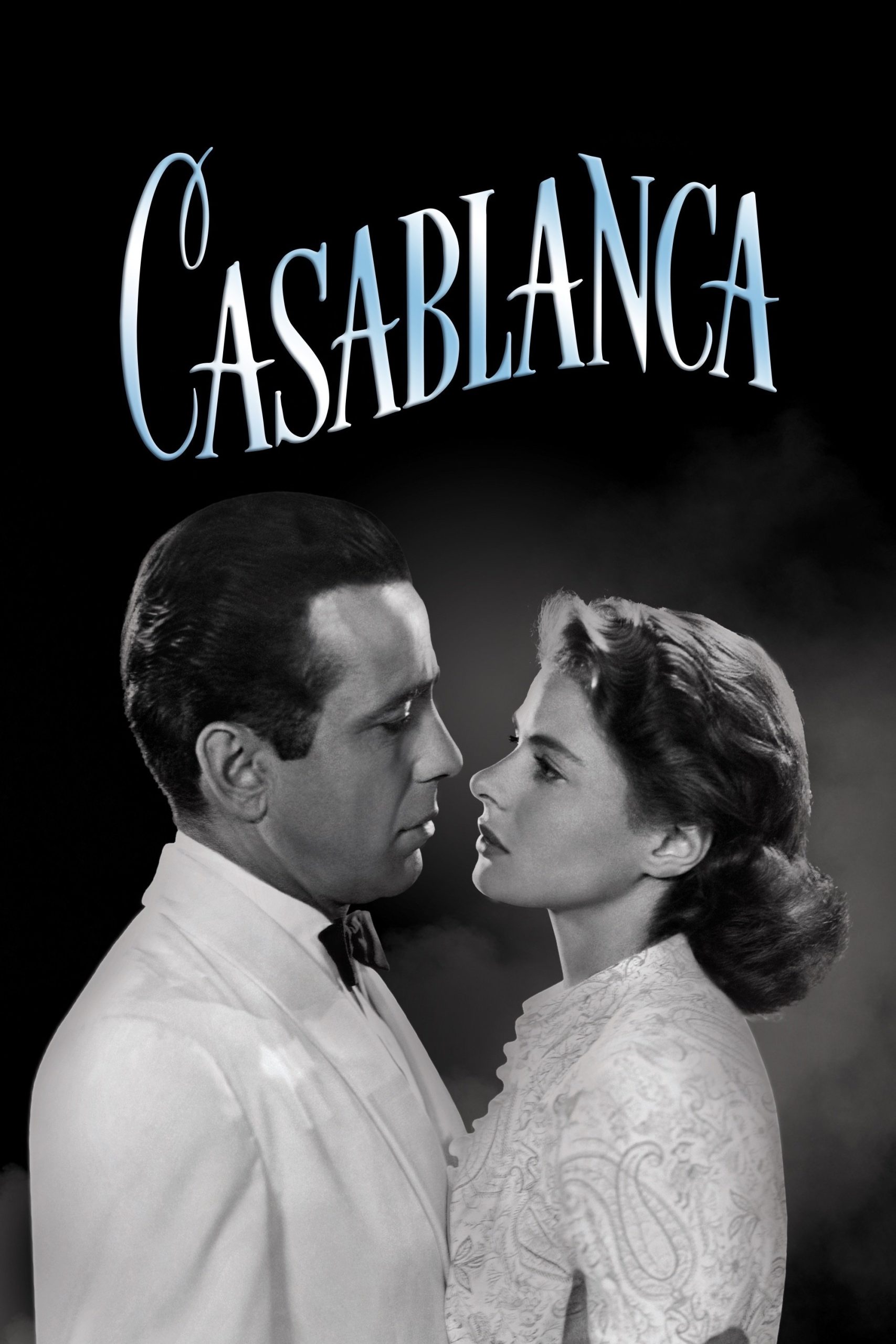
The Historical Era of the Film
Every time I revisit Casablanca (1942), I’m instantly pulled into the heady, uncertain world of its production era. The year 1942 was marked by intense global conflict; America was freshly engulfed in World War II after the shock of Pearl Harbor in December 1941. My understanding of the film sharpened when I began to look at the world in which it was made. There was a pervasive sense of anxiety, but also a rallying energy that charged through American society. Factories converted to war production, men left, sometimes with little warning, for military service, and women swiftly stepped into roles the mainstream had never permitted them before. Patriotism surged, but so did fear—each headline seemed to bring new uncertainty. Even the entertainment world couldn’t escape these sweeping economic and political transformations.
I often imagine what it would have been like to navigate daily life around the time of Casablanca’s production. Blackout curtains, ration books, and war bonds were inescapable realities. Hollywood itself became something of a propaganda workshop, with the Office of War Information closely observing studio output. With the Axis powers controlling vast swathes of Europe and North Africa, every depiction of resistance or support for the Allies meant a great deal—not just artistically, but practically. Studios felt a responsibility to the war effort, but also a vulnerability: anything perceived as unsupportive of the cause could risk both public backlash and government intervention.
Economically, the war boom brought the Great Depression to a definitive end, but I see in the newsreels and popular press from that time a deep awareness that this prosperity was precarious. There was no certainty at all about what the world—or even Hollywood—would look like after the war. The sense of a suspended future pervaded public consciousness, and the film’s production mirrored this in myriad ways, both subtle and overt.
Socially, America was grappling with issues of immigration and identity in a way I find inescapably reflected in Casablanca’s cast. The influx of European refugees—many of whom wound up in Hollywood’s own creative community—brought fresh perspectives and anxieties, adding another layer of urgency and poignancy to the film’s setting and characterizations. Every moment in Casablanca seems saturated with that particular wartime cocktail of hope and sorrow, a historical climate defined by movement, danger, and sacrifice.
Social and Cultural Climate
When I consider the social and cultural climate surrounding Casablanca, I see a fascinating intersection of old norms and emerging passions. There was, in 1942, a powerful sense of collective effort—what has often been called the “home front spirit.” The pressures of war and the necessity for unity made this a period where social tensions simmered beneath a veneer of cohesion. Gender roles were visibly shifting; I’m always struck by period advertisements and posters that portrayed women as both essential workers and ideal homemakers. The contradiction did not escape the millions actually living through it.
Racial and ethnic tensions were another ever-present undercurrent. I think often about how the broader society’s anxieties and prejudices—not to mention actual legislation, like Japanese American internment—coexisted with a newly urgent discourse on freedom and democracy. Hollywood, being a microcosm of California if not the world, had to navigate this landscape carefully. Casablanca’s diverse cast, featuring refugees and immigrants from across Europe, was, in a sense, a reflection of both Hollywood’s cosmopolitanism and its limitations. While on the surface, the film appeared to promote unity and shared purpose, those who look closely can sense the era’s conflicting currents.
The cultural mood was saturated with a longing for stability and clarity, values that I feel Casablanca both embodied and interrogated. Radio broadcasts and newsreels formed the heartbeat of popular culture, carrying not just the facts of the war but also the mythos of shared struggle. Movie palaces became a kind of sanctuary, a communal space where news of Allied advances or setbacks could be collectively processed—grieved or celebrated—before giving way to the catharsis of a good film. Wartime censorship, both formal and informal, also fundamentally shaped what could and could not be shown or said. That dynamic tension between candor and caution is woven through the film’s dialogue and even its sense of humor.
Looking at the broader tapestry of 1942, I see Casablanca emerging in a world hungry for meaning, where every cultural product had to be attuned to public moods and official imperatives. Expressions of loyalty (or perceived lack thereof) could have immediate consequences, meaning individual filmmakers and actors were sometimes working at personal risk. Many of the cast and crew had their own complex relationships with the ongoing war, and this shaped the atmosphere both on set and onscreen.
How the Era Influenced the Film
In my experience, it’s impossible to unravel Casablanca’s resonance without considering how its historical moment imprinted itself on the entire production. Time after time, I’m drawn to the way the screenplay, conceived as the war raged, leans into questions of sacrifice and loyalty that were anything but abstract for its writers and actors. Rick’s world-weariness and pragmatism seem to me like a coded response to the exhaustion so many must have felt living under the shadow of a seemingly endless conflict. Every line that hints at heartbreak, betrayal, or moral ambiguity feels heightened by the awareness that the world itself—at least as it was known—hung in the balance.
For me, the film’s specific setting in French Morocco, with its crossroads of armies, smugglers, refugees, and opportunists, functions as a stand-in for the displaced, uncertain identity of hundreds of thousands of people scattered across the globe by war. There is a deep authenticity, I think, in the casting decisions, especially the use of so many real-life refugees and displaced persons in supporting roles. Some were recent arrivals in America, having fled Nazi persecution. That sense of displacement and uncertainty feeds directly into the authenticity I hear in the background conversations—the accents, the urgency, the palpable yearning for escape.
Production was shaped by wartime constraints. I have read about shortages of film stock, limitations on set construction, and the reality that even lighting and costumes were subject to rationing. Yet I see how this scarcity contributed to the film’s expressive use of shadow and careful, deliberate atmosphere. These resource limits, combined with the creative ingenuity of directors and cinematographers, were not simply challenges to overcome; they became embedded in the film’s visual and emotional language, giving Casablanca its distinctive look and feel.
Significant elements of the plot—like the quest for exit visas—echoed the true desperation of war refugees, many of whom actually passed through North Africa looking for freedom. The dialogue’s political ambiguity, I suspect, was a deliberate concession to shifting alliances and a rapidly changing geopolitical landscape. I am struck by how Casablanca manages to espouse values of resistance and solidarity while remaining nimble enough to pass muster with the censors and serve the war effort’s needs for hope and steadfastness.
- World War II ongoing, with America newly involved
- Hollywood influenced by propaganda and censorship
- Economic boom, but underlying insecurities
- Refugee and immigrant stories pervasive in society and film
For me, the convergence of these historical conditions makes Casablanca not just a romance or a thriller, but also a living artifact—a collaboration between circumstance and storytelling that illuminates the lived realities of millions at that specific moment.
Audience and Critical Response at the Time
Contemporary reaction to Casablanca fascinates me, largely because it straddles two worlds: the escapist, romantic allure of classic Hollywood and the immediate, real-world relevance of a nation at war. Audiences in 1942 were profoundly receptive to stories that echoed their anxieties and gave shape to their hopes. I find it particularly interesting that the film was released just as the Allies landed in North Africa, making Casablanca’s setting and stakes eerily timely—almost prophetic. Word of mouth quickly grew, and I get the sense that the film’s success was rooted as much in its emotional resonance as in its sense of time and place.
Critics at the time recognized this rare convergence. Film columns and trade journals that I’ve read from the period often marveled at the movie’s urgent topicality. Reviewers praised its “genuine feeling” and “air of current reality,” noting how it tapped directly into the pulse of contemporary international events. Viewers, I think, responded not just to the story or Humphrey Bogart’s performance, but to the rich symbolism of Rick’s personal struggle aligning with the global one. Audiences heard themselves in the film’s radio broadcasts, recognized their feelings in Ilsa’s uncertainty, and perhaps found solace in watching characters make sacrifices in a fictional safely removed from the direct chaos of their own lives.
I sometimes imagine being in a packed movie palace in December 1942, the sense of collective anticipation as the projection flickered to life. Filmgoers experienced Casablanca as something more than entertainment—it felt like a message, a reassurance that even in uncertain times, choices mattered. People applauded not just the romance or thrills, but also the film’s affirmation of values like honor, sacrifice, and love of country. Not every critic was equally effusive, of course, but the critical consensus over the months following its release was that Casablanca was an unmistakable touchstone of the period—an “instant classic,” as some called it even then.
I’ve always been struck by how fast Casablanca became part of the cultural lexicon, with lines and scenes entering everyday conversation. The movie’s resonance with both critics and the wider public was, at least in my reading, a direct reflection of how thoroughly it tapped into—while also shaping—the era’s collective imagination. The world was desperate for stories that mattered, even and especially when they provided escape. Casablanca, to my mind, answered that need almost perfectly.
Why Historical Context Matters Today
When I talk with fellow film historians or casual viewers alike, I find the historical context of Casablanca is the missing key that unlocks its enduring vitality. If I watch the film without overlaying the desperation, sacrifice, and hope of 1942, I see only a well-constructed melodrama. But with its era in mind, even the smallest gestures take on layered significance—the sidelong glances, the hesitant words, the background cast humming with genuine anxiety and longing.
Understanding that the world itself was in flux as the film was being made, I find each viewing a richer, more poignant experience. The real-world struggles faced by the actors—many of whom had personal connections to the refugees and combatants in the conflict—bleed into their performances, lending a weight that transcends performance. The broader historical knowledge grounds the romance and the intrigue firmly in reality, despite Casablanca’s glamour and stylization.
For me, contextual awareness helps bridge the gap between then and now. It tempers nostalgia with the gravity of what contemporary audiences were actually facing—a struggle not just for love or moral clarity, but for survival, democracy, and the fate of entire populations. Many modern viewers, I think, are surprised to learn how much immediate risk, both professional and political, was involved in filming and screening such a project.
Ultimately, I have found the film’s power to be inseparable from the specific historical and social moment of its birth. The more I study that backdrop, the more the film’s artistry feels anchored in real emotion, real stakes, and real hope. When I bring this knowledge to my own screenings, Casablanca’s classic scenes open up, inviting me—and, I believe, any thoughtful viewer—into the uncertain, hopeful world of 1942 in a way that’s both deeply personal and unmistakably universal.
After understanding the factual background, you may want to see how this story was received as a film.
🎬 Check out today's best-selling movies on Amazon!
View Deals on Amazon