
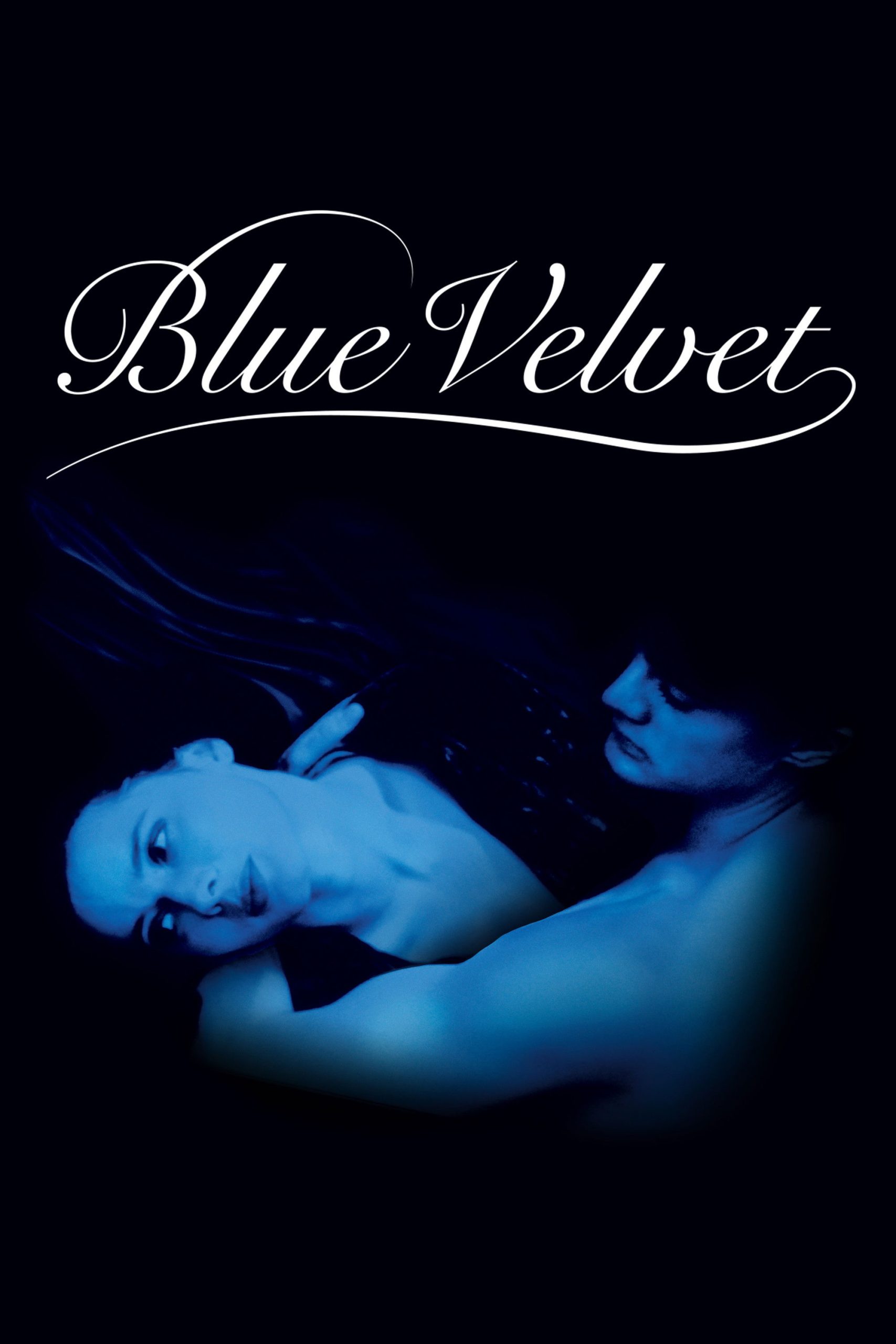
The Historical Landscape
Whenever I sink into “Blue Velvet,” the world of 1986 envelops me—a place both familiar and estranged. I remember the mid-1980s not only for its ostentatious pop culture but also for the contradictions bristling beneath its surface. As I look through the lens of that era, I see a society intoxicated by the promise of order, prosperity, and safety, at least on the surface. Ronald Reagan’s America, with its pastel suburbs and booming consumer economy, projected a sheen of plenty and normalcy. Yet I can’t help but recall how, lurking under that gloss, the country was riddled with anxiety, moral questioning, and a stubborn sense of unrest.
Glancing at news headlines from 1986, I see incidents that reveal the era’s preoccupations: the Iran-Contra scandal breaking in secret, the accelerating war on drugs, and the lasting aftershocks of the Vietnam conflict. Personal computers and cable television crept into American homes, subtly reshaping how families interacted. From my vantage, this was a moment when the notion of “community”—strong, confident, almost mythic—met the cold reality of fractured trust. Art and entertainment, meanwhile, seemed to clutch at nostalgia, either chasing after the ghost of a simpler, fifties ideal, or critiquing its hollowness with increasing boldness.
When I first encountered “Blue Velvet,” its 1950s set design—those white picket fences, well-tended lawns, and cherry-red fire trucks—struck me as deliberately out of time. It’s no accident, I felt, that Lynch reached back to an earlier American aesthetic, staging the story in a world cued by the optimism of Eisenhower’s postwar era but made with the sensibility of someone living through the discontents of the Reagan years. In these details, I see not mere retro stylization, but a pointed decision to confront the way nostalgia itself had become a smokescreen.
Popular cinema in 1986, for me, was awash in big-budget fantasies and safe comedies, but I recall sensing a hunger for films that pulled back the mask, showing what lay beneath society’s surface. “Blue Velvet” emerged not only from the indie film renaissance—where directors like Lynch, the Coen Brothers, and Jim Jarmusch thrived—but as a darker mirror to the year’s glossy mainstream offerings. The shockwaves felt in technology, global affairs, and domestic life quietly pressed artists to probe further, to question whether the certainty Americans sought was even possible, or only the calm before a new storm.
Cultural and Political Undercurrents
I’ve always been fascinated by the way “Blue Velvet” channels an undercurrent of anxiety, especially that uniquely 1980s fear that everything appearing decent might conceal a rot underneath. Watching it, I feel how the film emerges from a country preoccupied with images—images of security, wholesomeness, and economic triumph. At the same time, the shadows flicker ever more insistent. Campus protests against apartheid appear on TV; the AIDS crisis deepens and stigmatizes; the Cold War’s threat lingers despite hopeful rhetoric. These conflicts shape the psyche from which Lynch’s film grows.
In my reading, the film carries a direct challenge to the “Morning in America” image—it’s as though the dusty curtains are yanked back and we’re dragged into the crawlspace beneath suburbia. That seamy underside, with its violence, sexual transgression, and psychological strangeness, brings into focus everything polite society tries to suppress. To me, the script’s tension between surface and depth mirrors the national mood: outward confidence and suppressed dread, the wish to believe in innocence clashing with the fear of corruption in high places.
The personal stakes of masculinity and gender, so fraught in 1986, are also sharply on display. I see the characters’ performative “normalcy” as a subtle jab at the brittle roles prescribed by the era’s conservatism. There’s a palpable sense that while everyone clings desperately to the old rules (of fatherhood, femininity, heroism), those rules are barely holding the darkness at bay. This is not, in my eyes, nostalgia for the fifties, but a reckoning with the fantasy that those years ever provided safety at all.
I’m drawn, too, to how the film encodes the political atmosphere—paranoia swirling around the ongoing drug war, whispers of surveillance, and distrust among neighbors. It feels, to me, like Lynch is asking what integrity and community could possibly mean when secrets are so easily hidden beneath the manicured surface. When I reflect on the lingering effects of Watergate and contemporary scandals, I realize how suspicion became a foundational American posture by 1986. Against this, “Blue Velvet” stages its story as both nightmare and seduction, reflecting our fascination with the very evil we hope to keep at bay.
The Film as a Reflection of Its Time
I don’t see “Blue Velvet” merely as a story—it strikes me as a cultural diagnosis. From the first, overblown images of sunlight glinting off a red fire truck to the hellish vignettes of Frank Booth’s night world, Lynch seemed to me to be treating the everyday as mythic, intense, and never quite what it seemed. That duality, to my mind, feels precisely attuned to the historical mood of the mid-eighties.
In retrospect, I notice how the film’s contrasts—between glittering daytime and terrifying night, between young Jeffrey’s curiosity and Frank Booth’s depravity—mirror the tension I sensed in the era’s collective identity. I interpret Jeffrey’s journey not only as a loss of innocence but as a metaphor for the American public’s uncomfortable confrontation with truths they would rather ignore. The desire to solve—or simply survive—the mystery of Dorothy Vallens stands for a generation’s compulsion to probe forbidden territory, to seek understanding at the risk of their own safety.
What moves me most is Lynch’s treatment of Americana: the saturated primary colors, the kitsch interiors, the suburban rituals all feel like artifacts caught in a time-warp. I read these choices less as affectionate homage and more as deadpan satire, a way of showing how the American dream, so loudly trumpeted in the eighties, floats above a far more ambiguous reality. The insects swarming beneath the lawn—more than any plot twist—remain for me a perfect, sickly metaphor for the secret lives roiling under the surface of smooth talk and neighborly smiles.
I can’t help but think the film’s approach to sexuality and violence was also a direct response to the decade’s contradictions. The eighties, for all its libertine posturing in music and advertising, was marked by an anxious return to moral panics about corruption and deviation. Lynch, instead of moralizing, plunges his viewers into ambiguity. When I first watched Frank Booth’s outbursts, I felt a kind of affront—this was a cinematic world where evil wasn’t slick or rationalized, but unpredictable, id-like, and somehow disturbingly human. That ambiguity, refusing easy judgment or comfort, seemed to me both of its time and decades ahead in terms of its psychological daring.
As an historian, I find the nature of community in the film deeply revealing. The neighbors’ determined small talk, the neat choreography of “good mornings” and “how-do-you-dos,” now feel a little brittle, almost haunted. I recognize in their rituals both a longing for togetherness and a collective denial, a refusal to see what festers just out of sight. To me, Lynch brims with suspicion about the period’s faith in neat categories and clear morality. “Blue Velvet,” far from just a crime story, aches with the sense that the categories themselves are failing—and only by facing the darkness, not denying it, can anyone hope to find meaning.
Changing Perceptions Over Time
My initial contact with “Blue Velvet” was shaped—almost predetermined—by the shock it generated in its own time. Critics argued bitterly, some denouncing its perversity, others hailing its audacity. With the benefit of distance, I sense how the film’s reputation has transformed from scandal to touchstone. Each decade seems to bring new eyes, and I’m constantly intrigued by the evolution I see in conversations about it.
In the nineties, I remember a new generation claiming “Blue Velvet” as foundational. They saw its stylization as a forerunner of postmodern film—a language of pastiche and irony that anticipated the media-literate forms of the era. Younger cinephiles relished what their predecessors resented: the way Lynch blurred the boundaries of high and low, art and exploitation, horror and comedy. When I revisit the discussions, I notice how the anxieties of the eighties gradually recede, replaced by an appreciation for the film’s meta-commentary on the act of seeing, watching, and knowing.
By the 2000s, with television and digital media creating new, even more fragmented realities, Lynch’s meditation on surfaces and secrets began to feel like prophecy. I recognize the way later critics—emboldened by the rise of anti-hero storytelling, prestige television, and true crime—now view “Blue Velvet” as a masterclass in mood and ambiguity rather than a simple morality tale. The conversations have shifted: where people once decried its lack of closure, today they seem to crave its ambiguity as a mirror for their own, more confused age.
In recent years, amid cultural reckonings over power, consent, and trust, I find “Blue Velvet” speaking to yet another set of anxieties. Its female characters—especially Dorothy—have been re-examined through the lens of post-#MeToo awareness, with viewers parsing her trauma, suffering, and agency. Where once I heard arguments about whether the film exploits or critiques, I now hear more questions about how cycles of abuse reflect the intricate codes of silence in communities. The film’s mystery, never fully solved, mirrors the way society returns, again and again, to the problem of how to reckon with the evil “next door.”
Historical Takeaway
Reflecting on “Blue Velvet” through the prism of its era, I’m left with the sense that it is less a story about one place than a bold x-ray of 1980s America. The film refuses to be a simple warning about corrupted innocence; instead, it feels to me like a fever dream conjured by the anxieties and contradictions of the time. By staging its drama in a world haunted by nostalgia yet riddled with doubt, Lynch captures a nation midway between confidence and crisis. He reveals both the lure and the cost of believing in beautiful surfaces, forcing me—and, I think, the culture at large—to look deeper for unsettling truths.
I see “Blue Velvet” teaching us that every era’s sense of security is haunted by what it cannot or will not see. As an historian, I’m wary of reading any film as a perfect emblem of its time, but here I find an almost uncanny distillation of America’s mid-eighties mood—hungry for reassurance, anxious about collapse, desperate to protect the small world it loves, but compelled to face the darkness it contains. In its enduring impact and ever-evolving reputation, the film reminds me that history is always more complicated than propaganda or nostalgia admit. Lynch, with his surreal vision, offers a history lesson less in fact than in mood, sensation, and uneasy recognition.
To see how these real-world elements shaped the film’s impact, you may also explore its reception and legacy.
🎬 Check out today's best-selling movies on Amazon!
View Deals on Amazon