
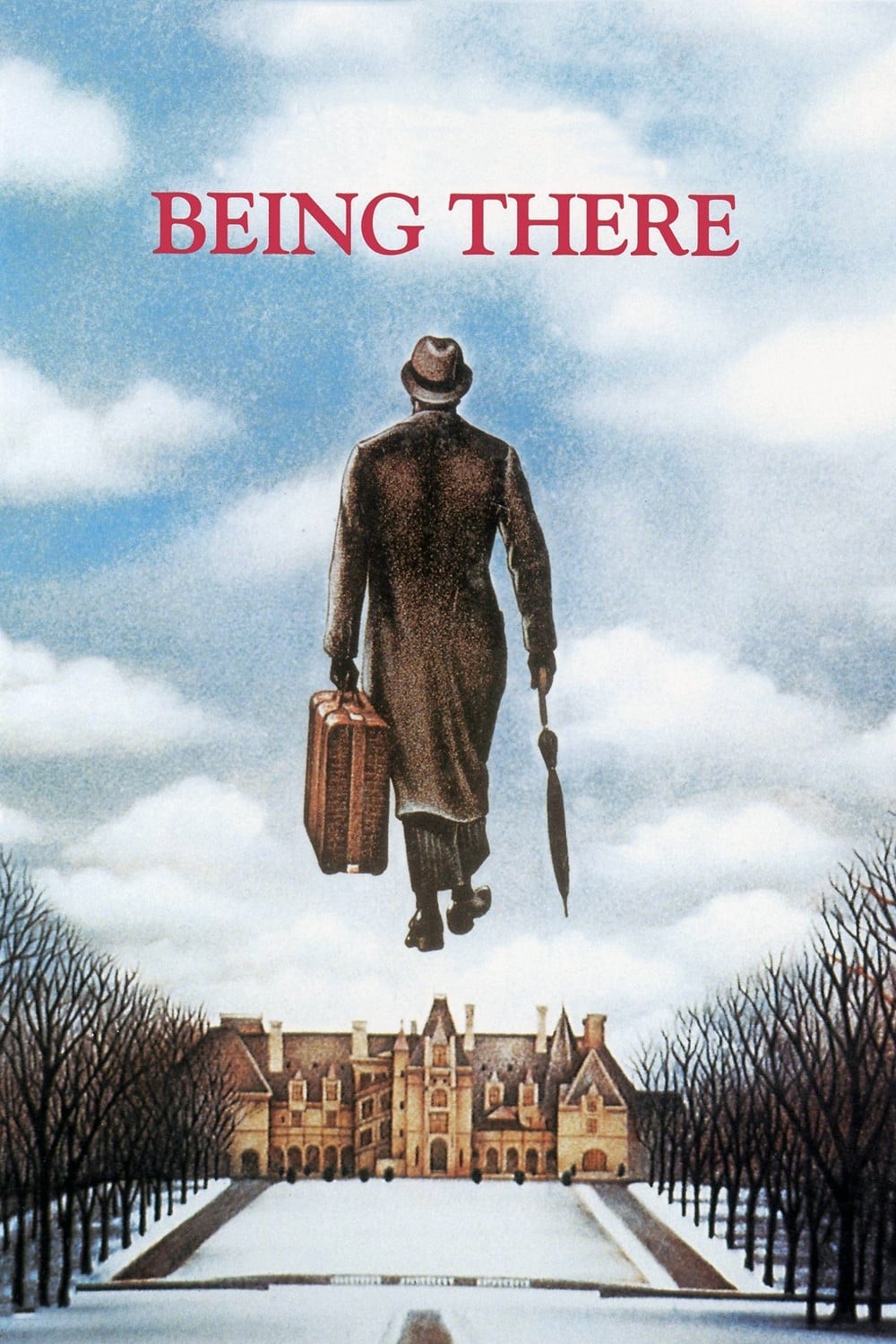
The Historical Era of the Film
Growing up during the latter part of the 20th century, I developed a deep curiosity for the odd ways in which cinema echoed the times of its production. To me, few films embody this more than Being There (1979). When I first viewed the film, I felt almost transported into an era thick with uncertainty, where established traditions collided with rapid social evolution. Looking back on the political and economic currents swirling in the late 1970s, I can clearly see how these forces shaped every nuance of the film. The United States, in the wake of the Vietnam War and the Watergate scandal, was immersed in an unmistakable crisis of trust toward its own institutions. As I delved into the country’s malaise, a sense of public disillusionment was easily detected. Everywhere I read, I encountered references to a fading “American Dream” amid economic stagnation—the so-called stagflation that left unemployment high and inflation rampant. For me, that sense of instability hovered over Being There like a cloud.
Social conditions during that moment are something I find endlessly striking. The nation, at the close of the 1970s, seemed locked in a collective identity search. Between the end of the counterculture movement and the uncertain beginnings of what would become the Reagan era, there was a vacuum—a kind of waiting room in history where collective anxieties simmered. The constant churn of news stories about energy crises, urban decay, and the retreat of manufacturing jobs painted a picture of a society teetering on the verge of change. As I watch the film with this backdrop in mind, the ever-present tension between old-world authority and new uncertainties becomes central in my understanding of its atmosphere. Realizing the full weight of that production era, I am convinced that the filmmakers were not merely reflecting contemporary realities: they were responding to them in every creative decision they made.
Social and Cultural Climate
The social climate underlying the late 1970s, as I interpret it, was characterized by a deep skepticism—not just of government, but of expertise itself. Coming out of the 1960s, which had been defined by bold claims of progress and collective movements, the culture seemed to turn inward. People around me, or at least the figures whose voices filled the news and public discourse, were exhausted by scandal and empty promises. In that landscape, I feel how Being There uses the image of the blank slate—someone who is entirely naive, yet eerily persuasive—to tap into what I see as a populist yearning for sincerity, regardless of substance.
Popular culture of the moment fascinated me for its duality: on one hand, there was a sense of regression, a nostalgia for lost innocence visible everywhere from television to advertising. On the other, there was a striking degree of cynicism. Public figures and media personalities, as I remember from archival broadcasts, were regularly lampooned for their lack of authenticity. Trust in the “establishment”—politicians, businessmen, the media—had evaporated, leaving a hunger for novelty and antiheroes who might puncture the pretensions of the old guard.
For years, I have viewed the film as a document born of this tension. The growing dominance of television, a medium that blurred lines between reality and fabrication, was palpable in the atmosphere of the era and in the film itself. I am struck every time by how Being There soaks up prevalent anxieties about image, spectacle, and performative wisdom.
- Widespread public distrust of institutions
- Rising influence of television on social and political life
- Growing cynicism in media and popular culture
- Economic fears and national self-doubt
Reflecting on these social attitudes, I’m convinced the film’s creative direction could only have emerged from this complicated historical moment. The social context wasn’t just a backdrop—it was the unspoken subtext driving audience reactions and artistic decisions alike.
How the Era Influenced the Film
When I dissect how historical circumstances shaped the fabric of Being There, I am repeatedly drawn to the interplay between the character of Chance and the roiling uncertainties of the period. To me, the decision to center the story on a simple gardener thrust into the corridors of power represents more than narrative whimsy; it’s a striking response to widespread feelings of impotence and confusion within society. The production era, thick with economic malaise and public anxiety, surely fueled the film’s choice to lampoon bureaucracy and the media’s complicity in shaping celebrity and meaning.
It’s impossible for me not to see the fingerprints of the late 1970s in the film’s stylistic restraint and its almost clinical detachment. Filmmakers during this time had a unique vantage point. They lived through a decade where language had become suspect and where those in authority were regularly revealed to be either corrupt or hopelessly disconnected. I am often reminded of real-world examples—from much-publicized congressional hearings to the coverage of presidential gaffes—that underscored the importance of media packaging over substance. This, to me, is the perfect soil for a film in which a man’s nonsensical utterances are mistaken for profound insight, simply because he fits the visual mold of authority.
Moreover, the influence of the era’s television explosion is unmistakable. As a historian, I can’t help but notice how the movie’s visual composition and storytelling are steeped in the rhythms and aesthetics of TV—long takes of talking heads, the polite yet shallow rituals of televised interviews, and the relentless focus on spectacle over substance. In my view, this was a direct reflection of the world where television wasn’t just a form of entertainment, but a new kind of reality-defining oracle. The audience was increasingly aware that truth, as presented through mass media, could be mere performance.
In sum, my reading of Being There as a product of its era helps clarify why its narrative and tone feel so pointed. The historical moment did not merely shape the background; it steered the story’s trajectory, dictated the characters’ behavior, and even colored the sense of humor that pulses through the film. For me, its enduring resonance is rooted in the era’s particular blend of uncertainty, spectacle, and longing for authenticity.
Audience and Critical Response at the Time
One of the aspects I find most revealing about Being There is the way contemporary audiences and critics interpreted its intentions. Having combed through period reviews, archived interviews, and box office reports, I came away with a vivid sense of ambivalence and quiet awe that seemed to define the public’s reaction. At a time when filmgoers were growing weary of heavy-handed political dramas and darker realist fare, the subtler, more satirical qualities of Being There struck a chord amongst critics who were primed to read meaning into ambiguity.
I’ve been struck by how frequently reviewers in 1979 zeroed in on Peter Sellers’ performance, but beneath that, there was a real appetite to find insight in the film’s portrayal of media, politics, and celebrity. It seems to me that many viewers recognized the biting accuracy with which the film recreated the blurred boundaries between truth and spectacle, especially given the decade’s obsession with television. Many critics, in my reading, praised the film for its willingness to let viewers draw their own conclusions—something that felt particularly novel in a period saturated with didactic storytelling.
Yet audience responses were hardly uniform. In the popular press and in letters to editors, I have come across more than a few notes of confusion or even frustration. Some expected a more overt satire or a clear resolution, but I believe that very ambiguity sparked ongoing debate and fascination. The film didn’t just mirror the prevailing uncertainty; it invited audiences to question their own assumptions about leadership, intelligence, and public life.
It’s also important for me to note how the film’s quiet, even languid pacing was regarded—some, used to the frenetic energy of late-70s cinema, found it charmingly meditative; others found it odd or slow. For the more reflective segments of society—the critics, think-piece writers, and the kinds of viewers who followed political news closely—Being There felt almost tailor-made. The film provided a wry commentary just as Americans were coming to terms with a new era, unsure of where to place their faith or how to untangle reality from appearance.
Why Historical Context Matters Today
Whenever I teach or write about Being There, I am compelled to stress to my students and readers the importance of understanding the film’s historical context. Over the years, I’ve found that many viewers approach the film’s story with a modern lens, unaware of just how tightly it is bound to the peculiarities of 1970s America. Grappling with the social and political shadows cast by Watergate and the pervasive cynicism of that era, I believe, is crucial to unlocking what makes the film so distinctive. There’s a temptation to see its themes as timeless, but for me, they are anchored in a particular moment when faith in leaders and the truth-telling function of the media were under unprecedented strain.
For contemporary audiences, revisiting the film through an appreciation of its era reveals subtle ironies and resonances that might otherwise go unnoticed. For example, recognizing the significance of television’s emergent cultural power—something we might take for granted today—enriches my appreciation of how Being There pokes fun at passive viewership and the manipulation of public perception. I notice that the film’s quiet critique of authority, and its blurring of sense and nonsense, can be traced directly to anxieties unique to its production era.
In modern discussions about misinformation, celebrity politics, and the vanishing line between entertainment and governance, I am reminded that many of these debates have roots in the late 1970s, as depicted in this film. By situating Being There within its precise historical moment, I find that new layers of relevance emerge. My understanding is deepened, not because history repeats itself exactly, but because these earlier social and political crises anticipated dilemmas we still face today.
Ultimately, my own engagement with Being There is inseparable from the context in which it was born. Knowing the anxieties that shaped it—the national doubts, the skepticism toward leadership, and the omnipresence of television—allows me to see the film not just as a quirky satire, but as a visually and emotionally faithful portrait of America at a crossroads. The historical context, for me, is not just background. It is the lens through which I can see most clearly what the film is trying to say about the world then, and what echoes remain for us now.
After understanding the factual background, you may want to see how this story was received as a film.
🎬 Check out today's best-selling movies on Amazon!
View Deals on Amazon