
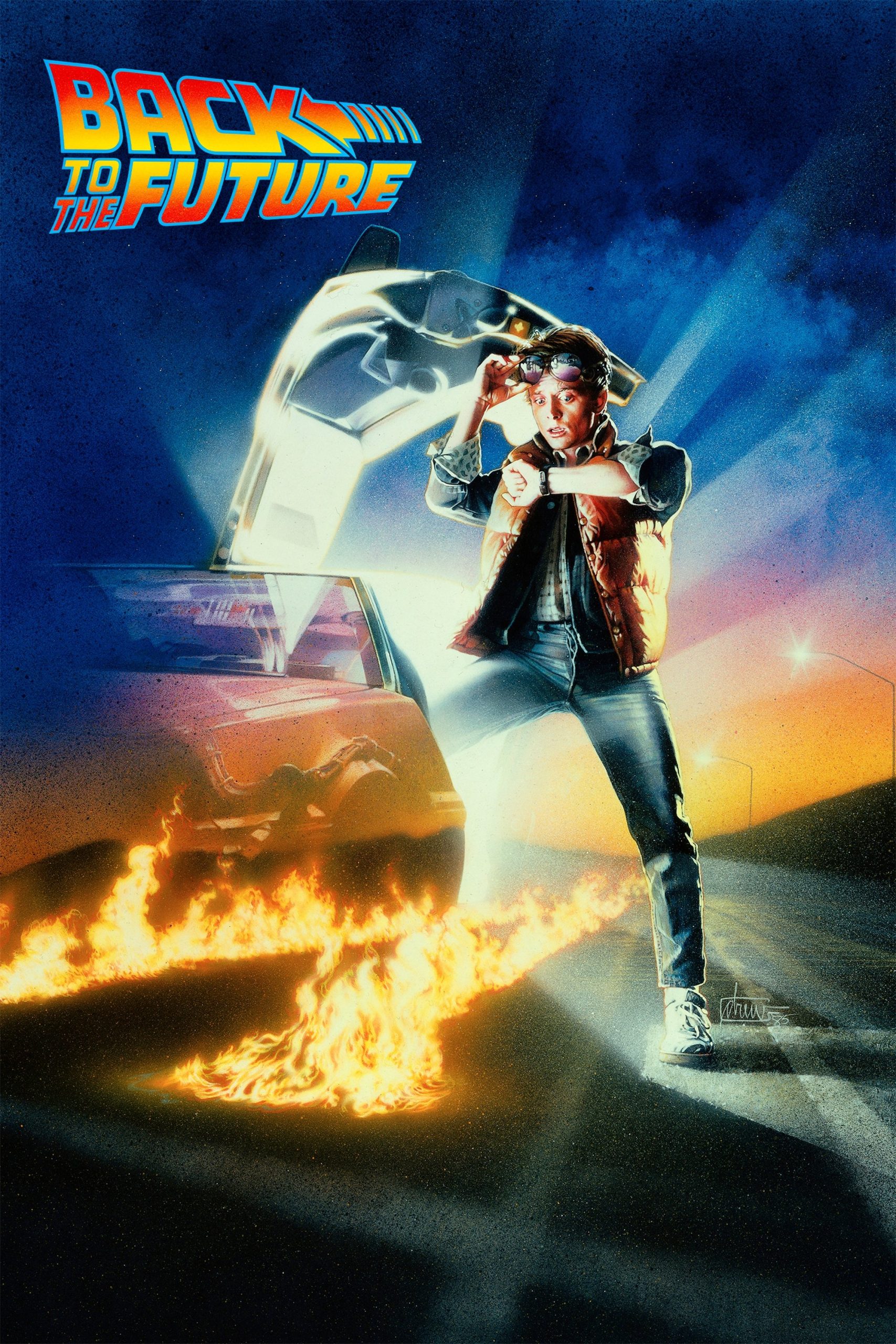
The Historical Era of the Film
When I first watched Back to the Future (1985), it was clear to me that the film captured something distinctive about the American experience during the mid-1980s. The world was at a crossroads—politically and socially—especially in the United States, and the film’s release neatly coincided with substantial cultural transitions. On the political front, the 1980s were defined by Ronald Reagan’s presidency, which to me seemed to bring a prevailing sense of optimism, coupled with a resurgent focus on individualism and free-market capitalism. This was a time marked by the aspiration for personal improvement but also laced with Cold War anxieties. The global tension, especially between the U.S. and the Soviet Union, created a backdrop of both bravado and underlying unease. I am always struck by how this era embraced media escapism as a response to real-world stressors. Economic policies of the time, the so-called “Reaganomics,” boosted consumer confidence for some while deepening disparities for others.
From my perspective, socially, this period was all about the push and pull between tradition and change. While the economy for many was on an upswing—evidenced by a surging stock market and a newfound fascination with technological innovation—there was a lingering nostalgia for the stability and perceived innocence of the postwar era. This tension informed much of the pop culture I remember: an interplay between celebrating the old and chasing the new. Culturally, the United States was moving through the tail end of the baby boom, with Generation X coming of age. The 1980s, in particular, saw a growing youth culture defined by MTV, blockbuster films, and the rise of home video technology, which were transforming the ways young people accessed and engaged with media.
I’ve always found it fascinating how some Americans, at the time, yearned for a simpler, more ordered vision of the past. There was unease about changing gender dynamics, the ongoing advance of civil rights, and debates over what constituted the “American family.” It was in this complicated and transitional atmosphere that Back to the Future emerged—a film that didn’t just reflect its time but was actively shaped by it. For me, the context of Cold War tensions and the push for technological progress forms a powerful lens through which to understand the film’s origins and impact.
Social and Cultural Climate
Reflecting on the social climate that greeted Back to the Future’s production and release, I am often reminded of the sharply drawn contrasts of the 1980s. America in this era was culturally hyperactive—family sitcoms, neon fashion, and Madonna played everywhere, while social anxieties about the future and nostalgia for the past ran rampant. The dominant attitude, as I felt it, was a blend of self-assurance and unease: Americans were eager to innovate but feared losing their historical roots. The decade worshipped new technology. Personal computers, video games, and emerging gadgetry, such as the Sony Walkman—which I remember seemed to capture the spirit of the times—shaped daily life and collective imaginations.
There was also a deep cultural fascination with time and memory. I see this most vividly in how films and television shows revisited the 1950s, mining its imagery for stories about change, loss, and possibility. The 1980s were, in a sense, obsessed with the past—not always for historical precision, but for the comfort or challenge it could provide to the present. In my view, the decade saw a surge of interest in retro culture: diners, classic cars, and rock-and-roll tropes became touchstones. Yet, this nostalgia often functioned as a cultural buffer against contemporary anxieties, including the rapid march of the so-called information age and fears of societal fragmentation.
In the midst of these cultural currents, American youth culture stood out. Teenagers and young adults seemed both empowered and adrift; their lives increasingly mediated by media but nonetheless hungry for connection and identity. The culture at large seemed to vacillate between earnest optimism—embodied in blockbuster entertainments—and an undercurrent of cynicism about politics and the future. On questions of social norms, I noticed a negotiation between traditional family values and emerging attitudes about gender, race, and sexuality.
Summing up, I see these key historical factors shaping the film’s social and cultural DNA:
- Fascination with 1950s Americana
- Technological optimism and anxiety
- Predominant youth culture and media consumption
- Debates over family values and social change
This dynamic backdrop, in my mind, explains the film’s uncanny ability to both critique and celebrate the past while capturing the restless spirit of the 1980s present.
How the Era Influenced the Film
The more I learn about Back to the Future’s production, the more convinced I become that its story and characters are inextricably linked to the climate of its era. The decision to send a protagonist from the 1980s back to the 1950s wasn’t just a clever plot device; it was a reflection of the decade’s preoccupation with memory, roots, and identity. I see the time travel premise as a way of exploring how the 1980s saw itself in relation to the mythic “Golden Age” of the American past. The 1950s, often depicted as a period of postwar prosperity and social order, are portrayed in the film through a lens both playful and critical. It’s as if the filmmakers were inviting audiences—many of whom were themselves products of the baby boom—to reconsider the values and conventions of their own upbringing.
It fascinates me how the film juxtaposes the technological innovation of Doc Brown’s DeLorean with the classic imagery of small-town America. The DeLorean, with its futuristic design and nuclear-powered “flux capacitor,” perfectly encapsulates the 1980s marriage of nostalgia and innovation. I see the film’s humor and warmth coming from these fruitful collisions: the dream of progress paired with an impatience for the constraints of tradition. In my view, the film delivers a subtle but significant critique of some 1980s values—the cult of individual heroism, the importance of family legacy, and the almost magical belief in “going back to fix things.”
If the film’s tone feels light and breezy, I recognize that it masked deep social undercurrents. For instance, Marty McFly’s journey is as much about self-actualization, a popular mid-’80s aspiration, as it is about righting his parents’ “wrongs.” The humor, the music, and even the clothes all bear the stamp of a period entranced by both innovation and nostalgia. Behind the lighthearted adventure, I see nods to the anxieties of the time—financial uncertainty, questions about family cohesion, and the desire to escape from or transform the status quo. In the way the filmmakers capture these tensions, I believe Back to the Future becomes a kind of funhouse mirror, reflecting not just the two eras it portrays onscreen, but my own 1980s reality as well.
Audience and Critical Response at the Time
When I look back at how Back to the Future was received in 1985, I’m struck by the astounding degree of public and critical enthusiasm. The film instantly became a box office sensation, a phenomenon I attribute to its heady mix of humor, nostalgia, and technical prowess. I remember reading contemporary reviews that praised its imaginative storytelling and the relatable, dynamic characters. Audiences seemed to connect especially with the family dynamics and the exhilarating yet approachable depiction of time travel. For many, the film was more than entertainment—it offered a sense of connection to both the rapidly changing present and the idealized past.
Critics, from what I can gather, described the film as a technical marvel of its time. The seamless mixing of period detail and clever special effects—particularly the DeLorean time machine—captured the public imagination. The way the film balanced references to the 1950s and 1980s struck a chord with multiple generations in the audience. I have spoken with people who recall seeing it in theaters and being both thrilled by the spectacle and moved by its warmth and good humor. It seems to me that this cross-generational appeal is no accident; it was a deliberate choice by filmmakers attuned to the historical moment.
The positive critical consensus also extended to its soundtrack, which blended 1980s pop with 1950s rock ‘n’ roll, encapsulating the film’s irrepressible energy. For many viewers of the era, Back to the Future was fresh and inventive while remaining deeply familiar—like opening a time capsule that celebrated both progress and tradition. It’s clear to me that this duality resonated strongly during a decade of profound cultural transition. Even now, revisiting archival material from the film’s opening weeks, I’m reminded just how rare such broad and enthusiastic reception really is. People found in it not only laughter and escape but a touchstone for understanding their own era.
Why Historical Context Matters Today
Contemplating the relevance of Back to the Future’s historical context, I find that understanding its roots in the 1980s enriches every rewatch. It’s not just about period detail or fashion, but about the deeper currents of longing and anxiety that drive the story. When I know what the filmmakers and audiences were living through—the Cold War, technological breakthroughs, an enduring nostalgia for what seemed like “better days”—the film’s gags and emotional beats land differently. The jokes about family life, technology, and even high school come alive when I realize how they spoke to contemporary hopes and fears.
For me, appreciating the film’s context is the key to unraveling its continued resonance. It reminds me that films are products of their time; they absorb and reflect the world as it exists, consciously or unconsciously. When I watch Back to the Future now, recognizing how it channels the social tensions and cultural currents of its moment, I feel I’m not just watching an escapist comedy but a living artifact of American experience. This perspective prompts me to think more deeply about other classic films, too—considering what they tell us about the periods that created them.
In the end, it’s this feeling of time travel—of being able to visit not just fictional eras, but the real hopes and tensions of the 1980s—that makes Back to the Future enduringly meaningful for me. The film’s historical context offers entry points for discussion, critical thinking, and nostalgia that remain just as important today as they were nearly four decades ago. Whenever I share the film with younger viewers, I encourage them to look closely not just at the story, but at the world that inspired it—a world whose aspirations, conflicts, and dreams are still with us in many ways.
After understanding the factual background, you may want to see how this story was received as a film.
🎬 Check out today's best-selling movies on Amazon!
View Deals on Amazon