
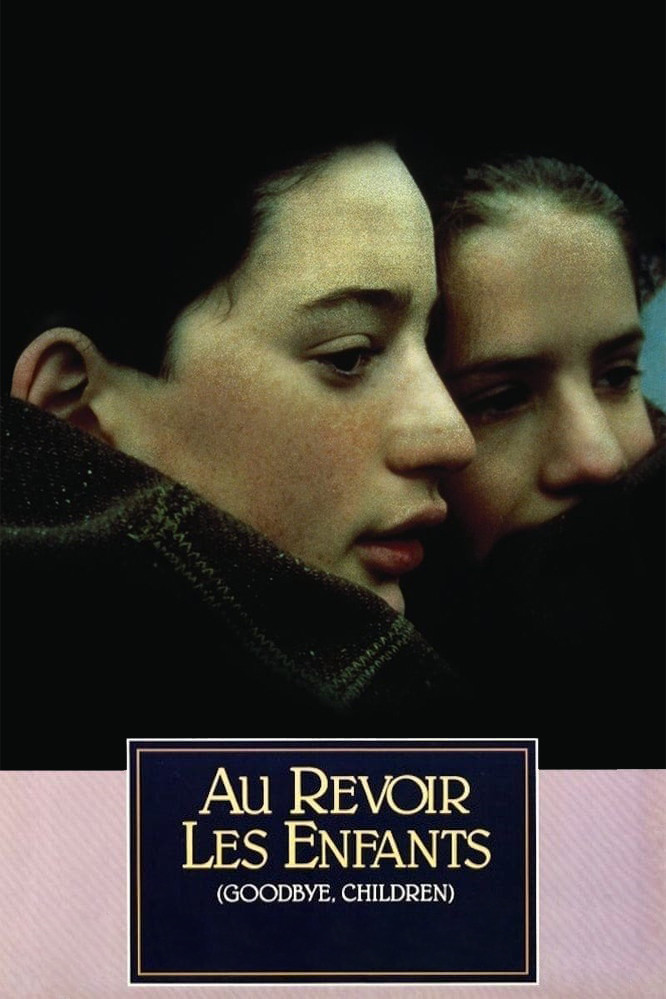
The Historical Era of the Film
Whenever I revisit Au Revoir les Enfants (1987), I can’t help but immerse myself in the turbulent backdrop against which Louis Malle crafted this deeply personal story. The film is rooted in the landscape of France during the waning years of the Second World War, specifically under the oppressive regime of the German Occupation between 1940 and 1944. For me, understanding this period means reckoning with a country fractured by foreign control, uncertainty, and internal divisions. The Vichy government, a regime collaborating with Nazi Germany, dominated the political structure, enforcing anti-Semitic laws, curtailing freedoms, and stoking fear among ordinary citizens. I’ve always felt that the paranoia and repression of these years seep into every frame of Malle’s film; the sense of ever-present danger would have weighed on every child and adult, especially anyone with something to hide.
Economically, the Occupation brought scarcity and rationing—basic goods became luxuries, and black markets flourished. For ordinary French families, daily life transformed into a negotiation with hunger, cold, and loss. When I think about the boys at the Catholic boarding school featured in the film, I see clear echoes of these conditions. Their world narrows to clandestine trading of jam and personal treasures, mirroring the broader economic desperation of their time. Social mobility stalled, and a strict class hierarchy persisted even within the cloistered environment of the school. The era saw families torn apart, children separated for safety, and communities splintered by suspicion and ideology. Political divides often ran through the very heart of French society, pitting neighbor against neighbor, and complicity against resistance.
That backdrop is inseparable from the wave of anti-Semitic persecution unleashed by the Nazis and abetted by the French state. The round-ups and deportations of Jews, especially children, colored the social fabric with an enduring sense of shame and trauma. The historical context is not limited to the film’s internal chronology, though. By 1987, when Malle released Au Revoir les Enfants, France was still wrestling with collective memory and accountability regarding collaboration and resistance. The seventies and eighties were a period of intense reflection in French society, with historians, journalists, and artists re-examining the myth of a universally resistant France. Films like this were not just retrospectives—they were interventions in ongoing national debates about guilt, complicity, remembrance, and identity.
Social and Cultural Climate
As I see it, the social and cultural climate surrounding both the Second World War setting and the film’s 1987 production was charged with introspection, anxiety, and an urgent drive to interrogate the national conscience. During the era depicted, dominant attitudes veered between overt collaboration with occupying forces and quiet, sometimes ambiguous forms of resistance. Living in a regime where ideological conformity was forcibly imposed, many adapted by outwardly espousing loyalty or at least passive compliance.
I find the school’s insular Catholic environment, as recreated by Malle, to be a microcosm of broader French society—religion serving as both solace and shield, tradition as both comfort and cage. Families sent their sons to such schools not only for education but for the illusion of safety, seclusion, and moral certainty during a period of profound instability. Still, even the most cloistered institutions were not immune to the growing danger for those identified as “other”—especially Jews. Anti-Semitic sentiments, fanned by propaganda and institutional policies, seeped into daily life, even among children, who parroted adult prejudices with devastating consequences.
Jumping forward to the societal mood in France by the mid-1980s, I’m always struck by how much had shifted in discussions about the Occupation. Intense historical debates raged about whether France did enough to protect its Jewish citizens, and to what extent its population participated in Nazi crimes. Claude Lanzmann’s documentary “Shoah,” released just two years before Malle’s film, shattered taboos and forced a reckoning with French involvement in the Holocaust. The artistic climate was charged with works that pulled no punches. The willingness to reflect, admit guilt, and face uncomfortable truths was—at least among intellectuals and filmmakers—more pronounced than ever before.
This cultural reckoning, with its atmosphere of self-examination, certainly infused the artistic production of Au Revoir les Enfants. I feel that the film’s muted colors, careful pacing, and attention to the small betrayals and silences of daily life reflect not just nostalgic recollection but an urgent need to bear witness. The desire for honest memory and the rejection of pious myths resonates through every scene and performance.
- German Occupation of France (1940–1944)
- Collaborationist Vichy government and its policies
- Rise of French Resistance and complicity debates
- Postwar memory struggles and historical revisionism
How the Era Influenced the Film
For me as a film historian, few works so powerfully illustrate the interplay between history and cinema as Au Revoir les Enfants. The story’s details and emotional contours are inseparable from the moment that forged them—not only the wartime years themselves but the period of the film’s production in the late 1980s. Louis Malle drew directly on his childhood recollections, recounting a dark formative trauma: the betrayal and eventual arrest of a Jewish classmate in his Catholic school. Thus, the film is not just a wartime story; it is an act of recollection shaped by decades of reflection and evolving attitudes about responsibility and guilt.
The film’s atmosphere of suspicion and dread matches what I know of the Occupation-era state: the all-pervasive anxiety that anyone, from the headmaster to the kitchen staff, could be an informer or collaborator. I am also fascinated by how the seemingly mundane routines of school life—meals, lessons, games—take on a heightened significance in this context. They aren’t simply background; they are part of a desperate effort to maintain normalcy—and concealment—in a world that punishes acts of humanity as severely as defiance. The presence of hidden Jewish children and the ever-present threat of Gestapo raids were lived realities for many French communities. Malle’s recreation of these dynamics, I believe, is haunted by the struggle to understand how ordinary people became complicit in such tragedies, sometimes consciously, sometimes out of fear or habit.
The late 1980s production era deeply colors the film’s sensibility. By then, a wave of memoirs, historical studies, and confessional accounts was questioning comforting postwar narratives. For me, this was a cultural moment that encouraged brutal honesty—any sanitized, heroic retelling would have felt false. Malle’s direct, understated approach reflects the mood of self-interrogation permeating French intellectual circles. There’s a somber acceptance of sorrow and moral ambiguity that’s unique to films made with the benefit of hindsight, after decades of suppressed stories gradually surfaced. I see Au Revoir les Enfants as a dialogue across generations: a survivor’s letter to the present, urging viewers not to look away from uncomfortable truths.
Audience and Critical Response at the Time
Reflecting on the film’s release in 1987, I find the cultural response itself a fascinating artifact of its era. The mid- to late-1980s in France was a period hungry for catharsis and genuine reckoning. Contemporary critics and audiences approached Au Revoir les Enfants with a seriousness that testified to its resonance. I remember reading reviews that hailed it as a necessary intervention—one that cut through layers of denial still lingering in some quarters of French society. Viewers who had lived through the war or grown up in its aftermath responded with particular intensity, some recalling their own childhood traumas, others confronting uncomfortable legacies within their families or communities.
For French audiences, the film helped renew public debate about complicity, collective memory, and the myth of universal resistance—a narrative long promoted in schools and popular media. Some older viewers reportedly felt discomfort, even shame, at the film’s remorseless depiction of betrayal and collaboration. Still, the emotional force and honesty of the story commanded respect. Younger viewers, many of whom had absorbed decades of patriotic mythmaking, experienced Malle’s work as a revelation: a lesson in both empathy and history.
I also recall reading how international critics, especially in the United States, praised the film for its unsparing realism and moral complexity. The film collected major awards, including the Venice Golden Lion, and quickly became canonized as a masterpiece of historical cinema rather than merely a French national story. This broad critical acclaim helped to further break the silence about French wartime guilt and the suffering of Jewish children. Personally, I’m always moved by how survivors and witnesses to these events responded—some expressing gratitude for having their stories rendered visible at last, others mourning losses that had never truly healed.
Why Historical Context Matters Today
From my perspective, there is no way to fully experience Au Revoir les Enfants without grappling with its historical context. I believe the legacy of the German Occupation and postwar French debates over memory are not just background but essential ingredients in both the making and the meaning of the film. For modern audiences, an understanding of this context transforms what might seem like a parochial school drama into an inquiry about nationhood, responsibility, and the unbearable cost of silence. When I watch the film through this lens, the smallest gestures—hesitation, denial, betrayal—break open into urgent questions about morality under oppression.
I also find that historical awareness brings richer appreciation of the way the film steps outside simplistic narratives of good and evil. The “gray zone” inhabited by so many characters echoes what historians have increasingly described: lives lived under compulsion, compromise, and incomplete knowledge. It’s easy for contemporary viewers to congratulate themselves for moral clarity, yet I am consistently reminded of how swiftly ordinary people are swept into complicity by fear or social pressure. The film’s context, then, is a warning as much as a memorial—one that remains relevant wherever prejudice, state violence, and communal silence persist.
Finally, I consider films like Au Revoir les Enfants to be indispensable for memory itself. In an age of rising nationalism and historical revisionism, the courage to confront difficult truths—the very climate in which Malle made his film—feels more vital than ever. The historical context, for me, insists that viewers approach the story not only as a closed chapter, but as a prompt for vigilance and empathy in the present.
After understanding the factual background, you may want to see how this story was received as a film.
🎬 Check out today's best-selling movies on Amazon!
View Deals on Amazon