
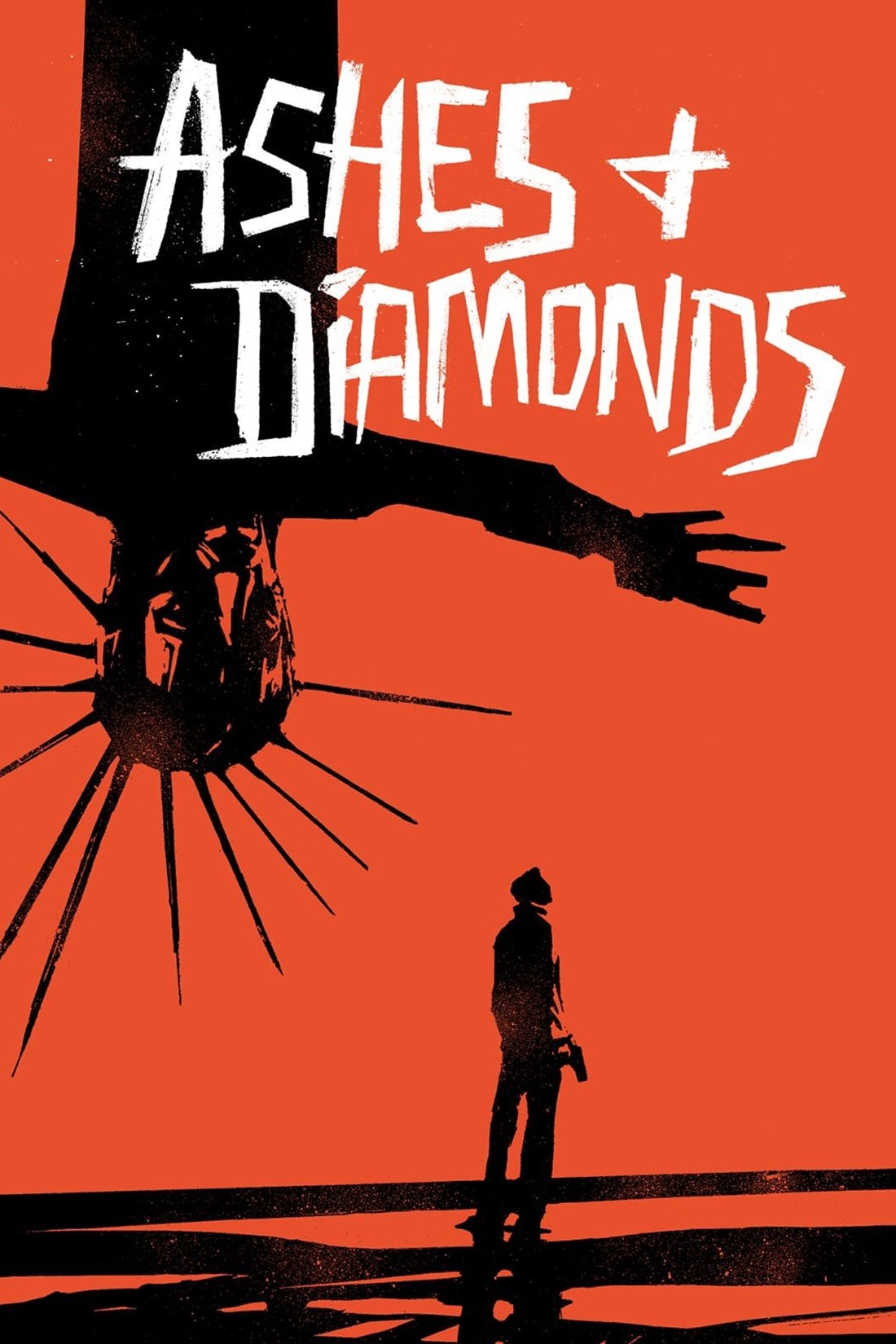
The Historical Era of the Film
When I first encountered “Ashes and Diamonds (1958),” I found myself immersed in a period where Poland was contending with the immense pressures and shifting ideologies of the immediate post-World War II era. The political climate in Poland during the late 1940s and 1950s was fundamentally shaped by the imposition of Communist rule after the defeat of Nazi Germany. Poland, though officially liberated, was not truly free; control had shifted from one totalitarian regime to another. Daily life and artistic production existed under the specter of Soviet hegemony, and every public discourse—from cinema to literature—was influenced, if not outright dictated, by the priorities and anxieties of the ruling party.
Economically, the country was exhausted. The scars of war were omnipresent, evident in ruined infrastructure, lingering poverty, and the deep psychological wounds of a population traumatized by genocide, collaboration, and resistance. The onset of forced collectivization and nationalization—hallmarks of the nascent People’s Republic—contributed to a sense of instability and, at times, hopelessness. I feel that in the midst of this rebuilding, Polish society clung to traditions but was also compelled to reconstruct its identity amidst new borders and occupations.
This era was marked by a tug-of-war between historical memory and official state narratives. The Communist regime regarded wartime resistance—particularly anything anti-Soviet—with suspicion. Every act of remembrance or artistic representation became fraught with ideological implications. I see the late 1950s as a moment of slow cultural thaw, following the death of Stalin in 1953 and the beginning of a limited de-Stalinization movement across Eastern Europe. In Poland, this began opening small windows for more critical and nuanced artistic expression, including cinema.
As I look to the world outside Poland, it’s hard to ignore the backdrop of the Cold War—the looming tension between the Western Bloc and the Soviet-controlled East. Poland’s cultural production took on a dual existence: while shaped by local tragedies and hopes, it was also watched carefully by international audiences hungry for signals of dissent or conformity.
- Communist consolidation of power in Poland after WWII
- Widespread economic hardship and reconstruction
- Ongoing trauma from Nazi/Soviet occupations
- Gradual cultural thaw and increased artistic freedom post-1956
These historical forces weren’t abstract for the filmmakers and original audience—they were the very conditions of their daily existence, instilling both raw urgency and profound caution in the artistic choices of the era.
Social and Cultural Climate
Reflecting on the social and cultural climate that surrounded the creation of “Ashes and Diamonds,” I am struck by the contradictions and fierce debates that shaped Polish identity in the wake of war. Dominant social attitudes revolved around the search for meaning and stability after traumatic upheaval. Many I have spoken to or read reminisce about a country divided—not just by former allegiances during the war, but also by how to reckon with a complicated past while lining up under the demands of a new regime.
Small wonder, then, that a sense of skepticism permeated much of Polish society in these years. In my experience as a historian, I have often seen this manifest in evasive speech, coded writing, and the widespread use of irony—strategies adopted to express dissent, survive scrutiny, or simply navigate the uncertain moral terrain left in the wake of occupation and civil strife. These strategies allowed people to say one thing and mean another, a resonant undercurrent that would profoundly affect the film’s tone and approach.
Culture was oscillating between the persistence of old national myths—heroism, martyrdom, the romantic spirit—and a government campaign to legitimize itself by rewriting history and promoting socialist realism. I find it fascinating to observe how these tensions fostered a kind of double consciousness: an ability to participate in official rituals while privately maintaining different beliefs. This period was also marked by the loss of trust in institutions and authority, as so many had proven themselves complicit in either Nazi or Communist abuses. Faith in the individual, and the individual’s ability to discern right from wrong, frequently took center stage.
Amid this fractured landscape, new cultural trends were breaking through. The “Polish Film School” emerged around this time, advocating more personal and psychologically nuanced storytelling than the rigid formulas of earlier propaganda films. I see “Ashes and Diamonds” as one of the key expressions of this movement—where directors and writers began to challenge state dogma through subtle subversion rather than frontal assault. The rise of a more intellectual, middle-class audience fostered critical discussions in salons, university clubs, and clandestine circles, further fueling the climate that this film so deftly engages.
How the Era Influenced the Film
Whenever I watch “Ashes and Diamonds,” I’m acutely aware of how inseparable its story, characters, and mood are from the historical circumstances of its creation. The influence of the era is palpable in the film’s very texture—its ambiguity, its moral uncertainties, its refusal to offer easy heroics or villainy. The people behind the film, including director Andrzej Wajda, were themselves products of the period’s cultural thaw—a brief window where critical reflection on recent history became possible, though always within certain limits.
I see the film’s reluctant, ambiguous protagonists as perfect embodiments of a generation haunted by past allegiances and forced into new realities. The war had fractured Polish society along lines that were impossible to escape, and the film’s story reflects this deeply. The protagonist—neither unequivocally heroic nor evil—manifests the moral exhaustion I’ve come to associate with post-war Poland, where the right course of action had become a matter of survival rather than moral clarity.
The production era itself was fraught with risk. The screenwriters and directors navigated a landscape of censorship; open defiance of the party line could mean professional ruin or worse. I have marveled at the creativity with which filmmakers camouflaged political critiques, using allegory and subtext. The way “Ashes and Diamonds” explores the contested meanings of resistance and collaboration, especially in depicting Home Army fighters versus Communist officials, reveals how contentious these issues remained—untouchable in official histories, but urgent in popular memory.
The very aesthetics of the film—the use of light, shadow, and fragmented narrative—evoke a society picking its way through darkness toward uncertain dawn. These choices are, in my view, inextricable from the larger cultural project of exploring what it meant to be Polish after such catastrophic upheaval. The lingering presence of Soviet reality, the trauma of occupation, and the pressures of ongoing reconstruction are not background details but active forces shaping the narrative’s direction and the psychology of its characters.
Audience and Critical Response at the Time
I’ve always been fascinated by how a film’s initial reception reveals so much about the climate in which it entered public life. When “Ashes and Diamonds” appeared on Polish screens in 1958, viewers and critics alike responded with remarkable intensity. Many Polish audiences, accustomed to either escapist entertainment or the stilted optimism of socialist realism, recognized immediate echoes of their own dilemmas in the film. I have read accounts of early screenings where the silence in the theater was almost palpable—not just out of respect but from shock and recognition.
A longing for acknowledgement of individual trauma and collective ambiguity resonated strongly with contemporary audiences. The film’s portrayal of the complexities of resistance fighters—once heroes, now often cast as villains by the Communist narrative—generated discomfort and heated debates. I’ve found records of viewers feeling seen for the first time: their losses, their confusion, their inability to neatly categorize themselves as either guilty or innocent. Official party critics responded with suspicion; there was some attempt to frame the film as ambiguous enough to warrant approval, but others feared it hinted too strongly at anti-communist sentiment.
Among the emerging wave of cultural critics—students, intellectuals, and fellow filmmakers—the film sparked conversation about the boundaries of cinematic truth. I believe these debates helped spark the Polish New Wave, a burst of artistry grounded in critical engagement with history and the present. Internationally, the film’s stark realism and novel aesthetic approach attracted praise at festivals, elevating Polish cinema to new visibility during a Cold War moment where glimpses behind the Iron Curtain were rare and highly prized.
Why Historical Context Matters Today
As I continue to revisit “Ashes and Diamonds,” I find that understanding its historical context transforms the experience. The film is more than a compelling narrative; it’s a window into a uniquely charged moment in Polish and European history. To view the film without this context would be, for me, to miss much of its resonance—the quiet rebellion in every ambiguous line, the haunted looks exchanged in half-lit rooms, the pervasive sense of existential crisis.
Knowing the weight of censorship and state control lends the film’s choices further significance. The subtle challenges to official doctrine, the space carved out for moral doubt, the careful crafting of complex characters—all of these reflect the push-pull between individual agency and structural constraint that defined Polish life at mid-century. I find the film’s refusal to resolve every ambiguity a powerful historical testimony in itself, mirroring a society that could not afford ideological certainties.
Understanding the audience’s hunger for nuanced representation, and the courage it took for filmmakers to deliver it, deepens my appreciation for the film as an act of cultural resistance. In a world increasingly divided by simplified narratives about good and evil, “Ashes and Diamonds” reminds me that history is rarely tidy, and that real lives are lived in the spaces between. For students and scholars today, the film’s historical grounding makes it an essential artifact—not just of Polish cinema, but of the ways art contends with the shadows of dictatorship, war, and survival.
After understanding the factual background, you may want to see how this story was received as a film.
🎬 Check out today's best-selling movies on Amazon!
View Deals on Amazon