
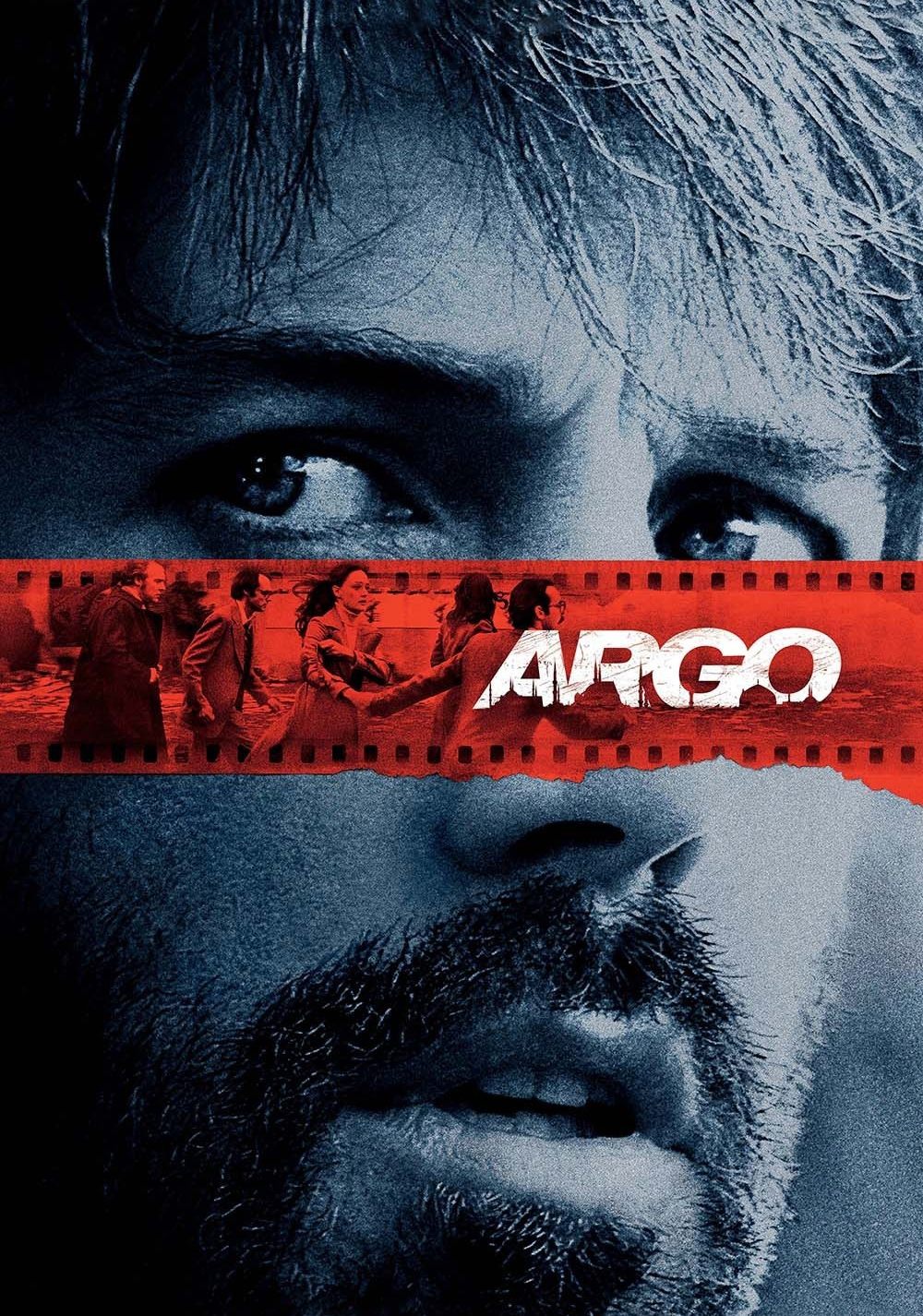
The Historical Era of the Film
When I first sat down to watch Argo (2012), I couldn’t ignore my awareness that the film’s story was inseparable from its dramatic late-1970s backdrop. The Iran hostage crisis, which erupted in November 1979, was the event that ultimately set the stage for that harrowing rescue mission. As I revisited that period in my mind, I remembered the political instability that swept across the world after the Iranian Revolution. Iran’s monarchy had been overthrown earlier that year, replaced by the rule of Ayatollah Khomeini and a government born from rising resentment toward American influence and the Shah’s regime. The inflation and economic mismanagement that marked the Shah’s final years only heightened the unrest, destabilizing social life and fueling anti-Western sentiment within the country.
The United States itself, on the cusp of the 1980s, was burdened by economic malaise. Inflation and unemployment ran high, and the political climate was tinged with disillusionment in the aftermath of the Vietnam War and Watergate. Jimmy Carter’s presidency seemed defined by uncertainty, and the hostage crisis became a national ordeal that played out daily on television screens. For me, the most striking detail was how the media’s newfound, relentless coverage gave Americans a sense of shared anxiety and helplessness; people saw the faces of hostages every evening as they counted the days of captivity. Iran, once a key Cold War ally for the US, became a symbol of the unexpected danger of shifting allegiances, with revolutionary fervor replacing comfortable predictability. This era was not just about Iran and America, but about the realignment of global power as the Cold War order began to fragment.
Yet, as I reflect on how Argo situates its narrative, I can’t help but be reminded of the human stories submerged beneath headlines. The tension of that time—the mix of fear, pride, and uncertainty—gave rise to a kind of collective national anxiety. As a historian, I noticed how the small details of the era, from fashion to broadcast news styles, reflected broader currents of change. The world was caught between old certainties and the unknown, and everyone—desperately—looked for answers, sometimes in covert operations like the rescue depicted in Argo. It was a time when distrust of authority, both foreign and domestic, simmered just beneath the surface, and it’s impossible for me to watch the film without feeling the weight of that moment pressing in from every angle.
Social and Cultural Climate
In tracing the social and cultural climate that permeated the late 1970s and early 1980s, I’m always struck by how Argo’s narrative emerges from a confluence of anxieties and shifting identities. The fallout from Watergate and the defeat in Vietnam had left many Americans feeling battered and skeptical of their government’s ability to protect their interests abroad. I see the national psyche of that era as one marked by vulnerability and uncertainty—people grappled with the loss of what once felt like American infallibility. National pride had certainly wavered; there was a distinct air of soul-searching as the country’s self-image began to fracture.
Internationally, the Western depiction of Iran reflected deeply ingrained stereotypes and cultural misunderstandings. I’ve always noticed how the hostage crisis didn’t just strain diplomatic ties—it generated widespread fear of the unfamiliar, and the media often reduced a complex revolution to images of chanting crowds and burning flags. Anti-Iranian and, more broadly, anti-Middle Eastern sentiments sharpened in the American consciousness. I remember reading about Iranian students and immigrants facing hostility, threats, and sometimes violence, as the general public tended to conflate individual identity with grand political events. The Islamic Revolution quickly became shorthand for danger, “otherness,” and unpredictable change.
In the world of popular culture, the anxieties and obsessions of the time filtered through television, movies, and print. Journalists and filmmakers began to lean into stories about espionage, international intrigue, and secret rescue missions. I consider this a direct reflection of America’s desire to regain agency and control—a psychological balm for audiences haunted by nightly images of the embassy standoff. Yet, there was also a fascination with the glitz and escapism of Hollywood, even as the nation faced grim realities. Even genres like science fiction and spy thrillers seemed to echo real-life tensions, as the specter of Cold War politics hovered over everyday life.
- Anti-American sentiment spikes in Iran, with the embassy as a focal point
- Hostage crisis dominates headlines and everyday conversation in the US
- Rising distrust of government and institutions among Americans
- Cultural stereotyping and misunderstandings between East and West
I can’t look at Argo without seeing the intricate ways it recreates these social tensions and fears. As someone who studies historical representation, I’m always aware of how films like this challenge or reinforce collective memories. The fact that so much of the plot leans on the created “movie” within the story subtly nods to Hollywood’s own influence on American perceptions of heroism and power. In my view, the inspirations and confusions of the late 1970s social climate ripple through every character interaction, costume, and backdrop in the film.
How the Era Influenced the Film
When I reflect on how historical circumstances shaped Argo’s story, characters, and production, I’m consistently drawn to the way its creators navigated layers of memory, nostalgia, and critique. The late 1970s wasn’t just a setting—it was the crucible that forged the story’s urgency and tone. The actual “Canadian Caper”—the secret operation to extract American diplomats hiding in Tehran—is something I remember reading about in history books as a perfect encapsulation of Cold War-era subterfuge, blending real danger with outlandish creative solutions. The audacity of using a fake Hollywood science fiction film as a cover mirrored the era’s sense of desperation and improvisation. I find it remarkable that a time of increasing cynicism toward authority also produced a willingness, at least in covert circles, to gamble everything on imaginative risk-taking.
The characters in Argo are, to my mind, products of both their environment and the complex mythologies Americans construct about themselves. Tony Mendez, the CIA specialist at the center of the plot, is caught between the world of hard-nosed intelligence work and the dream factories of Los Angeles. I’ve always been fascinated by how the film blurs the line between reality and illusion, echoing both the subterfuge of espionage and the spectacle of Hollywood—it’s a commentary born straight out of a culture obsessed with both secrecy and spectacle. The way the film re-imagines collaborative efforts between Canadian diplomats and US operatives highlights, for me, a moment in history when international alliances felt especially fragile and necessary.
I am always attuned to the subtle production decisions that filmmakers make, often as a response to the times in which they work. In the early 2010s, when Argo was produced, there was a renewed appetite for dramatizing historic events, particularly those in which ordinary people’s bravery intersects with large geopolitical forces. I see this as reflective of American culture grappling, in a post-9/11 world, with the role of clandestine intervention and the capacity for both error and heroism among government agencies. The film’s detailed period recreation—from wardrobe to the use of grainier film stock for certain sequences—signals a dedication to capturing the tactile feel of the late ‘70s, but also an attempt to bridge present anxieties with past crises. The echoes between 1979 and our contemporary debates over intervention, national pride, and media sensationalism are, in my view, unmistakable.
Audience and Critical Response at the Time
When Argo premiered in 2012, I could sense that audiences arrived with a kind of eager trepidation—curious to see how a now-legendary historical episode would be translated for a new era. For many viewers, especially those old enough to remember watching the hostage crisis on television, the film reawakened both pride and old wounds. I found that critics and viewers alike responded strongly to the depiction of an American intelligence triumph achieved with both bureaucratic grit and Hollywood imagination. There was palpable appreciation for a story that acknowledged diplomatic collaboration, with the role of Canadian embassy staff highlighted and celebrated. Yet, I also recall voices raising concerns about the film’s downplaying of certain international contributions, especially the role of the Canadians, and the simplification of Iranian motivations for American audiences.
I also think about the broader cultural climate of the early 2010s, where a swell of interest in stories about government secrecy, classified missions, and global threats was peaking. Argo, to me, fit neatly with the popular appetite for both suspense and affirmation—a film that could dramatize historic anxiety while ultimately reassuring viewers of the power of cunning and courage. Critics generally lauded the film for its tightly wound suspense and period detail. However, in specialist circles (including my own), there were nuanced discussions about the responsibilities of historical filmmaking: How should filmmakers balance entertainment with accuracy? Who gets credit for success? How do you represent the “enemy” sympathetically or otherwise? These were questions that Argo forced back into the open, perhaps more directly than many films of the time.
For many, Argo’s win at the Academy Awards signaled mainstream embrace of historical stories that ally nostalgia with a certain American self-confidence. Personally, I often noted how the debates around the film became a proxy for larger conversations about the US’s place in global conflicts and, subtly, about how history itself is retold in moments of renewed national anxiety. The film’s success suggested to me that audiences were not only ready but hungry to revisit old crises through the lens of modern movie-making craftsmanship, and that the divides between historical experience and cinematic retelling were as complicated as ever.
Why Historical Context Matters Today
Every time I return to Argo, what leaps out at me is just how vital its historical context is for any meaningful understanding of the film’s impact—and its limitations. For those of us who study the intersection of cinema and history, the late 1970s and early 1980s are not just backdrops, but living forces that pulse through the drama, dialogue, and outcomes presented on screen. I believe that being aware of these circumstances—the revolution in Iran, the hostage crisis, the media evolution, the American malaise, even the rising skepticism toward governmental authority—gives us a richer appreciation of not just what happens in the film, but why it resonates with audiences decades later.
Reflecting on Argo in today’s fractured geopolitical and media environment, I see powerful parallels—and critical lessons. Modern viewers, like those in 2012 and 1979, are grappling with rapid realignment of global power, the unpredictability of protest movements, and the ever-present question of governmental transparency. For me, understanding the historical conditions that shaped both the actual events and the film’s production illuminates the ongoing dialogue between past and present—how we frame stories of crisis, heroism, and international tension depends deeply on the times in which we live. This is not just nostalgia; it’s a kind of critical vigilance that, as a historian, I see as essential to decoding any narrative built from historical fact.
To appreciate Argo as more than just a well-crafted thriller, I constantly remind myself—and urge others—to read its choices against the broad tapestry of history. The film’s creation reflects not just the story of a rescue, but the U.S.’s ongoing struggle to interpret its place in world affairs, reckon with the consequences of interventionist policy, and understand the emotional terrain of both pride and defeat. So much of what defines national identity and collective memory is at play in Argo’s historical context, giving the film exceptional depth for those willing to look beyond the surface. I find this not just fascinating, but essential—without that grounding, the film’s lessons and provocations risk being flattened into entertainment alone, robbed of the nuance that history so richly provides.
After understanding the factual background, you may want to see how this story was received as a film.
🎬 Check out today's best-selling movies on Amazon!
View Deals on Amazon